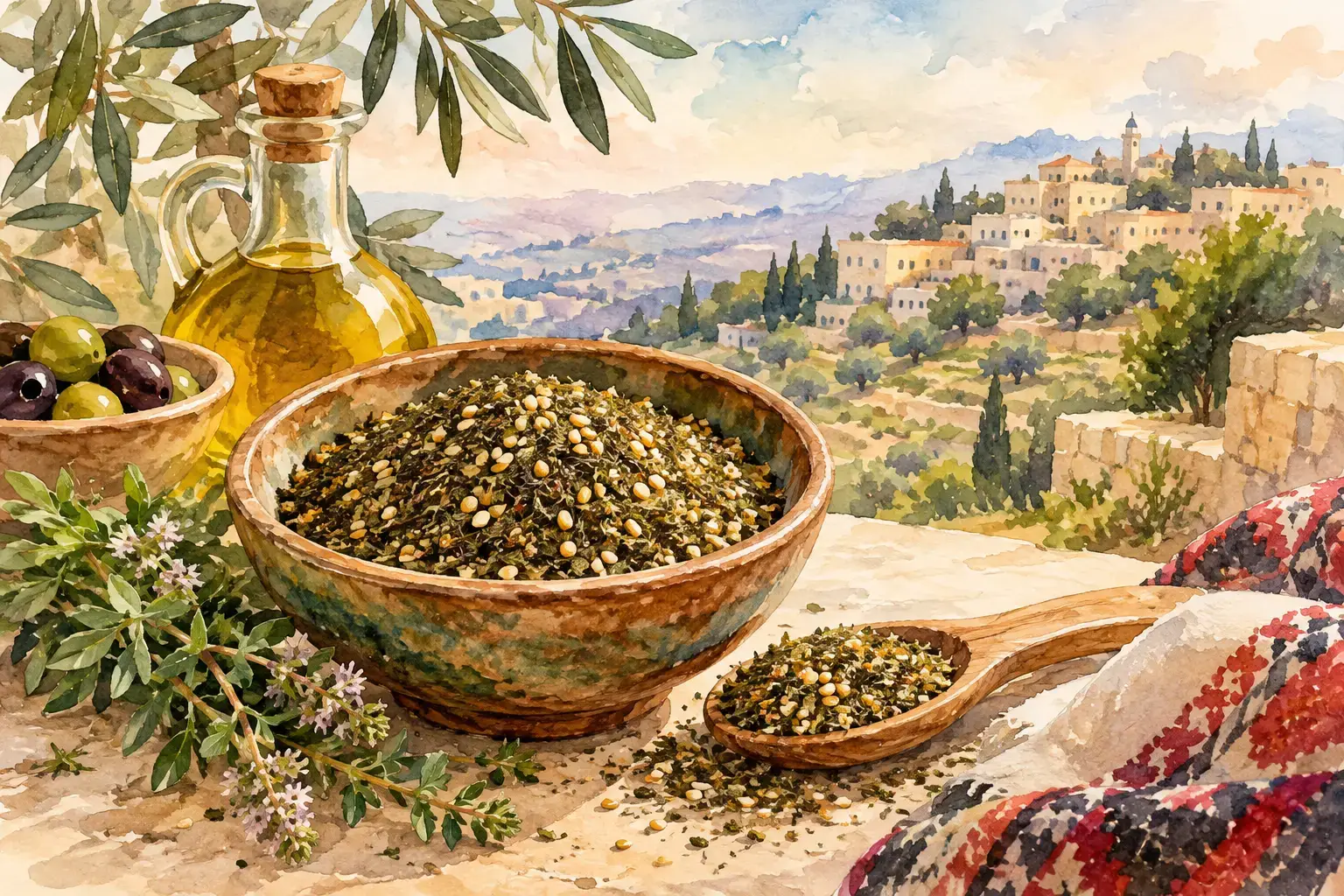
Palestinian zaatar is not simply a seasoning to shake over eggs or tuck into a pantry shelf. It is the bright, earthy taste of olive harvests, hillside herbs, family kitchens, and a food tradition carried forward with care. One pinch can be tangy with sumac, nutty with sesame, fragrant with thyme, and quietly peppery – a small, vivid expression of Palestinian land.
For those who choose food with a story, za’atar offers more than bold Mediterranean flavor. It makes an ordinary breakfast feel considered, turns olive oil and warm bread into a ritual, and brings a deeply rooted ingredient into the rhythm of daily life.
Palestinian zaatar begins with the herb
The word za’atar can describe both an herb and a finished spice blend. That distinction matters. Across the Levant, recipes and ingredient ratios shift from one home, village, and producer to another. There is no single formula that can speak for every Palestinian table.
At the heart of many Palestinian blends is Origanum syriacum, often called Syrian oregano, Bible hyssop, or za’atar herb. Its aroma is fuller and more floral than standard oregano, with notes that feel warm, green, and slightly camphorous. It grows naturally in the Eastern Mediterranean and has long been gathered, dried, and used in cooking and traditional household practices.
The herb is usually blended with tangy red sumac, toasted sesame seeds, and salt. Some blends include cumin, coriander, or other herbs; some lean lemony and sharp, while others are deeply herbal. The point is not uniformity. Regional character is part of what makes za’atar worth seeking out.
A blend shaped by place
Palestine’s hills, valleys, sun, and soils influence the character of its native botanicals. When herbs are thoughtfully harvested and carefully dried, they retain an aromatic intensity that is immediately apparent when the package is opened. The scent should feel alive: savory, leafy, citrus-bright, and inviting rather than flat or dusty.
That sensory quality also explains why provenance is more than a label detail. A za’atar blend made with herbs connected to Palestinian growing traditions carries a particular cultural and culinary meaning. Choosing it helps keep attention on the farmers, families, and knowledge behind an ingredient too often treated as generic.
The flavor of Palestinian zaatar in the kitchen
Za’atar is wonderfully practical. It asks very little of the cook, yet gives so much back. The most classic way to enjoy it is with good زيت الزيتون البكر الممتاز and bread: pour oil into a small dish, add za’atar, and dip. The oil softens the herbs and carries the perfume of sumac and sesame through every bite.
For a breakfast with real presence, spread labneh or a thick plain yogurt over toast, finish with a generous pinch of za’atar, and add sliced cucumber or tomatoes. It also belongs on fried eggs, avocado toast, roasted potatoes, grilled vegetables, and simple salads dressed with olive oil and lemon.
It is especially good where gentle foods need contrast. Sprinkle it over hummus, white beans, feta, or a warm grain bowl. Rub it onto chicken, fish, or mushrooms with olive oil before roasting. Fold it into bread dough, scatter it over flatbread, or stir a little into a vinaigrette for greens.
Heat changes the blend. Added at the end, za’atar stays fresh and aromatic. Baked onto manakish or roasted with vegetables, its sesame becomes toastier and its herbal notes deepen. Neither is better. It depends on whether you want brightness or warmth to lead.
A simple pantry ritual
Keep Palestinian zaatar where you can reach for it often, not hidden among occasional spices. Its value lies in making everyday food feel cared for. A small bowl of olive oil, a plate of fruit and cheese, and warm pita can become an unhurried afternoon meal. In that sense, za’atar is as much about hospitality as seasoning.
For the clearest flavor, buy in amounts you will use while it is fragrant and store it in a tightly sealed container away from heat and direct light. The sesame seeds contain natural oils, so freshness matters. If the blend no longer smells lively when you rub a pinch between your fingers, it is time to replenish it.
Heritage, harvesting, and respect for the plant
Za’atar carries profound cultural importance in Palestinian life. It appears at breakfast tables, in school lunches, during visits, and in food memories shared across generations. For many Palestinians, its scent can bring home close – even from far away.
That intimacy is also why sourcing deserves care. Wild herbs are precious, but wildcrafting must be responsible. Overharvesting can place pressure on native plant populations and the landscapes that support them. The most meaningful approach honors both heritage and ecological continuity: cultivated herbs where appropriate, transparent agricultural relationships, seasonal knowledge, and harvesting practices that allow plants to regenerate.
A premium za’atar blend should not rely on romantic language alone. Look for clear ingredient information and a flavor that reflects real herbs rather than excessive salt or anonymous filler. Sesame should taste nutty, sumac should bring a clean tartness, and the herb should remain the center of the experience.
At PALINOVA, that standard reflects a larger belief: Palestinian botanicals deserve to be valued for their integrity, potency, and origin. Food can be a daily pleasure, but it can also create a more direct relationship with the people and places that make it possible.
Bringing za’atar into a wellness-minded table
A wellness-oriented pantry does not need to be restrictive or complicated. It can be built around ingredients that make simple meals satisfying: nourishing oils, aromatic herbs, legumes, fresh produce, and spices with character. Za’atar fits naturally into that approach because a little goes a long way.
Its savory, tart profile can make simple ingredients more appealing without relying on heavy sauces. Try it on roasted carrots with olive oil, over a bowl of lentil soup, or mixed into a yogurt dip with a squeeze of lemon. Pair it with olive oil for richness, lemon for lift, or creamy foods such as labneh for balance.
A practical note for sharing: most traditional blends contain sesame, a major food allergen. Always read the ingredient label, especially when serving guests or purchasing a blend for someone with dietary restrictions. Salt levels also vary, so taste before adding more seasoning to a dish.
A gift of the earth, used generously
The best way to understand Palestinian zaatar is to use it often. Let it become the finishing touch on a weekday lunch, the center of a slow weekend breakfast, or a thoughtful addition to a gift basket for someone who loves to cook.
Each use is an invitation to pay attention: to the sharp perfume released by crushed herbs, the ruby tang of sumac, the mellow richness of olive oil, and the agricultural heritage held in a familiar meal. Keep it close to the stove, pass it freely at the table, and let this enduring taste of Palestine bring more warmth to the food you already love.