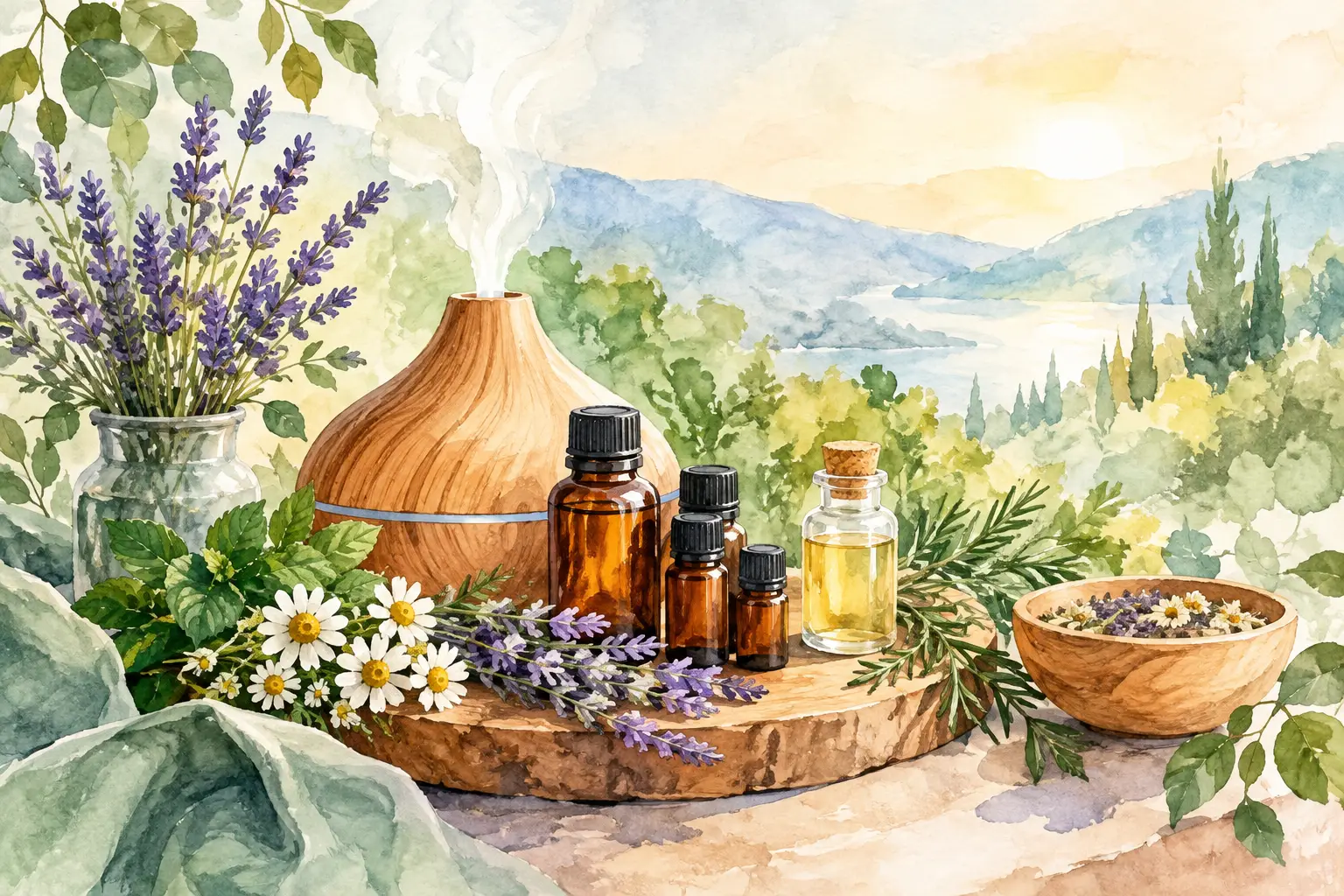
A small amber bottle can hold the bright lift of wild pine, the honeyed calm of helichrysum, or the sacred resinous depth of frankincense. But the scent alone does not tell the whole story. A thoughtful guide to sustainable aromatherapy begins before the cap is opened: with the plant, the landscape that nourished it, and the people whose knowledge and labor brought it forward.
Sustainable aromatherapy is not about collecting the largest possible oil library. It is about choosing fewer, more meaningful botanicals with clear provenance, using them respectfully, and recognizing that every drop represents a concentrated amount of plant material. When aroma becomes part of a considered ritual, it can care for your senses without asking too much of the earth.
What Sustainable Aromatherapy Really Means
Essential oils are powerful plant concentrates. Depending on the botanical, a large quantity of leaves, flowers, needles, resin, peel, or wood may be needed to produce a small amount of oil. That makes sourcing more than a marketing detail. It affects biodiversity, water use, soil health, harvest practices, packaging, and the livelihood of farming and harvesting communities.
Sustainable aromatherapy asks a few essential questions. Was the botanical cultivated, responsibly wildcrafted, or gathered without exhausting wild populations? Is the plant suited to its growing region? Can the seller identify where it came from and how it was extracted? Are growers and artisans treated as partners rather than invisible steps in a supply chain?
The answer will not always be a simple label. Wildcrafted materials can be deeply connected to place and traditional ecological knowledge, yet they require especially careful harvesting. Cultivated crops can reduce pressure on wild plants, but large-scale farming may carry its own costs if it relies heavily on water, chemical inputs, or monoculture. The goal is not perfection. It is informed choice, accountability, and steady improvement.
Tria olis amb una història que pots rastrejar
A bottle labeled “pure” is a starting point, not a full sourcing story. Purity matters because oils may be diluted, adulterated, or blended with undisclosed materials. Sustainability asks for more: a meaningful picture of origin, extraction, and stewardship.
Look for a nom botànic when possible, along with the plant part used and country or region of origin. These details help distinguish oils that share a common name but differ in chemistry and aroma. For example, the character of an oil can shift with altitude, rainfall, soil, harvest timing, and extraction method. That variation is not a flaw. It is one of the signatures of a genuine botanical material.
Regional oils are particularly meaningful when their place of origin is central to their identity. Palestinian frankincense and pine carry the aromatic imprint of the eastern Mediterranean landscape, while Palestinian helichrysum offers a warm, herbaceous floral profile rooted in a region with generations of plant knowledge. At PALINOVA, this connection to land is part of the value: botanicals are not treated as anonymous ingredients, but as gifts of a specific soil, season, and community.
Ask brands to be clear about whether an oil is steam distilled, cold pressed, solvent extracted, or produced through another process. Steam distillation is common for leaves, flowers, and resins, while citrus peel oils are often cold pressed. Neither method is automatically superior in every context. What matters is that the method suits the plant and that the finished oil is represented honestly.
Use Less, and Let the Plant Speak
One of the most practical sustainable habits is also the simplest: use less oil than you think you need. Aromatherapy is sensory, and a heavy fragrance can overwhelm the room as easily as it can overwhelm the plant resource behind it.
In a diffuser, begin with a few drops and adjust for the size of the room, ventilation, and your personal comfort. Diffuse for a limited period rather than continuously all day. This preserves oil, keeps the experience intentional, and is often more pleasant for people sharing the space.
For topical rituals, essential oils should be diluted in a carrier oil such as olive oil, black seed oil, or another skin-appropriate plant oil. A lower dilution is often the wiser choice for regular body care. Start conservatively, patch test a new blend, and avoid applying undiluted essential oils directly to skin unless a qualified professional has given specific guidance.
A sustainable practice also means respecting safety. Keep oils away from eyes and mucous membranes, store them out of reach of children and pets, and take extra care during pregnancy, while nursing, or when managing a health condition. Citrus oils may increase sensitivity to sunlight depending on the oil and method of use. Aromatherapy can support a restorative atmosphere, but it is not a substitute for medical care.
Build a Small, Purposeful Collection
The most sustainable collection is one you will actually use. Rather than buying many oils for every passing mood, choose a small group that serves your everyday rituals and reflects the aromas you genuinely love.
A resinous oil such as frankincense can bring depth to evening reflection, meditation, or a warm body oil. Pine can create a clean, forest-like atmosphere that feels especially welcome when indoor air feels stale. Helichrysum offers a grounding herbal-floral note for a slow skincare ritual when blended appropriately. Origanum syriacum has a bold, herbaceous character and should be approached with particular care, restraint, and proper dilution due to its potency.
Your collection can evolve with the seasons. A bright aromatic blend may suit morning showers and open windows in spring. In colder months, resin, wood, and spice notes can make a home feel settled and warm. The point is not to chase trends. It is to create a personal scent wardrobe with depth, repetition, and meaning.
Make the Whole Ritual More Responsible
Sustainability continues after purchase. Essential oils last longer when stored in tightly closed dark glass bottles, away from direct heat and light. Proper storage protects the aroma and reduces waste. If an oil changes dramatically in scent, color, or texture, it may be past its best for aromatic use.
Use what you own before opening duplicates. Repurpose a nearly empty bottle by letting the final drops scent a simple cleaning blend or a diffuser session, provided the oil remains fresh and appropriate for that use. Reuse outer packaging where practical, and recycle glass components according to local guidelines. Small habits matter because a wellness ritual becomes more sustainable when its care extends beyond the moment of use.
Be cautious with disposal. Do not pour undiluted essential oils down the drain, where concentrated aromatic compounds can burden water systems. If you have an unwanted or expired oil, absorb a small amount into a disposable material before placing it in household trash, following local disposal guidance when available.
Honor Heritage Without Reducing It to Aesthetic
Aromatherapy has long been shaped by local plant traditions, from household remedies and perfumery to ceremonial burning and seasonal care. Buying a regionally rooted oil can be a beautiful way to participate in that story, but it should come with curiosity and respect.
Learn the plant’s proper name. Appreciate the harvesters, distillers, and rural families who sustain the work. Avoid treating cultural provenance as a decorative label detached from real people and landscapes. When brands invest in transparent sourcing and local economic opportunity, a purchase can support the continuity of agricultural knowledge that might otherwise be overlooked.
This is especially significant for Palestinian botanicals. Their value is not only their distinctive aroma or skincare potential. It is also the resilience of the land-based traditions behind them: growers tending ancient groves, families preserving harvest knowledge, and communities creating new possibilities through what their soil has always offered.
Let Your Aromatherapy Practice Stay Personal
There is no single perfect sustainable routine. A city apartment dweller may choose a compact diffuser and two carefully sourced oils. Someone with a daily body-care ritual may prioritize a quality carrier oil and one versatile essential oil. A gift giver may look for a botanical set that tells a clear story of place.
Start with what feels useful, beautiful, and manageable. Let one oil become familiar before adding another. Notice how it changes a room, a shower, or the pause before bed. The most lasting aromatherapy ritual is not built on abundance. It is built on attention – to your body, your home, the plant in the bottle, and the hands that brought it there.