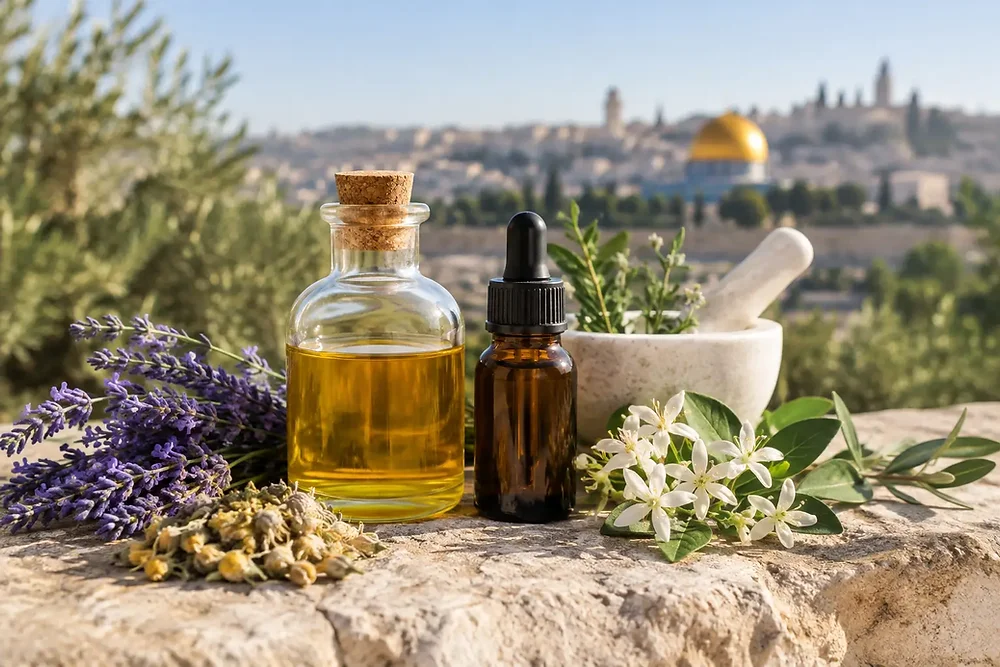
A drop of essential oil begins long before it reaches a diffuser or a bath ritual. The search for essential oil extraction examples Palestine leads to a landscape where resinous frankincense, sun-warmed oregano, wild helichrysum, and pine grow in distinct soils and climates. Their aroma is only one part of the story. The other is the patient work of choosing the right plant material, harvesting it at the right moment, and using an extraction method that respects what the plant has to offer.
For Palestinian botanicals, extraction is not simply a manufacturing step. It is where agricultural knowledge, seasonal rhythms, and sensory precision meet. Done well, it creates an oil that feels true to its source: vivid, nuanced, and concentrated.
What Palestinian Essential Oils Preserve
Essential oils are highly concentrated aromatic compounds held within certain plants. They are not the same as plant or carrier oils. Olive oil, black seed oil, and Barbary fig seed oil are pressed from fatty seeds or fruit and leave a nourishing oil behind. Essential oils, by contrast, capture volatile aromatic constituents from leaves, flowers, needles, wood, peel, or resin.
That distinction matters when choosing a product for your ritual. A few drops of Palestinian oregano essential oil can scent a shower, diffuser, or properly diluted body oil. Barbary fig seed oil is used directly on the skin in small amounts as a facial oil. Both are botanical treasures, but their texture, concentration, and use are entirely different.
The goal of essential oil extraction is not to force the greatest possible volume from a plant. It is to preserve an aromatic profile that is clean, balanced, and recognizable. Yield can vary greatly from one botanical to another. A fragrant flower may produce very little oil, while pine needles or aromatic leaves can offer a more generous yield. Low yield is not a flaw. Often, it is a reminder of how much plant material and care are held in every small bottle.
Palestinian Essential Oils: Extraction Methods
Steam Distillation for Palestinian Oregano and Pine Oils
Steam distillation is one of the most respected methods for extracting essential oils from aromatic leaves, flowering tops, and needles. Plant material is placed in a distillation chamber, where steam moves through it and gently carries volatile aromatic molecules upward. As the steam cools, it returns to liquid. The essential oil separates from the aromatic water, often called hydrosol.
Per a Origanum syriacum, the beloved wild oregano associated with Palestinian za’atar traditions, timing makes a real difference. The plant’s scent and aromatic composition shift as it grows, flowers, and dries. Harvesting well-developed leafy and flowering material, then distilling it carefully, helps create an oil with a bold herbal character. Its naturally powerful aroma means that less is often more in personal aromatherapy.
Aceite de pino is also commonly obtained through steam distillation of needles and young twigs. A well-made pine essential oil feels clear, forest-like, and bright rather than harsh or overly camphoraceous. It is especially welcome in seasonal diffuser blends, shower steam rituals, and home fragrance moments when you want the air to feel refreshed.
Steam temperature, distillation time, and the condition of the plant material all matter. Too much heat or an overly aggressive process can flatten delicate notes. Too little extraction may leave valuable aromatic compounds behind. The best approach depends on the plant, the season, and the intended aromatic profile.
Hydrodistillation for Palestinian Flowering Botanicals
Hydrodistillation is closely related to steam distillation, but the plant material is placed in water or comes into more direct contact with boiling water. It has a long history in traditional botanical practice and can be especially suitable for certain flowers, herbs, and more delicate material.
Palestinian helichrysum, sometimes called immortelle, is a remarkable example. Its small golden blooms carry an aroma that can be herbaceous, honeyed, dry, and softly earthy at once. The flowering tops are typically gathered when their aromatic potential is at its height, then distilled with close attention to freshness and handling. Bruised, overheated, or poorly stored flowers can lose some of the character that makes the botanical special.
Helichrysum essential oil is prized in skin-focused rituals for its refined aroma and its place in traditional botanical care. It belongs in a diluted facial or body blend rather than directly on the skin. For many people, its appeal is as emotional as it is practical: a quiet, sunlit scent that makes an evening routine feel less rushed.
Frankincense: A Palestinian Essential Oil Tradition
Frankincense begins as resin, not leaf or flower. The resin is collected from Boswellia trees after natural tears of aromatic sap harden. Its extraction calls for a different kind of patience. Quality depends on the resin’s cleanliness, sorting, age, and aromatic integrity before distillation even begins.
During steam distillation, the resin releases a distinctive profile that can feel lemony, woody, balsamic, and warm. Palestinian and regional frankincense traditions have long valued the resin in incense, hospitality, and contemplative practices. In essential oil form, frankincense offers a concentrated way to bring that ancient sensory language into a modern ritual.
A diffuser is often the simplest place to start. A few drops can create a grounded atmosphere for journaling, stretching, or settling into the evening. For topical use, dilute it in a carrier oil and patch test first. The aroma may be deeply familiar to one person and unexpectedly intense to another, which is why a personal approach matters.
Why Provenance Matters for Palestinian Olis Essencials
The plant’s Latin name tells only part of the story. Soil mineral content, elevation, rainfall, sun exposure, harvesting season, and post-harvest drying all influence an essential oil’s final character. Two oils from the same botanical species can smell noticeably different when they come from different growing regions.
Palestine’s hills, valleys, and Mediterranean conditions give aromatic plants a particular context. Wildcrafted materials can be compelling because they grow under natural pressures and often develop vivid aromatic defenses. Yet wildcrafting must be guided by restraint. Taking too much from a wild population can weaken the very ecosystems and rural traditions people hope to protect.
Responsible sourcing favors harvest practices that allow plants to regenerate, use only appropriate plant parts, and create fair value for the people who cultivate or gather them. For a mission-led collection such as PALINOVA’s, purity has a wider meaning. It includes the oil in the bottle, but also the care given to the land and the families whose knowledge brings these botanicals forward.
How to Choose Quality Palestinian Olis Essencials
A beautiful label is not proof of quality. Seek clear botanical identification, the plant part used, country or region of origin, and a stated extraction method when available. A supplier that can speak plainly about batch testing, purity standards, and dilution guidance gives you more confidence than one relying only on broad wellness promises.
Scent alone is also not a complete test. Natural oils vary from harvest to harvest, so a genuine essential oil will not always smell identical year after year. What you want is an aroma that feels alive and coherent, without the flat sweetness or sharp chemical edge that can suggest unnecessary fragrance additions or poor handling.
Price requires context, too. Oils from resin, flowers, or low-yield botanicals often cost more because they require considerable raw material. A very low price for a rare flower oil is worth questioning. At the same time, a high price does not automatically guarantee integrity. Traceability and transparent production remain the better measures.
Using Palestinian Essential Oils in Daily Rituals
The most satisfying routine is usually a simple one. Diffuse frankincense when you want a slower, more reflective room. Add a properly diluted helichrysum blend to an evening body-care ritual. Let pine brighten a shower steamer or a bowl of warm water placed safely nearby. Use oregano with particular restraint, preferably in a diffuser blend and according to product directions, because its intense aromatic constituents can be irritating when overused.
Essential oils are concentrated materials, not casual fragrance. Never apply them undiluted, keep them away from eyes and mucous membranes, and store them out of reach of children and pets. If you are pregnant, nursing, managing a medical condition, or using medication, consult a qualified clinician before use. A patch test with a diluted blend is a small step that can save your skin unnecessary discomfort.
Choose the oil that makes you pause and breathe more fully. When its scent carries the character of Palestinian fields, forests, flowers, or resin, that pause can become a small daily connection to land, craft, and the enduring generosity of plants.