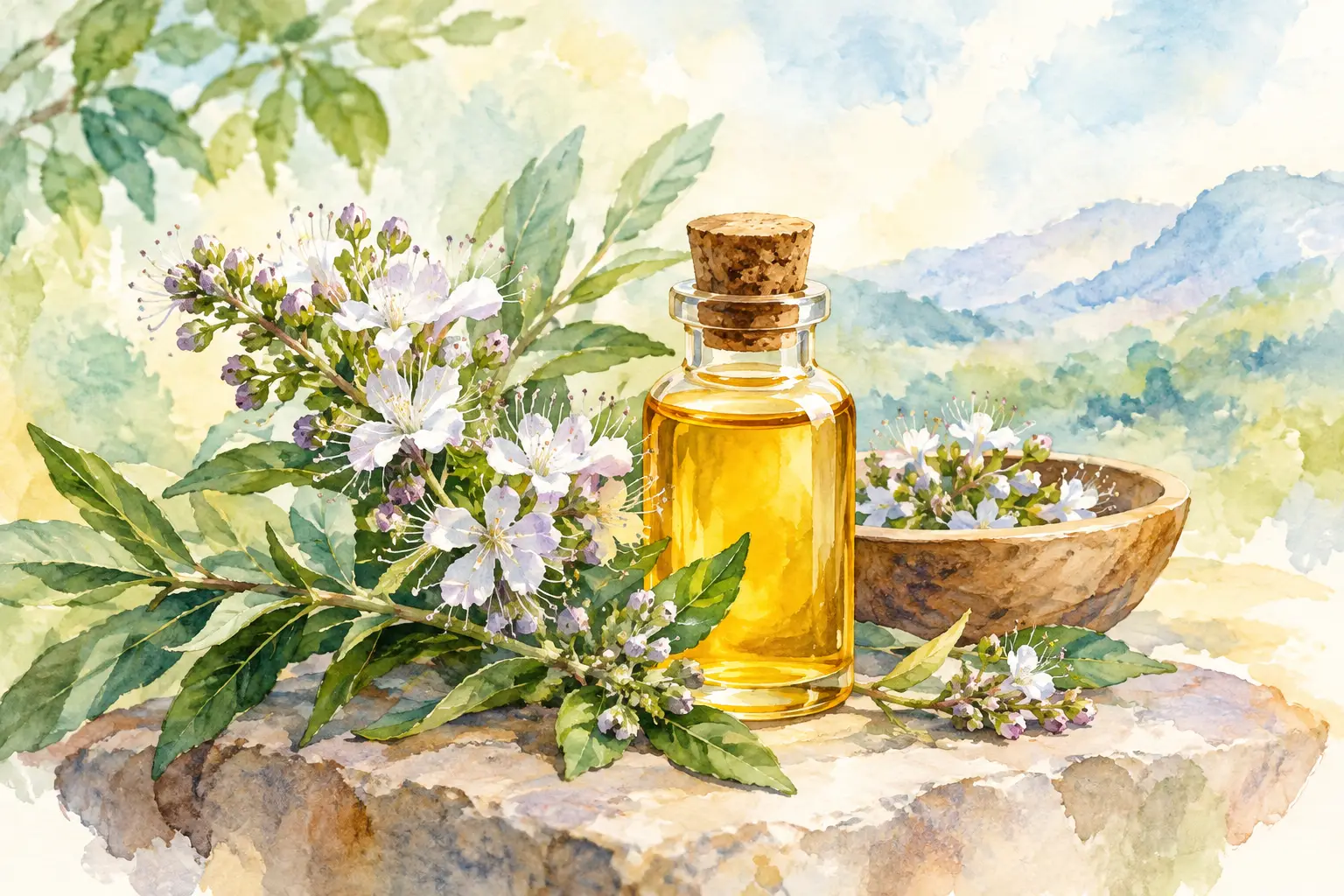
Varthemia iphionoides essential oil can be used to bring a distinctive, sun-warmed botanical character to aromatherapy, personal care rituals, and naturally scented spaces. Its value is not in grand promises, but in its sense of place: an aromatic expression of a resilient Mediterranean plant that has long belonged to the hillsides and traditional plant knowledge of Palestine and the Levant.
Often known through its botanical name, Varthemia iphionoides is a member of the daisy family. Like many region-specific botanicals, its aromatic profile can shift with the season, growing conditions, plant material, and distillation method. That variation is part of its character. A carefully produced oil should feel like a true plant essence, not a generic fragrance designed to smell the same every time.
What Varthemia Iphionoides Essential Oil Can Be Used For
The most appropriate uses for Varthemia iphionoides essential oil are aromatic and topical, always after proper dilution. It may be enjoyed in a diffuser, blended into body oils, added to bath and shower rituals with a dispersant, or used to create a more grounded atmosphere at home. Its herbaceous, dry, and wild-green presence can feel especially fitting when you want a fragrance that is less floral-sweet and more connected to open land, stone, and sun.
For many people, essential oils are part of a pause in the day rather than a cure for a problem. A few drops in a diffuser while reading, stretching, or settling into an evening routine can turn an ordinary room into a more intentional refuge. Varthemia’s particular appeal is its uncommonness. It offers a sensory alternative to familiar lavender, peppermint, or citrus oils, while carrying the story of a plant shaped by its native terrain.
A grounding aromatic ritual
Try Varthemia iphionoides essential oil in a diffuser when you want an earthy, herb-led atmosphere. Start conservatively with two or three drops in water, particularly if you are new to the oil or using a small room. Diffuse in short sessions, then notice how the aroma meets your space and your own preferences.
Its dry green character can stand beautifully on its own, though blending adds dimension. Pair it amb encens for a resinous, contemplative ritual; sweet orange for warmth and lift; or Palestinian helichrysum for a more golden, herbaceous composition. The right blend depends on what you want the moment to feel like. For quiet focus, keep the formula spare. For an evening wind-down, round it out with a softer floral or resinous note.
A distinctive addition to body oils
In a properly diluted body oil, Varthemia can lend an elevated aromatic layer to a post-shower massage or a slow hand and foot ritual. Choose a nourishing carrier oil such as jojoba, sweet almond, or olive-derived squalane, and keep the essential-oil concentration low. For a general body blend, a 1 percent dilution is a sensible starting point – roughly six drops of essential oil per ounce of carrier oil.
This is not the same as applying an essential oil directly to the skin. Pure essential oils are highly concentrated plant extracts, and even a botanical with a beautiful heritage can cause irritation when used carelessly. Dilution preserves the pleasure of the aroma while respecting the skin’s barrier.
A Varthemia body oil is particularly lovely for moments when fragrance matters as much as texture: after a warm bath, before sleep, or as a finishing touch after moisturizing. If your skin is dry, let the carrier oil do the moisturizing work and allow the essential oil to serve as the aromatic accent. That distinction helps keep expectations realistic and your routine gentle.
Freshening rooms, linens, and slow-living spaces
Varthemia iphionoides essential oil can also be used in a home fragrance ritual. Add a few diluted drops to an essential-oil room spray, a ceramic diffuser, or a bowl of warm water placed safely out of reach. For linens, avoid dropping oil directly onto fabric, which may stain. Instead, use a properly formulated linen mist or diffuse the oil near freshly folded towels and bedding.
The effect is more nuanced than a conventional air freshener. Rather than masking a room with sweetness, a botanical aroma can make a space feel clearer, warmer, and more personal. It is a small way to choose fragrance with provenance over anonymous perfume.
The Difference Between Tradition and Proven Benefit
Varthemia iphionoides has a place in regional botanical traditions, and research interest in Mediterranean plants continues to grow. Still, traditional use and laboratory research do not automatically establish a specific health outcome in people. The composition of an essential oil can vary significantly, and high-quality clinical research on Varthemia essential oil remains limited.
That is why it is best to use this oil as a sensory wellness product rather than a treatment for infection, inflammation, pain, or a medical condition. It should not replace professional care, prescribed medication, or evidence-based treatment. The most honest luxury is one that respects both ancestral knowledge and the limits of what can be claimed.
This perspective also protects the reputation of Palestinian botanicals. Plants from this land deserve recognition for their complexity, craft, and cultural meaning without being reduced to exaggerated wellness claims. At PALINOVA, provenance and purity are part of the experience, but they are also a reason to use every concentrated plant extract thoughtfully.
How to Choose and Store a Quality Oil
With a less familiar essential oil, transparency matters. Look for the full Latin name, Varthemia iphionoides, rather than a vague common-name label. A trustworthy seller should identify the country or region of origin, the extraction method, and ideally the plant part distilled. Steam distillation is common for essential oils, but the details matter because leaves, flowers, and whole aerial parts can yield different aromatic expressions.
The oil should be sold in a dark glass bottle with a secure cap. Heat, light, and air gradually change essential oils, so store it upright in a cool, dark cabinet and close it promptly after each use. If the aroma begins to smell unusually flat, sour, or harsh, it may be past its best.
Price can also tell part of the story. Wildcrafted or carefully cultivated regional plants require skillful harvesting and distillation, and very low prices can be a warning sign. Yet wildcrafted should never mean carelessly collected. Aprovisionament responsable protects the landscapes and rural communities that make rare botanical oils possible in the first place.
Essential Safety for Varthemia Iphionoides Oil
Natural does not mean risk-free. Essential oils are concentrated, and the same aromatic compounds that make them compelling can be irritating or unsuitable in certain circumstances. Before making Varthemia oil part of your ritual, keep these practical boundaries in mind:
- Do not ingest the oil or add it to food, tea, or water unless a qualified healthcare professional specifically directs you to do so. An aromatic essential oil is not interchangeable with a culinary herb.
- Dilute before topical use and patch test a finished blend on a small area of skin. Stop using it if redness, itching, burning, or discomfort occurs.
- Use extra caution if you have sensitive skin, asthma, fragrance sensitivity, or an allergy to plants in the Asteraceae family, which includes daisies, ragweed, and chamomile.
- Ask a qualified clinician before use during pregnancy, while breastfeeding, around young children, or if you have a medical condition or take medication. Keep all essential oils away from pets and children.
Good aromatherapy is attentive rather than excessive. You do not need a heavily scented room or a strong skin blend to experience the beauty of a plant oil. A few drops, used with care, are often enough.
Varthemia iphionoides essential oil invites a quieter kind of self-care: one rooted in aroma, place, and respect for the plant. Let it be a reminder that a daily ritual can carry more meaning when it begins with what the earth has grown well.