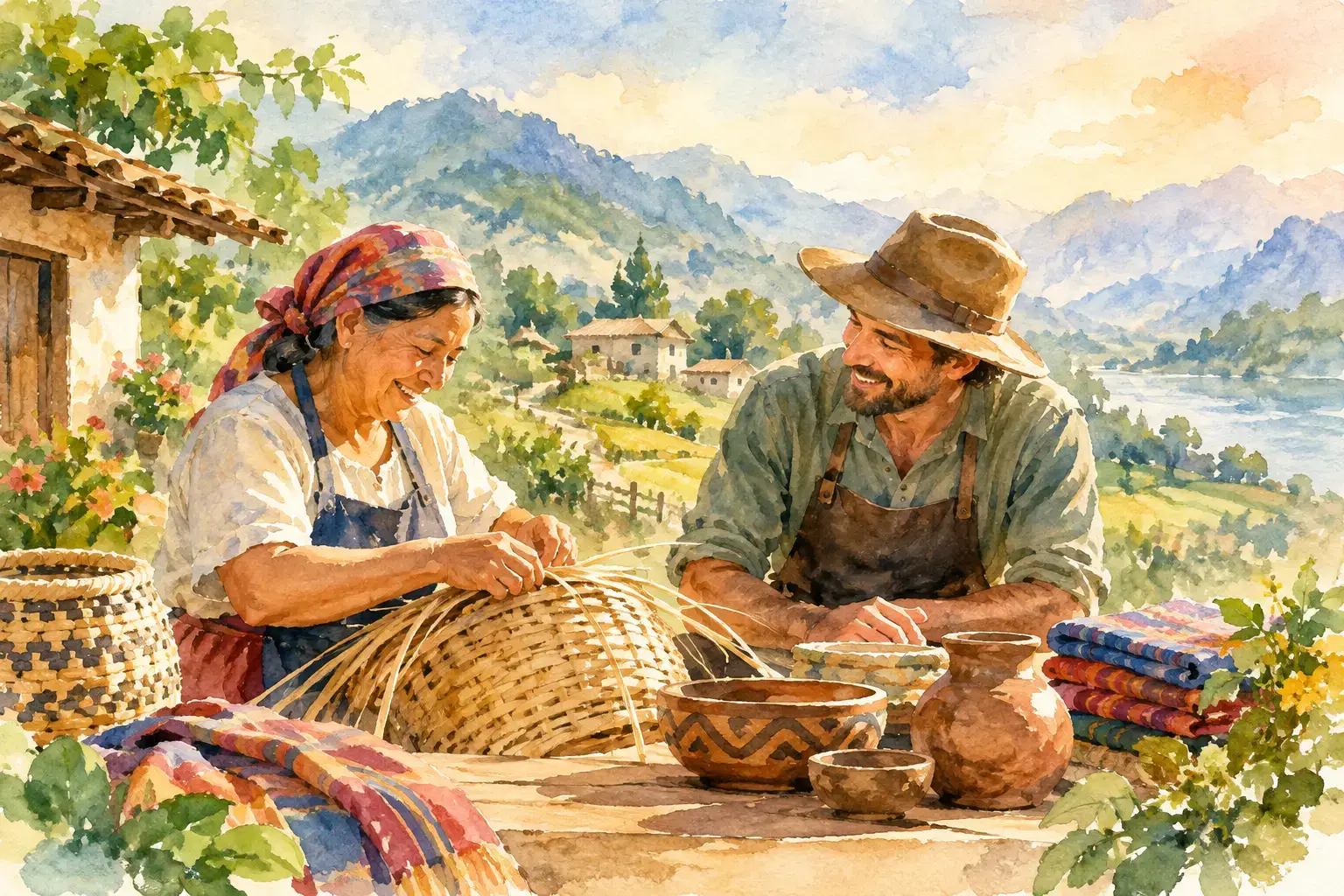
A bottle of wildcrafted essential oil, a hand-finished textile, or a jar of fragrant za’atar begins long before it reaches a shelf. Rural artisan partnerships make that journey more meaningful by connecting the people who tend the land and preserve inherited skills with customers who value purity, provenance, and care.
For Palestinian makers, this connection is not a marketing detail. It is a practical way to keep botanical knowledge, family farms, seasonal craft, and local livelihoods rooted in place. For the person opening a parcel at home, it can turn a daily skincare ritual, a quiet aromatherapy moment, or a shared meal into a more tangible relationship with the land that made it possible.
What Rural Artisan Partnerships Protect
Rural artisan work is often built around knowledge that cannot be rushed or easily replicated. A grower understands when olive fruit is ready for pressing. A distiller learns how weather, harvest timing, and plant condition shape an essential oil. A textile maker develops a practiced hand for materials, color, and finish. These are living skills, passed among families and communities through repetition rather than mass-production manuals.
Partnerships that are designed with respect help keep this knowledge in use. They create a route to market for goods that might otherwise be undervalued beside standardized alternatives. That matters especially for plants with a strong sense of place, including Palestinian helichrysum, Origanum syriacum, frankincense, pine, and the fruit of the Barbary fig. Their character is inseparable from climate, soil, and the care behind harvest.
Provenance Is Part of the Product
In wellness and beauty, shoppers have learned to look beyond a beautiful label. They want to know where an oil came from, how it was handled, and whether its story is specific enough to trust. Provenance provides more than romance. It offers useful context for quality, traceability, and the traditions that inform a product’s use.
A plant oil pressed with attention to freshness may feel very different from one that has spent months moving through anonymous supply chains. An aromatic botanical gathered at the appropriate time may carry a more distinctive scent profile. These details do not make every natural product automatically superior, and they should never replace appropriate testing or clear ingredient information. They do explain why origin, processing, and relationships deserve attention.
Rural Artisan Partnerships Create Better Accountability
The strongest rural artisan partnerships are not one-time transactions. They are ongoing working relationships shaped by clear expectations, reliable purchasing, respectful communication, and fair recognition of skill. When a retailer knows its growers, distillers, and makers, it is better positioned to ask meaningful questions about materials, harvest methods, storage, and production practices.
That accountability benefits both sides. Artisans can plan with greater confidence when demand is more predictable, while customers receive a clearer picture of what they are bringing into their homes. The goal is not to make rural life appear frozen in time or perfectly simple. Agriculture is vulnerable to weather, water availability, transport delays, and changing market conditions. Honest partnerships acknowledge those realities rather than hiding them behind a polished heritage story.
There is also a difference between celebrating artisans and treating their labor as a decorative backdrop. Craft deserves payment, credit, and room to evolve. A meaningful partnership gives makers a voice in how their work is represented and avoids reducing a complex culture to a generic aesthetic. That distinction is especially important for Palestinian products, where food, fragrance, agriculture, and craft carry deep histories of resilience.
Quality Requires Both Tradition and Careful Standards
Traditional knowledge and contemporary quality practices can strengthen one another. Heritage may guide how a botanical is selected, distilled, or prepared, while thoughtful testing and formulation help confirm purity and consistency. Neither approach needs to displace the other.
For example, a pure essential oil should be valued for its botanical identity and aromatic character, but also handled with sensible safety guidance. A nourishing plant oil can be a beautiful part of a moisture-rich routine, yet skin needs differ. Patch testing is wise, and essential oils should be diluirse adecuadamente for topical use. Clear direction respects the customer as much as an evocative origin story does.
What This Means for Your Daily Rituals
Choosing products shaped by rural partnerships is not about making every purchase carry impossible weight. It is about choosing with more awareness when you can. A few well-made items can bring depth to ordinary rituals: massaging a carefully chosen plant oil into dry skin, breathing in a grounding aroma at the end of a demanding day, or seasoning roasted vegetables with olive oil, sumac, and za’atar.
The sensory experience is part of the value. Palestinian olive oil can bring a grassy, peppery note to the table. Sumac offers a bright, tangy lift. Arabic coffee creates a slower, more intentional pause. In personal care, a thoughtfully selected oil may support a simple ritual centered on softness, comfort, and attention. These products are not only objects of use. They can be reminders to move through the day with greater presence.
At PALINOVA, that connection begins with the belief that Palestinian botanicals deserve global recognition without being separated from the people and landscapes that give them meaning. The result should feel premium because the ingredients, labor, and heritage behind it are treated as valuable from the beginning.
The Trade-Offs Worth Understanding
Artisanal supply chains are not always built for instant availability. Seasonal harvests can be limited, handmade details may vary slightly, and certain materials will cost more when makers are compensated responsibly. These are not flaws to disguise. They are often signs that a product has not been stripped of its context simply to meet a mass-market schedule.
Still, “artisanal” alone is not a guarantee of ethical practice or exceptional quality. Customers should look for specificity: named ingredients, thoughtful use guidance, meaningful information about origin, and evidence that a brand understands how its products are made. Vague language about tradition is easy. Responsible sourcing is demonstrated through consistency and care.
A More Connected Kind of Luxury
Luxury does not have to mean distance from the source. It can mean the opposite: knowing that an oil, spice, or handmade piece reflects skilled work, distinctive land, and a supply chain built with intention. Rural artisan partnerships offer that kind of value because they keep the human story close to the product without turning it into spectacle.
The next time you choose a botanical ritual or a pantry staple, let curiosity guide you. Ask what the ingredient is, where it grew, who shaped it, and how it arrived in your hands. Those questions make room for products with real roots, and for the communities that continue to cultivate them.