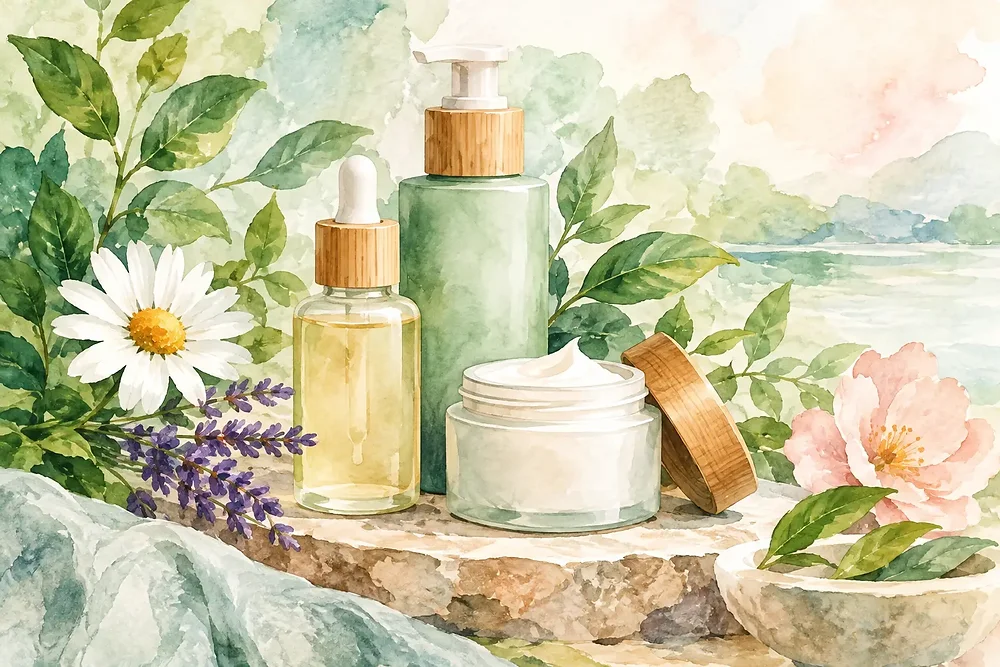
Un beau flacon peut promettre un jardin, un rituel, voire un retour à la nature. Mais c'est dans les petits caractères qu'un produit révèle sa véritable nature. Ce guide des étiquettes de beauté propre est conçu pour lire au-delà de la poésie du flacon, afin que vos soins quotidiens reflètent à la fois vos exigences et les plantes que vous invitez chez vous.
La cosmética limpia no es una norma única regulada en Estados Unidos. Un producto puede utilizar palabras como natural, puro, ecológico o no tóxico sin que estas te indiquen exactamente cómo se ha formulado, probado u obtenido. Eso no significa que todas las afirmaciones estén vacías. Significa que la etiqueta merece toda tu atención.
Commencer par la liste des ingrédients, pas par la promesse
La liste des ingrédients, souvent appelée liste INCI, est le point de départ le plus clair. Les ingrédients sont généralement énumérés de la plus grande à la plus petite quantité, jusqu'à ce que la formule atteigne les ingrédients utilisés à un pour cent ou moins. Les premiers ingrédients façonnent généralement la texture, la performance et le caractère du produit.
Pour une huile visage, vous constaterez peut-être une liste courte dominée par des huiles végétales telles que Opuntia Ficus-Indica huile de graines, huile d'olive ou l'huile de graine noirePour une crème ou un nettoyant, l'eau peut figurer en premier, suivie par des humectants, des huiles végétales, des émulsifiants, des conservateurs et des extraits apaisants. Une liste plus longue n'est pas automatiquement moins propre. Les formules à base d'eau nécessitent un système de conservation bien pensé pour rester sûres lors d'une utilisation répétée.
Cherchez à la fois le nom commun et le nom botanique latin lorsque cela est possible. Le nom latin aide à identifier la planta exacte, ce qui importe lorsqu'une étiquette fait référence de manière générale à un ingrédient familier. « Helichrysum », par exemple, peut désigner différentes espèces dotées de profils aromatiques et d'usages traditionnels différents. Une nomenclature précise témoigne du soin apporté à la formulation et à la traçabilité.
Il aide également à comprendre que la position d'un ingrédient ne raconte pas toute l'histoire. Les huiles essentielles et les extraits puissants sont utilisés en quantités infimes, mais peuvent néanmoins jouer un rôle sensoriel significatif. Un pourcentage faible ne signifie pas qu'un extrait botanique est purement décoratif. Il s'agit peut-être du dosage idéal pour un produit sans rinçage, en particulier pour les peaux sensibles.
Un guide des labels de beauté propre : lisez les allégations avec attention
Les allégations en face avant peuvent constituer un résumé utile, mais elles ne remplacent pas la liste des ingrédients. Considérez-les comme des questions à creuser plutôt que comme une preuve absolue.
Naturel puede significar que una fórmula contiene ingredientes de origen vegetal, pero no confirma el porcentaje de origen natural ni explica el proceso. Ciertos procesos son necesarios y beneficiosos. El aceite prensado en frío, el aceite esencial destilado al vapor y un extracto botánico elaborado con cuidado se someten a procesos diferentes. La pregunta más relevante es si la marca es transparente sobre lo que utiliza y por qué.
Bio a un mayor significado cuando un producto identifica qué está certificado como ecológico, ya sea un ingrediente específico o un porcentaje de la fórmula total. El cultivo ecológico puede fomentar prácticas agrícolas más respetuosas con el suelo y reducir la exposición a ciertos insumos agrícolas, pero no es el único indicio de un producto que merezca la pena. Silvestre Botaniques palestiniens, recolectados de forma responsable en su entorno natural, pueden aportar un carácter regional notable incluso cuando la certificación ecológica oficial no sea el aspecto central.
Sans parfum significa generalmente que no se ha añadido ninguna fragancia para aportar aroma. Sans parfum can sometimes mean that ingredients were added to mask a formula’s natural odor, so read the complete list. If a product includes essential oils, it is scented, even if the scent comes entirely from plants. That can be a pleasure in a ritual, but it is not right for everyone.
Hypoallergénique, testé sous contrôle dermatologique, et testé clínicamente il faut aussi du contexte. Ces phrases ne vous indiquent pas la taille ou la conception d'un test, ni s'il correspond à vos propres besoins cutanés. Ce sont des indices utiles lorsqu'ils sont associés à des informations transparentes, et non des garanties contre une réaction.
What Transparency Looks Like in Practice
The most reassuring labels make it easier to understand what you are buying. They name ingredients specifically, give clear directions, identify the quantity in the bottle, and include sensible safety information. A batch number or lot code is another quiet sign that a maker can trace a product through production.
For oils and aromatic products, transparency can also include plant origin, extraction method, and the plant part used. Frankincense resin from a named species is more informative than a vague reference to “resin extract.” A steam-distilled essential oil and a fragrance oil are different materials, even when they share a similar scent impression.
Provenance deserves its own place in a clean beauty decision. Soil, climate, harvest timing, and local cultivation practices influence a plant’s aroma and composition. Palestinian helichrysum warmed by Mediterranean light, or olive oil pressed from fruit grown in historic groves, carries more than a romantic origin story. It connects quality to a real agricultural landscape and to the families whose knowledge tends it.
At PALINOVA, that connection is part of the standard: botanical care is most meaningful when the land, the plant, and the people behind it are treated with respect. Still, provenance should be accompanied by practical product information. Heritage and evidence work best together.
Do Not Mistake a Long Avoid List for Quality
Many beauty labels feature lists of ingredients they leave out. Some exclusions may align with your preferences, especially if you avoid a known irritant or want to limit a certain material. But an increasingly long “free-from” list can distract from the more useful question: what is in the formula, and is it there for a clear purpose?
A well-made cream may contain an emulsifier to keep oil and water blended, a preservative to prevent microbial growth, and a chelator to help the formula remain stable. These are functional choices, not evidence that a product has failed to be clean. Likewise, a botanical formula can still irritate skin if it is overloaded with aromatic oils or used without regard for individual sensitivity.
The best clean beauty is not defined by fear. It is defined by intelligent formulation, honest labeling, responsible sourcing, and ingredients selected at appropriate levels.
Huiles essentielles Need a More Careful Read
Essential oils are concentrated aromatic plant materials, not interchangeable drops of perfume. Their scent can make a bath, body oil, or evening massage feel deeply restorative, but concentration changes the experience. A rinse-off shower product has different considerations from a facial serum that remains on the skin for hours.
Read directions closely. If an essential oil is sold for aromatic use, it may need dilution before skin application. Do not assume that natural means safe to apply neat, ingest, or use around children, during pregnancy, or near pets. Individual circumstances vary, and people with allergies, respiratory sensitivities, or medical concerns should seek qualified guidance.
For leave-on skincare, a brand should be attentive to potential fragrance allergens and recommend a patch test when appropriate. Patch testing does not predict every response, but it is a thoughtful habit: apply a small amount as directed to a discreet area and give your skin time to respond before broad use.
Match the Label to Your Actual Need
A clean label cannot choose for you. Let your skin concern and ritual guide the decision. If dryness is your concern, prioritize emollient oils, barrier-supporting ingredients, and a formula that feels comfortable enough to use consistently. If your skin is reactive, simpler formulas and fragrance-free options may be a wiser place to begin than a richly aromatic blend.
If you are buying a plant oil, consider freshness and packaging. Oils rich in delicate fatty acids benefit from dark or opaque bottles, tight closures, and storage away from direct heat and sunlight. Check for a harvest, bottling, or best-by date when available. A precious oil deserves to arrive protected, not merely packaged beautifully.
For gifts, the label can become part of the story. A clearly named botanical, a recognizable place of origin, and a precise explanation of use turn a lovely object into a meaningful one. The gift of the earth feels more personal when the recipient knows what it is, where it came from, and how to enjoy it safely.
Let Your Standards Be Both Clear and Generous
There is no need to memorize every INCI name before choosing better beauty. Begin with a few steady questions: What is this product designed to do? What are its main ingredients? Is the brand direct about sourcing and safe use? Does the formula suit my own skin, values, and daily ritual?
A label will never hold the entire story of a plant, but it should offer enough truth to begin a trusting relationship. Read slowly, choose with intention, and let each drop of oil or sweep of balm be a small way of honoring both your wellbeing and the living landscapes that made it possible.