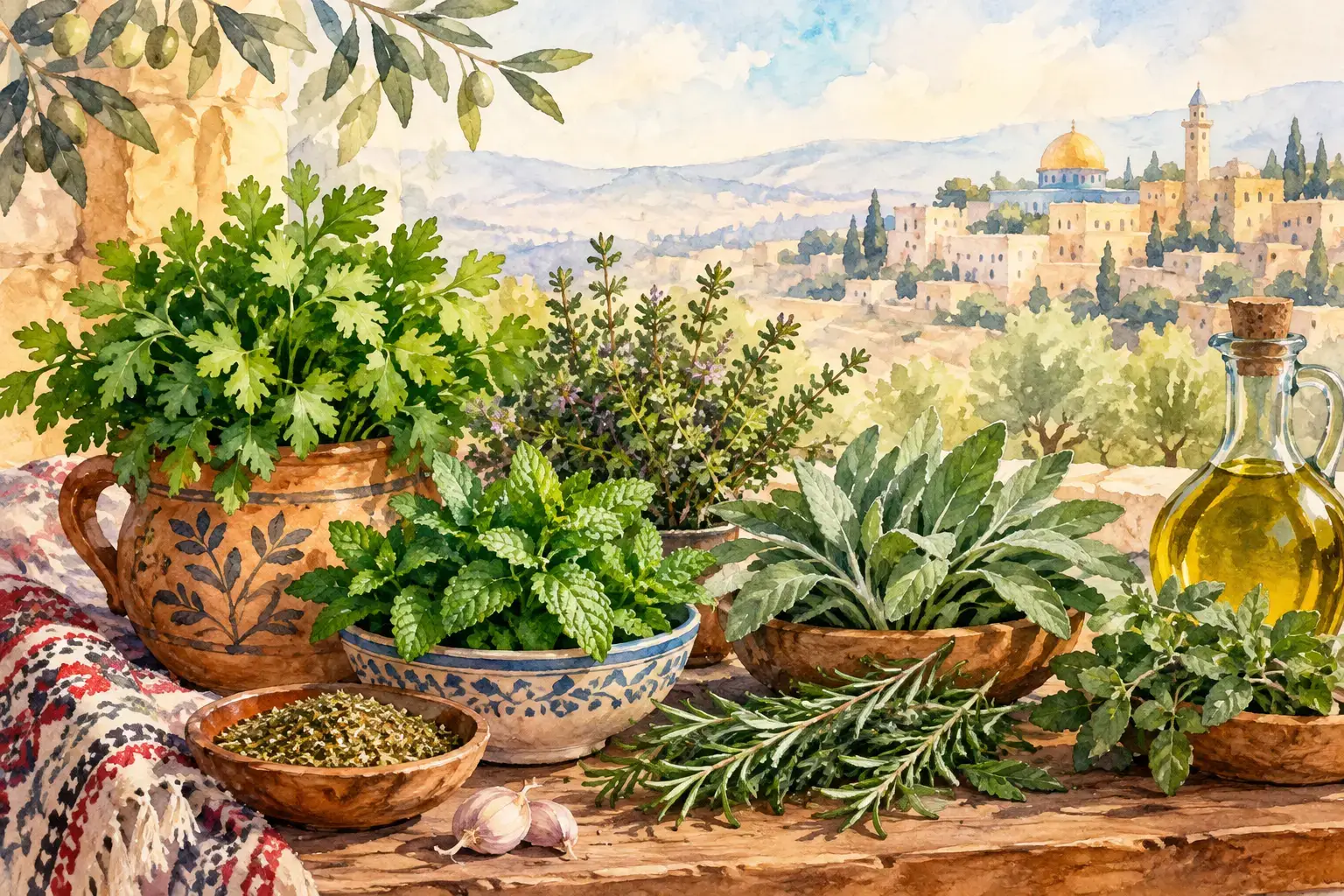
A warm piece of flatbread, a pour of green-gold olive oil, and a pinch of wild za’atar can turn a simple breakfast into a ritual. The top Palestinian herbs for cooking are not chosen for heat or novelty. They bring brightness, woodland depth, gentle bitterness, and the unmistakable fragrance of a Mediterranean landscape shaped by sun, stone, and patient cultivation.
In Palestinian kitchens, herbs are rarely an afterthought. They are folded into salads, rubbed onto roasted vegetables, stirred into soups, scattered over eggs, and served generously beside olive oil and bread. Many are gathered in season or grown close to home, carrying practical knowledge passed through families and farming communities. Their flavor is vivid, but their place at the table is equally about care, hospitality, and connection to the land.
Top Palestinian Herbs for Cooking and Everyday Flavor
Za’atar: the essential wild thyme blend
Za’atar is the first flavor many people associate with Palestinian food, though the word can refer both to the aromatic herb and the beloved seasoning blend. At its heart is often ORIGANUM syriaque, sometimes called Syrian oregano or Bible hyssop. Its leaves are more floral and savory than common oregano, with a clean, wild, almost peppery lift.
The familiar table blend usually combines dried za’atar herb with toasted sesame seeds, sumac, and salt. Every household and producer may make it a little differently. Some blends lean citrusy with more sumac; others are deeply herbal or more sesame-forward. That variation is part of its character, not a flaw to correct.
Use za’atar simply: mix it with extra-virgin olive oil and spoon it over warm pita, labneh, or thick yogurt. It is also excellent on roasted carrots, baked chicken, grilled halloumi, and potatoes. Add it near the end of cooking when possible. High, prolonged heat can soften the herb’s bright aromatic notes.
Sumac: tartness from the hillsides
Sumac is technically a ground berry rather than an herb, but no Palestinian herb and spice collection feels complete without it. Deep red and gently tangy, it provides acidity without the wetness of lemon juice. Its taste is fruity, savory, and pleasantly astringent – a valuable counterpoint to rich olive oil, toasted nuts, and grilled meats.
Sprinkle sumac over a cucumber and tomato salad just before serving, or use it to finish hummus, roasted cauliflower, onions, and fish. In a marinade, combine it with olive oil, garlic, and a little salt for chicken or vegetables. Because sumac is naturally delicate, it works best as a finishing seasoning or in short marinades rather than being cooked aggressively for a long time.
Look for culinary sumac with a clean, berry-like tartness and a rich burgundy hue. It should not taste dusty, harsh, or overly salty. Quality matters here: sumac is often diluted with salt or citric acid, which can flatten its naturally layered flavor.
Sage: soft, resinous, and grounding
Palestinian sage, often enjoyed as a tea as well as a cooking herb, has a fuller, more aromatic presence than the dry rubbed sage many American cooks know. Its scent can be resinous and gently camphorous, with a savory warmth that pairs naturally with olive oil, onions, beans, and squash.
A little goes far. Fry fresh sage leaves briefly in olive oil until crisp, then spoon both leaves and oil over roasted sweet potatoes or white beans. Add chopped sage to a lentil soup with caramelized onion, or tuck a few leaves around chicken before roasting. When using dried sage, begin with restraint and taste as you go. Its beauty is in a quiet, grounding depth, not domination.
Mint: cool brightness for savory dishes
Mint brings a clean green note that wakes up foods built on grains, legumes, and yogurt. Fresh mint is especially welcome in chopped salads, stuffed vegetables, and yogurt sauces, while dried mint carries a darker, more concentrated flavor that is wonderful in soups and cooked dishes.
Try fresh mint with parsley, cucumber, tomato, lemon, and olive oil for a salad that cuts through a rich meal. Stir dried mint into yogurt with salt and grated cucumber, or add a small pinch to lentils shortly before serving. Mint can be powerful when heated for too long, so fresh leaves generally belong at the end.
Parsley: the green foundation
Parsley is often treated as garnish in American kitchens. In Palestinian cooking, it earns a more central role. Its grassy freshness gives shape to salads and balances earthy ingredients such as bulgur, chickpeas, lentils, and eggplant.
Use flat-leaf parsley generously in tabbouleh-style salads, herb-packed grain bowls, and chopped vegetable salads. Blend it with garlic, olive oil, and lemon for a fast sauce over grilled vegetables or fish. Curly parsley will work in a pinch, but flat-leaf parsley offers a cleaner texture and stronger flavor for dishes where it carries real weight.
Dill and coriander: bright, fleeting, and seasonal
Dill and fresh coriander, commonly called cilantro in the US, bring a distinct seasonal freshness to Palestinian-style cooking. Dill is sweetly grassy with a faint anise note, while cilantro is citrusy, green, and more assertive. Neither is necessary in every dish, but each can transform simple ingredients when used with intention.
Dill is lovely with potatoes, yogurt, cucumbers, eggs, and fish. Cilantro shines with beans, tomato dishes, rice, and garlic. If cilantro tastes soapy to you, do not force it – use parsley and a little mint instead. Cooking should honor personal taste as much as tradition.
How to Build a Palestinian Herb Pantry
Start with one versatile herb blend and a few fresh herbs rather than buying everything at once. A thoughtful foundation is za’atar, sumac, dried mint, fresh parsley, and good olive oil. From there, sage, dill, and cilantro can follow according to the meals you cook most often.
Store dried herbs and sumac in tightly sealed containers away from light, heat, and the steam of the stove. They will not spoil quickly, but their fragrance fades. Buy amounts you can use within several months, and trust your senses: when a pinch no longer perfumes your fingers, it is time to refresh it.
Fresh herbs benefit from a different approach. Wrap parsley, mint, dill, or cilantro loosely in a barely damp towel and refrigerate them in a container or reusable bag. Wash only what you plan to use that day. Excess water is more likely to shorten their life than a little patience.
Bringing Palestinian Herbs Into Familiar Meals
These flavors do not require a complete change in how you cook. Stir za’atar into olive oil for a weeknight sheet pan of vegetables. Finish avocado toast or fried eggs with sumac. Fold parsley and mint into a quinoa salad, or use sage in a creamy white bean dish instead of rosemary.
For a more traditional-feeling table, serve olive oil, za’atar, sliced cucumbers, tomatoes, olives, and warm bread together. The ingredients are humble, but the experience is generous. It invites everyone to season, tear, dip, and linger.
Choose culinary herbs and spice blends specifically labeled for food use. Essential oils, including those made from aromatic Palestinian plants, are highly concentrated and are not a substitute for dried or fresh herbs in everyday cooking unless a qualified professional has given clear food-safety guidance.
The best way to learn these ingredients is to let them become familiar. Keep sumac near the salt, reach for parsley by the handful, and let za’atar meet warm bread and olive oil often. With every fragrant pinch, the kitchen becomes a little closer to the enduring generosity of Palestinian soil.