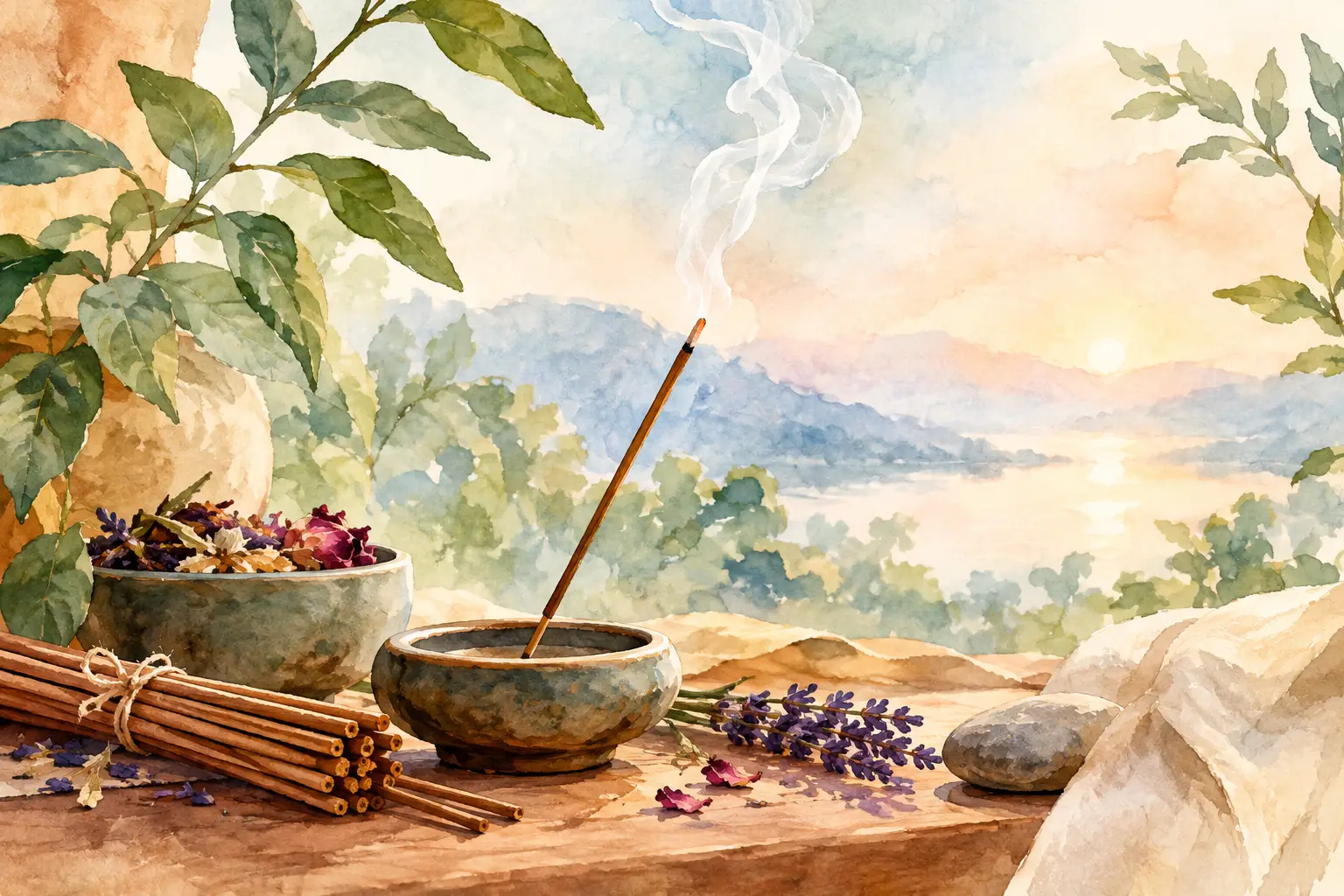
A room can smell pleasant and still be filled with synthetic fragrance. That is the distinction worth making when you buy incense. If you arrived looking for a “guide achat encens naturel,” begin with one simple question: what, exactly, is burning? The answer separates a meaningful botanical ritual from a perfumed product with little connection to the plant named on its label.
Natural incense is not one single format. It may be a raw resin, aromatic wood, dried botanical material, or a carefully made stick that uses plant-based binders and pure aromatic ingredients. Each has a different character, burn time, and level of intensity. The right choice depends on whether you want a brief moment of grounding, a slower evening ritual, or a fragrance that carries the unmistakable memory of a particular landscape.
What natural incense should contain
At its most elemental, incense is plant material warmed or burned to release its aroma. Frankincense resin, for example, is the dried sap of Boswellia trees. Its bright, balsamic scent can feel both ancient and clear, with notes that shift from citrusy lift to warm, resinous depth as it meets the heat.
A natural incense may include one botanical ingredient or a blend of resins, woods, herbs, and natural gums. Incense sticks and cones often need a binder to hold their shape. A plant-derived powder or gum is not a problem in itself. What matters is transparency: a thoughtful maker can tell you what gives the incense its scent, what makes it burn, and where the materials came from.
Be cautious around vague language such as “fragrance,” “parfum,” or “aroma” when no further ingredient information is offered. These terms can describe a natural aromatic extract, but they can also conceal synthetic fragrance compounds. “Natural-inspired” is not the same as botanical. A shorter ingredient list is often encouraging, yet provenance and clear labeling matter more than a label designed to sound pure.
Guide achat encens naturel: choose your format
Raw resin is the most direct route to an unaltered incense experience. Small grains or tears of frankincense are placed on a heat-safe burner, traditionally over charcoal or more gently on an electric resin warmer. Without added perfume or binder, the scent reveals the resin itself. This format asks for a little more attention, but it rewards you with control: use a pinch for a quiet personal ritual or more for a larger space.
Resin on charcoal produces a fuller, smokier expression. It can be beautiful for ceremonial use, though the charcoal itself adds heat and smoke. An electric warmer is often preferable for daily rituals, apartments, or anyone who wants to experience the resin’s aromatic complexity with less combustion.
Incense sticks are convenient and familiar. They can be an excellent choice when made with identifiable botanicals, natural binders, and responsibly sourced wood or resin. Their trade-off is that the scent is shaped by the base material and combustion, so it may not smell exactly like the raw plant. Cones tend to be more concentrated and burn more quickly, making them suited to a short reset before meditation, journaling, or a bath.
Aromatic woods and dried herbs offer another experience altogether. Their scent is often earthy and immediate, but quality varies widely. Seek species-specific naming and responsible harvesting rather than broad claims about “sacred” or “cleansing” plants. Reverence should never become an excuse for vague sourcing or pressure on vulnerable plant populations.
Let the ritual guide the choice
For a quiet morning, a few grains of frankincense resin warmed slowly can create a bright, contemplative atmosphere without overtaking the room. For a hosted dinner or a cozy evening, a subtle stick may be simpler to use. If your home is small, choose lighter quantities and allow the fragrance to develop gradually. More smoke does not mean better incense.
The most memorable aromas usually have dimension. High-quality frankincense may open crisp and lemony, then become honeyed, woody, or mineral. A flat scent that remains aggressively sweet from the first second can signal an added fragrance oil, though sensory impressions alone are never proof. Let the label, the source, and your own experience work together.
Read the label as closely as you read a skincare label
People who choose clean oils and botanical skincare already understand the value of ingredient literacy. Apply the same care to incense. Look for a named botanical, such as Boswellia sacra or Boswellia carterii, when buying frankincense. The Latin name is not a guarantee of excellence, but it shows a useful level of specificity and helps distinguish the ingredient from broad marketing language.
Then look for origin. Place matters because soil, climate, harvest practices, and processing influence aroma. A resin with a traceable origin carries more than a pretty story. It gives you a clearer picture of the hands, trees, and ecosystems behind the product. For botanicals rooted in the Mediterranean and Southwest Asian traditions, origin is often part of the sensory identity itself.
Ask whether the resin is wild-harvested, cultivated, or gathered from managed trees. None of these terms automatically makes a product better. Wildcrafted material can be exceptional, but only when collection respects regeneration and local stewardship. Cultivated material can provide welcome consistency and reduce pressure on wild stands. The meaningful question is whether the seller explains its approach with care rather than relying on a romantic label.
Color and shape can vary from batch to batch. Frankincense tears may range from pale gold to deeper amber, and small pieces are not necessarily inferior to large ones. Freshness, storage, botanical species, and natural variation all play a part. Be skeptical of claims that one color alone proves purity or potency.
Purity is also about how incense burns
Natural incense still produces particulate matter when burned. “Natural” does not mean that unlimited smoke is ideal for every body or every home. Keep the room ventilated, use a heat-safe holder, and begin with a small amount. Never leave burning incense unattended.
If you have asthma, fragrance sensitivity, or respiratory concerns, consider using an electric warmer for resin or speak with a qualified health professional before making incense part of your routine. Pet households deserve extra care too. Birds are especially sensitive to airborne irritants, while cats and dogs may react differently to aromatic plants. Keep all burning materials, resins, ash, and oils out of reach.
Avoid products that make sweeping wellness promises. Incense can support a calming environment, a pause in a busy day, or a sensory connection to tradition. It is not a replacement for medical care. The most trustworthy makers describe their ingredients and ritual use without turning aroma into a cure-all.
Store your incense to preserve its character
Resins and botanical incense are sensitive to heat, humidity, and competing odors. Store them in a sealed glass jar or metal tin, away from direct sun and kitchen steam. Keep different resins separate if you want to preserve their individual notes. A frankincense resin stored beside strongly scented candles can slowly lose its clarity.
Buy an amount you can enjoy within a reasonable period instead of stockpiling for years. Properly stored resin can remain aromatic for a long time, but its liveliness may soften with age. Smaller purchases also let you learn what truly suits your home and ritual.
PALINOVA approaches botanicals as gifts of land, labor, and inherited knowledge. When a resin carries a clear origin and is handled with restraint, its aroma becomes more than décor. It becomes a small, fragrant encounter with resilience, harvest, and place.
Choose incense slowly. Warm a few grains, notice the first bright lift and the deeper notes that follow, and let the ritual be proportionate to the moment. The finest natural incense does not need to announce itself loudly. It leaves the room feeling considered, rooted, and gently restored.