

An Herb Distillation Process Example From Leaf to Oil

A fragrant essential oil begins long before a bottle is filled. It begins with the living plant: the dry warmth of a hillside, the timing of the harvest, and the aromatic compounds held in a leaf, flower, or stem. This herb distillation process example follows a steam-distilled Mediterranean herb from field to finished oil, showing why extraction is both a technical craft and a deep expression of place.
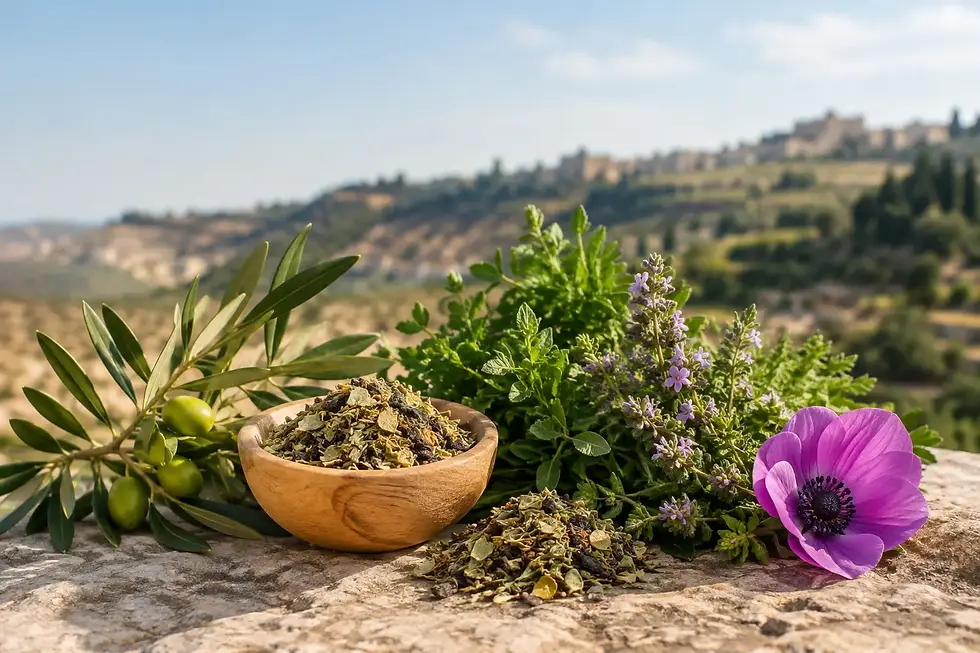
For Palestinian botanicals such as Origanum syriacum, often known as Palestinian oregano or za'atar, provenance is not a decorative detail. Soil, sun, elevation, rainfall, and harvest practices all shape the plant's aroma. Distillation does not create that character. Done well, it carefully carries the plant's volatile aromatic profile into a concentrated form.
Herb Distillation Process Example: Steam Distilling an Aromatic Herb
Steam distillation is one of the most widely used methods for extracting essential oil from aromatic herbs. It is especially suited to plant materials whose aromatic molecules can travel with steam without being exposed directly to the harshest heat of a dry vessel.
Imagine freshly harvested Origanum syriacum arriving at a small distillery. Its leaves carry a bright, herbaceous scent with warm, resinous edges. The goal is not simply to produce the largest possible amount of oil. The goal is to preserve a clear, recognizable expression of the herb while handling the raw material responsibly.
1. Selecting and preparing the harvest
The process begins with the plant material itself. Herbs are harvested when their aromatic content is at a useful point, which varies by species, growing region, weather, and the part of the plant being distilled. Some herbs are distilled fresh; others rest or dry briefly to reduce excess moisture and make loading more consistent.
The material should be clean and free from mold, damaged plant matter, or field debris. It is then cut or loosened as needed and placed into the still. Packing matters. If herbs are compressed too tightly, steam may struggle to pass evenly through the plant bed. If they are too loose, the distillation can be inefficient. A skilled distiller looks for an even fill that allows steam to move through every layer.
2. Passing steam through the herbs
In a steam-distillation setup, water is heated separately or below the botanical chamber. As the water turns to steam, it rises through the herbs. That warm vapor gently lifts volatile aromatic compounds from the leaves and stems.
This is where patience matters. Too much heat or pressure can alter the aroma and create a harsh, cooked character. Too little heat may fail to release the full aromatic profile. The right pace depends on the herb, the volume of material, the equipment, and even the condition of the harvest.
Essential oils are highly concentrated, but they are not the whole plant in liquid form. They are a selective collection of volatile compounds that can be carried by steam. The grounded green character of a fresh herb, for example, may shift in distillation, becoming sharper, warmer, or more camphoraceous depending on its natural chemistry.
3. Cooling the aromatic vapor
The steam and aromatic compounds then travel from the still into a condenser, where they are cooled. As the vapor returns to liquid, it becomes a fragrant mixture of water and tiny droplets of essential oil.
This condensed liquid contains two valuable expressions of the herb. The first is the essential oil, which is concentrated and generally floats on top of the water, though a few oils are denser than water and settle below it. The second is the hydrosol, also called aromatic water. Hydrosols are gentler, water-based distillates with their own aroma and uses, but they are not diluted essential oils.
4. Separating oil from hydrosol
The oil and hydrosol move into a separator, where they naturally divide into layers. The essential oil is drawn off, while the hydrosol is collected separately. This stage may sound simple, yet clean separation is central to quality. Excess water in an oil can affect stability, while careless handling may introduce contamination.
The fresh oil may appear clear, pale yellow, greenish, or amber depending on the plant. Its scent can also change as it settles. Some oils benefit from a brief resting period before evaluation, allowing the aroma to become more integrated after the energy of distillation.
5. Testing, filtering, and bottling
A quality-focused producer evaluates the oil before it reaches a customer. Organoleptic assessment examines appearance and aroma, while laboratory testing can help verify identity, purity, and the expected chemical profile. For a brand built around traceable botanicals, this is where heritage and modern quality standards meet.
If filtering is needed, it should be done with care so that unwanted particles are removed without stripping the oil's natural character. The finished essential oil is then bottled in dark glass to help protect it from light. Heat, air, and sunlight can gradually change an oil, so storage conditions remain important long after distillation ends.
Why Yield Is Not the Whole Story
A common misunderstanding is that more oil always means better distillation. In reality, yield is only one measurement. A high-yield batch can still have a dull, damaged, or unbalanced aroma if the herbs were poorly handled or pushed too hard in the still.
The most meaningful results balance yield with integrity. The plant must be harvested at an appropriate time, the still loaded evenly, steam regulated thoughtfully, and the oil tested before bottling. Wildcrafted and region-specific plants may also vary naturally from season to season. That variation is not automatically a flaw. It can be a truthful reflection of rain, temperature, soil, and the resilience of the landscape.
For Palestinian herbs, this connection is especially meaningful. A botanical shaped by the hills and valleys of Palestine carries an aromatic signature that cannot be separated from the people who tend, harvest, and preserve local plant knowledge. From Our Soil, By Our Toil is not merely a phrase. In distillation, the land remains present in every sensory detail.
What This Means for Your Aromatherapy Ritual
Understanding an herb distillation process helps you choose essential oils with more confidence. Look beyond a dramatic scent or an attractive label. Ask what plant was used, where it was grown, how the oil was extracted, and whether the producer takes purity seriously.
A steam-distilled herb oil can bring a crisp botanical note to a diffuser ritual, a grounding moment of inhalation, or a carefully diluted body oil. Always dilute essential oils before applying them to skin, patch test a new blend, and follow product-specific directions. Certain oils may not suit children, pregnancy, sensitive skin, or particular health circumstances, so personal guidance matters.
At PALINOVA, the most meaningful oils are not rushed from plant to package. They honor the original botanical, the hands behind the harvest, and the quiet ritual waiting at home. Let the aroma be a reminder that purity is built step by step, beginning in the field and carried forward with care.
Comments