
Essential Oil vs. Botanical Extract: What's the Real Difference
- Palinova
- 11 minutes ago
- 8 min read

Essential oils are a plant’s concentrated aromatic volatiles, captured through steam or pressure, and used mainly for scent and mood-focused aromatherapy. Botanical extracts are solvent or water-based preparations that pull a wider range of plant compounds, including ones with no smell at all, and they’re chosen for measurable effects on skin, food, or supplements. That’s the core split behind the question “what’s the difference between essential oil vs. botanical extract,” and it decides which one belongs in your routine.
Here’s the quick rule of thumb:
Want scent or a mood lift? Reach for an essential oil in a diffuser or heavily diluted in a carrier oil.
Want a measurable skin or health benefit? An extract, standardized for its active compounds, usually performs more predictably.
Planning to ingest anything? Only use products labeled food-grade, and dilute essential oils to a fraction of a percent before they ever touch skin, since undiluted use raises the risk of irritation and sensitization.
Key Takeaways
Essential oils deliver aroma and mood benefits through volatile compounds, while botanical extracts deliver measurable functional effects through nonvolatile actives like polyphenols and flavonoids.
Point | Details |
Extraction determines function | Steam distillation and cold pressing make essential oils; solvent and CO2 extraction make botanical extracts. |
Composition varies by design | Essential oils shift by harvest and region; extracts are often standardized for consistent active percentages. |
Match material to goal | Use essential oils for scent and diffusers, extracts for skin serums, supplements, and food flavoring. |
Dilute and patch test | Keep topical essential oil use under roughly 2 percent and test on skin 24 hours ahead of full use. |
Palinova sources both types | Palinova offers steam-distilled essential oils for aroma and seed oil extracts like Barbary Fig for functional skincare. |
Table of Contents
What’s the Difference Between Essential Oil vs. Botanical Extract in How They’re Made?
The gap between these two materials starts at extraction, not in the bottle. Essential oils are built almost entirely from volatile aroma compounds, the ones light enough to travel on steam or survive cold pressing. Botanical extracts go after everything else: the polyphenols, flavonoids, and polysaccharides that never evaporate but still do real work in skin and food.
Steam distillation pushes hot vapor through plant material, and the aromatic oils separate out when the vapor condenses. This is how most true essential oils, from lavender to Aleppo pine, come to be.
Cold-press mechanically squeezes oils from rinds or seeds, mostly citrus peels, with no heat involved to protect fragile compounds.
Solvent extraction soaks plant matter in ethanol or other solvents to pull out nonvolatile actives, the method behind most standardized botanical extracts.
CO2 extraction uses pressurized carbon dioxide as the solvent instead, and it’s gaining ground because it leaves no residue and runs at lower temperatures than steam.
Maceration and infusion simply steep plant material in oil or alcohol over time. It’s slower and gentler, and it’s why homemade herbal oils differ so much from commercial extracts.
Yield tells you why prices vary so widely. It can take dozens of pounds of plant material to fill a single small bottle of essential oil, which is part of why potency and cost track together. Newer methods like ultrasound-assisted and microwave-assisted extraction are improving how much usable compound producers can recover from the same amount of raw material, which matters more for extracts than for oils.
Pro Tip: If a product lists “steam distilled” or “cold pressed,” you’re looking at an essential oil. If it says “extracted with ethanol” or “CO2 extracted,” you’re almost certainly holding a botanical extract, even if the label calls it an oil.
How Do Composition and Concentration Differ?
Essential oils are chemically loud. A single oil can contain dozens to hundreds of distinct volatile compounds, terpenes, aldehydes, and phenols among them, and that mix shifts with the plant’s species, growing region, and even the season it was harvested. Two bottles of rosemary oil from different farms can smell and behave noticeably differently.
Botanical extracts run the opposite way. Because manufacturers often standardize them to a specific percentage of an active compound, one batch of a given extract tends to behave close to the next. That consistency is part of why polyphenols and carotenoids from plant extracts have become common additives in food and cosmetic formulas, where predictable antioxidant activity matters more than aroma.
Essential oils: terpenes, terpenoids, aldehydes, phenolic compounds. Oil-soluble, not water-soluble.
Botanical extracts: polyphenols, flavonoids, carotenoids, polysaccharides. Often water- or alcohol-soluble, which is why they blend into serums and beverages that essential oils would just float on top of.
That solubility split explains a lot of formulation choices you’ll see on ingredient labels. An oil-based serum leans on essential oils and seed oils; a water-based toner or drink leans on extracts.
What Are Botanical Extracts Used for Compared to Essential Oils?
Manufacturers don’t pick between essential oil and extract at random. Each material has a lane it performs well in, and mixing them up usually means paying for aroma when you needed function, or vice versa.
Essential oils shine in diffusers, in short-contact aromatherapy blends, and as fragrance components in soaps and creams. Diluted properly, some also contribute mild topical benefits, but medical sources generally treat essential oil benefits as complementary rather than primary treatment.
Botanical extracts dominate in serums, oral supplements, and food and beverage flavoring, where their nonvolatile actives, antioxidants especially, need to survive processing and storage without evaporating.
Overlap happens in cosmeceuticals, where a cream might contain both a fragrant essential oil for scent and a functional extract for the antioxidant punch.
Labeling matters here more than people expect. The FDA draws a hard line between cosmetic fragrance use and therapeutic claims, so a product marketed for aromatherapy can’t legally promise to treat a medical condition, regardless of which material sits inside the bottle.
Pro Tip: Check whether a product is meant to smell good or do something measurable. If the label leans hard on “calming aroma,” you’re paying for an oil’s strength. If it leans on “antioxidant” or “anti-inflammatory,” an extract is doing the heavy lifting.
[
Are Botanical Extracts and Essential Oils Safe to Use?
Both materials carry real risk when used carelessly, just different kinds. Essential oils are potent enough that undiluted contact with skin can cause burns or allergic reactions in sensitive people, and ingestion without professional guidance is genuinely risky.
Dilute before topical use. A common ceiling for facial application sits well under 2%, and patch testing on your inner arm 24 hours ahead catches most reactions before your face does.
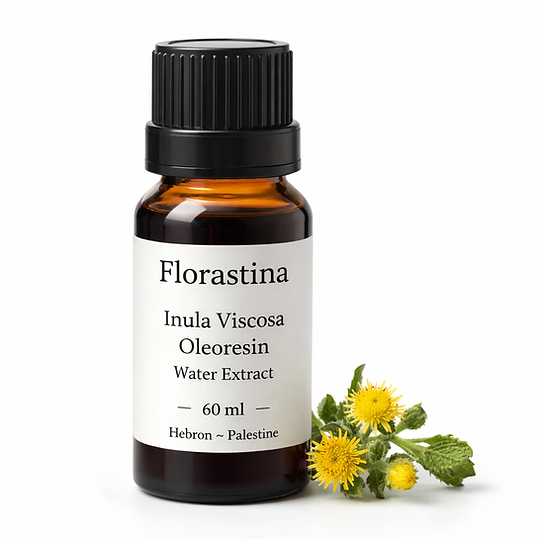
Read the extract’s label closely. Look for the solvent used, the standardized percentage of active compound, and any allergen disclosures, since not every “natural” extract is automatically gentle.
Treat pregnancy, young children, and pets as special cases. Several common essential oil components carry documented cautions for these groups specifically.
Store both away from light and heat. Dark glass bottles in a cool cabinet slow oxidation. Essential oils generally hold their quality for one to three years unopened; extracts vary more depending on whether they’re alcohol-based, water-based, or dried powders.
Even with good technique, clinical evidence for essential oils’ broader health claims remains mixed, which is exactly why they’re best treated as a complementary tool, not a replacement for medical care. Our guide to diluting Aleppo pine needle oil for skin walks through the patch-test process step by step if you want a concrete example.
How Do You Choose Between an Essential Oil and an Extract?
Run through four questions before you buy anything. What’s the actual goal, scent or a specific skin or health outcome? What’s the product base, oil or water? Are there safety restrictions in your household, kids, pregnancy, pets? And how long does the product need to stay stable on a shelf?
Face serum for fine lines: go with an extract or a seed oil with documented actives, since you want consistent function over months of use, not just a pleasant smell.
Evening diffuser blend: an essential oil wins outright, since aroma is the entire point.
Ingestible flavoring or tea: only food-grade extracts belong here. Essential oils are far too concentrated for casual ingestion.
At checkout, ask three label questions: is it food-grade if you plan to ingest it, what percentage of active compound does the extract contain, and what solvent was used to pull it out. Our guide to matching essential oils to skin type covers the skin-specific version of this checklist in more depth.
Pro Tip: When a product doesn’t disclose its extraction method or active percentage, that’s a bigger red flag than the price tag.
What the Research Actually Supports Doing Differently
Most guides treat essential oils and botanical extracts as interchangeable “natural” ingredients, and that’s the mistake worth correcting first. They come from different extraction chemistry, they solve different problems, and treating them as swappable is how people end up disappointed, or worse, irritated.
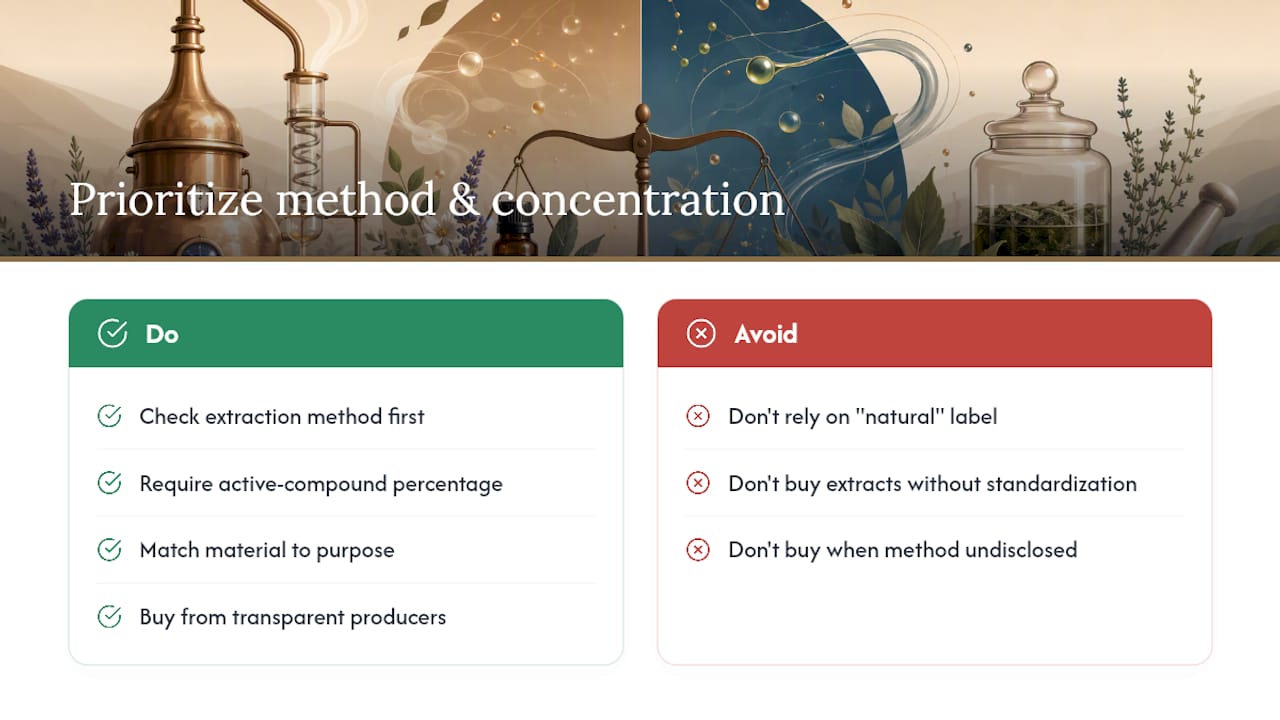
The bigger gap is in how people shop. Shoppers chase “natural” on a label and skip the two questions that actually matter: what extraction method was used, and what percentage of active compound is inside. A vague botanical extract with no standardization number is barely more informative than an unlabeled oil.
Prioritize the extraction method and concentration disclosure over marketing language every time. A well-sourced essential oil used for scent, and a properly standardized extract used for function, both earn their place. The failure mode isn’t choosing the wrong material category. It’s buying either one from a producer who won’t tell you how it was made.
— abdelmuhsen
Find the Right Essential Oil or Extract for Your Routine
Palinova is the place to start once you know whether you need aroma or function, because every product is built around that same distinction instead of blurring it for marketing convenience. Reaching for scent and mood support? The Wildcrafted Cypress Essential Oil and Pure Frankincense Essential Oil are steam-distilled specifically for diffuser and topical aromatherapy use.
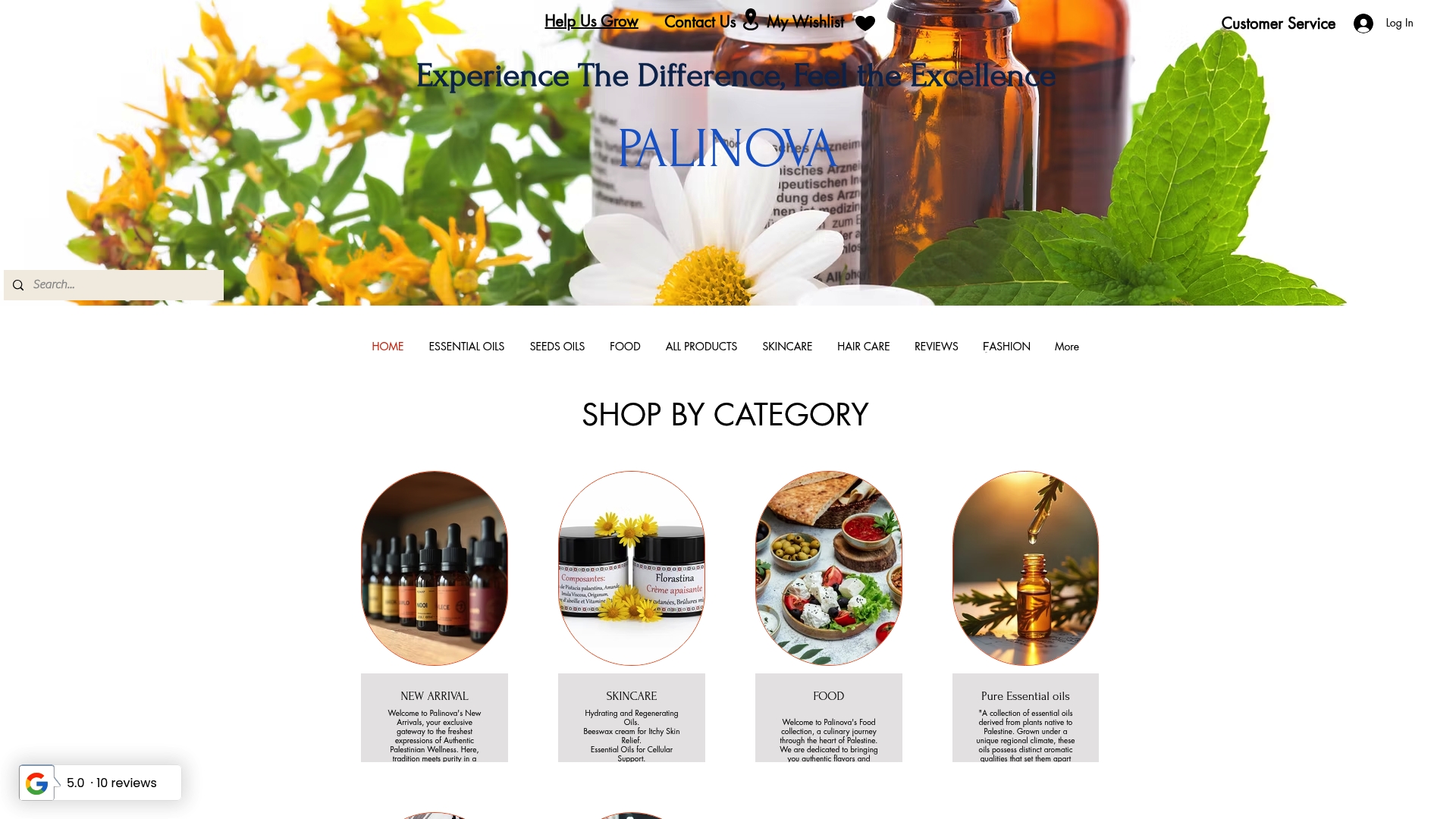
Need a functional skin benefit instead? Barbary Fig Seed Oil is formulated for anti-aging support, and Palinova’s botanical skincare line builds on inula and other extracts for soothing, non-fragrance-first results. If you’re still unsure which category fits your skin type or goal, book one of Palinova’s free aromatherapy consultations before you buy. Browse the new arrivals to see the current lineup, or head straight to a product page to place your order.
Sources
Sourcing quality is where most of the variability discussed above actually gets decided, long before a bottle reaches a shelf. Palinova steam-distills its Palestinian botanicals in small batches, which keeps the volatile profile intact instead of degraded by rushed processing, and every product ties back to a specific harvest region rather than an anonymous blend.
FAQ
Can I use extract instead of essential oil?
Only for the same function, not automatically. If you need aroma, an extract usually won’t smell strong enough; if you need a measurable skin or food benefit, an extract is often the better, more stable choice.
What does botanical extract do?
Botanical extracts deliver nonvolatile plant compounds like polyphenols and flavonoids, commonly used for antioxidant and antimicrobial effects in skincare, food, and supplements.
What’s the difference between essential oil and extract?
Essential oils are volatile aromatic compounds captured by steam distillation or cold pressing, mainly for scent; botanical extracts are solvent or water-based preparations capturing a broader range of actives for functional use.
Are rosemary extract and essential oil the same thing?
No. Rosemary essential oil is steam-distilled for its aromatic compounds, while rosemary extract is typically solvent-extracted for antioxidant compounds used in skincare and food preservation, and the two behave very differently in a formula.
Recommended


Comments