
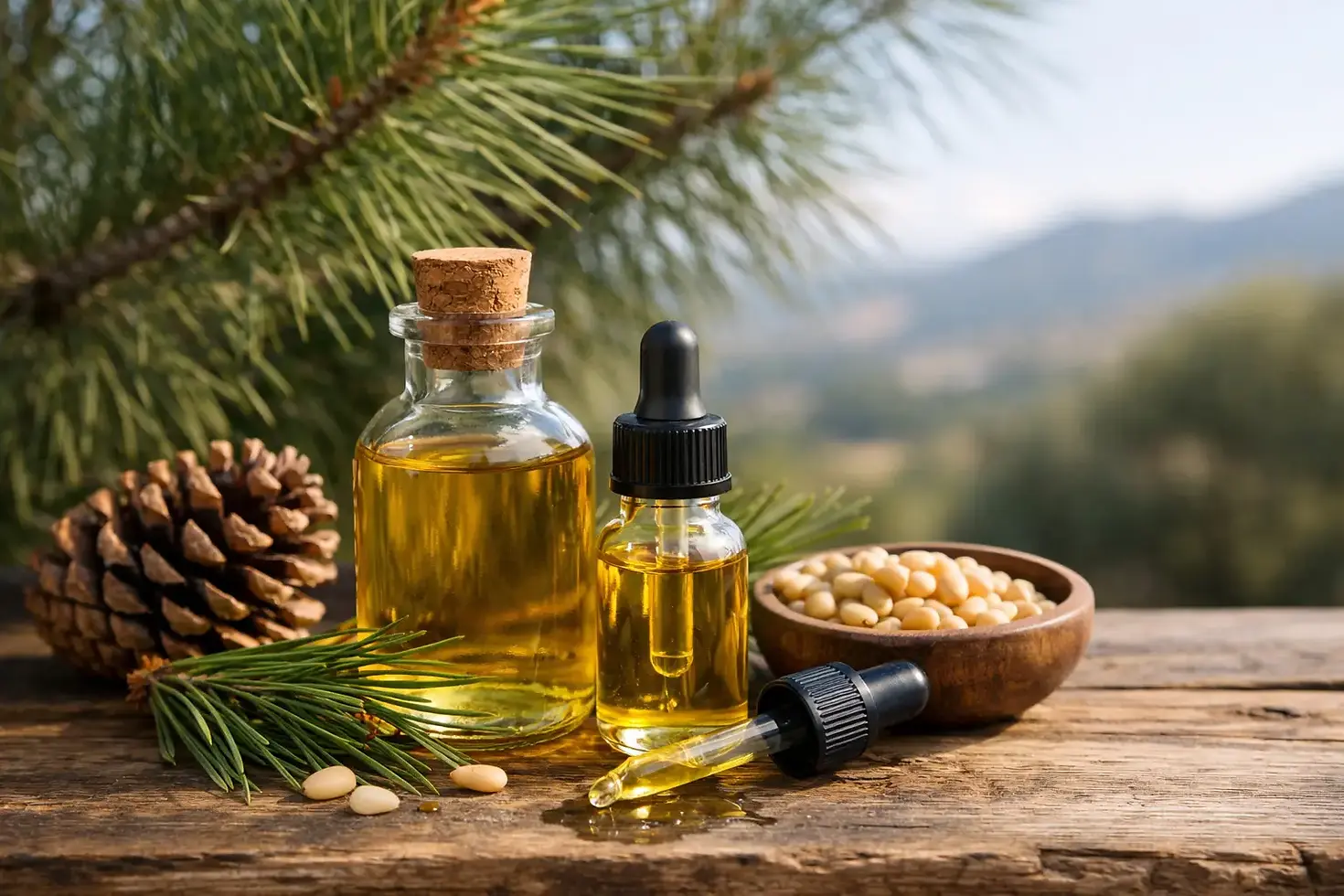
Pinus Halepensis (Aleppo Pine) Essential Oil
- Palinova

- 9 hours ago
- 5 min read
A dry hillside after rain has a scent that stays with you: sun-warmed resin, green needles, stone, and air made suddenly clear. Pinus halepensis (Aleppo pine) essential oil carries an expression of that Mediterranean landscape into a small bottle. Its aroma is bright, woody, and gently balsamic - less sweet than many conifer oils, with a brisk, forest-like lift that makes a room feel freshly opened to the outdoors.
For those drawn to botanicals with a true sense of place, Aleppo pine is more than a pleasant fragrance. It is a resilient tree shaped by heat, wind, and sparse soil across the eastern Mediterranean, including Palestine. Used thoughtfully, its essential oil can become a grounding part of a home aroma ritual, a post-shower body oil blend, or a seasonal practice of slowing down and breathing deeply.
What Makes Aleppo Pine Essential Oil Distinct?
Aleppo pine, botanically known as Pinus halepensis, is an evergreen recognized by its slender needles, irregular silhouette, and remarkable ability to endure dry Mediterranean conditions. The essential oil is commonly steam-distilled from the tree’s needles and small branches. This matters because an oil’s botanical name and plant part help identify what is actually in the bottle. “Pine oil” is a broad label, while Pinus halepensis identifies a specific species with its own aromatic character.
The fragrance opens green and crisp, then settles into dry wood, resin, and a subtle camphor-like freshness. It can feel clarifying without being sharp, especially when balanced with softer oils. Frankincense gives it a deeper resinous center; Palestinian helichrysum can round its herbal edges; sweet orange brings a brighter, sunlit contrast.
Like every essential oil, its scent and composition can vary with rainfall, elevation, harvest timing, plant material, and distillation choices. That variability is not a flaw. It is part of what makes region-specific botanical oils so compelling. Still, responsible sourcing and clear identification are essential for anyone seeking a pure, traceable oil rather than a generic fragrance blend.
The Aromatherapy Role of Pinus Halepensis (Aleppo Pine) Essential Oil
Aleppo pine is especially suited to rituals that call for mental space and a cleaner-feeling atmosphere. Its forest aroma can help mark the transition from a crowded workday to a quieter evening, or add a sense of renewal to a morning routine. Aromatherapy is personal: one person may find pine invigorating, while another may find its evergreen depth more settling. Start with the experience rather than a promise.
A breath of Mediterranean forest at home
In a water-based diffuser, begin with three to five drops and allow the room to fill gradually. Diffusing for short intervals is often enough, particularly in small rooms. The goal is not to make the scent overwhelming. It is to create a subtle environmental cue: time to stretch, tidy the kitchen, journal, or simply sit near an open window.
For a balanced woodland blend, combine Aleppo pine with frankincense and a little citrus. For a softer evening profile, use it with lavender or cedarwood. If children, pets, or anyone with respiratory sensitivities share the space, diffuse conservatively and ensure they can leave the room easily. Fresh air remains part of good aromatic practice.
A restorative body-care ritual
The crisp character of Aleppo pine works beautifully in a massage or body oil after a shower, especially when skin feels dry and calls for a more enveloping ritual. It must be diluted first in a carrier oil such as olive oil, jojoba oil, or Barbary fig seed oil. A practical low dilution for general body use is about 1 percent: roughly six drops of essential oil per one fluid ounce of carrier oil.
For facial use, choose an even gentler dilution or leave essential oils out entirely if your skin is reactive. Botanical luxury should never require pushing past discomfort. A beautifully simple carrier oil can be the right answer on its own.
Why Provenance Matters in a Pine Oil
Pine trees grow across a wide geographic range, and oils sold under broad names can come from different species, regions, or blends. That is why provenance is part of quality, not just a romantic detail. Knowing the botanical name, country or region of origin, plant part, and extraction method gives buyers a clearer view of the oil they are bringing into their homes.
In Palestine, native and naturalized botanicals have long been interwoven with seasonal rhythms, household rituals, and agricultural knowledge passed between generations. The Aleppo pine’s presence in the Mediterranean landscape speaks to endurance. It thrives where conditions are demanding, holding its green against long, dry summers. When such plants are cultivated or gathered with care, the value reaches beyond aroma. It supports the continuity of land-based skills and rural livelihoods.
At PALINOVA, this connection between plant, place, and people is central. A botanical oil should feel exceptional because it is honestly sourced, carefully handled, and respected from field to final bottle. The most meaningful luxury is not excess. It is knowing what you are using, where it came from, and why it deserves a place in your ritual.
How to Use Aleppo Pine Oil With Care
Essential oils are concentrated materials, not casual perfume. A few intentional habits protect both the experience and your skin.
Always dilute Aleppo pine essential oil before applying it to the body. Avoid using it undiluted, and do not add it directly to bathwater, where droplets can sit against the skin instead of dispersing safely. If you would like a pine-scented bath ritual, first blend the diluted oil into an unscented bath oil or a suitable bath base according to its directions.
Perform a patch test before using any new blend. Apply a small amount of the properly diluted mixture to the inner arm, then wait 24 hours. If redness, itching, burning, or irritation occurs, wash the area with a carrier oil and discontinue use. Do not use essential oils on broken or inflamed skin, and keep them away from eyes and mucous membranes.
Pregnant or nursing individuals, people managing a medical condition, and those taking medication should seek advice from a qualified health professional before using essential oils. This is also wise for anyone with asthma, allergies, or a history of fragrance sensitivity. Essential oils are not intended to diagnose, treat, cure, or prevent disease, and Aleppo pine oil should not be taken internally unless specifically directed by an appropriately qualified clinician.
Store the bottle tightly closed in a cool, dark place. Oxygen, warmth, and light can gradually alter aromatic oils, which may increase the chance of skin sensitivity over time. Keeping the cap secure and using clean hands around the bottle are small acts of care that preserve the oil’s character.
Pairing the Aroma to Your Ritual
Aleppo pine does not need a complicated routine to be memorable. Use it in a diffuser while preparing your home for guests, or blend it into a carrier oil for a slow shoulder massage after a day spent at a desk. Its clean, resinous profile also pairs naturally with moments of seasonal reset: opening windows in early spring, bringing greenery indoors, or creating a quieter atmosphere during cold-weather months.
For a more personal scent ritual, place one drop on an aromatherapy inhaler wick rather than applying the oil directly to the skin. This offers a portable way to return to the aroma throughout the day while keeping dosage measured. If the scent feels too intense, use less. With essential oils, restraint often creates the most refined experience.
The beauty of Aleppo pine is that it asks little. A measured drop, a well-chosen carrier, and a few unhurried breaths can bring the enduring spirit of the Mediterranean forest into an ordinary moment.


Comments