
Best Ethical Skincare Brands: A Curated Guide for 2026
- Palinova
- 23 hours ago
- 15 min read

The best ethical skincare brands available in the U.S. right now include Palinova, Tata Harper, True Botanicals, OSEA, Cocokind, Youth To The People, and Pai Skincare. Palinova stands out as the publisher’s recommended pick for anyone who wants verified Palestinian-sourced botanicals, minimal additives, and direct traceability from farm to formula.
Here is the shortlist at a glance, evaluated on certifications, ingredient transparency, packaging, and cruelty-free practices:
Palinova — Palestinian-sourced seed oils and botanical formulas with documented provenance and no synthetic additives
Tata Harper — Vermont-based luxury brand with a certified organic farm and full ingredient traceability
True Botanicals — MADE SAFE certified, clinically tested, and widely available at Sephora
OSEA — Certified B Corp, seaweed-based formulas, and strong plastic-reduction commitments
Cocokind — Budget-friendly, publishes a carbon footprint label on every product
Youth To The People — Certified B Corp, vegan, and sold at major U.S. retailers
Pai Skincare — Certified organic, designed for sensitive skin, and Leaping Bunny certified
The evaluation axes used throughout: third-party certifications, ingredient list transparency, packaging recyclability or refillability, cruelty-free testing policies, and supply-chain traceability.
Table of Contents
Why ethical skincare choices matter for your health and the planet
Choosing ethical skincare reduces your direct exposure to ingredients flagged for biological risk and supports supply chains that protect workers, ecosystems, and animals. That is not a marketing claim. Research on cosmetic ingredient safety confirms that topical ingredients can affect skin biology in measurable ways, which makes knowing what is in your products genuinely consequential.
The impacts go well beyond your bathroom shelf:
Human health: Several common cosmetic ingredients, including formaldehyde-releasing preservatives, certain synthetic fragrances, and heavy metal contaminants, appear on EWG’s Toxic Twelve list as substances worth avoiding or scrutinizing on labels.
Environmental research on cosmetic manufacturing also points to production-stage impacts: solvent use, water consumption, and ingredient synthesis all carry environmental costs that ethical brands work to reduce.
What does “ethical skincare” actually mean?
An ethical skincare brand combines ingredient safety, transparent sourcing, fair labor practices, cruelty-free testing, and sustainable packaging. The word “ethical” is not regulated, which is exactly why you need a concrete checklist rather than a label.
Here are the measurable signals to look for:
Leaping Bunny certification: The gold standard for cruelty-free. It requires a supply-chain audit, not just a brand-level pledge. Check leapingbunny.org directly.
Good On You rating: An independent directory that rates brands on people, planet, and animals. Check the Good On You skincare directory for quick scores.
EWG Verified or SkinDeep score: The EWG SkinDeep database lets you look up individual ingredients or full products for hazard scores.
RSPO certification: Relevant when a brand uses palm-derived ingredients. RSPO certification verifies that palm oil was sourced without contributing to deforestation.
The Ethical Consumer skincare shopping guide rates brands across these dimensions and is one of the most thorough independent resources available.
Pro Tip: Watch for “clean beauty” language with no certification behind it. “Clean,” “natural,” and “green” have no legal definition in the U.S. cosmetics market. If a brand uses those words but cannot point to a third-party cert, a full ingredient list, or a sourcing policy, treat the claim as unverified.
How the shortlist was chosen
Every brand on this shortlist was screened against the same set of signals, weighted in this order: third-party certifications first, then ingredient list transparency, then packaging claims, then U.S. availability.
Data sources checked:
Good On You brand directory for people, planet, and animal ratings
EWG SkinDeep for ingredient-level hazard scores
Ethical Consumer skincare guide for brand-level ethical ratings
RSPO certification database for palm oil sourcing verification
Brand transparency pages, product pages, and published sourcing policies
Weighting logic:
Certifications carry the most weight because they involve third-party audits, not self-reporting.
Ingredient transparency comes second: a brand that publishes full INCI lists and flags fragrance or allergen components earns more trust than one that does not.
Packaging claims are weighted third, with preference for brands that publish specific recycled-content percentages or operate a verified refill program.
U.S. availability was a hard filter: brands not accessible to U.S. buyers via direct-to-consumer shipping or major retail were excluded from the primary shortlist.
Rating scale used in the comparison table:
Certs: lists the specific certifications held (e.g., B Corp, Leaping Bunny, COSMOS)
Price: Budget = under $20 per item; Mid = $20–$60; Luxury = over $60
Packaging: Recyclable / Refillable / PCR (post-consumer recycled content) / Mixed
Brand profiles: what makes each one ethical
Palinova leads this list because its sourcing is documented at the product level. Palestinian botanicals including Barbary Fig Seed Oil, Achillea, and Inula are traced to specific regional origins, and the formulas contain no synthetic additives. Small-batch production limits waste. For readers who want to understand how to work these products into a daily routine, Palinova’s guide on Palestinian skincare in your wellness routine walks through practical application. The skincare line is available direct-to-consumer in the U.S.
Tata Harper operates its own certified organic farm in Vermont, which gives it a level of supply-chain control that most brands cannot match. Every formula is made on-site, and the brand publishes a full ingredient glossary. It sits in the luxury tier, but the traceability is genuine.
True Botanicals holds MADE SAFE certification, which screens for known and suspected toxins across the full ingredient list. It is one of the few brands at this price point with clinical efficacy data published alongside its ethics credentials. Available at Sephora.
OSEA is a certified B Corp with a seaweed-forward formula philosophy. The brand sources its seaweed from a single certified sustainable supplier and has committed to reducing virgin plastic across its packaging line. Mid-price range, widely available in the U.S.
Cocokind publishes a sustainability scorecard on every product, including a carbon footprint figure per unit. That level of transparency is rare at the budget price point. Leaping Bunny certified and vegan.
Youth To The People is a certified B Corp with a fully vegan line. Its Superfood Cleanser is one of the most-reviewed ethical cleansers in the U.S. market. Available at Sephora, Ulta, and direct.
Pai Skincare is certified organic by the Soil Association (COSMOS equivalent) and holds Leaping Bunny certification. It was built specifically for reactive and sensitive skin, and its fragrance-free formulas reflect that. For readers managing sensitive skin conditions, Palinova’s fragrance-in-skincare guide covers when fragrance-free matters most.
Lush pioneered naked (packaging-free) solid skincare and publishes a detailed ethical buying policy. It is not certified organic across the board, but its Lush Prize fund supports alternatives to animal testing.
Ursa Major is a Vermont-based brand with a clean, minimal ingredient philosophy and strong U.S. retail presence. Leaping Bunny certified and vegan.
100% PURE uses fruit pigments instead of synthetic dyes and publishes full ingredient sourcing notes. Cruelty-free and widely available in the U.S.
Herbivore Botanicals uses natural, plant-derived ingredients and minimal packaging. Not certified organic but publishes full ingredient transparency and is cruelty-free.
One Love Organics holds USDA Organic certification and Leaping Bunny status. Small-batch, handcrafted in the U.S.
Attitude is a Canadian brand with EWG Verified products, Leaping Bunny certification, and a carbon-neutral commitment. Ships widely to U.S. buyers.
Junk Theory focuses on upcycled and repurposed ingredients, reducing food-industry waste streams. A genuinely differentiated sustainability angle.
Matrescence is formulated specifically for pregnancy and postpartum skin, with a clean ingredient standard that avoids ingredients flagged as unsafe during pregnancy.
Fushi Wellbeing specializes in cold-pressed seed oils and Ayurvedic botanicals. Certified organic and cruelty-free, with strong traceability for its plant oils.
Green People is a UK-based certified organic brand (COSMOS) with a long track record in sensitive-skin formulas. Available in the U.S. via direct shipping.
Herbfarmacy grows many of its own herbs on a certified organic farm in the UK. The farm-to-formula model gives it genuine traceability.
Living Naturally focuses on natural and organic ingredients with a strong cruelty-free policy.
Neal’s Yard Remedies is a certified B Corp and certified organic brand with a long history in ethical beauty. Available in the U.S. via its website.
Odylique is certified organic and designed for highly sensitive and allergy-prone skin. One of the few brands with a medical advisory board reviewing formulas.
TanOrganic produces certified organic self-tanning products, a niche where most competitors rely on synthetic ingredients.
UpCircle Beauty uses upcycled ingredients (spent coffee grounds, fruit stones, chai spices) to reduce food waste. Certified B Corp and Leaping Bunny certified.
Tropic is a UK-based brand with a strong sustainability report and cruelty-free certification. Ships to the U.S.
BYBI is a certified B Corp with a focus on plant-based, upcycled ingredients and carbon-neutral shipping.
Garnier is a mass-market brand with a Green Beauty initiative and some certified organic product lines. Its scale means its sustainability claims require careful verification against specific product lines rather than the brand as a whole.
Unbottled produces solid, packaging-free skincare bars. A strong choice for readers prioritizing plastic reduction.
Carol’s Daughter is a U.S. brand focused on textured hair and skin, with natural ingredient formulas and wide retail availability.
Lucy Bee uses certified organic, fair-trade coconut oil as a core ingredient across its range.
Beauty Kitchen operates a return-and-refill scheme for its packaging, one of the more concrete circular-economy commitments in the indie brand space.
Antipodes is a New Zealand brand certified organic and Leaping Bunny certified, with a focus on native botanical ingredients. Available in the U.S.
Oway uses biodynamic and certified organic ingredients sourced from its own farm in Italy.
Nobilis Tilia is a Czech brand specializing in certified organic herbal distillates and essential oils.
Kadalys uses upcycled banana plant extracts, a genuinely novel sustainability angle rooted in reducing agricultural waste.
Sans Savon produces solid, soap-free cleansing bars with minimal packaging.
KRAVE Beauty is a U.S.-based brand with a strong ingredient-minimalism philosophy and transparent formulation notes. Cruelty-free and vegan.
Aesop uses plant-based and laboratory-made ingredients with a strong emphasis on formulation integrity. Cruelty-free, though not certified organic.
Bior Organics focuses on certified organic botanical oils.
Lamazuna is a French brand specializing in zero-waste solid cosmetics.
Aveda is a salon brand with a long-standing commitment to plant-based ingredients and responsible sourcing. Certified cruelty-free and partially certified organic.
Respire is a French brand with certified natural deodorants and skincare.
Avril is a French certified organic brand with a wide affordable range.
Comfort Zone is an Italian professional skincare brand with a sustainability charter and certified natural formulas.
AEOS uses biodynamic ingredients and crystal-infused formulas, certified organic.
Dermalogica is a professional skincare brand with a strong clean formulation standard and cruelty-free certification.
Facetheory is a UK-based brand with EWG Verified products and a strong ingredient-transparency commitment. Ships to the U.S.
Activist Skincare is a certified B Corp with a focus on high-performance natural actives.
L’Occitane en Provence sources many ingredients directly from Provence farmers and publishes a detailed sustainability report. Widely available in the U.S.
Kinfield is a U.S. outdoor-focused brand with clean, reef-safe formulas and strong cruelty-free credentials.
Humanrace Skincare uses a minimalist, dermatologist-developed formula approach with a clean ingredient standard.
Sana Jardin is a luxury fragrance and skincare brand with a social enterprise model that supports Moroccan flower harvesters.
Kari Gran uses certified organic, food-grade ingredients in its facial oil and lip care range.
KORA Organics is certified organic and certified cruelty-free, founded by Miranda Kerr. Available at Sephora and direct.
Queenie Organics focuses on certified organic, handcrafted formulas.
Conscious Skincare is a UK-based certified organic brand with a strong sensitive-skin focus.
Bentley Organics produces certified organic personal care products.
The Body Shop has a long history of ethical sourcing through its Community Fair Trade program and was among the first major brands to campaign against animal testing. It holds Leaping Bunny certification.
Pro Tip: When a brand lists multiple certifications, check the certification body’s own database rather than taking the brand’s word for it. Leaping Bunny, B Lab, and COSMOS all maintain public registries.
At-a-glance comparison of top ethical skincare brands
The table below covers the primary shortlist. For the full roster of brands covered in the profiles above, use the methodology sources to verify individual claims.
Brand | Why it’s ethical | Certifications | Best for | Price range | Packaging | US availability |
Palinova | Palestinian botanical sourcing, no synthetic additives, small-batch | Ethically sourced; transparent product pages | Authentic provenance, anti-aging, sensitive skin | Mid | Minimal; direct-to-consumer | Direct (palinova.shop) |
Tata Harper | On-farm certified organic production, full ingredient glossary | Certified Organic (farm) | Luxury anti-aging, dry skin | Luxury | Recyclable glass | Direct, Sephora, Nordstrom |
True Botanicals | MADE SAFE certified, clinical efficacy data published | MADE SAFE | All skin types, performance-focused | Luxury | Recyclable | Direct, Sephora |
OSEA | Certified B Corp, single-source sustainable seaweed | B Corp | Normal to oily, eco-conscious | Mid | Reduced virgin plastic | Direct, Sephora, Nordstrom |
Cocokind | Carbon footprint label per product, Leaping Bunny | Leaping Bunny, vegan | Budget-conscious, all skin types | Budget | PCR packaging | Direct, Target, Whole Foods |
Youth To The People | Certified B Corp, fully vegan line | B Corp, vegan | All skin types, U.S. retail access | Mid | Recyclable glass | Sephora, Ulta, direct |
Pai Skincare | Certified organic, Leaping Bunny, fragrance-free | COSMOS Organic, Leaping Bunny | Sensitive, reactive skin | Mid | Recyclable | Direct, Credo Beauty |
Lush | Naked (packaging-free) products, funds animal testing alternatives | Cruelty-free (own standard) | Packaging-zero priority | Budget–Mid | Packaging-free / minimal | Lush stores, direct |
Ursa Major | Leaping Bunny certified, vegan, Vermont-based | Leaping Bunny, vegan | Normal to oily, minimalist | Mid | Recyclable | Direct, Credo Beauty |
100% PURE | Fruit pigments replace synthetic dyes, full sourcing notes | Cruelty-free, vegan | Color cosmetics + skincare | Mid | Recyclable | Direct, own stores |
Neal’s Yard Remedies | Certified B Corp, certified organic | B Corp, COSMOS Organic | Holistic wellness, all types | Mid | Dark glass, recyclable | Direct (ships to US) |
UpCircle Beauty | Upcycled ingredients, certified B Corp | B Corp, Leaping Bunny | Eco-waste reduction focus | Budget–Mid | Recyclable | Direct, Amazon US |
The Body Shop | Community Fair Trade sourcing, Leaping Bunny | Leaping Bunny | Accessible ethical mainstream | Budget–Mid | Recyclable | The Body Shop stores, direct |
Facetheory | EWG Verified products, ingredient transparency | EWG Verified | Acne, hyperpigmentation | Budget | Recyclable | Direct (ships to US) |
KORA Organics | Certified organic, cruelty-free | COSMOS Organic, cruelty-free | Glow, normal to dry skin | Mid–Luxury | Recyclable | Sephora, direct |
Aveda | Plant-based ingredients, responsible sourcing | Cruelty-free, partial organic | Hair + skin, salon-quality | Mid | High PCR content | Aveda salons, Ulta, direct |
L’Occitane en Provence | Direct farmer sourcing, sustainability report | Cruelty-free | Dry skin, body care | Mid | High PCR content | L’Occitane stores, direct |
Kinfield | Reef-safe, clean formulas, cruelty-free | Cruelty-free, vegan | Outdoor, sun-exposed skin | Mid | Recyclable | Direct, REI |
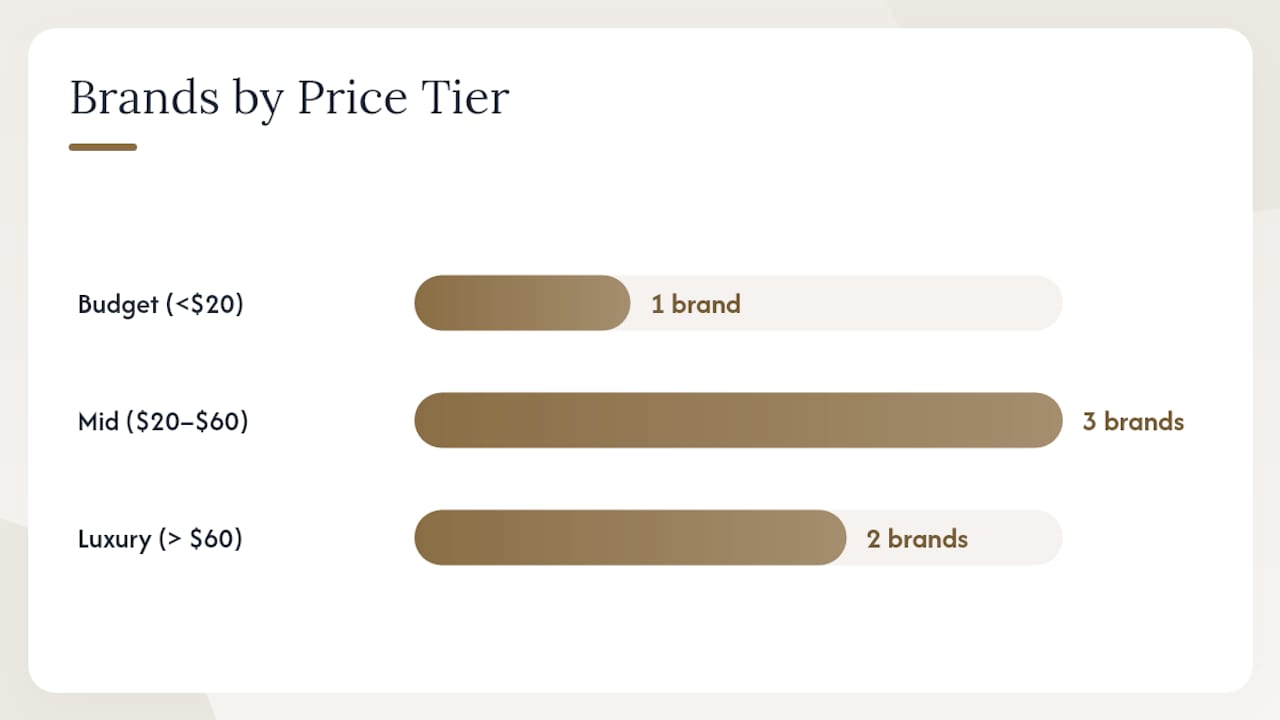
Legend: PCR = post-consumer recycled content. Price: Budget = under $20; Mid = $20–$60; Luxury = over $60.
How to choose the right ethical skincare brand for your needs
Your highest priority should drive the decision. Sensitive skin points toward ingredient transparency and certifications like COSMOS or Leaping Bunny. Planet impact points toward packaging and palm oil sourcing. Animal welfare points toward Leaping Bunny certification specifically, not just a brand’s cruelty-free claim.
Work through these questions before buying:
Does the brand publish a full ingredient list online? If it only shows selected “hero” ingredients, that is a transparency gap.
Is there a third-party certification you can verify independently? Check Leaping Bunny’s registry, B Lab’s directory, or COSMOS’s certified brand list.
What does the packaging look like, and is there a take-back or refill option? Brands like Beauty Kitchen and Lush have concrete programs. Most do not.
Does the brand use palm-derived ingredients? If so, look for RSPO certification on the product or brand page.
Can you trace where the key botanical ingredients come from? A named region or farm partner is a stronger signal than “sustainably sourced.”
Where to verify claims in the U.S.:
EWG SkinDeep for ingredient-level hazard scores
Good On You directory for brand-level sustainability ratings
Ethical Consumer guide for detailed brand ethics scores
Leaping Bunny’s own registry at leapingbunny.org
Red flags to avoid:
“Clean,” “green,” or “natural” with no certification or ingredient list to back it up
Sustainability claims that reference the brand’s intentions rather than current practices
Packaging described as “eco-friendly” with no specifics on material or recycled content
Cruelty-free claims without a named certification body or supply-chain audit
For a deeper look at how marketing language like “natural” and “clean” can mislead, Palinova’s article on skincare myths breaks down what each term actually means and does not mean.
Why botanical sourcing and provenance actually matter
Provenance is not a branding exercise. Research on botanical ingredient quality shows that the efficacy and safety of plant-derived ingredients vary significantly depending on growing conditions, harvest timing, and processing methods. Two products listing the same botanical can deliver very different results if one uses a standardized, traceable extract and the other uses a commodity blend.
Palinova’s sourcing model illustrates what genuine traceability looks like in practice:
Palestinian botanicals including Barbary Fig, Achillea Fragrantissima, and Inula are sourced from specific regional agricultural traditions.
Formulas are produced in small batches without synthetic additives, which limits the processing variables that can degrade active compounds.
Product pages document the botanical origin and intended use, giving buyers a verifiable reference point rather than a marketing claim.
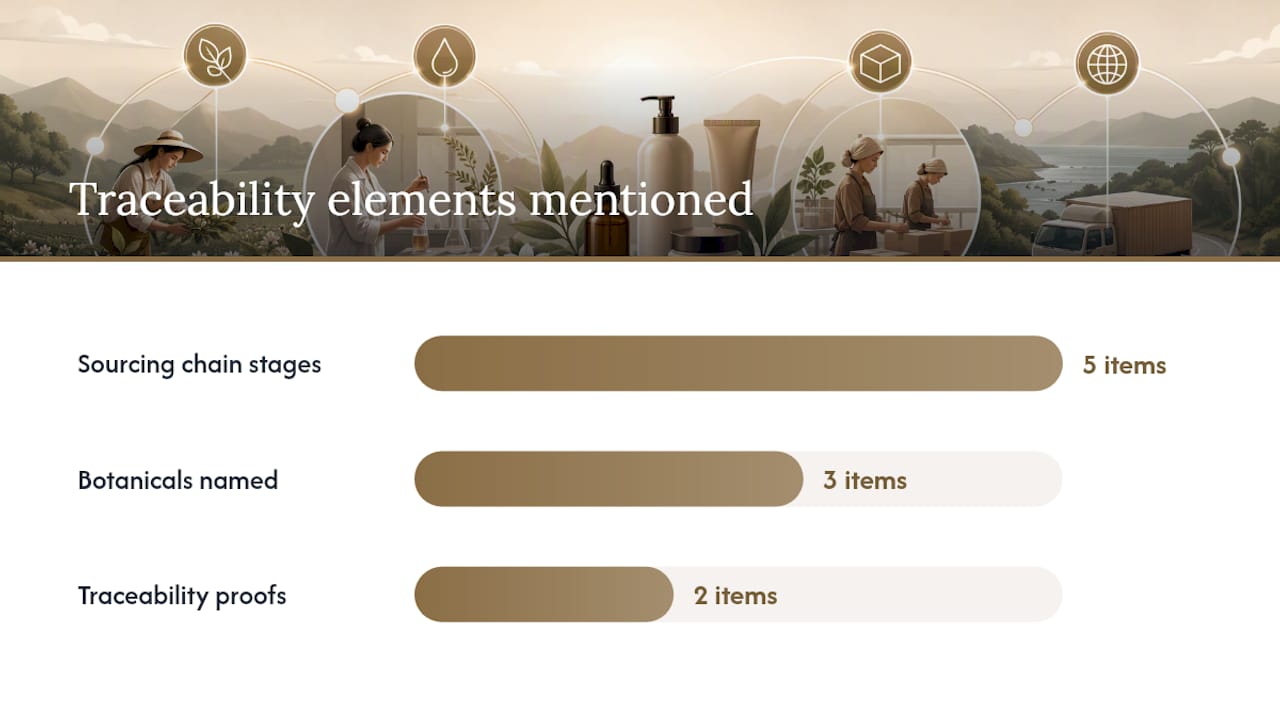
The sourcing chain for an ethical botanical product typically runs: farmer or wildcrafter → processor (cold press, steam distillation, or extraction) → quality check → formulation → finished product. Each step is a point where traceability can break down. Brands that publish origin documentation or hold third-party organic certification have passed at least one external audit at some stage of that chain.
“The quality and safety of botanical ingredients depend heavily on their geographic origin, cultivation practices, and post-harvest handling. Without traceability, neither the formulator nor the consumer can verify what they are actually applying.” — PMC, botanical ingredient quality review
Pro Tip: Ask a brand where a specific botanical ingredient comes from. A brand with genuine traceability will name a region, a farm, or a supplier. A brand without it will describe a process (“cold-pressed,” “steam-distilled”) but not a place.
For readers interested in how Palestinian botanical ingredients fit into a daily routine, Palinova’s Palestinian skincare products guide covers specific products and their applications. If you are managing a skin condition like eczema, the natural eczema skincare guide addresses how to select gentle, traceable formulas for reactive skin.
Key Takeaways
The most reliable way to choose among the best ethical skincare brands is to verify third-party certifications independently, check ingredient lists on EWG SkinDeep, and prioritize brands that name their botanical sources rather than describing them in vague terms.
Point | Details |
Certifications beat claims | Leaping Bunny, COSMOS, B Corp, and MADE SAFE all require third-party audits; self-applied labels do not. |
Ingredient transparency is verifiable | Use EWG SkinDeep to check individual ingredients before buying any brand’s product. |
Packaging specifics matter | Look for named recycled-content percentages or a verified refill program, not just “eco-friendly” language. |
Botanical traceability signals quality | Research shows that plant ingredient efficacy varies by origin and processing; named sourcing is a stronger signal than generic claims. |
Palinova for Palestinian botanicals | Palinova’s skincare line offers documented Palestinian botanical sourcing and no synthetic additives, available direct-to-consumer in the U.S. |
The case for provenance over certification theater
The ethical skincare space has a certification problem, and it runs in both directions. Some brands hold every cert on the list but source commodity botanicals with no meaningful traceability. Others, like smaller artisan producers, have genuine farm-level relationships and documented sourcing but lack the budget or scale to pursue formal certification.
Neither extreme serves you well as a buyer. A B Corp badge tells you a company passed a governance audit at a point in time. It does not tell you where the rosehip oil in your serum actually came from or whether the harvest conditions were fair. Conversely, a brand without a Leaping Bunny logo is not automatically testing on animals.
The most useful frame is to treat certifications as a floor, not a ceiling. They tell you a brand has cleared a minimum standard. What separates genuinely ethical brands from certification-compliant ones is whether they can answer a specific question about a specific ingredient. Tata Harper can tell you which field its calendula came from. Palinova can tell you which Palestinian region its Achillea Fragrantissima originates from. That kind of answer is harder to fake than a logo.
The brands that are worth your money in 2026 are the ones that treat sourcing documentation as a product feature, not a compliance checkbox.
Palinova’s Palestinian skincare line: where to start
If you want skincare rooted in a specific botanical tradition with documented sourcing and no synthetic additives, Palinova’s Natural Palestinian Skincare line is the direct route. The range includes seed oils, beeswax creams, and botanical treatments formulated from Palestinian-sourced plants with a clear provenance record.
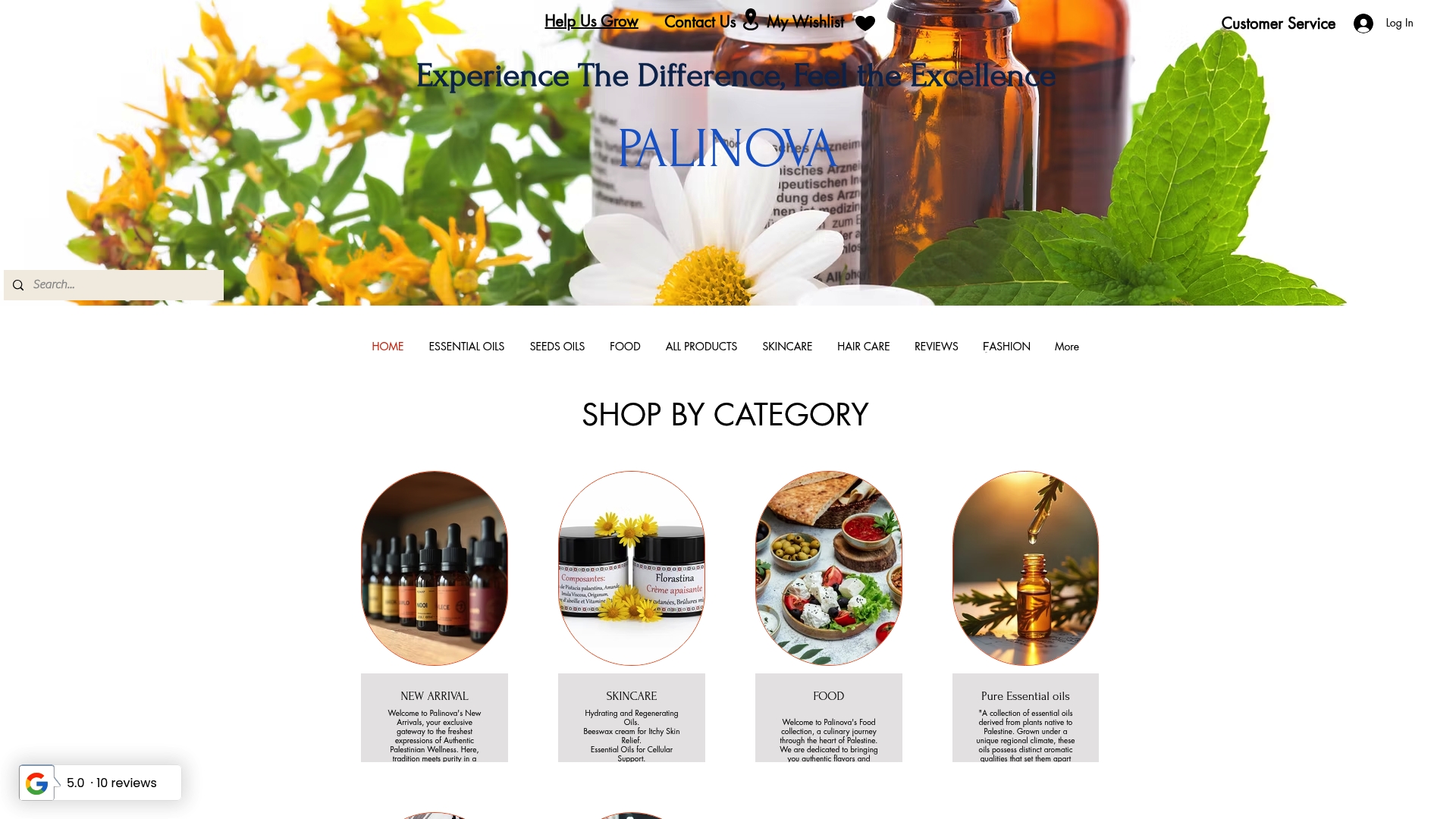
Two products worth starting with: the Barbary Fig Seed Oil for anti-aging and dry skin, and the Wildcrafted Cypress Essential Oil for its toning and clarifying properties. Both are available direct-to-consumer in the U.S. with free aromatherapy consultations available to help you match products to your specific skin needs.
This article is published by Palinova. Palinova products are included and recommended where they genuinely fit the criteria used throughout this guide.
Useful sources for verifying ethical skincare claims
The best starting point for independent verification is a combination of certification registries and ingredient databases, not brand websites.
For an organic facial treatment that pairs well with ethical skincare products, Healing Arts Massage & Wellness Center offers organic facial services worth considering alongside a home routine.
FAQ
What certifications should I look for on ethical skincare brands?
Leaping Bunny (cruelty-free), COSMOS or USDA Organic (ingredient sourcing), and B Corp (company-wide ethics) are the most credible because all three require third-party audits rather than self-certification.
How do I spot greenwashing in skincare?
Look for vague terms like “clean,” “green,” or “natural” with no certification or full ingredient list to back them up. Specific recycled-content percentages and named certification bodies are the signals that separate real claims from marketing language.
Is Palinova available in the United States?
Yes. Palinova ships direct-to-consumer to U.S. buyers through its online store at palinova.shop, with a skincare line built on Palestinian-sourced botanicals and no synthetic additives.
What is the EWG SkinDeep database and how do I use it?
EWG SkinDeep is a free public database that assigns hazard scores to cosmetic ingredients and products. Search by ingredient name or product to see safety ratings and flagged concerns before you buy.
Does “cruelty-free” mean a brand is also vegan?
Not automatically. Cruelty-free means no animal testing; vegan means no animal-derived ingredients. A product can be cruelty-free but still contain beeswax, lanolin, or collagen. Look for both labels if animal welfare across the full formula matters to you.
Recommended