
Podiatry Backed Cracked Heels Remedy: Botanical Seal in 7 to 14 Days

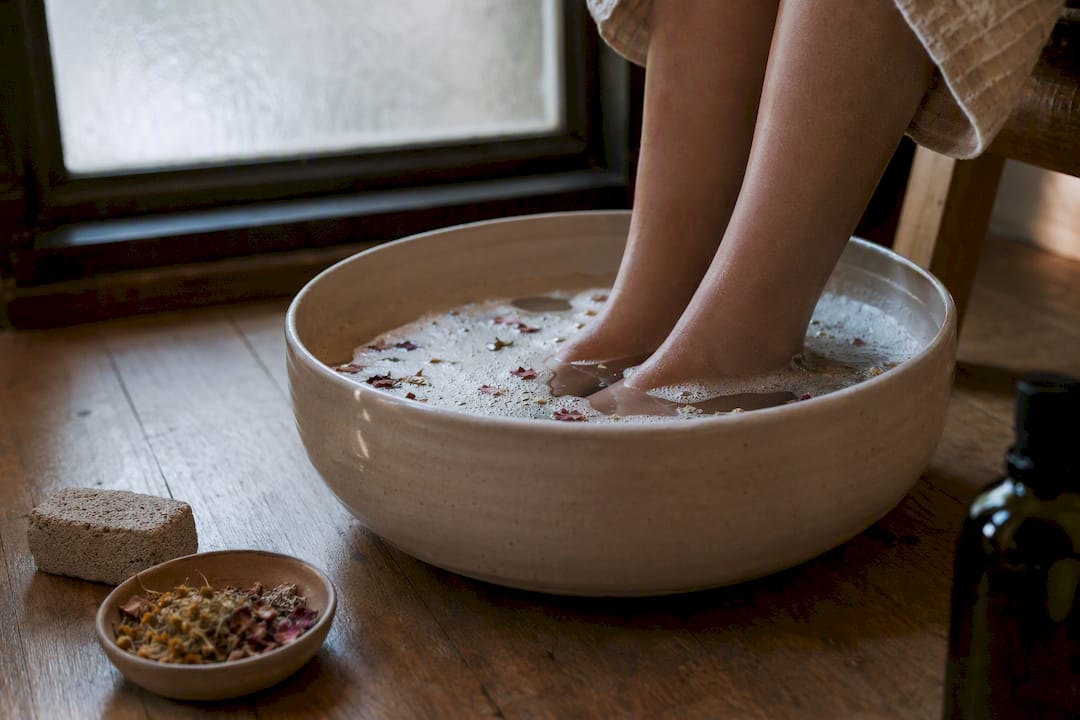
The fastest cracked heels home remedy is a nightly routine: soak for 10 to 15 minutes, gently file away dead skin with a pumice stone, apply a urea-based keratolytic cream, then seal it in with an occlusive balm and cotton socks. Most Grade 1 to 2 fissures show real improvement within 7 to 14 days. If you have diabetes, poor circulation, or a bleeding crack, skip the DIY approach and call a podiatrist first.
TL;DR:
Using a 20% to 40% urea cream combined with mechanical debridement can lead to noticeable improvement within 7 to 10 days for mild to moderate cracks.
Avoid aggressive tools like razor shavers and focus on gentle filing after soaking to prevent damage to living tissue and infection risk.
Proper treatment involves applying keratolytics on damp skin, sealing with an occlusive balm, and wearing cotton socks overnight for maximum moisture retention.
Individuals with diabetes, circulation issues, or bleeding cracks should seek professional care immediately instead of attempting home remedies.
Lifestyle factors like prolonged standing and cold weather significantly worsen heel cracks, especially without proper supportive footwear or routine maintenance.
Table of Contents
The Three-Step Protocol: Soften, Remove, Repair
Cracked heels form when the skin loses moisture faster than it can replace it, and the dead layer thickens until it splits under pressure. Fixing that takes three distinct moves, not one miracle cream.
Soften. Soak feet in warm (not hot) water for 10 to 15 minutes. Longer soaks strip natural oils and can actually dry the skin out more.
Debride. Once skin is wet and pliable, use a pumice stone or foot file to gently remove the thickened dead layer. Never reach for a razor or metal callus shaver. Podiatrists warn these tools remove living tissue along with dead skin, which raises infection risk instead of solving the problem.
Treat and seal. Apply a keratolytic cream containing urea, ideally in the 20% to 40% range for stubborn callus, then layer on an occlusive like petroleum jelly or a beeswax balm and cover with cotton socks overnight.
This sequence matters because lotion alone rarely fixes thick callus. It just sits on top of dead skin that’s already too hardened to absorb it. The keratolytic breaks down that hardened layer chemically, and the occlusive traps moisture against skin so it can actually work overnight.
How Do You Safely Soak, File, and Treat Cracked Heels?
Doing each step correctly matters more than doing all of them fast. Here’s the breakdown.
Prep and soak: Check that you have normal sensation in your feet before starting (this rules out nerve issues that need a doctor’s attention). Clean the area, test water temperature with your wrist, and consider adding half a cup of Epsom salt or a mild soap to the water. Stick to 10 to 15 minutes.
Exfoliate: Work the pumice stone or foot file over each heel for 60 to 90 seconds while skin is still wet. Rinse the tool frequently so you’re not just redistributing dead skin cells.
Apply the keratolytic: Use a pea-sized amount on rough patches, once or twice daily. Mild stinging is normal on cracked skin.
Occlude: Apply a generous layer of petroleum jelly or a thick balm, then pull on cotton socks before bed. This “wet wrapping” style approach, borrowed from eczema care, increases how much moisturizer actually penetrates the skin overnight.
Reduce exfoliation frequency if skin feels raw or irritated the next day.
Stop the entire routine and reassess if you see bleeding, pus, or spreading redness.
Pro Tip: Apply your keratolytic cream to slightly damp skin right after your soak, not on dry feet later. Damp skin absorbs active ingredients far better, which is the whole logic behind the wet wrapping method.
What Ingredients Actually Heal Cracked Heels?
Not every product marketed for dry feet does the same job, and understanding the difference saves you money and time.
Keratolytics are the workhorses. This is the ingredient category most cracked-heel creams need to actually contain.
Humectants and ceramides come in during the maintenance phase. Ceramides help rebuild the skin’s natural barrier once the thick callus is gone, which is why a lot of dermatology-backed formulas pair urea with ceramide blends.
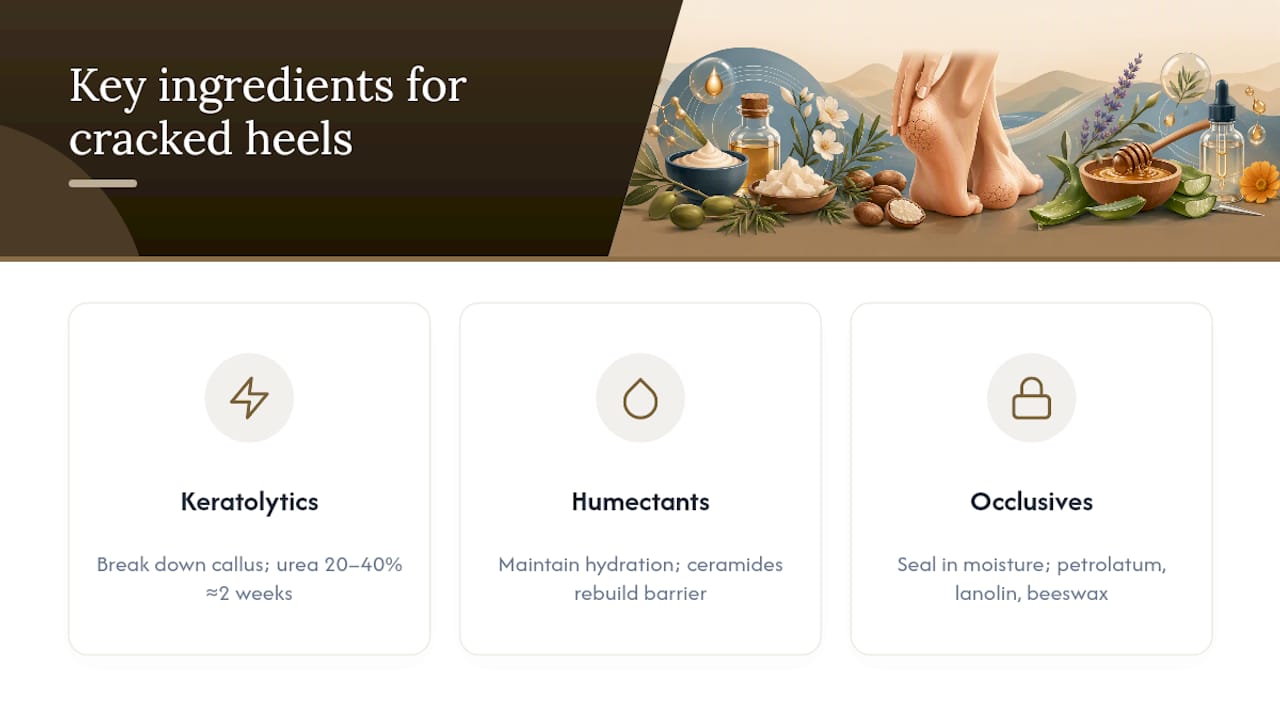
Occlusives like petrolatum, lanolin, and beeswax seal moisture in rather than adding it. They’re not optional. Overnight repair depends on trapping whatever moisture and active ingredient is already on the skin so it doesn’t evaporate.
Botanical oils like Barbary Fig seed oil or shea butter soothe and nourish skin, but they work as an adjunct, not a substitute. Podiatry sources are blunt about this: standard oils and lotions seal in what’s already there but don’t break down existing thick callus the way a true keratolytic does.
A quick number worth remembering: OTC urea creams in the 20% to 40% range typically show visible response in about two weeks, and combining mechanical debridement with high-concentration urea can produce noticeable improvement in as little as 7 to 10 days for Grade 1 to 2 fissures.
When Should You Stop Home Treatment and See a Doctor?
Home care works for most uncomplicated cracked heels, but certain situations call for professional evaluation instead of another night of soaking.
If you have diabetes or any condition affecting circulation or nerve sensation, treat any heel fissure as a medical issue from day one rather than a cosmetic one. Reduced sensation means you might not notice a wound worsening, and poor circulation slows healing dramatically.
Stop immediately and seek care if you notice increasing pain, swelling, redness spreading beyond the crack, drainage, fever, or deep bleeding. Avoid aggressive filing or strong keratolytics on any skin that’s already inflamed or open. If two full weeks of consistent home treatment brings no meaningful improvement, book an appointment with a podiatrist or dermatologist rather than escalating the concentration on your own.
Keeping Heels Soft After They Heal
Healed heels crack again fast without a maintenance routine, so build a lighter version of the same protocol into your week.
Use a urea cream at 10% to 20% strength two or three nights a week instead of nightly.
Switch to a lighter ceramide-based moisturizer each morning to reinforce the skin barrier.
Choose supportive, closed-backed shoes over flip-flops, and add gel heel cups if you’re on your feet all day.
Run a humidifier through dry winter months and keep showers on the shorter, cooler side.
Do a short weekly reset: a 5 to 10 minute soak, a light pass with the pumice stone, and a balm application before bed.
This lighter cadence keeps skin flexible without the daily commitment the initial repair phase required.
Does What You Eat and Drink Affect Cracked Heels?
Skin health starts from the inside, and chronically dry, cracking heels sometimes point to gaps in diet rather than just a skincare routine problem.
Water intake matters more than most people assume. Skin is the last organ to get hydration when you’re running a fluid deficit, so heels and other high-friction areas show dryness first. Aim for consistent water intake throughout the day rather than a big glass right before bed.
Certain nutrient deficiencies show up as skin symptoms. Low zinc and vitamin A intake are both associated with poor skin barrier function, and omega-3 fatty acids from fish, walnuts, or flaxseed support the lipid layer that keeps skin flexible. Vitamin C plays a role in collagen production, which affects how well skin repairs itself after cracking.
None of this replaces the topical protocol. Diet supports skin from the inside while urea and occlusives do the direct repair work on the surface. But if you’re doing everything right topically and still seeing recurring fissures, a genuinely poor diet or chronic dehydration is worth ruling out before assuming your skincare routine is the problem. A rough rule of thumb: if your urine is consistently dark and you’re getting less than five servings of fruits and vegetables a day, your skin is likely feeling that deficit before anywhere else does.
Why Standing All Day and Cold Weather Make Heels Worse
Two lifestyle factors drive most cases of cracked heels, and neither has much to do with the products you’re using.
Prolonged standing, especially on hard floors, puts constant pressure on the fat pad under your heel. That pressure pushes it outward, and skin responds to repeated mechanical stress by thickening, the same way palms callus from manual labor. Retail workers, nurses, teachers, and anyone on their feet eight-plus hours a day are far more prone to heel fissures regardless of how well they moisturize, because the mechanical stress keeps rebuilding the callus.
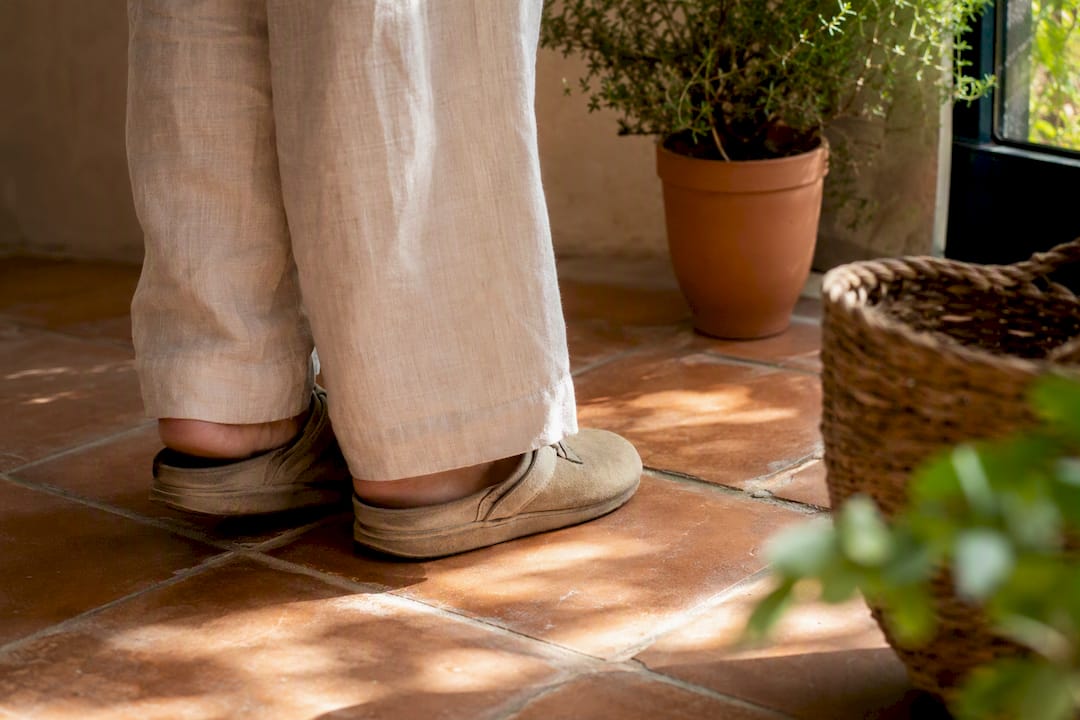
Climate compounds the problem. Cold, dry winter air pulls moisture out of exposed skin, and indoor heating makes it worse by dropping humidity even further indoors. Open-backed shoes and sandals in summer heat expose heels to friction and dryness with zero support, which is why cracked heels often spike at both ends of the year, deep winter and peak sandal season, for opposite reasons.
If your job keeps you standing most of the day, rotating between two pairs of shoes and adding a cushioned insole reduces repetitive pressure on the same spot. If you live somewhere with harsh winters, that’s exactly when the maintenance routine above needs to become non-negotiable rather than optional.
How Botanical Occlusives Fit the Repair Protocol
Podiatry-backed keratolytics do the heavy lifting when callus is thick and cracked, but the occlusive step afterward is where botanical ingredients genuinely earn their place. Palinova formulates around Palestinian botanicals specifically because ingredients like beeswax and Barbary Fig seed oil perform the sealing and nourishing job that overnight repair depends on.
PALINOVA Beeswax Soothing Cream works as an occlusive layer over a keratolytic treatment, trapping moisture against skin the same way petroleum jelly does, with the added skin-conditioning properties beeswax is known for. PALINOVA Barbary Fig Oil is suited to the daily nourishment phase, layered under an occlusive balm or used on its own once heels are past the heavy-callus stage. Together, Palinova’s soothing blends support the maintenance routine without pretending to replace medical-grade urea when a fissure is deep or stubborn. For readers who want product-specific application guidance, Palinova’s beeswax cream guide walks through timing and layering.
— abdelmuhsen
Where Palinova Fits Into Your Nightly Routine
Once you’ve done the keratolytic work, your skin needs an occlusive that actually stays put through a full night in socks and doesn’t feel greasy or synthetic against already-sensitive skin. That’s the specific gap Palinova’s beeswax and seed oil formulas are built to fill.

PALINOVA Beeswax Soothing Cream slots directly into the “occlude” step of the repair protocol, sealing in moisture and any keratolytic cream underneath through the night. PALINOVA Barbary Fig Oil works well as a daily nourishing layer once the worst of the cracking has resolved, supporting the maintenance phase rather than the acute repair phase. Think of them as the botanical half of a routine that still needs a real keratolytic to do the heavy lifting first.
If you’re ready to build out that nightly routine with ingredients sourced from Palestinian agricultural heritage rather than a lab, the Barbary Fig Oil product page has full usage details, and Palinova also offers free aromatherapy consultations if you want a routine tailored to your specific skin. Browse the full collection to see what fits your current stage of heel repair.
Sources
FAQ
What Is the Fastest Way to Heal a Cracked Heel?
Combine a warm 10 to 15 minute soak with gentle pumice exfoliation, then apply a 20% to 40% urea cream and seal it with an occlusive balm and socks overnight. Grade 1 to 2 fissures often show visible improvement within 7 to 10 days using this combination.
What Deficiency Causes Cracked Heels?
Cracked heels aren’t caused by a single deficiency, but low zinc, vitamin A, or omega-3 intake can weaken the skin’s natural barrier and make dryness worse. Chronic dehydration has a similar effect, since skin loses moisture priority when overall fluid intake is low.
Does Vaseline Get Rid of Cracked Heels?
Petroleum jelly alone won’t dissolve thick, hardened callus, but it plays an important supporting role as the occlusive layer after exfoliation and a keratolytic cream. Cleveland Clinic recommends it specifically as a moisture seal, not a standalone treatment for deep fissures.
What Is the Best Home Remedy for Cracked Heels?
The best-supported approach is the three-step protocol: soften with a warm soak, debride gently with a pumice stone, then apply a urea-based keratolytic followed by an occlusive balm like petroleum jelly or a beeswax cream overnight. This combination addresses both the thickened callus and the moisture barrier, which a moisturizer alone cannot do.
Recommended

Comments