
Achillea fragrantissima essential oil: science and uses

What is Achillea fragrantissima essential oil?
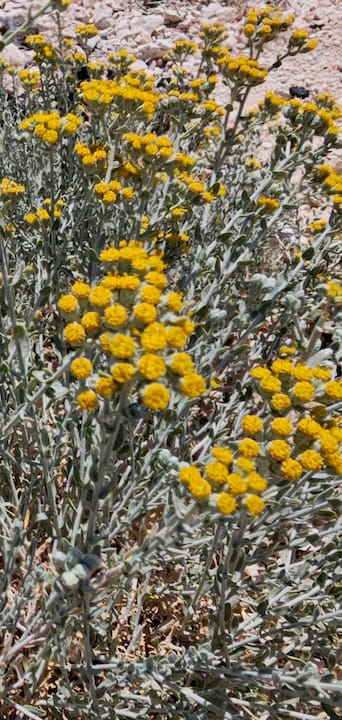
Achillea fragrantissima essential oil is one of the most pharmacologically dense plant extracts documented from the Middle Eastern flora, and its therapeutic credentials are now firmly supported by peer-reviewed research. Known locally in Palestine as Qaysoom, this aromatic desert subshrub grows in the gravelly riverbeds of the Jordan Valley and the Hebron Desert, where extreme aridity appears to concentrate its bioactive compounds to unusual levels.
The oil’s principal benefits are:
Antimicrobial activity against Gram-positive bacteria such as Staphylococcus aureus, Gram-negative pathogens including Pseudomonas aeruginosa and Escherichia coli, and the fungal pathogen Candida albicans
Anti-inflammatory action via suppression of pro-inflammatory cytokines TNF-α, IL-2, and IL-6, validated in cell-based assays
Antispasmodic and bronchodilator effects, with mechanistic evidence pointing to muscarinic receptor blockade and potassium channel activation
Analgesic properties, demonstrated in both central and peripheral pain models
Antioxidant capacity, with free-radical scavenging activity documented across multiple ecospecies
The key bioactive compound terpinen-4-ol (also reported as 4-terpineol) is consistently identified as a major constituent, particularly in oils derived from Egyptian plant material. Traditional Palestinian herbalists have used Qaysoom for respiratory complaints, gastrointestinal disorders, and wound care for generations. Modern pharmacology is now catching up with what those practitioners understood empirically.
Chemical composition and bioactive compounds
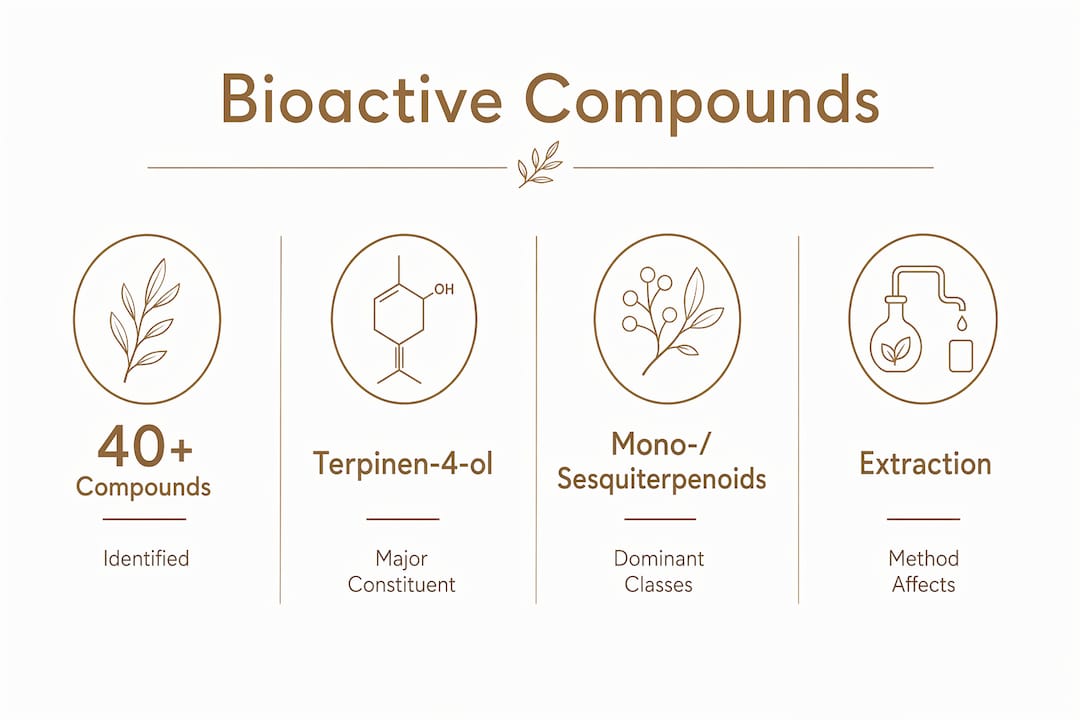
The phytochemical profile of Achillea fragrantissima essential oil is dominated by mono- and sesquiterpenoids, though the precise ratios shift considerably depending on where the plant was harvested and how the oil was extracted.

A comparative study of oils from Saudi Arabia and Egypt identified 40 compounds, with terpenes comprising nearly all of the total oil mass. Monoterpenoids formed the majority in both Saudi Arabian and Egyptian oils, while sesquiterpenoids constituted a substantial but smaller portion. The dominant compounds vary by origin: the Saudi Arabian oil is characterised by α-thujone (12.0%), myrcenyl acetate (10.3%), and β-thujone (4.7%), whereas the Egyptian oil leads with 4-terpineol (17.4%), myrcenyl acetate (9.1%), and artemisia ketone (9.0%).
Extraction method adds another layer of variation. Supercritical fluid extraction yields the highest oil output and produces piperatone as the dominant compound, while headspace extraction emphasises α-thujone (29.37%) and artemisia ketone (19.59%). Research published in BMC Complementary Medicine confirms that solvent-free methods enhance concentrations of bioactive molecules such as piperatone compared to standard hydrodistillation.
Compound | Class | Biological role |
Terpinen-4-ol (4-terpineol) | Monoterpenoid | Antimicrobial, anti-inflammatory |
α-Thujone | Monoterpenoid | Antimicrobial, antispasmodic |
β-Thujone | Monoterpenoid | Antimicrobial |
Artemisia ketone | Monoterpenoid | Antioxidant |
Piperatone | Monoterpenoid | Antimicrobial (elevated in SF extraction) |
Myrcenyl acetate | Monoterpenoid ester | Antioxidant, fragrance component |
(+)-Spathulenol | Sesquiterpenoid | Anti-inflammatory |
Santolina alcohol | Monoterpenoid | Antifungal |
Climatic stress, altitude, and seasonal timing all influence which compounds accumulate in the plant tissue. Geographical variance research confirms that antioxidant potency and constituent ratios differ meaningfully across regions, which is why provenance matters when evaluating any therapeutic claim tied to this oil.
How effective is the oil against bacteria and fungi?
The antimicrobial evidence for Achillea fragrantissima essential oil is among the strongest in the Achillea genus. Cell and biofilm studies show activity against Pseudomonas aeruginosa, Escherichia coli, Staphylococcus aureus, Streptococcus pyogenes, Clostridium perfringens, and Candida albicans, covering both Gram-positive and Gram-negative bacterial classes as well as a clinically significant fungal pathogen.
Minimum inhibitory concentrations vary by extraction method. Microwave-assisted hydrodistillation (MAHD) oils produced MIC values of 0.25–2 mg/mL against all tested organisms, while hydrodistillation oils ranged from 13–52 mg/mL. The supercritical fluid extract demonstrated particularly strong biofilm inhibition, suppressing biofilm formation across all tested strains by 65.12–80.84%. The highest single figure recorded was 80.84% inhibition of S. aureus biofilm at 185 mg/mL.
Pro Tip: When reviewing antimicrobial data for essential oils, always check which extraction method was used. MAHD and supercritical fluid extracts of Achillea fragrantissima consistently outperform standard hydrodistillation oils in both MIC and biofilm assays.
Biofilm inhibition is clinically relevant because biofilm-forming bacteria are notoriously resistant to conventional antibiotics. The oil’s broad-spectrum activity, combined with its biofilm-disrupting capacity, positions it as a candidate for adjunctive use in topical skin infection management, though clinical trial data in humans remains limited.
Anti-inflammatory effects and therapeutic potential
The anti-inflammatory action of Achillea fragrantissima essential oil operates through several distinct molecular pathways, which is what separates it from simpler plant extracts with only one mechanism of action.
In vitro studies using LPS-stimulated RAW 264.7 macrophages show that the oil suppresses TNF-α, IL-2, and IL-6 release and reduces inducible nitric oxide synthase (iNOS) expression. These are core mediators of the acute inflammatory cascade, and their suppression correlates with reduced tissue swelling and pain signalling.
The oil’s therapeutic applications extend across several body systems:
Respiratory relief: The oil acts as a bronchodilator by blocking muscarinic receptors and activating potassium channels to relax tracheal smooth muscle, suggesting potential utility in asthma and bronchospasm management
Digestive antispasmodic: The same receptor mechanisms that relax airway tissue also reduce intestinal cramping
Analgesic activity: Rodent studies demonstrate both central and peripheral pain relief, with protective effects observed in gastric and colonic tissue models
Neuroprotection: Pharmacology reviews identify anti-neuroinflammatory potential relevant to neurodegenerative disease research, though human clinical trials are absent
Antioxidant defence: Free-radical scavenging via DPPH and ABTS assays confirms oxidative stress reduction at the cellular level
The breadth of these mechanisms reflects the chemical complexity of the oil. No single compound accounts for all activity; the synergy between terpinen-4-ol, spathulenol, and the thujone isomers appears to drive the combined effect.
Traditional and contemporary uses in medicine
Palestinian and wider Middle Eastern herbalists have used Qaysoom for centuries across a remarkably consistent set of conditions. Traditional applications include gastrointestinal disorders (stomach pain, spasms, and dysmenorrhoea), respiratory ailments (coughs, fever, and allergic rhinitis), skin infections and wound healing, and inflammatory conditions including rheumatic pain.
Contemporary pharmacological research validates most of these uses at the mechanistic level. The antispasmodic effect on smooth muscle explains the gastrointestinal and respiratory applications. The antimicrobial and anti-inflammatory activities together account for the wound-healing and skin-infection uses. What traditional practitioners observed empirically, laboratory science has since mapped to specific receptor interactions and cytokine pathways.
Safety considerations for clinical and consumer use:
Dilution is non-negotiable: The oil must be diluted with a carrier oil such as jojoba or sweet almond before any topical application; undiluted application risks skin irritation
Ingestion requires supervision: Due to the potency of thujone-containing oils, oral use should only occur under the guidance of a qualified practitioner
Pregnancy and epilepsy: Thujone is a known convulsant at high doses; the oil is contraindicated in pregnancy and in individuals with seizure disorders
Patch testing: A 48-hour patch test on the inner forearm is advisable before broader topical use
Aromatherapy context: Olfactory exposure via diffusion can influence mood and stress responses through the amygdala, but the oil functions as a complementary wellness tool rather than a substitute for medical treatment
Dosage thresholds for human use are not yet established by clinical trial data. The absence of robust human studies means that all therapeutic applications should be approached with appropriate caution and professional oversight.
Palinova’s commitment to authentic sourcing and quality
Palinova sources its Achillea fragrantissima essential oil directly from Palestinian agricultural land, maintaining the provenance link that makes the oil’s chemical profile consistent and traceable. The Jordan Valley and Hebron Desert origins are not incidental; as geographical variance research confirms, regional growing conditions directly shape the oil’s constituent ratios and therapeutic potency.
Every batch undergoes purity verification, with GC/MS analysis used to confirm constituent identity and rule out adulteration with synthetic compounds or lower-grade oils. This matters because, as Ohio State Health notes, many mass-market essential oils contain synthetic fillers that compromise both safety and efficacy. Palinova’s Achillea fragrantissima oil carries no synthetic additives.
Ethical harvesting is built into the supply model. Palinova works within Palestinian agricultural heritage, supporting traditional knowledge holders and sustainable land use rather than industrial extraction. For health professionals and researchers seeking a traceable, unadulterated reference oil, this provenance chain is a meaningful quality signal.
Pro Tip: Before purchasing any Achillea fragrantissima essential oil, request the batch-specific GC/MS report. This document confirms the dominant compounds present (look for terpinen-4-ol and α-thujone) and verifies the absence of synthetic diluents. Palinova provides this assurance as standard.
Palinova also offers free personalised aromatherapy consultations, which is particularly useful for health professionals integrating the oil into patient-facing wellness protocols.
How does Achillea fragrantissima compare to other Achillea species?
The Achillea genus comprises roughly 130 species, and several produce essential oils with overlapping but distinct profiles. Achillea millefolium (common yarrow) is the most widely studied and contains chamazulene, which gives it a pronounced blue colour and strong anti-inflammatory activity via COX pathway inhibition. Achillea fragrantissima lacks significant chamazulene but compensates with higher thujone content and a broader antimicrobial spectrum.
Achillea biebersteinii and Achillea wilhelmsii are documented for antifungal and antioxidant activity, but neither matches the biofilm inhibition data recorded for A. fragrantissima supercritical fluid extracts. The bronchodilator mechanism, specifically the muscarinic receptor blockade and potassium channel activation, appears to be a distinguishing pharmacological feature of A. fragrantissima not consistently reported in other species. For researchers focused on respiratory or skin-infection applications, A. fragrantissima currently presents the more specific and better-characterised evidence base.
Potential side effects and contraindications
The thujone content of Achillea fragrantissima essential oil is the primary safety concern. α-Thujone and β-thujone are GABA-A receptor antagonists; at sufficient doses, they can cause convulsions, and chronic exposure carries hepatotoxic risk. The concentration of thujone varies by extraction method and origin, with headspace extracts showing α-thujone at 29.37% and hydrodistillation oils at 20.38%.
Contraindications include pregnancy, breastfeeding, epilepsy, and known sensitivity to plants in the Asteraceae family. Contact dermatitis is possible with undiluted topical use, and sensitisation can develop with repeated exposure to concentrated preparations. Individuals taking anticoagulant medications should exercise caution, as some Achillea species have demonstrated antiplatelet activity in laboratory models. The oil should be kept away from children and stored out of reach, as accidental ingestion of even small volumes poses a risk given the thujone load.
Stability and storage conditions
Essential oils degrade through oxidation, photolysis, and hydrolysis, and Achillea fragrantissima oil is no exception. The monoterpenoid-rich profile, particularly the thujone isomers and terpinen-4-ol, makes the oil susceptible to oxidative degradation when exposed to air, light, or heat. Oxidised terpenes are more likely to cause skin sensitisation than fresh oil, so storage conditions directly affect both potency and safety.
Store the oil in amber or dark violet glass bottles with airtight caps, away from direct sunlight and heat sources. A cool, dark cupboard or refrigerator (4–8°C) extends shelf life considerably. Carrier oils used for dilution, such as jojoba or sweet almond, should also be refrigerated and replaced if they develop a rancid odour. Opened bottles should be used within 12–18 months; unopened, properly stored oil may remain stable for up to three years. Always replace the cap immediately after use to minimise headspace oxidation.
Key takeaways
Achillea fragrantissima essential oil delivers scientifically validated antimicrobial, anti-inflammatory, and bronchodilator activity through a complex terpenoid profile that varies meaningfully by geographic origin and extraction method.
Point | Details |
Dominant bioactive compounds | Terpinen-4-ol, α-thujone, β-thujone, and piperatone drive the oil’s antimicrobial and anti-inflammatory effects. |
Biofilm inhibition | Supercritical fluid extracts strongly inhibit bacterial biofilm formation across all tested strains. |
Anti-inflammatory mechanism | The oil suppresses TNF-α, IL-2, IL-6, and iNOS expression in LPS-stimulated macrophage models. |
Thujone safety risk | High thujone content contraindicates use in pregnancy, epilepsy, and without carrier oil dilution for topical application. |
Provenance affects potency | Geographic origin and extraction method both alter constituent ratios and therapeutic activity; GC/MS verification is advisable before clinical use. |
Recommended
Comments