
6–12 Drops per 30 mL: Safe Essential Oils for Aromatherapy Massage

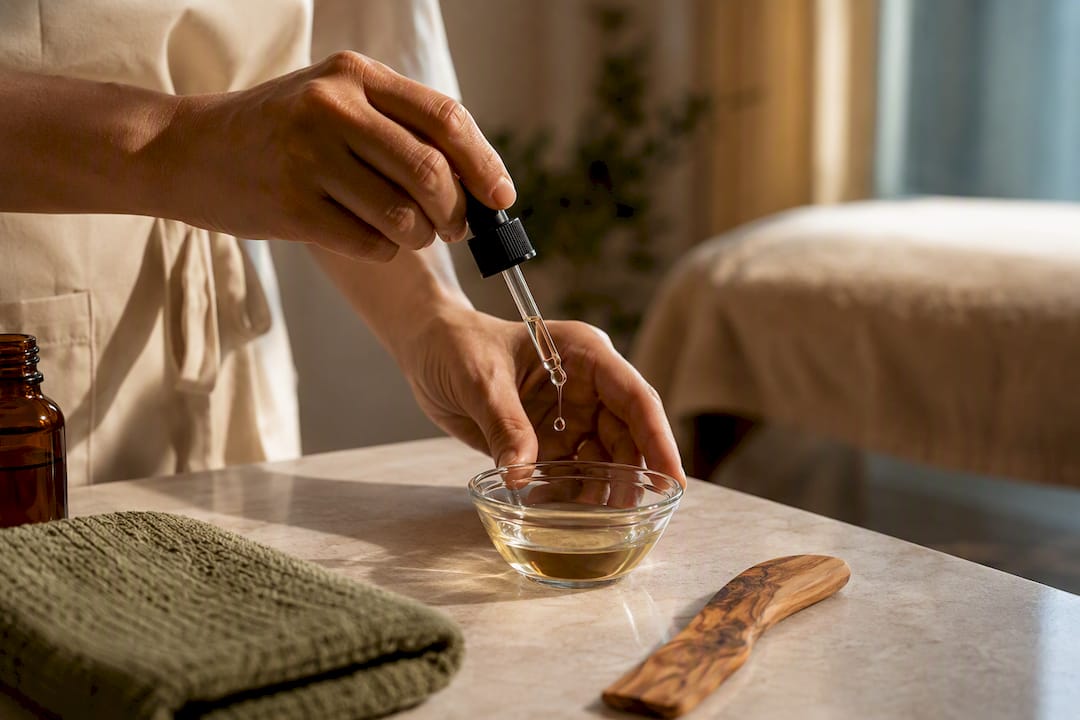
Lavender, peppermint, frankincense, roman chamomile, eucalyptus, rosemary, geranium, and bergamot cover most massage goals, from easing sore muscles to calming a stressed nervous system. The rule that matters more than the oil you pick: always dilute in a carrier oil, run a patch test first, and check for pregnancy or medication cautions before a session. Systematic-review evidence backs modest, short-term relief for pain and anxiety when essential oils are added to massage, not used alone.
TL;DR:
Lavender and roman chamomile are suitable for clients with sensitive or reactive skin, while eucalyptus and rosemary should be avoided for asthmatic or seizure-prone individuals.
Use 6 drops of essential oil per 30 mL of carrier oil for a 1% dilution, adjusting based on the targeted concentration and application area.
Always perform a patch test 24 hours before massaging with essential oils, and keep detailed records of oil types and ratios used for each client.
Quality sourcing, including GC/MS reports and traceable origin, is critical to ensure consistency and safety in aromatherapy massage.
Aromatherapies show modest, short-term relief for pain and anxiety, with evidence supporting their use as an adjunct rather than a substitute for medical treatment.
Table of Contents
Best Essential Oils for Aromatherapy Massage
Different oils solve different problems on the table, and matching the oil to the goal matters more than chasing whatever smells best in the bottle.
Lavender is the most-studied oil in massage research, largely thanks to linalool and linalyl acetate, its calming constituents. Trials commonly apply it at 1.5% to 3%, and a systematic review and meta-analysis found topical essential-oil therapy with massage produced a meaningful drop in pain intensity right after treatment. It suits tension, sleep trouble, and general stress.
Peppermint brings menthol, which creates a cooling sensation that can ease tight muscles and tension headaches. It is potent, so keep it under 2% and never use it near a client’s eyes or on broken skin.
Frankincense works well for grounding and for clients dealing with chronic discomfort. It is generally gentle on skin, though quality varies wildly between suppliers.
Roman chamomile is one of the mildest options, making it a solid pick for anxious clients, older adults, or anyone with reactive skin.
Eucalyptus supports respiratory ease and muscle relief, but its high cineole content makes it a poor choice for young children and anyone with asthma.
Rosemary stimulates circulation and works nicely in muscle-recovery blends, though it should be avoided with clients who have seizure disorders.
Geranium balances mood and plays well with skin, which is part of why Palinova’s geranium guidance treats it as a relaxation-blend staple.
Bergamot lifts mood but carries photosensitivity risk, so it needs a non-phototoxic version or same-day sun avoidance.
Skip cinnamon bark, oregano, clove, and wintergreen for massage work. All four are strong dermal irritants, and wintergreen carries salicylates that interact with blood thinners. Scent preference still matters. A client who dislikes eucalyptus won’t relax under it no matter how well it performs in a trial, so always ask about history and preferences before you open a bottle.
How Much Essential Oil Should You Use for a Massage?
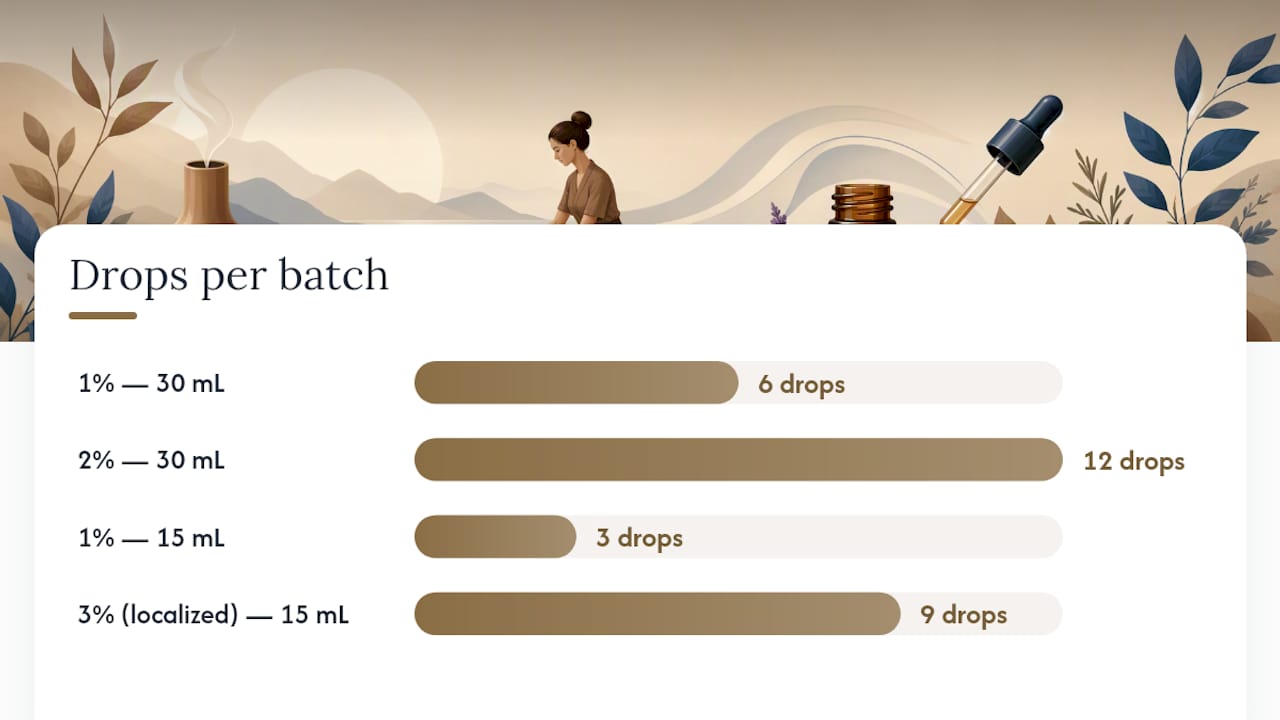
Dilution is where most home blenders get it wrong, and it is the single easiest place to prevent a skin reaction.
The math is simple once you know the standard: one drop of essential oil is roughly 0.05 mL.
For a 1% dilution in 30 mL of carrier oil, use about 6 drops.
For a 2% dilution in 30 mL, use about 12 drops.
For a 1% dilution in 15 mL (a smaller batch), use about 3 drops.
For a localized 3% blend in 15 mL, use about 9 drops.
Beyond blending into a carrier oil, you have three other reliable delivery options: a face-cradle inhalation pad (a drop or two on a cotton pad tucked below the headrest), a diffuser running in the room, or a warmed towel lightly scented before it’s laid over tired muscles. Before any of these, do a patch test: apply the diluted blend to the inner forearm, wait 24 hours, and check for redness, itching, or burning before using it anywhere else.
Pro Tip: Keep a small notebook of exactly which oils, ratios, and carrier you used for each client. If a reaction ever shows up days later, you’ll know precisely what caused it.
Which Carrier Oil Works Best for Massage?
Its texture determines how the whole massage feels.
Sweet almond oil is the industry standard: medium glide, moderate absorption, and a neutral scent that doesn’t compete with your blend.
Grapeseed oil absorbs faster and feels lighter, which works well for oily or acne-prone skin, though therapists doing long sessions may need to reapply more often.
Jojoba oil is technically a liquid wax that mimics skin’s natural sebum, giving it excellent shelf stability and a smooth, non-greasy finish.
Fractionated coconut oil is odorless, very light, and never turns solid at room temperature, making it a favorite for hot climates or long massage sessions.
Sweet almond and grapeseed both come from allergen categories, tree nuts and grapes respectively, so ask about nut allergies before reaching for almond oil. Jojoba and fractionated coconut are the safer defaults for clients with known nut sensitivities. Specialty carriers like arnica-infused oil can help with bruising and joint stiffness, but arnica itself isn’t meant for broken skin or long-term daily use.
Simple Essential Oil Blends for Relaxation, Muscle Relief, and Energy
You don’t need a dozen bottles to build an effective blend, just the right ratio for the goal.
Relaxation blend: 7 drops lavender plus 3 drops bergamot in 30 mL carrier oil gives roughly a 1% dilution, appropriate for full-body work. Swap in lavender alone at a lower ratio for sensitive skin.
Muscle relief blend: 4 drops peppermint plus 4 drops rosemary in 15 mL carrier oil creates a localized 2.5% blend for shoulders, calves, or lower back, not for full-body spread.
Energizing blend: 2 to 3 drops rosemary with a citrus oil like sweet orange in 30 mL carrier gives a light 0.5% to 1% dilution, or skip the carrier entirely and use it on an inhalation pad.
Child-safe or sensitive-skin variant: halve every drop count above and stick to roman chamomile or lavender as the base note.
Pro Tip: Mix a small 15 mL test batch before committing to a full bottle. Scent and skin response can shift once oils blend together, even when each one tested fine alone.
Is Aromatheromy Massage Safe? Contraindications to Know
Most healthy adults tolerate diluted essential oils well, but several groups need real caution, not a quick disclaimer.
Pregnancy and postpartum: avoid rosemary and several other stimulating oils in the first trimester, and reduce concentrations generally; check with a doctor for any oil used regularly.
Seizure disorders: rosemary and eucalyptus can be problematic; avoid them without medical clearance.
Blood thinners: wintergreen and other high-salicylate oils can amplify medication effects and should be avoided entirely.
Photosensitivity: bergamot and several citrus oils react with UV light, so use a bergaptene-free version or plan for zero sun exposure for 12 hours after application.
If a reaction happens, wash the area with mild soap and water immediately, remove the carrier oil residue with a clean cloth, and seek medical attention for swelling, difficulty breathing, or spreading rash. Professional guidance from the American Massage Therapy Association recommends thorough client intake and documented consent before every aromatherapy session, not just the first one. That paperwork step is often skipped, and it is exactly the thing that protects both client and therapist when something unexpected comes up.
What Does the Research Actually Show About Aromatheromy Massage?
Topical essential-oil therapy applied with massage produced a favorable effect on pain intensity compared with placebo immediately after treatment, with smaller but still measurable benefits at one and four weeks out.
That finding comes from a systematic review and meta-analysis of musculoskeletal pain trials, and it lines up with what an evidence map covering 171 trials also found: benefits show up for pain, sleep, and anxiety in some settings, but confidence in the results ranges from low to moderate. Part of the problem is mixed methodology. Many studies blend inhalation and topical massage without separating out which delivery method drove the result, and oil concentration varies by trial. The honest takeaway: aromatherapy massage is a reasonable add-on for pain and stress, not a substitute for medical treatment.
How to Tell If an Essential Oil Is High Quality
A cheap essential oil and a properly distilled one can look identical in the bottle and behave very differently on skin.
Check the label for the Latin botanical name, not just the common name. A legitimate supplier will offer a GC/MS report on request, showing the exact chemical breakdown of that specific batch, along with a batch number and some detail on harvest region and extraction method. Fresh oils smell bright and consistent; oxidized ones smell flat, slightly rancid, or noticeably different from bottle to bottle. Traceable sourcing isn’t a marketing add on, it is what keeps a blend’s therapeutic profile consistent from one purchase to the next, which is the whole point of buying a specific oil for a specific outcome rather than whatever is cheapest that week.
Why Sourcing Shapes Every Blend You Make
Aromatherapy only works as well as the oil behind it, and that’s the piece Palinova treats as non-negotiable. Every batch is tied to a specific Palestinian harvest, sourced with attention to soil, timing, and extraction rather than mass production. That matters for something like Barbary Fig Seed Oil, prized for its skin-repair properties, where potency depends entirely on how the seed was pressed. Readers unsure which blend fits their skin type or medical history can seek personalized aromatherapy consultation services for recommendations built around their actual situation.
What This Guide Gets Right That Most Don’t
Most essential oil content online treats safety as a footnote and dilution ratios as an afterthought buried under a wall of marketing copy. That gets the priority backward. The research is genuinely modest here, a favorable but not dramatic effect on pain, some signal on anxiety, low-to-moderate certainty across the board, and pretending otherwise does readers no favors.
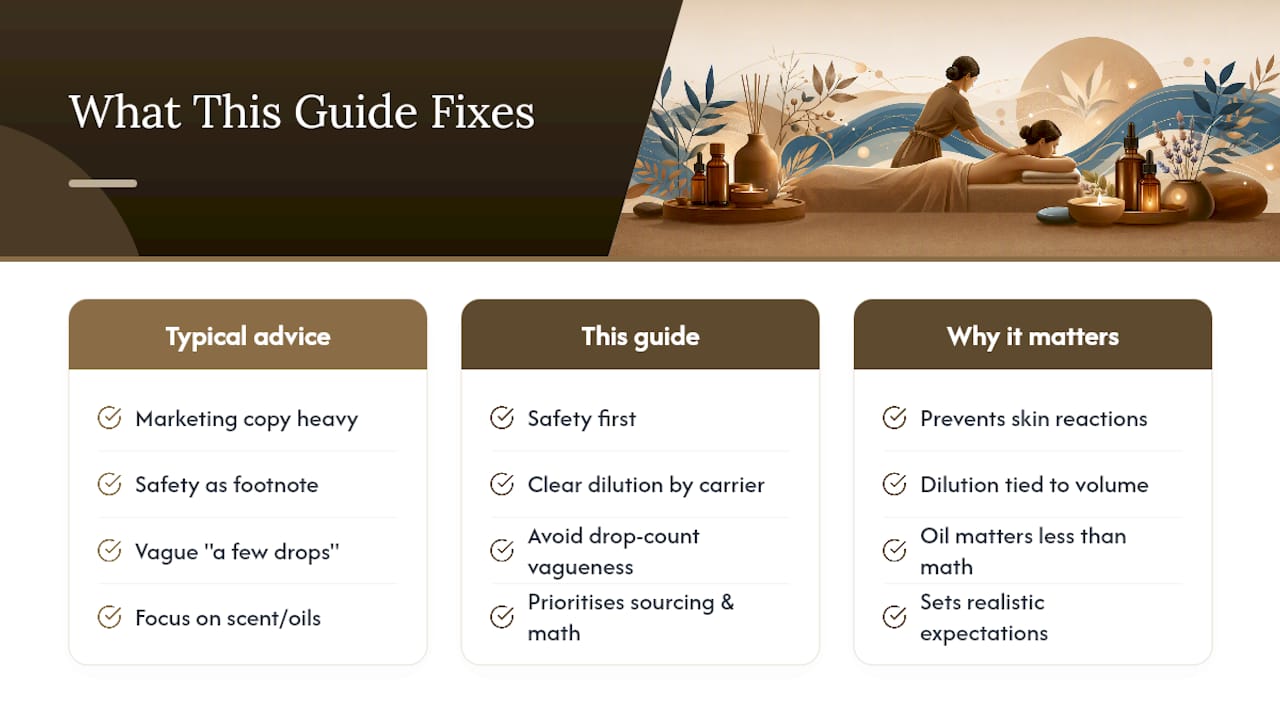
Where conventional advice fails hardest is drop-count vagueness. Telling someone to add “a few drops” of peppermint to a massage blend with no reference to carrier volume is how skin reactions occur. The oil matters less than most articles suggest. Sourcing and dilution math matter more.
Everything else, which oil smells nicer, which blend sounds more luxurious, is preference. Safety is not.
— abdelmuhsen
Palinova’s Recommended Oils for Massage and Where to Start
Three products come up often once you know what you’re targeting. Wildcrafted Cypress Essential Oil works well for grounding and muscle support, especially in a localized post-exercise blend. Achillea Fragrantissima offers gentle, anti-inflammatory qualities that suit clients who find stronger oils like peppermint too intense. And Palinova’s geranium guidance page walks through skin-friendly ratios for anyone building a relaxation blend from scratch.
Before buying a full bottle of anything new, check the product page for GC/MS availability and start with the smallest size offered, usually enough for several test blends before committing to a larger purchase. If you’re unsure which oil fits your skin type, a medical condition, or a specific massage goal, book a free aromatherapy consultation and get a recommendation built around your actual situation rather than a generic list.
Where to Learn More About Aromatheromy Massage
The systematic review and meta-analysis on topical essential oils for the clearest pain-outcome data available.
The NCBI evidence map for a broad view of what’s actually been studied.
AMTA’s practitioner guidance for professional-level dilution and intake standards.
Harvard Health on therapeutic massage for general context on massage and pain relief.
Sources
FAQ
What’s the difference between essential oil and aromatherapy oil?
An essential oil is the concentrated plant extract itself, while an “aromatherapy oil” usually refers to that essential oil already diluted into a carrier oil at a massage-safe percentage.
Can you use essential oils for massaging?
Yes, but only after diluting them in a carrier oil like sweet almond or fractionated coconut. Undiluted, or “neat,” application on skin raises the risk of irritation and sensitization significantly.
Recommended


Comments