
Evidence Backed Essential Oils for Sleep for Adults, 20 Minute Ritual

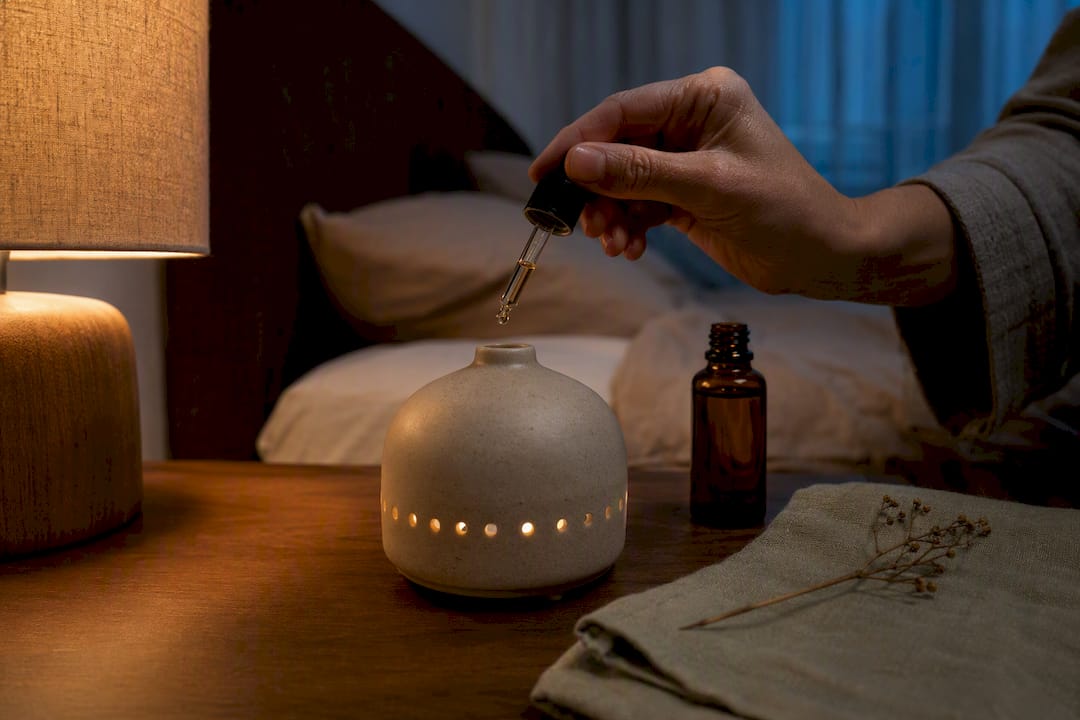
Lavender has the strongest evidence behind it for sleep, with a 2025 review of 11 randomized controlled trials showing a significant improvement in sleep quality among adults. If lavender’s scent isn’t your thing, cedarwood, bergamot, chamomile, and vetiver are solid alternatives. Tonight’s move: diffuse your chosen oil for at least 20 minutes before bed, or add a few drops to a cotton pad by your pillow. Save any topical use for after you’ve diluted properly.
TL;DR:
Diffusing 3-5 drops of your chosen oil for at least 20 minutes before bed enhances sleep, while longer sessions can yield better results.
For physical discomfort or nighttime waking, cedarwood or chamomile may be more effective than lavender, depending on your specific sleep issue.
Avoid energizing oils like rosemary, peppermint, and citrus at bedtime, as they can increase alertness and hinder sleep initialization.
Use proper dilution and patch testing before skin contact, and consult a healthcare professional if pregnant, breastfeeding, or caring for pets sensitive to scents.
Table of Contents
Which Essential Oils Actually Help You Sleep?
Not every calming scent does the same job. Some oils quiet a racing mind, others ease physical tension, and a few just smell good without doing much physiologically. Matching the oil to your actual sleep problem, rather than grabbing whatever’s on sale, makes a real difference.
Lavender carries the most consistent research behind it. The pooled data from 11 trials and 628 participants found a standardized mean difference of -0.56 for sleep quality, a result researchers flagged as statistically significant. Lavender’s linalool and linalyl acetate content is likely behind its sedative effect after inhalation. It works broadly, whether your issue is anxiety, trouble falling asleep, or just a mind that won’t shut off.
Cedarwood contains cedrol, a compound linked to sedative activity that seems particularly useful for people who fall asleep fine but wake up in the middle of the night. Its woody, grounding scent also layers well with lavender in a diffuser blend.
Bergamot stands out for anxiety-driven sleeplessness. It’s citrus-bright rather than heavy, and people who find lavender too “floral” often respond better to it.
Chamomile splits into two useful camps. Roman chamomile leans calming and is a good match for anxious, overthinking minds. German chamomile has more anti-inflammatory character, which makes it worth trying if physical discomfort, like tension or minor aches, is what’s keeping you up.
A few others deserve short mentions:
Clary sage has mild sedative and mood-balancing properties, often used for stress-related insomnia.
Vetiver is deeply earthy and grounding, a good pick for people who feel physically restless at night.
Ylang-ylang is sweet and heavy, useful for lowering a racing heart rate before bed.
Frankincense brings a slow, meditative quality that pairs well with breathwork routines.
Neroli offers citrus-floral calm without the stimulating edge some citrus oils have.
Sweet orange is gentle and mood-lifting, a good starter oil for people new to aromatherapy.
Valerian has a strong, earthy smell and a long folk history as a sleep aid, though it’s more polarizing scent-wise than the others.
Pro Tip: If you’re sensitive to strong smells, start with a single oil like lavender or bergamot rather than a pre-mixed blend. Single-oil inhalation often outperforms mixed blends in clinical comparisons, and it’s easier to tell what’s actually working.
Skip rosemary, peppermint, and petitgrain at bedtime. All three are known for their energizing, alertness-boosting effects, the opposite of what you want in the hour before sleep.
How to Use Essential Oils for Sleep, Step by Step
The method matters almost as much as the oil. Here’s a practical approach you can start tonight and keep using for weeks.
Set up a diffuser session. Place it a few feet from your bed, not right next to your face, in a room with some airflow. Use 3 to 5 drops of oil for a standard ultrasonic diffuser, and run it for at least 20 minutes before you fall asleep. Aromatherapy sessions longer than 20 minutes tend to produce noticeably larger effects than shorter bursts.
Try direct inhalation if you don’t have a diffuser. A cotton pad with 2 to 3 drops tucked near your pillow works well, as does a personal aromatherapy inhaler you can keep on the nightstand. Steam inhalation, a few drops in a bowl of hot water, works faster but isn’t practical to sustain all night.
Dilute before any skin contact. A general adult guideline is 2 to 3% dilution in a carrier oil like jojoba or sweet almond, applied to wrists, temples, or the soles of the feet. Citrus oils like bergamot carry a photosensitivity risk, so keep them off skin that will see sun exposure the next day.
Add a bath if you want a fuller ritual. Mix 4 to 6 drops into a tablespoon of carrier oil or unscented bath gel before adding it to running water, about 30 to 60 minutes before bed.
Repeat nightly and give it time. Multi-week use, commonly up to four weeks in the trials, tends to produce stronger results than a single try. Give any routine at least two to four weeks before deciding it isn’t working.
Pro Tip: For the full breakdown on drop counts, diffuser placement, and ventilation, Palinova’s guide on using essential oils in a diffuser safely covers the specifics in more depth.
Safety, Dilution, and Who Should Be Cautious
Patch-test any new oil before regular use: apply a diluted drop to your inner forearm and wait 24 hours to check for redness or irritation. For general dilution charts and full patch-test steps, Palinova’s essential oil dilution guide walks through specific ratios for different uses.
Pregnant or breastfeeding women, infants, and people with dementia should check with a clinician before starting regular aromatherapy, since some oils carry hormonal or respiratory cautions that don’t apply to the general adult population. Pets are a separate concern entirely: cats in particular are sensitive to many essential oils, including tea tree and citrus oils, so keep diffusers out of rooms where animals can’t leave if the scent bothers them.
Several published reviews note that independent purity testing is often missing from aromatherapy trials, which is one reason sourcing matters as much as the oil itself.
When you’re buying, look for:
The Latin botanical name on the label (Lavandula angustifolia, not just “lavender”).
Language indicating steam distillation rather than solvent extraction.
GC/MS testing documentation, if the seller offers it.
And remember: rosemary, peppermint, and citrus oils like lemon and grapefruit tend to be stimulating rather than calming, so they’re better suited to a morning routine than an evening one.
What the Research Says, and How Fast You Should Expect Results
The clearest evidence points to lavender, with that -0.56 standardized mean difference from the 2025 review standing out as one of the more robust findings in this space. A 2025 Frontiers meta-analysis covering 27 publications and over 2,000 patients found inhalation aromatherapy improved sleep outcomes and reduced anxiety and depression symptoms in people with comorbid insomnia. The catch: studies varied a lot in design, and few tested the actual purity of the oils used.
Translate that into practical terms: don’t expect a single 5 minute sniff to fix insomnia. Give it a real session length and a few weeks of consistency before judging whether it’s working for you.

Why Palinova Approaches Aromatherapy Differently
Sourcing is where most sleep-aid claims fall apart, since purity testing is often missing from the trials researchers rely on. Certain essential oils, such as Wildcrafted Cypress, are steam-distilled and drawn from botanicals rooted in generations of agricultural practice. Beyond the product itself, Palinova offers free personalized aromatherapy consultations for readers who want help building a routine suited to their specific sleep pattern, plus ongoing blog resources like the guide to Palestinian essential oils in daily wellness rituals for continued learning.
— abdelmuhsen
Ready to Build Your Own Nightly Ritual?
Once you know which oil fits your sleep pattern, the next step is finding one you can actually trust. Palinova’s Wildcrafted Cypress Essential Oil is steam-distilled and sourced from Palestinian botanicals, grounding and woody in a way that pairs well with the diffuser routine outlined above.

If you’re not sure which oil matches your specific sleep barrier, whether that’s racing thoughts, physical tension, or waking up at 3 a.m., free personalized aromatherapy consultations may be available to help you figure out the best oils instead of guessing. You can also browse the full collection of new arrivals for other sleep-supportive options, including the calming floral notes of geranium oil. Reach out for a consultation or place an order tonight, and give your routine a few weeks to settle in before judging the results.
Where This Article’s Claims Come From
This guide draws on a 2025 systematic review of lavender’s sleep effects, a meta-analysis on aromatherapy session length, a 2025 Frontiers review on inhalation aromatherapy and comorbid insomnia, a pooled analysis of aroma inhalation therapy trials, and the Sleep Foundation’s practical oil guide.

This article is general information, not a substitute for advice from a qualified doctor. Consult a qualified healthcare professional about your own circumstances before acting on anything here.
Sources
FAQ
Which essential oil is best for sleeping?
Lavender has the strongest research support, with a 2025 review of 11 clinical trials finding a significant improvement in sleep quality. Cedarwood, bergamot, and chamomile are effective backups if you don’t respond well to lavender’s scent.
What essential oil makes you fall asleep quicker?
Lavender and bergamot both show calming effects tied to reduced anxiety, which is often what delays sleep onset. Diffusing either for 20 minutes or more before bed tends to work better than a brief application right before you close your eyes.
Where do I apply essential oils for sleep?
Undiluted application directly on skin isn’t recommended, and citrus oils like bergamot should be kept off skin exposed to sunlight the next day.
Which oil is best for sleeping if lavender isn’t for you?
Cedarwood works well for staying asleep through the night, while chamomile suits anxious minds or mild physical discomfort. Vetiver is a strong choice if restlessness, rather than racing thoughts, is your main barrier.
Recommended


Comments