
Fennel Seed Oil: Nature's Ancient Answer to Digestive Relief

Fennel seed oil can genuinely ease bloating, gas, and cramping for most healthy adults, and it has done so across cultures for thousands of years. The evidence base is uneven: the clearest human trial data comes from pediatric colic studies, where a fennel-seed-oil emulsion eliminated colic in 65% of treated infants versus 23.7% for placebo. Adult data is thinner but consistent with the mechanism.
The practical bottom line:
Bloating, gas, and post-meal cramping: Fennel seed oil and seed preparations are a reasonable adjunctive option. Expect relief within minutes to an hour for functional symptoms.
IBS and functional dyspepsia: Some combination trials show benefit; fennel works best alongside dietary changes, not instead of them.
Infant colic: The strongest human-trial evidence exists here, but pediatric use requires a clinician’s guidance on formulation and dose.
Structural GI disease, celiac disease, or severe IBD: Fennel is not a substitute for medical treatment. See a clinician first.
Fennel seed oil is an adjunct, not a primary therapy. Johns Hopkins Medicine notes that most over-the-counter digestive supplements are not FDA-regulated drugs, and whole-food strategies plus targeted medical care remain the foundation. Fennel fits best as a well-chosen addition to that foundation.
Key Takeaways
Fennel seed oil is a well-supported adjunctive digestive aid with a plausible mechanism, a strong pediatric trial, and a favorable safety profile at reasonable doses.
Point | Details |
Evidence verdict | Strongest human trial data is pediatric (65% colic elimination); adult functional GI evidence is consistent but limited. |
Best use cases | Post-meal bloating, gas, mild cramping, and functional IBS as an adjunct to diet and medical care. |
Safety flags | Avoid medicinal doses in pregnancy; check interactions with anticoagulants and hormone-sensitive medications. |
How to start | Begin with a post-meal seed chew or fennel tea before investing in concentrated extracts or essential oils. |
Palinova option | Palinova’s 10ml Fennel Oil is steam-distilled from Foeniculum vulgare and fits the quality profile recommended in this guide. |
Table of Contents
What is fennel seed oil, and what makes it work on digestion?
What does the science actually say about fennel and digestion?
How to use fennel seed oil: forms, doses, and simple recipes
Safety, side effects, and drug interactions you need to know
A closer look at the key studies: methods, results, and limits
Palinova’s 10ml fennel oil: a well-sourced option for your wellness routine
What is fennel seed oil, and what makes it work on digestion?
Foeniculum vulgare is a flowering plant in the carrot family, native to the Mediterranean but now grown across the Middle East, India, and North America. Every part of the plant has culinary or medicinal history, but the seeds and the oil pressed or distilled from them carry the highest concentration of bioactive compounds.
The active compounds that matter
Trans-anethole is responsible for the characteristic anise-like aroma and most of the digestive activity. It relaxes intestinal smooth muscle (antispasmodic action) and helps gas move through the gut rather than accumulating, which is the classic carminative effect. Research confirms that these antispasmodic and carminative actions reduce intestinal smooth-muscle spasm and support gas passage.
Fenchone is the second major volatile, contributing a slightly bitter, camphor-like note. It has mild antimicrobial properties and may reinforce the antispasmodic effect. Estragole (methyl chavicol) is present in smaller amounts and has raised some safety questions at high doses, discussed in the safety section below. Limonene, also present, has anti-inflammatory properties studied in other contexts.
Dose forms and how traditional use maps to modern products
The USDA FoodData Central documents fennel seeds as a food ingredient rich in fiber, calcium, and iron, which supports their role in general digestive health when eaten regularly. Traditional use goes further:
Post-meal seed chew (mukhwas): Common across South Asia and the Middle East. A small pinch of seeds after a meal is still the most accessible and fastest-acting form.
Fennel tea: A European Commission E-approved preparation. Steeping 1–2 teaspoons of crushed seeds in hot water for 10 minutes extracts the volatile oils into a drinkable form.
Tincture or ethanolic extract: Captures a broader constituent profile than steam distillation alone, including non-volatile phenolics. Used in herbal pharmacy traditions.
Essential oil (steam-distilled): Concentrated trans-anethole. Requires dilution for any oral or topical use.
Enteric-coated capsules: Deliver the oil past the stomach to the small intestine, reducing heartburn risk and targeting lower-GI symptoms.
Pro Tip: Crushing or lightly toasting whole fennel seeds before chewing or steeping releases more volatile oil than using them whole. A quick 30-second dry toast in a pan makes a noticeable difference in aroma and potency.
What does the science actually say about fennel and digestion?
The evidence sits at two levels: preclinical (cell and animal models) and human clinical trials. Both matter, but they answer different questions.
Preclinical findings: barrier protection and anti-inflammatory signaling
A 2022 study published in both PMC and PLOS One tested an ethanolic fennel seed extract in cell cultures and in mice with DSS-induced colitis. The extract reduced pSTAT1 activation, a key node in the JAK/STAT inflammatory signaling pathway, and improved transepithelial electrical resistance (TEER), a direct measure of intestinal barrier integrity. Histological damage in the colitis mice was also reduced.
What this means in plain terms: The gut lining acts like a selective filter. When it becomes “leaky,” inflammatory signals amplify and symptoms worsen. Fennel extract, in this preclinical model, helped keep that filter intact and quieted one of the main inflammatory alarm systems. This is mechanistically interesting, but mice with chemically induced colitis are not the same as humans with IBS or Crohn’s disease. These findings support further human trials rather than clinical claims.
Human clinical evidence
The clearest human-trial statistic comes from a pediatric randomized controlled trial (the Alexandrovich 2003 study): a fennel-seed-oil emulsion eliminated colic in 65% of treated infants compared to 23.7% in the placebo group, with no serious adverse events reported. That is a meaningful effect size in a controlled design.
Adult data is more limited. Combination trials pairing fennel with other carminatives (peppermint, caraway) for functional dyspepsia and IBS show consistent but modest symptom reduction. No large, fennel-only adult RCT has been published as of this writing.
Evidence type | Population | Key finding | Strength |
Preclinical (cell/mouse) | DSS colitis model | Reduced pSTAT1, improved TEER, less histological damage | Moderate (mechanistic signal only) |
Pediatric RCT | Infants with colic | 65% colic elimination vs. 23.7% placebo | Strong for this population |
Adult combination trials | IBS/functional dyspepsia | Symptom reduction with fennel-containing blends | Moderate (heterogeneous preparations) |
Statistic to remember: 65% vs. 23.7%. That gap in the infant colic trial is the most concrete human evidence fennel seed oil has. Adult evidence is real but less definitive.
Who is most likely to benefit from fennel seed oil?
Fennel seed oil works best for functional digestive complaints, meaning symptoms without an underlying structural or inflammatory disease driving them.
Most likely to see benefit:
Adults with post-meal bloating and gassiness, especially after high-fiber or cruciferous vegetable meals
People with functional IBS (particularly IBS-C or IBS-M) looking for an adjunctive carminative alongside dietary management
Individuals with mild functional dyspepsia who experience upper-abdominal discomfort or early satiety
Infants with colic, under pediatric supervision and with an appropriate formulation
Anyone using fennel as a preventive measure (post-meal chew or pre-meal tea) rather than a rescue treatment for severe symptoms
Who should not expect fennel to be the answer:
People with untreated celiac disease or gluten sensitivity (dietary intervention comes first)
Those with active, severe IBD flares requiring medical management
Anyone with a confirmed structural GI issue (strictures, polyps, motility disorders) without clinician oversight
Individuals with known allergies to plants in the Apiaceae family (carrots, celery, parsley, dill), which cross-react with fennel
WebMD’s clinical overview reinforces that fennel is best treated as an adjunct to diet and medical care, not a standalone treatment. That framing is accurate and worth keeping in mind before you stock up.
The timing matters too. A post-meal seed chew or a pre-meal cup of fennel tea works preventively, reducing gas formation before it builds. Reaching for fennel after severe cramping has already set in is less effective than using it consistently as part of a digestive routine.
How to use fennel seed oil: forms, doses, and simple recipes
The five main forms, ranked by accessibility
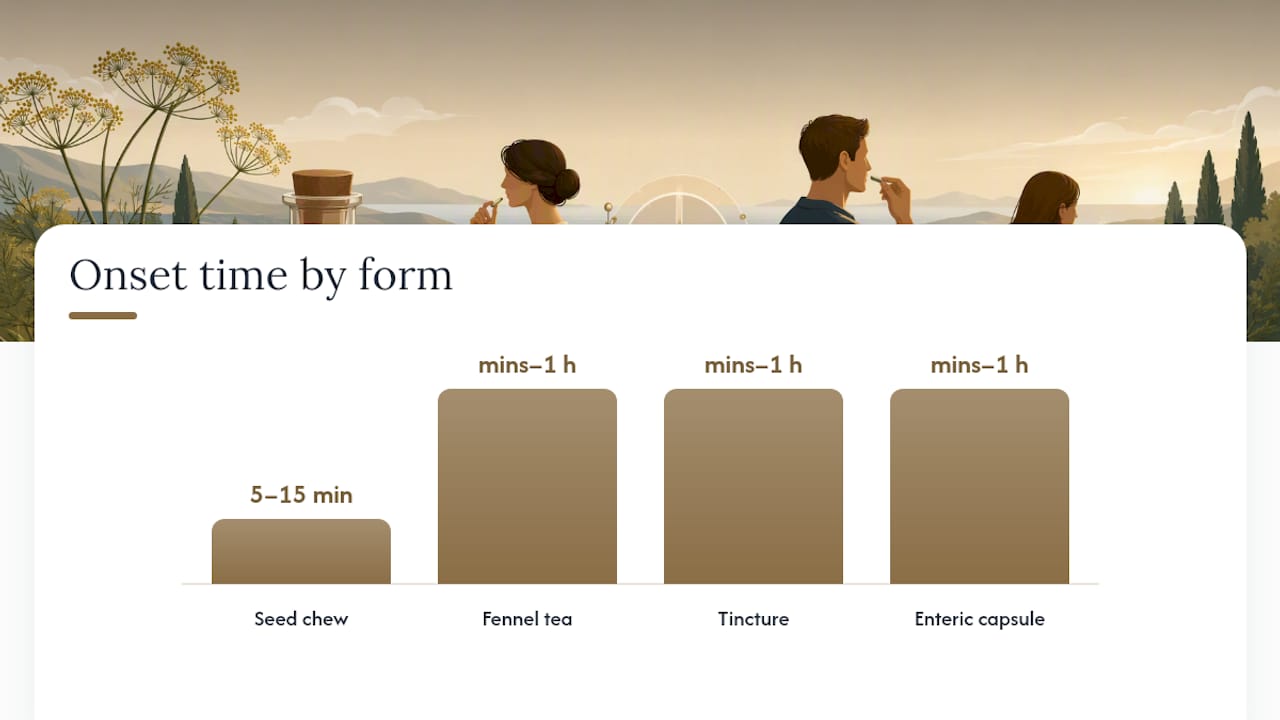
Whole seed chew: The simplest entry point. Chew ½–1 teaspoon of seeds after meals. Transmucosal absorption of volatile components from chewing can produce relief within 5–15 minutes, faster than intestinal absorption from a capsule.
Fennel tea: Crush 1–2 teaspoons of seeds, steep in 8 oz of hot (not boiling) water for 10 minutes, strain and drink. Traditional monographs from the American Botanical Council support this range for adult use. Drink 2–3 cups daily between or after meals.
Tincture or ethanolic extract: Follow the product label; typical adult doses in herbal practice run 2–4 ml of a 1:5 tincture, two to three times daily. Ethanolic extracts capture a different constituent profile than steam-distilled oil, including non-volatile phenolics relevant to the STAT/barrier findings.
Essential oil in enteric capsules or diluted oral drops: Use only standardized, third-party-tested products. Typical oral doses in clinical preparations range from 0.1–0.6 ml of fennel essential oil per day, divided. Never ingest undiluted essential oil directly from a bottle.
Aromatherapy (inhalation or topical diluted): Diffuse 3–5 drops in a room diffuser for general comfort. For topical abdominal massage, dilute 1–2 drops of fennel essential oil in 1 teaspoon of a carrier oil (such as sweet almond or jojoba) and massage clockwise over the abdomen.
Pro Tip: Combining fennel with peppermint or ginger in a tea blend amplifies the carminative effect. A simple blend: 1 teaspoon crushed fennel seeds, ½ teaspoon dried peppermint, and a thin slice of fresh ginger steeped together for 10 minutes. Avoid mixing fennel tincture with alcohol-based preparations if you are taking medications metabolized by the liver.
Form | Best for | Onset | Key limit |
Seed chew | Post-meal gas, quick relief | 5–15 min | Lowest dose; mild effect |
Tea | Daily digestive support, mild bloating | minutes to an hour | Requires preparation |
Tincture | Broader constituent profile, IBS support | minutes to an hour | Alcohol content; label variation |
Enteric capsule | Lower-GI targeting, IBS-C | minutes to an hour | Requires quality sourcing |
Aromatherapy/topical | Comfort, mild cramping | Variable | No systemic GI effect |
Safety, side effects, and drug interactions you need to know
Fennel seed oil has a strong safety record when used in food amounts or in standardized preparations. At higher doses or in essential-oil form, the risk profile shifts.
Common side effects
Mild heartburn is the most frequently reported side effect, particularly with tea or tincture on an empty stomach. Allergic reactions occur in people sensitive to the Apiaceae family. Essential oil applied undiluted to skin causes irritation and, in some cases, photosensitivity.
The estragole question
Estragole, a minor constituent of fennel essential oil, is a weak rodent carcinogen at very high doses in animal studies. The European Food Safety Authority has flagged it as a concern at pharmacological doses. At the amounts present in a cup of fennel tea or a post-meal seed chew, the exposure is far below levels associated with risk in animal models. Long-term, high-dose supplementation with concentrated fennel oil is a different calculation, and caution is warranted.
Drug interactions
If you take blood thinners (warfarin, aspirin, clopidogrel) or antiplatelet medications, talk to your clinician before adding fennel supplements. Fennel has mild estrogenic activity from trans-anethole, which may also interact with hormone-sensitive conditions or medications. Some evidence suggests fennel can affect CYP enzyme activity, potentially altering how certain prescription drugs are metabolized. The interaction risk is low at food doses but rises with concentrated extracts or essential oil.
Population-specific cautions:
Pregnancy: Avoid medicinal doses of fennel essential oil. Traditional food amounts (seeds in cooking) are generally considered safe, but concentrated preparations have uterine-stimulant activity in animal models.
Breastfeeding: Small amounts in food are likely fine. Medicinal fennel preparations have been used traditionally to support milk production, but evidence is limited and quality varies. Consult a clinician.
Children and infants: Only use pediatric-specific formulations under clinician guidance. Do not give undiluted essential oil to children.
Red flags requiring a clinician visit: Unexplained weight loss, blood in stool, persistent vomiting, or symptoms that worsen despite two weeks of consistent fennel use. These are not fennel problems; they are signals that something else needs evaluation.
How to choose a quality fennel product in the U.S.
The U.S. supplement market is not regulated the way pharmaceuticals are. The FDA does not approve dietary supplements for safety or efficacy before they reach store shelves. That puts the burden of quality verification on the buyer.
What to look for on the label
Botanical name: The label must say Foeniculum vulgare. “Fennel oil” or “fennel extract” without the Latin name tells you nothing about what is actually in the bottle.
Extraction method: Steam-distilled essential oils preserve the volatile fraction (trans-anethole, fenchone) best. Cold-pressed seed oils are different products with a different constituent profile. Solvent-extracted products should specify USP-grade solvents and residual solvent testing.
GC/MS testing: Gas chromatography/mass spectrometry is the standard method for verifying essential oil composition and purity. A reputable supplier provides a certificate of analysis (COA) with GC/MS data for each batch.
Third-party certification: Look for NSF International, USP, or Informed Sport verification, or a COA from an independent lab. The American Herbal Products Association (AHPA) provides good manufacturing practice guidance that quality producers follow.
Country of origin and batch traceability: Know where the fennel was grown. Mediterranean and Middle Eastern sources (including Palestinian-grown botanicals) have long cultivation histories and established quality benchmarks.
Label pitfalls to avoid
“Natural flavors” as the only descriptor: legally meaningless for quality purposes
Missing or unspecified solvents in extract products
No country of origin listed
“Aromatic oil blend” with no constituent breakdown
Pro Tip: Ask the supplier directly for the COA for the specific batch you are buying. A company that cannot or will not provide one is telling you something important about their quality controls.
When to choose which form
Situation | Recommended form |
Quick post-meal relief, no supplements | Whole seed chew or tea |
Daily IBS support, consistent dosing | Enteric-coated capsule |
Aromatherapy or topical abdominal massage | Steam-distilled essential oil (diluted) |
Broader anti-inflammatory support (adjunctive) | Ethanolic extract or tincture |
Palinova’s 10ml Fennel Oil is steam-distilled from Foeniculum vulgare and sourced from Palestinian botanical heritage, a region with centuries of fennel cultivation. It fits the aromatherapy and topical dilution use cases described above. For readers who want internal digestive support, pairing the essential oil with a food-form preparation (seeds or tea) covers both the fast-acting transmucosal route and the sustained systemic route.
A closer look at the key studies: methods, results, and limits
The STAT/barrier preclinical study (2026)
The study published in PMC and PLOS One used an ethanolic extract of fennel seeds, not a steam-distilled essential oil. That distinction matters: ethanolic extraction pulls out a broader range of phenolics and flavonoids alongside the volatiles, so the mechanism findings may not translate directly to essential-oil products.
The researchers measured pSTAT1 (phosphorylated STAT1, a marker of active inflammatory signaling) and TEER (transepithelial electrical resistance, a proxy for how intact the gut lining is). Both improved with fennel extract treatment in cell cultures and in the DSS colitis mouse model. Tight-junction mRNA expression also improved, suggesting the barrier repair was happening at the gene-expression level, not just as a surface effect.
The honest interpretation: JAK/STAT pathway modulation is the same mechanism targeted by some of the most expensive IBD biologics on the market. Fennel extract touching that pathway in a mouse model is genuinely interesting science. It does not mean fennel replaces those therapies, and it does not mean the effect size in humans would be clinically meaningful. What it does mean is that the traditional use of fennel for gut inflammation has a plausible molecular explanation worth investigating in human trials.
The Alexandrovich infant colic RCT
The Alexandrovich 2003 trial is the most-cited human evidence for fennel seed oil’s digestive effects. The design was a randomized, double-blind, placebo-controlled trial in infants with colic. The fennel-seed-oil emulsion eliminated colic in 65% of treated infants versus 23.7% in the placebo group, a statistically meaningful difference. No serious adverse events were reported.
Study parameter | Fennel group | Placebo group |
Colic elimination rate | 65% | 23.7% |
Serious adverse events | None reported | None reported |
Population | Infants with colic | Infants with colic |
Formulation | Fennel-seed-oil emulsion | Placebo emulsion |
The limitation is obvious: infants are not adults, and a pediatric emulsion formulation is not the same as a seed chew or a steam-distilled essential oil. Extrapolating these numbers to adult IBS or bloating requires caution. The trial does, however, confirm that fennel seed oil can produce measurable, clinically meaningful symptom relief in a controlled human setting.
Gaps in the adult evidence
No large, single-herb fennel RCT in adults with IBS or functional dyspepsia has been completed. The combination-product trials (fennel plus peppermint, fennel plus caraway) make it difficult to isolate fennel’s individual contribution. Future trials need standardized single-herb preparations, validated symptom scales, and adult populations stratified by IBS subtype.
A perspective on fennel seed oil as a digestive tool
Fennel seed oil occupies a specific and useful niche in a wellness toolkit, but it is a niche, not a cure. The preclinical evidence for barrier protection and anti-inflammatory signaling is genuinely compelling science. The pediatric colic trial is the kind of controlled human evidence that earns respect. What is missing is the large adult RCT that would let anyone say with confidence exactly how much benefit to expect and for whom.
What that means practically: fennel seed oil is worth trying for functional digestive complaints, particularly post-meal bloating and gas, where the mechanism is well understood and the safety profile at reasonable doses is favorable. It is not worth delaying a clinician visit for symptoms that could signal something more serious.
The sourcing question deserves more attention than most buyers give it. Ethanolic extracts and steam-distilled essential oils are genuinely different products with different constituent profiles. A label that says “fennel oil” without specifying extraction method, botanical name, and batch testing is not a product you can make an informed decision about. The sustainable sourcing standards that responsible producers follow are not just ethical window dressing; they affect the consistency of the plant material and, by extension, the consistency of the product you are using.
Start with the food forms. A post-meal seed chew costs almost nothing, works quickly, and gives you a real sense of whether fennel agrees with your system before you invest in a concentrated extract or essential oil. Reserve the essential oil for aromatherapy and topical use unless you are working with a standardized, tested oral preparation under clinician guidance.
Palinova’s 10ml fennel oil: a well-sourced option for your wellness routine
If you have read this far and want to try fennel seed oil beyond the kitchen, the question is not whether to use it but which product to trust. Most essential oils on the U.S. market carry no batch-level testing data, no botanical name on the label, and no traceable origin.
Palinova’s 10ml Fennel Oil is steam-distilled from Foeniculum vulgare and rooted in Palestinian botanical heritage, a region where fennel has been cultivated and used medicinally for generations. The product is free from synthetic additives and fits the quality checklist this guide describes: named botanical source, steam-distillation method, and ethical sourcing practices aligned with the Sustainable Herbs Initiative standards Palinova follows.
For digestive use, it works best as a topical abdominal massage oil (diluted 1–2 drops in a teaspoon of carrier oil, massaged clockwise) or in a room diffuser for aromatic comfort. Pair it with a daily fennel seed tea or post-meal chew for the internal carminative effect. Palinova also offers free aromatherapy consultations if you want personalized guidance on integrating fennel oil into a broader wellness routine. Visit the product page to review sourcing details and place an order.

Further reading and primary sources
The following sources formed the evidence base for this guide. Each is worth reading directly if you want to go deeper.
PMC/PLOS One (2022): The peer-reviewed preclinical study on fennel seed extract, STAT pathway modulation, and intestinal barrier function is the most mechanistically detailed source available. Read it for the cell-model and mouse-model methodology, and note the authors’ own caution about translating preclinical findings to clinical practice. Available at PMC and PLOS One.
WebMD fennel overview: A practical consumer-facing summary of digestive benefits, safety cautions, and interaction flags. Useful for a quick reference on fennel’s health properties without wading through primary literature.
Johns Hopkins Medicine on digestive supplements: Essential context on FDA regulation of supplements and why whole-food and medical strategies remain primary. Grounds the adjunctive framing of fennel in mainstream clinical thinking.
Myhealthcare.com clinical overview: The source for the Alexandrovich infant colic RCT summary, including the 65% vs. Check this for the pediatric evidence and formulation details.
This article provides general health information and is not a substitute for professional medical advice. Confirm current guidance with a qualified clinician or registered dietitian, particularly for chronic symptoms, pregnancy, or medication interactions.
Sources
FAQ
How does fennel oil help with digestion?
Trans-anethole, the primary compound in fennel seed oil, relaxes intestinal smooth muscle and acts as a carminative, helping trapped gas move through the gut and reducing cramping. Preclinical research also shows it may support intestinal barrier integrity by modulating inflammatory signaling.
Do fennel seeds actually cure stomach problems?
No. Fennel seeds and fennel seed oil are adjunctive aids for functional symptoms like bloating and gas, not cures for structural or inflammatory GI disease. They work best alongside a balanced diet and, for chronic symptoms, clinician-guided care.
What does fennel do for the colon?
In practical terms, this suggests a potential role in supporting colon health, but human clinical evidence in adults is still limited.
What should you not take with fennel seeds?
Avoid combining medicinal fennel doses with anticoagulants (warfarin, aspirin, clopidogrel) or antiplatelet drugs without clinician guidance, as fennel has mild blood-thinning and estrogenic activity. Fennel may also affect CYP enzyme metabolism, which can alter how certain prescription medications work in the body.
Recommended


Comments