
Frankincense Essential Oil for Natural Wellness and Aromatherapy

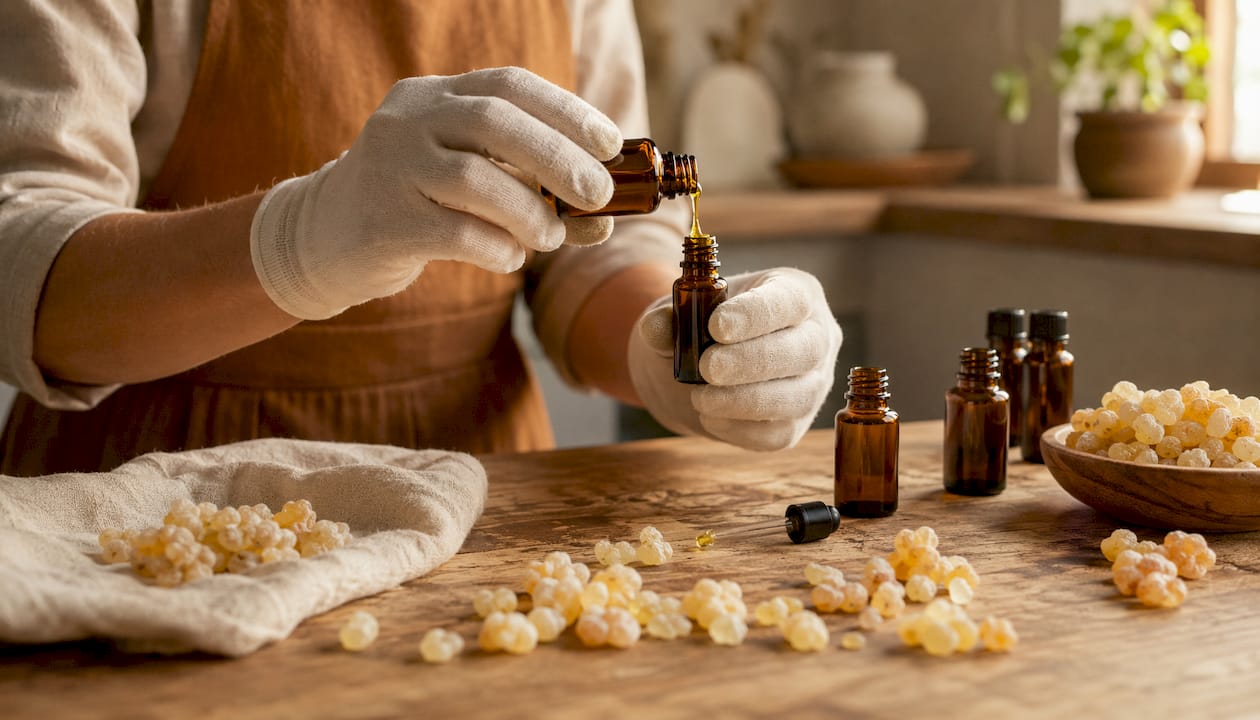
If you want a frankincense essential oil that actually smells like burning incense and carries real therapeutic weight, Palinova’s Palestinian Boswellia sacra advanced-extraction oil is the one to buy. Most oils on the market are light steam distillates; this one captures the heavier diterpene compounds that give authentic frankincense its grounding, resinous character. Here’s what to know before you order:
Botanical name: Boswellia sacra
Origin: Palestine
Extraction: Advanced process capturing heavier diterpenes, not standard light distillation
Primary uses: Aromatherapy, meditation, topical skin applications (diluted)
Next step: View the product, check the COA/GC-MS, confirm the origin label, and request a free aromatherapy consultation if you need guidance.
Table of Contents
What makes this Boswellia sacra extract different?
Spec | Detail |
Botanical name | Boswellia sacra |
Country of origin | Palestine |
Extraction method | Advanced resin extraction (captures heavier diterpenes) |
Olfactory profile | Rich, warm, resinous — closely mirrors burning incense |
Recommended topical dilution | diluted in a carrier oil |
Recommended uses | Diffusion, meditation, topical (diluted), professional aromatherapy |
Packaging | Amber glass, tamper-evident cap, lot number on label |
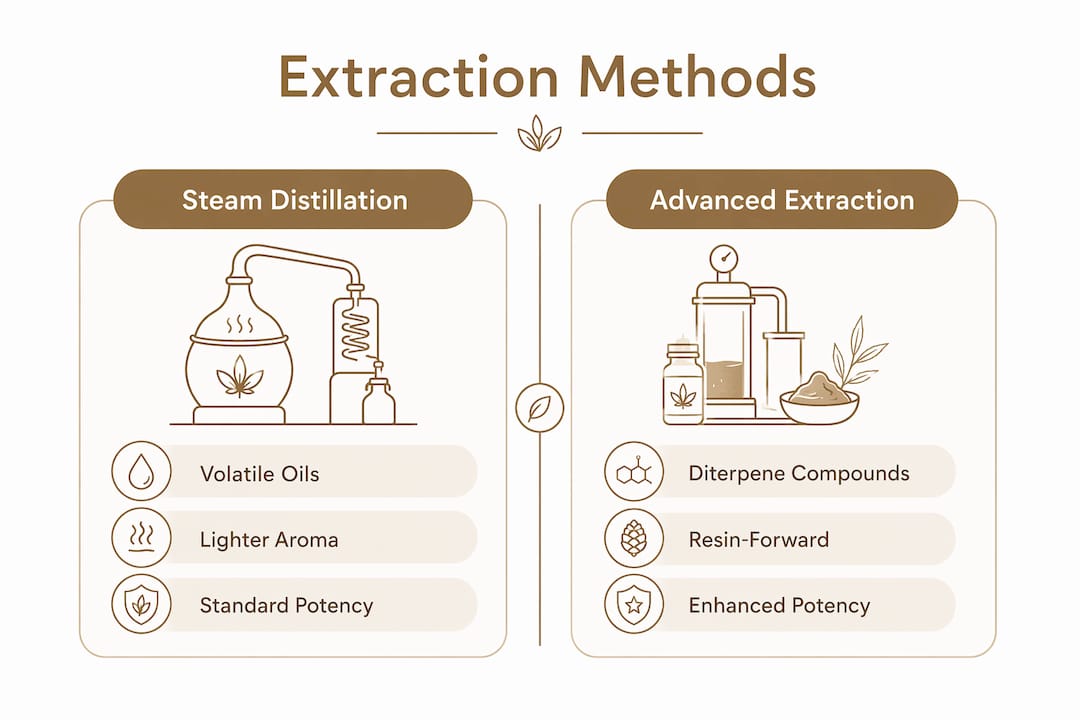
The scent alone tells you something. A standard steam-distilled frankincense oil smells clean and slightly citrusy. Palinova’s extract smells like the resin burning in a censer. That difference comes from the extraction process, not marketing language.
Pro Tip: When you receive any frankincense oil, tilt the bottle. A resin-forward, diterpene-rich extract will be noticeably more viscous than a thin, water-clear steam distillate. Thin and watery usually means light distillation only.
Why does species and origin change what you actually get?
Species and geographic origin directly shape the oil’s chemical fingerprint, which changes both aroma and how the oil behaves therapeutically. Boswellia sacra from Palestine and Oman is widely regarded as producing the most resinous, alpha-pinene-rich profile among the major commercial species.
Species | Key character | Typical alpha-pinene | Buyer relevance |
Boswellia sacra (Palestine/Oman) | Resinous, warm, complex | High | Preferred for meditation, deep aromatherapy |
Boswellia carterii (Somalia) | Lighter, slightly citrusy | Moderate | Common in mass-market oils |
Boswellia serrata (India) | Earthy, less aromatic | Lower | More common in oral resin supplements |
Boswellia frereana (Somalia) | Dry, woody | Variable | Niche; less studied |
On a COA or GC-MS report, look for alpha-pinene as a dominant peak, along with limonene and incensole acetate. Those compounds signal a genuine sacra profile. Quality is best judged by explicit botanical labeling and origin disclosure, because species and origin strongly influence chemical composition. One more thing worth knowing: boswellic acids are non-volatile and are not typically present in steam-distilled oils. They concentrate in resin extracts, which is why extraction method matters so much.
How does extraction method affect potency and aroma?
The extraction method determines which molecules actually make it into the bottle. Steam distillation captures volatile terpenes well but leaves behind the heavier, non-volatile compounds. CO2 and specialized low-temperature extractions preserve heavier molecules and deliver a more resinous aroma and different bioactivity profile.
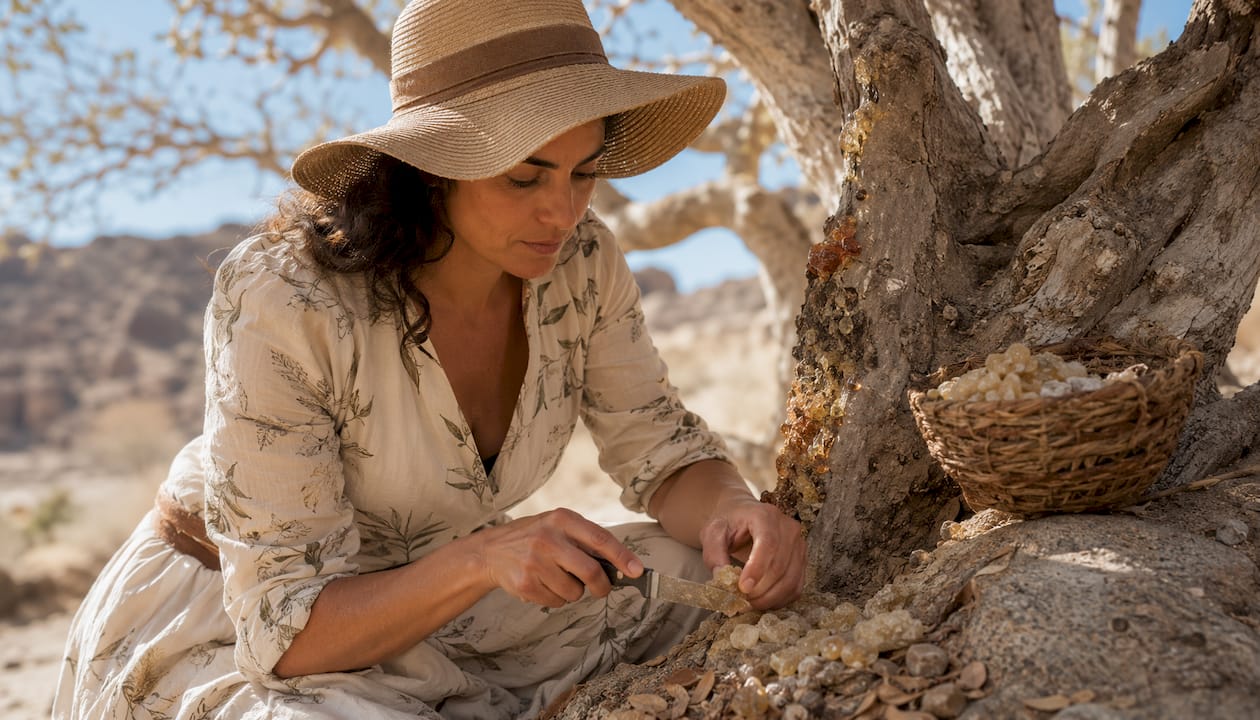
Palinova’s advanced extraction process is designed specifically to capture those heavier diterpene compounds from the Boswellia sacra resin. The result is a therapeutic-grade extract with a richer, more authentic burn-incense profile and stronger grounding properties for aromatherapy and meditation. Standard light distillation simply cannot replicate that.
Pro Tip: Always look for the extraction method stated explicitly on the product page or label. If a seller lists only “steam distilled” and claims a full resinous profile, that’s a mismatch worth questioning. Transparent extraction disclosure is a basic trust signal.
How do you verify authenticity before you buy?
Always confirm three things before checkout: the botanical name (Boswellia sacra), the country of origin (Palestine), and a recent COA or GC-MS report linked directly on the product page. Amber glass, full botanical labeling, and a visible lot number are reliable purchase-quality indicators.
Checklist:
✅ Botanical name printed as Boswellia sacra (not just “frankincense”)
✅ Country of origin stated (Palestine)
✅ COA or GC-MS report available, dated within the last two years, with lab name
✅ Extraction method described specifically (not just “pure” or “natural”)
✅ No carrier oils or additives listed in ingredients
✅ Amber glass bottle with tamper-evident cap and lot number
✅ Sustainable harvesting or ethical sourcing statement
Red flags: vague “therapeutic grade” claims with no COA, missing or undated lab reports, unusually low pricing for a claimed resin extract, and suspiciously thin viscosity. “Therapeutic grade” is not a standardized certification — any seller can use the phrase. The COA is the only objective proof.
Pro Tip: Email the seller and ask for the specific lot’s GC-MS report before purchasing in bulk. A reputable supplier will send it without hesitation. Hesitation is your answer.
How do you use frankincense oil safely?
Frankincense essential oil is for aromatherapy and diluted topical use. Concentrated resin extracts used in oral studies are a different product category with a different safety profile. Treat each form on its own terms.
Application | Dilution | Notes |
Diffusion / inhalation | Undiluted in diffuser | a few drops per moderate amount of water |
Facial skin (adult) | — | a small number of drops per tablespoon of carrier oil |
Body application (adult) | — | several drops per tablespoon of carrier oil |
Professional aromatherapy | Up to 2% | Adjust per client sensitivity |
Diluting in a carrier oil such as jojoba, sweet almond, or olive oil is non-negotiable before any topical application. Skin sensitization can occur even with high-quality oils. Frankincense may interact with anticoagulants like warfarin, so anyone on blood thinners should consult a healthcare provider before use. Pregnancy caution applies as well; check with a qualified practitioner. Research suggests potential anti-inflammatory activity, but many studies are small or animal-based, so keep expectations realistic.
Pro Tip: Always patch test: apply one drop of the diluted blend to the inner forearm, cover loosely, and wait 24 hours. Redness or itching means stop. This applies even to oils labeled “therapeutic grade.”
How should you store frankincense oil to keep it potent?
Store in a cool, dark place in the original amber glass bottle with the cap fully tightened. Heat and light degrade volatile terpenes and accelerate oxidation, which flattens the aroma and reduces bioactivity.
Storage do’s and don’ts:
✅ Keep in a cool place away from direct sunlight
✅ Refrigerate for long-term storage
✅ Decant bulk purchases into smaller amber bottles to minimize air exposure
❌ Don’t store near stoves, windowsills, or in a car
❌ Don’t leave the cap off between uses
An unopened bottle stored properly can retain potency for multiple years. Once opened, it is best to use within a year and a half for optimal aroma and activity. Signs of oxidation: the scent turns flat or slightly rancid, and the color may shift.
What should you expect to pay for high-potency Boswellia sacra?
Advanced-extraction, resin-forward Boswellia sacra oil commands a premium over ordinary steam-distilled frankincense. That’s a function of extraction complexity, limited origin supply from Palestine, and the cost of third-party lab testing.
Product type | Typical U.S. price range | Key driver |
Standard steam-distilled frankincense | — | High yield, light process |
Therapeutic-grade Boswellia sacra extract | — | Low yield, advanced extraction, COA |
Certified organic / small-batch | — | Certification overhead, limited supply |
Buying tips for U.S. customers:
Request a sample or small bottle before committing to bulk
Confirm COA availability for the specific lot number before ordering
Check the seller’s return policy; reputable suppliers stand behind quality
Factor in shipping time; Palestinian-origin products may take 7–14 business days
For the shopping guide and more detail on reading COA reports, Palinova’s blog covers the specifics.
Key Takeaways
Palestinian Boswellia sacra advanced-extraction frankincense oil is the most authentic, high-potency option for aromatherapy and natural wellness when you verify species, origin, and COA before buying.
Point | Details |
Species and origin matter | Always confirm Boswellia sacra from Palestine; species determines chemical profile and aroma. |
Extraction drives potency | Advanced extraction captures heavier diterpenes that standard steam distillation leaves behind. |
COA is non-negotiable | “Therapeutic grade” is unregulated; only a GC-MS/COA from a named lab proves purity. |
Dilute before topical use | Use 0.5–2% in a carrier oil; patch test first regardless of quality claims. |
Palinova’s offering | Palinova’s Palestinian Boswellia sacra extract uses advanced extraction and provides COA access and free consultations. |
Why Palestinian frankincense deserves its own standard
Most of the frankincense conversation centers on Somali or Omani sources, and that’s partly a supply-chain story, not a quality story. Palestinian Boswellia sacra grows in a specific terroir that produces a resin profile with a depth of aroma that lighter-harvested sources rarely match. At Palinova, the decision to source exclusively from Palestine isn’t a marketing angle. It reflects a commitment to the agricultural heritage of the land and to the growers who have tended these trees for generations.
The trust signals that matter here are straightforward: transparent extraction disclosure, COA access tied to specific lot numbers, sustainable harvesting statements, and free aromatherapy consultations for buyers who want guidance on dilution, blending, or therapeutic application. These aren’t extras. They’re the baseline for any supplier serious about therapeutic-grade quality.
If a seller can’t tell you the extraction method, the harvest region, and the lab that tested the batch, that’s not a supplier worth trusting with a product you’re putting on your skin or breathing in a closed room.
Palinova’s Boswellia sacra oil: what you get and how to order
Palinova’s frankincense essential oil is a therapeutic-grade Boswellia sacra resin extract sourced directly from Palestine, processed using advanced extraction to preserve the heavier diterpene compounds that standard distillation misses. The aroma is rich, warm, and resinous — the closest thing to burning incense you’ll find in a bottle. It’s built for diffusion, meditation, professional aromatherapy blending, and diluted topical use.
[
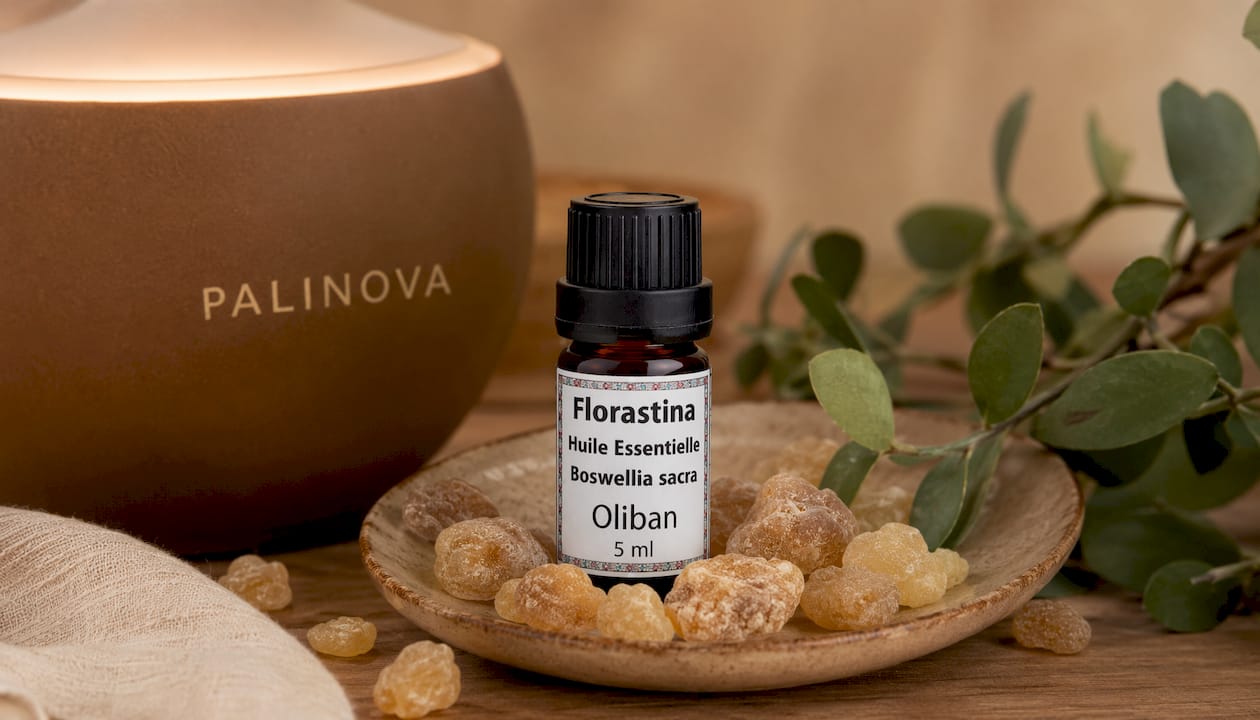
Every order comes with COA access and lot traceability. U.S. customers can expect standard international shipping timelines, and Palinova’s team is available for lab report questions. Free aromatherapy consultations are available for buyers who want personalized guidance on blending ratios, skin applications, or wellness routines. Visit the product page to check current availability, review the COA, and book a consultation.
Useful sources and further reading
Frankincense for Health Conditions — Healthline overview of frankincense resin, essential oil, and the evidence base for therapeutic claims
Frankincense Oil: Benefits, Side Effects, and Myths — MedicineNet on extraction methods, boswellic acids, and quality markers
5 Health Benefits of Frankincense Oil — and How To Use It — Health.com on dilution, safety, and COA/label guidance
Frankincense: Overview, Uses, Side Effects, Precautions, Interactions — WebMD on drug interactions and contraindications
Frankincense Essential Oil: Health Benefits, Dosage, and More — WebMD dosage and usage overview
PMC research on Boswellia — PubMed Central peer-reviewed research on Boswellia chemistry and clinical evidence
How to use COA/GC-MS reports: Search for alpha-pinene, limonene, and incensole acetate as dominant peaks on any Boswellia sacra GC-MS. A reputable lab report will list the testing laboratory name, date, lot number, and individual compound percentages. If those fields are blank or absent, the report is incomplete.
FAQ
What is frankincense essential oil made from?
Frankincense essential oil is distilled or extracted from the resin of Boswellia trees. The species, origin, and extraction method determine the chemical profile and aroma of the final product.
Is Boswellia sacra the best species for aromatherapy?
Boswellia sacra is widely considered the most resinous and aromatically complex species, making it the preferred choice for meditation and professional aromatherapy. Palestinian Boswellia sacra is particularly valued for its deep, incense-like profile.
Do frankincense essential oils contain boswellic acids?
Standard steam-distilled oils do not contain significant boswellic acids because those compounds are non-volatile. Advanced resin extractions can preserve heavier molecules, which is why extraction method matters for potency.
How do I know if a frankincense oil is pure?
Request the GC-MS or COA report for the specific lot. Look for the botanical name Boswellia sacra, country of origin, lab name, and individual compound percentages. Amber glass, a lot number, and a clear extraction description are supporting signals.
Where can I buy authentic Palestinian Boswellia sacra oil in the U.S.?
Palinova sells Palestinian Boswellia sacra advanced-extraction frankincense oil directly to U.S. customers through its online store, with COA access and free aromatherapy consultations available on request.
Recommended
Comments