
Helichrysum italicum italicum: Skin Benefits and Safe Use
- Palinova
- 1 hour ago
- 10 min read
TL;DR:
Helichrysum italicum italicum is a highly sought-after essential oil with anti-inflammatory and antioxidant properties used mainly in skincare. Its chemical profile varies by chemotype and origin, making verified sourcing and proper dilution crucial for safety and effectiveness. Most scientific evidence remains preclinical, so realistic expectations and quality sourcing are essential for beneficial use.
Helichrysum italicum italicum is the nominate subspecies of the Mediterranean “immortelle” plant, and its steam-distilled essential oil is one of the most sought-after botanicals in natural skincare for its anti-inflammatory and antioxidant properties. The FDA does not regulate essential oil purity or quality, so sourcing from a supplier who provides third-party GC/MS lab reports is the single most important step you can take before buying. One more thing to know upfront: oil yield by steam distillation is very low, which is why pure immortelle oil is expensive and why it must always be diluted before touching your skin.
What it is: A perennial subshrub in the Asteraceae family, native to dry Mediterranean coastlines
Common names: Immortelle, Italian everlasting flower, curry plant
Primary use: Topical skincare (anti-aging, bruise support, redness reduction) and aromatherapy
Safety baseline: Dilute before every topical application; patch test first; consult a healthcare provider if pregnant or on medications
Table of Contents
What’s actually inside Helichrysum italicum italicum?
The chemical profile of immortelle essential oil explains both its distinctive scent and its skin effects. Major constituents include:
Neryl acetate: The dominant compound in Corsican-type oils; linked to the characteristic sweet, honey-like fragrance and believed to influence skin-remodeling pathways
γ-Curcumene and β-diketones: Associated with anti-inflammatory signaling and the oil’s regenerative reputation
α-Pinene: Dominant in Balkan-type oils; contributes a sharper, more resinous note
Neryl propanoate: A secondary ester that rounds out the aroma profile
Chemotype and origin drive these differences materially. A Corsican oil and a Balkan oil can smell and behave quite differently, even though both carry the same Latin name on the label. That gap matters when you are choosing an oil for a specific skin goal rather than just fragrance.
GC/MS (gas chromatography/mass spectrometry) is the standard method to verify what is actually in a bottle. A reputable supplier publishes batch-specific GC/MS reports so you can confirm the chemotype, major constituents, and absence of adulterants before you use the oil.
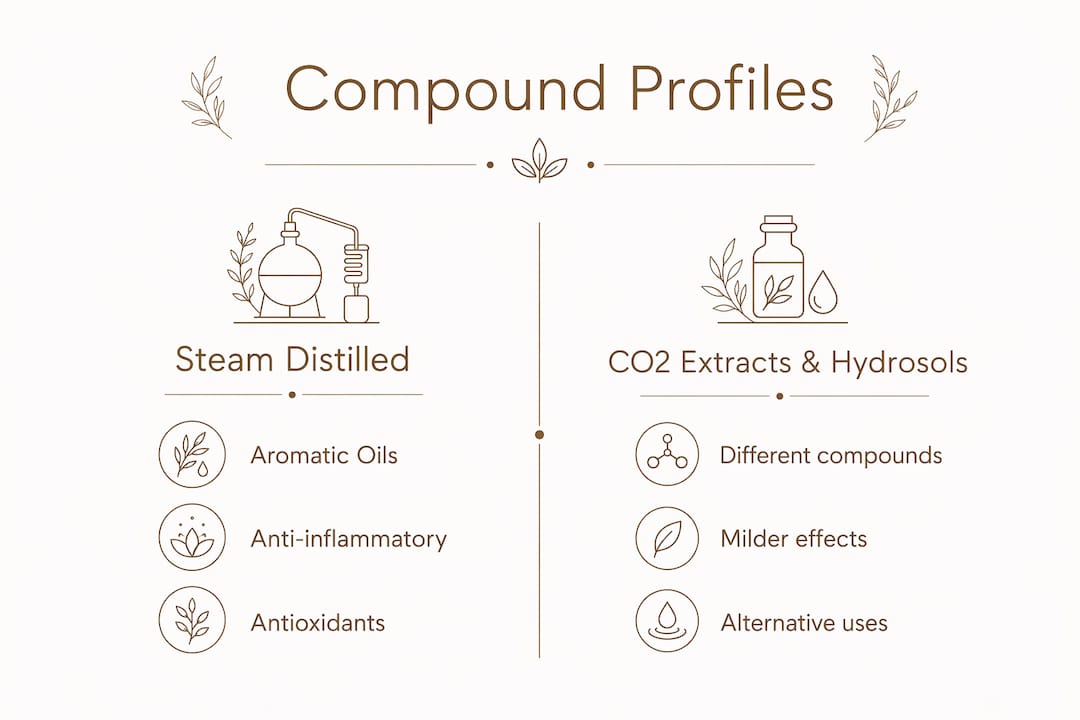
It is also worth knowing that hydrosols and CO2 extracts carry different compound profiles than steam-distilled essential oil. Hydrosols are gentler and suit sensitive skin; CO2 extracts are rich in non-volatile polyphenols. Neither is a substitute for the essential oil, but both expand your options.
Pro Tip: When a specific skin effect matters to you, choose a documented chemotype rather than judging by price alone. A cheap “immortelle oil” with no chemotype disclosure is almost certainly not Corsican neryl-acetate type.
What does the science actually say about skin benefits?
The honest answer: the evidence is promising but mostly preclinical. Lab and animal studies predominate; large-scale human trials remain limited. That does not make the oil ineffective, but it does mean you should calibrate your expectations.
Where the science is strongest:
Anti-aging: In vitro studies found anti-collagenase and anti-elastase activity in immortelle extracts, which is why formulators include it in anti-aging blends. These enzymes break down collagen and elastin; inhibiting them in a lab dish is a meaningful signal, not a clinical guarantee.
Antimicrobial and antioxidant: Multiple studies confirm activity against certain bacteria and fungi in controlled settings.
Constituent synergy: Individual compounds behave differently in isolation than in the full oil, which supports using an authenticated whole oil rather than a single isolated constituent.
“While anti-inflammatory and antimicrobial properties are reported, most research is preclinical and users should patch test before use.” — Healthline
For realistic timelines: reduced redness and improved bruise healing may appear over several weeks of consistent use. Anti-aging effects require sustained use alongside supporting actives like Barbary fig seed oil and a complete routine. Anyone managing a medical skin condition should consult a healthcare provider before adding immortelle oil.
How to use Helichrysum essential oil safely
The rule is simple: always dilute before applying to skin. Here is how to do it right.
Choose your dilution rate. For the face, use 0.25–1% (roughly 1–2 drops per 10 mL of carrier oil). For body use, 1–3% is appropriate for most adults.
Pick a carrier oil. Barbary fig, jojoba, and sweet almond oil all work well. Barbary fig is particularly complementary for anti-aging blends.
Patch test first. Apply the diluted blend to your inner forearm, wait 24 hours, and check for redness, itching, or swelling before using it on your face.
Mix your blend. For a 10 mL bottle at 1%: add 2 drops of immortelle oil. For a 30 mL bottle at 1%: add 6 drops.
Store correctly. Use amber glass bottles, keep them away from heat and light, and seal tightly after each use.
“Essential oils should be diluted with a carrier oil before topical application; the FDA does not monitor purity or quality of essential oils.” — Medical News Today
Contraindications: Consult a healthcare provider before use if you are pregnant, nursing, or taking medications metabolized by liver enzymes. Avoid applying near eyes or mucous membranes. If you have sensitive or eczema-prone skin, start at the lowest dilution and increase only if tolerated.
How to spot authentic Helichrysum italicum when buying in the US
Authenticity is the biggest challenge in the US essential oil market. Here is what to check:
Latin name on the label: It should read Helichrysum italicum or Helichrysum italicum subsp. italicum, not a vague “helichrysum blend”
Processing method: Look for “steam distilled” — solvent-extracted oils have different profiles and residue risks
GC/MS report: Request a batch-specific report; chemical composition is reliably determined by GC/MS and GC/FID analysis
Country of origin and chemotype: Corsican, Croatian, or Palestinian origin with chemotype noted
Packaging: Amber glass, sealed with a lot number and expiration date
On wildcrafted vs. cultivated: wildcrafted oils often carry more chemical complexity but raise sustainability questions when demand outpaces natural regeneration. Cultivated sources with transparent farming practices can be equally high quality and more consistent batch to batch.
Pro Tip: Pure immortelle oil is expensive because yield is so low. If a bottle is priced like a commodity oil, suspect dilution, adulteration, or mislabeling. A GC/MS report is your protection.
Simple blends and routines to try
Anti-aging face serum (10 mL)
Add 2 drops of immortelle oil to 10 mL of Barbary fig seed oil. Apply 2–3 drops to clean, dry skin each evening before heavier creams. This sits at roughly 1% dilution. For a broader anti-aging oil routine, layer it under a formulated cream.
Bruise and spot blend (10 mL)
Combine 2 drops immortelle with 10 mL jojoba oil. Apply gently to the affected area twice daily. Do not use on broken skin.
Calming massage oil (30 mL)
Add 6 drops immortelle oil to 30 mL sweet almond oil (1% dilution). Use for a gentle facial or body massage once daily. Pair with anti-inflammatory herbal teas as part of a broader wellness routine.
Usage notes:
Apply after cleansing, before heavier creams or sunscreen
Once daily is sufficient for most; twice daily only if your skin tolerates it well
Avoid the eye area and lips
What does Helichrysum italicum actually look like?
Helichrysum italicum is a woody-based perennial subshrub that grows on dry, rocky, or sandy ground around the Mediterranean, from sea level up to roughly 2,200 meters. Stems reach 20–70 cm tall, covered in narrow, linear, silvery-gray leaves that release a strong curry-like scent when brushed. The clusters of small, bright yellow flowers appear in summer and hold their color long after cutting, which is why the plant earned the name “everlasting” or immortelle.
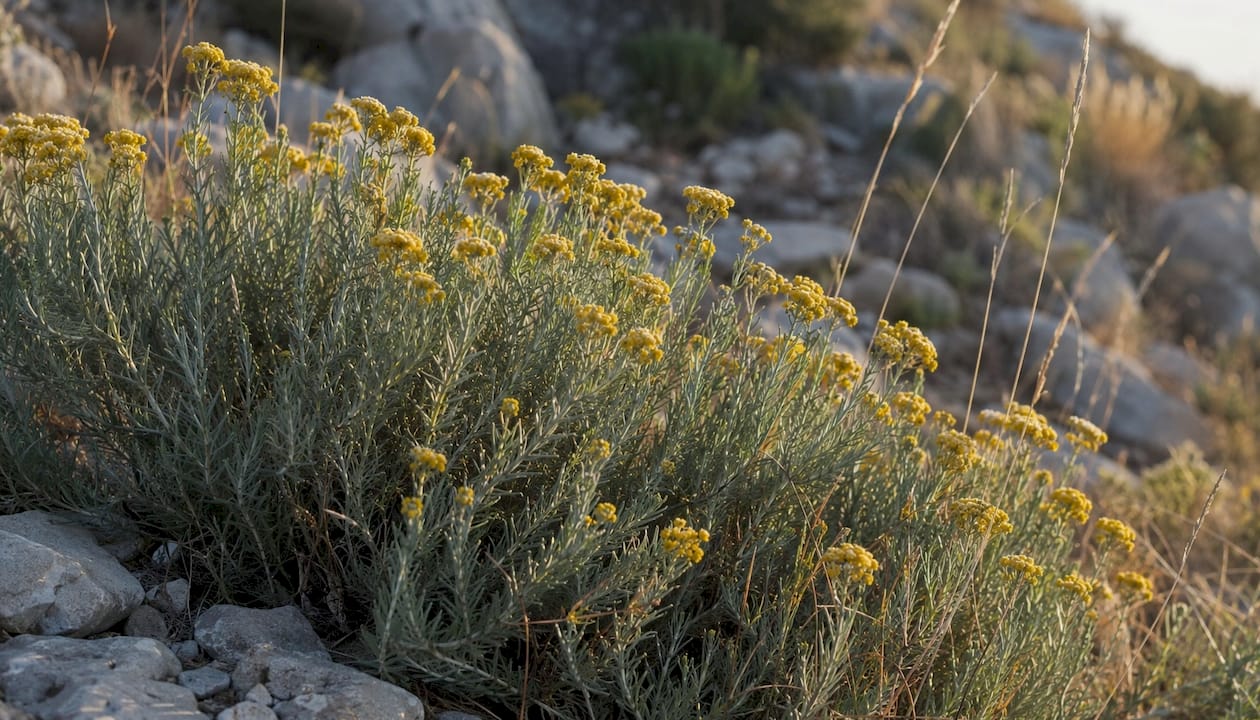
It thrives in alkaline, nutrient-poor soils with full sun and good drainage. The Mediterranean basin is its native range, but it grows across southern Europe, North Africa, and into the Levant, including Palestine.
Traditional medicinal uses through history
Mediterranean folk medicine used H. italicum for centuries before modern chemistry confirmed any of it. Traditional applications included treatment for toothache, digestive disorders, coughs, colds, skin diseases, liver complaints, and bronchitis. The plant was also used topically for dermatomycosis and alopecia. In coastal communities, young shoots were added to meat and fish stews for flavor, then removed before serving. Scientists have since confirmed many of these traditional activities, including anti-inflammatory, antioxidant, antimicrobial, and antiviral properties.
How Helichrysum italicum is grown and harvested
Commercial cultivation expanded significantly in Eastern European Mediterranean countries, particularly Croatia, Bosnia and Herzegovina, France, Italy, Bulgaria, and Serbia, driven by rising demand from the cosmetic and pharmaceutical industries. The plant is propagated from semi-hardwood cuttings taken in summer and requires well-drained, alkaline soil with minimal irrigation once established.
Harvesting targets the early flowering tops, when essential oil content peaks. Steam distillation of early flowering tops is the standard extraction method, though high processing temperatures can degrade sensitive constituents, which is why controlled, low-temperature distillation is preferred for premium oil.
Sustainability and environmental considerations
Wild harvesting has historically supplied much of the market, but the sharp increase in commercial demand has put pressure on natural populations in some regions. Responsible sourcing now means either certified cultivated supply or wildcrafted material collected under regulated quotas that allow populations to regenerate. Packaging and transport choices also matter: amber glass over plastic, minimal processing, and short supply chains all reduce the environmental footprint of a bottle reaching your shelf.
Palestinian sourcing adds another dimension. Small-scale, traditional harvesting tied to local agricultural knowledge tends to be lower-impact than industrial monoculture, and it supports rural communities directly.
How does Helichrysum italicum italicum compare to related subspecies?
The species Helichrysum italicum includes several recognized subspecies: italicum (the nominate form), microphyllum, picardii, pseudolitoreum, serotinum, and siculum. The nominate subspecies italicum is the one most commonly used in essential oil production and the one whose chemistry is most thoroughly documented.
H. italicum subsp. serotinum (sometimes called the Dalmatian type) is also commercially significant and tends toward higher α-pinene content. H. italicum subsp. microphyllum, found in island populations, shows distinct chemical profiles that differ from mainland types. Beyond the subspecies, the broader genus Helichrysum contains over 600 species, most of which have no established essential oil use. Buying a bottle labeled simply “helichrysum” without subspecies or chemotype information could mean you are getting any of them.
Key Takeaways
Helichrysum italicum italicum essential oil offers real, lab-supported anti-inflammatory and antioxidant activity, but safe and effective use depends entirely on verified sourcing, proper dilution, and realistic expectations about clinical evidence.
Point | Details |
Always dilute | Dilution rates for use vary typically within a low percentage range for face and body; a few drops per 10 mL carrier oil is a common guideline. |
Request GC/MS | Batch-specific lab reports confirm chemotype, purity, and absence of adulterants. |
Evidence is preclinical | Anti-collagenase and anti-elastase activity is confirmed in vitro; large-scale human trials remain limited. |
Price signals quality | Oil yield rarely exceeds 0.1% (v/w); a very cheap bottle likely indicates dilution or adulteration. |
Palinova sourcing | Palinova’s Palestinian-sourced Helichrysum Italicum Pure Essential Oil is steam-distilled with GC/MS available. |
Why Palestinian provenance changes the conversation
Most immortelle oil on the US market comes from Croatia, France, or Bosnia. Palestinian-sourced oil is rarer, and that rarity is worth understanding rather than just marketing. Palestine’s Mediterranean climate, alkaline soils, and traditional harvesting practices produce botanicals with distinct chemical profiles shaped by centuries of agricultural knowledge. When Palinova sources from Palestinian growers, the supply chain is short, the farming practices are small-scale and low-impact, and the connection between land and product is direct.
What that means practically: batch-to-batch transparency is easier to maintain, and the story behind the oil is verifiable rather than generic. Palinova backs that with GC/MS reports and free aromatherapy consultations, so you are not just buying a bottle. You are buying documented provenance and access to guidance on how to actually use it. For anyone serious about holistic wellness through Palestinian botanicals, that combination is harder to find than the oil itself.
Palinova’s Helichrysum Italicum Pure Essential Oil
Palestinian botanicals at this quality level are rare in the US market, and Palinova’s Helichrysum Italicum Pure Essential Oil delivers exactly what the buyer checklist above calls for: steam-distilled processing, clear Latin name labeling, documented Palestinian origin, and batch-specific GC/MS reports available on request.
The oil pairs naturally with Palinova’s Barbary fig seed oil as a carrier for anti-aging face serums, and the product line extends to other Palestinian essentials like frankincense for those building a complete natural skincare routine. If you want personalized guidance on dilution ratios, blending, or which oil fits your skin goals, Palinova offers free aromatherapy consultations. Visit the product page to check current stock, request a GC/MS report, or book your consultation.
Useful sources
PMC review: Helichrysum italicum extraction, distillation, and health effects — Covers extraction methods, GC/MS methodology, constituent activity, and the evidence base for skin benefits; includes chemical profile tables.
ScienceDirect: Antimicrobial and anti-inflammatory effects linked to chemical composition — Key source for chemotype variation, yield data, and the Corsican vs. Balkan profile comparison.
MDPI: Essential oil and hydrosol composition of immortelle — Compares volatile profiles across extraction methods; useful for understanding hydrosol and CO2 extract differences.
MDPI Molecules 2023: Essential oil constituent interplay — Explains synergistic and antagonistic effects between oil constituents; supports the case for whole authenticated oil.
Medical News Today: Helichrysum essential oil benefits and use — Consumer-facing safety summary covering dilution, FDA non-regulation, and practical use guidance.
Healthline: Helichrysum essential oil benefits and precautions — Accessible overview of preclinical evidence, patch testing advice, and contraindications.
FAQ
What is Helichrysum italicum italicum used for in skincare?
It is used primarily for its anti-inflammatory and antioxidant properties, with in vitro evidence supporting anti-aging applications through anti-collagenase and anti-elastase activity. Most clinical support remains preclinical.
How do you dilute Helichrysum essential oil for face use?
Use 0.25–1% dilution for facial application, which equals roughly 1–2 drops per 10 mL of carrier oil such as Barbary fig or jojoba.
How can you tell if an immortelle oil is authentic?
Check for the full Latin name (Helichrysum italicum or subsp. italicum), “steam distilled” on the label, a batch-specific GC/MS report, and country of origin. A very low price is a reliable warning sign of adulteration, given that oil yield by steam distillation is very low.
Can you ingest Helichrysum essential oil?
No. Essential oils are highly concentrated and not intended for internal use without direct supervision from a qualified healthcare provider. Use topically or aromatically only.
Where does Palinova’s Helichrysum oil come from?
Palinova sources its Helichrysum Italicum Pure Essential Oil from Palestinian botanicals, with steam-distilled processing and GC/MS reports available by request for batch verification.
Recommended
Comments