
Nature's Secret to Calming Eczema and Psoriasis Naturally

Colloidal oatmeal, standardized herbal extracts, and barrier-supporting seed oils are the natural options with real clinical backing for calming eczema and psoriasis. A liposomal Althaea officinalis (marshmallow) topical matched steroid creams on SCORAD scores after four weeks in a randomized trial, and colloidal oatmeal improved symptoms in 96% of psoriasis study participants reviewed by the Journal of the American Academy of Dermatology. Start small: an oatmeal bath tonight, an emollient applied while skin is still damp, and a patch test on any new topical before it touches inflamed skin.
Try a 15-minute colloidal oatmeal bath, then moisturize immediately after patting dry.
Patch-test any new herbal or oil product on the inner forearm for 48 hours first.
Stop and call a dermatologist if redness spreads fast, pus appears, or you develop fever.
Quick fact: A 2026 multi-center trial found chamomile topicals cut EASI eczema severity scores by 54.4%, versus 17.3% for placebo.
Key Takeaways
Natural options like colloidal oatmeal, standardized marshmallow and chamomile extracts, and barrier-supporting seed oils can meaningfully reduce eczema and psoriasis symptoms when used consistently and safely alongside medical care.
Point | Details |
Start with oatmeal | Colloidal oatmeal baths improved symptoms in most participants in reviewed psoriasis studies. |
Trust the marshmallow data | Liposomal Althaea officinalis matched steroid results on SCORAD scores after four weeks in a trial. |
Patch test everything new | Even chamomile carries a small contact sensitization rate, so test 48 hours before wider use. |
Moisturize within minutes | Applying emollient within three minutes of bathing locks in far more moisture than dry skin. |
Choose quality seed oils | Cold-pressed oils like Palinova’s Barbary Fig seed oil support barrier repair without synthetic additives. |
Table of Contents
What Does the Research Actually Show?
The strongest data point in natural eczema care right now is the Althaea officinalis trial. Forty patients used a liposomal marshmallow extract instead of a topical steroid, and after four weeks their SCORAD severity scores were statistically indistinguishable from the steroid group, with no reported side effects in either arm. That is a small study, but it is a rare case of a plant extract going head to head with a prescription treatment and not losing.
Colloidal oatmeal has the broadest support. Analysis summarized by the Journal of the American Academy of Dermatology found that when used as a paste, an ingredient in moisturizer, or a bath additive, it improved symptoms in 96% of people with psoriasis in the studies reviewed.
Herbal topicals cleared a higher bar in 2026. A randomized, placebo-controlled trial testing 3% chamomile and 2% calendula preparations on mild-to-moderate atopic eczema found both produced meaningful EASI score reductions with generally low rates of adverse events.
The gap between “people have used this for centuries” and “a randomized trial confirms this works” is where most natural remedies fall apart. Marshmallow, chamomile, and calendula are the rare exceptions that have crossed it, even if the trials remain small and the herbal extracts used were pharmaceutical-grade and standardized, not whatever is on a health food store shelf.
None of these trials involved more than a few hundred participants, and dosing standardization varies between studies. Larger, longer confirmatory trials are still needed before any of this replaces prescribed care.
Which Natural Remedies Actually Calm the Skin?
Colloidal oatmeal is the easiest place to start. Dissolve one cup of finely ground colloidal oatmeal into a lukewarm bath and soak for 10 to 15 minutes, or mix it with water into a paste and apply directly to itchy patches. Cleveland Clinic dermatologists list it alongside petroleum jelly and sunflower seed oil as a first-line home option, and it can be used daily during a flare.
Herbal topicals with trial support include:
Chamomile (3% concentration) — the strength tested in the 2026 trial; look for standardized extracts rather than loose tea bags pressed onto skin.
Calendula (2% concentration) — often paired with chamomile in formulations; patch-test first since flower-family allergies can cross-react.
Aloe vera — gel form works best on open, irritated patches; avoid products with added alcohol.
Licorice root extract — has anti-inflammatory compounds studied for mild-to-moderate eczema, though evidence is thinner than for chamomile.
Marshmallow root (Althaea officinalis) deserves special mention as a steroid-sparing option worth discussing with your dermatologist, given its trial results matching topical steroids. A product like the BYOMA Barrier Boost Essence illustrates how marshmallow extract shows up in standardized, retail-ready formulations.
Seed oils matter for a different reason: barrier repair rather than acute symptom relief. Cold-pressed Barbary Fig (prickly pear) seed oil is rich in tocopherols and unsaturated fatty acids that support the skin’s outer layer, and sunflower seed oil and coconut oil have both shown improvement in barrier function over several weeks of use. Choose oils with minimal additives, and reach for a thicker ointment over a thin cream when skin is very dry or cracked.
For the itch itself, skip the scratching and try:
A cool, damp washcloth held on the itchy area for a few minutes.
Cotton mittens at night if scratching happens during sleep.
Pinching or tapping the skin near the itch instead of scratching it directly.
Pro Tip: Moisturize within three minutes of stepping out of the bath or shower. Damp skin locks in far more moisture than dry skin, and that window matters more than which specific product you use.
Layer treatments in this order: bathe, pat (don’t rub) dry, apply any prescribed medication first, then seal with your moisturizer or oil. Wet-wrap therapy (damp cotton layers under dry ones) can help stubborn patches but works best under a clinician’s guidance.
[
How Do You Patch Test New Natural Remedies Safely?
Even natural extracts cause reactions. The 2026 eczema trial recorded a 4.8% contact sensitization rate for chamomile, a small but real number worth respecting before you slather anything new across inflamed skin.
Here’s how to patch test properly:
Apply a small amount to the inner forearm, not the face or already-inflamed skin.
Wait 48 hours, checking at 24 and 48 hours for redness, swelling, or itching.
If nothing happens, apply to a small area of affected skin for another 2 to 3 days before wider use.
Watch for these warning signs and stop immediately if you see them: new blistering, spreading redness beyond the treated area, pus or yellow crusting, or fever alongside a worsening rash. Any of these calls for a dermatologist, not another home remedy.
Never apply herbal topicals or seed oils to open, weeping, or actively infected skin. If you take prescription medication or use potent botanical supplements, check with your prescriber before adding concentrated herbal extracts. Undiluted essential oils belong nowhere near inflamed skin. A properly diluted geranium oil blend is a completely different product than the same oil applied straight from the bottle.
Quick fact: Dermatology researchers note that scratching itself drives allergic skin inflammation at a cellular level, which is why breaking that cycle matters as much as any topical you choose.
What Does a Daily Skin-Calming Routine Look Like?
Consistency beats intensity with eczema and psoriasis. A simple, repeatable routine protects the barrier better than an occasional deep treatment.
Morning and evening:
Cleanse with a fragrance-free, low-lather cleanser. Skip anything with sulfates or added scent, both common irritant triggers.
Pat skin dry, leaving it slightly damp.
Apply any prescribed treatment first, then seal with an ointment (for very dry skin) or cream (for daily maintenance).
Moisturize within three minutes of washing to lock in water.
For bathing: use lukewarm, not hot, water for 10 to 15 minutes, no more than once daily. Add colloidal oatmeal on flare days, and consider an Epsom salt soak occasionally to ease muscle tension around irritated joints if you have psoriasis.
Weekly add-ons might include:
A targeted herbal topical (chamomile or calendula) on stubborn patches.
A gentle seed oil massage on dry areas after bathing.
Wet-wrap therapy on severely dry patches, used sparingly and only as directed.
Gentle cleansing and moisturizing routines built around these steps tend to outperform sporadic, aggressive treatment attempts.
Can Diet, Stress, and Lifestyle Changes Reduce Flares?
Diet plays a supporting role, not a starring one. PUFAs (omega-3 and omega-6 fatty acids) and compounds in Nigella sativa show anti-inflammatory and barrier-supporting mechanisms in review literature, but be cautious with aggressive elimination diets. Cutting entire food groups without medical supervision rarely helps and can create new nutritional problems.
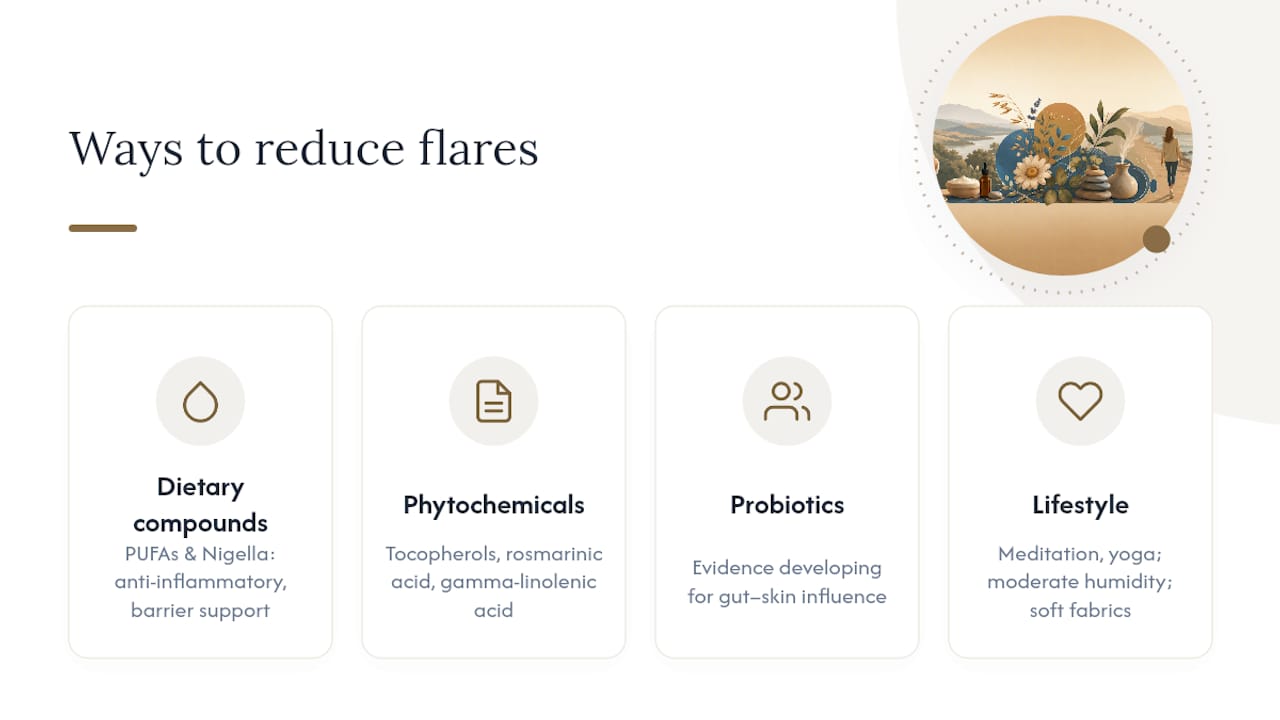
Quick fact: Phytochemicals including tocopherols, rosmarinic acid, and gamma-linolenic acid have been shown to support stratum corneum maturation and suppress proinflammatory signaling in eczematous skin.
Turmeric and curcumin have plausible anti-inflammatory properties, and probiotics are being studied for their influence on skin inflammation through the gut, though evidence for either is still developing. Check with your doctor before adding any supplement if you take other medications.
Stress management deserves real attention. Meditation, yoga, and simple distraction techniques help interrupt the itch-scratch cycle that drives so much of the visible damage. Environmentally, keep humidity moderate, choose soft breathable fabrics, and identify your personal irritant and allergen triggers, since these vary widely between individuals.
When Should You See a Dermatologist Instead?
Natural care has limits, and knowing them protects you. Stop self-treating and seek medical evaluation if you notice:
Signs of infection: pus, yellow crusting, fever, or rapidly spreading redness.
Severe pain or new blistering that wasn’t there before.
No improvement, or worsening, after 7 to 14 days of consistent home care.
Sleep disturbance so severe it’s affecting daily function.
Before your appointment, bring a list of everything you’ve tried, including natural remedies and how long you used each one, plus photos tracking how your skin has changed. Tell your clinician specifically about any herbal topicals or seed oils in your routine so they can flag interactions with anything they prescribe.
A Realistic Mindset for Natural Skin Care
There’s no single remedy that erases eczema or psoriasis overnight, and anyone promising that is selling something. What actually works is consistency: the same gentle cleanser, the same moisturizing window, the same oatmeal bath on flare days, repeated for weeks.
Track what matters, not just how your skin looks. Note itch frequency, sleep quality, and how your skin feels day to day. A simple photo journal makes small improvements visible when they’re too gradual to notice otherwise. Treat natural remedies as a complement to prescribed treatment, not a replacement for it, and give any new approach real time before deciding whether it’s working.
Where Barbary Fig Seed Oil Fits Into Your Routine
Barrier-supporting oils are the piece of this routine most people get wrong, reaching for whatever is in the kitchen instead of something formulated for compromised skin. Palinova’s Barbary Fig (prickly pear) seed oil is cold-pressed and free of synthetic additives, sourced from Palestinian agricultural cooperatives that have grown this crop for generations.
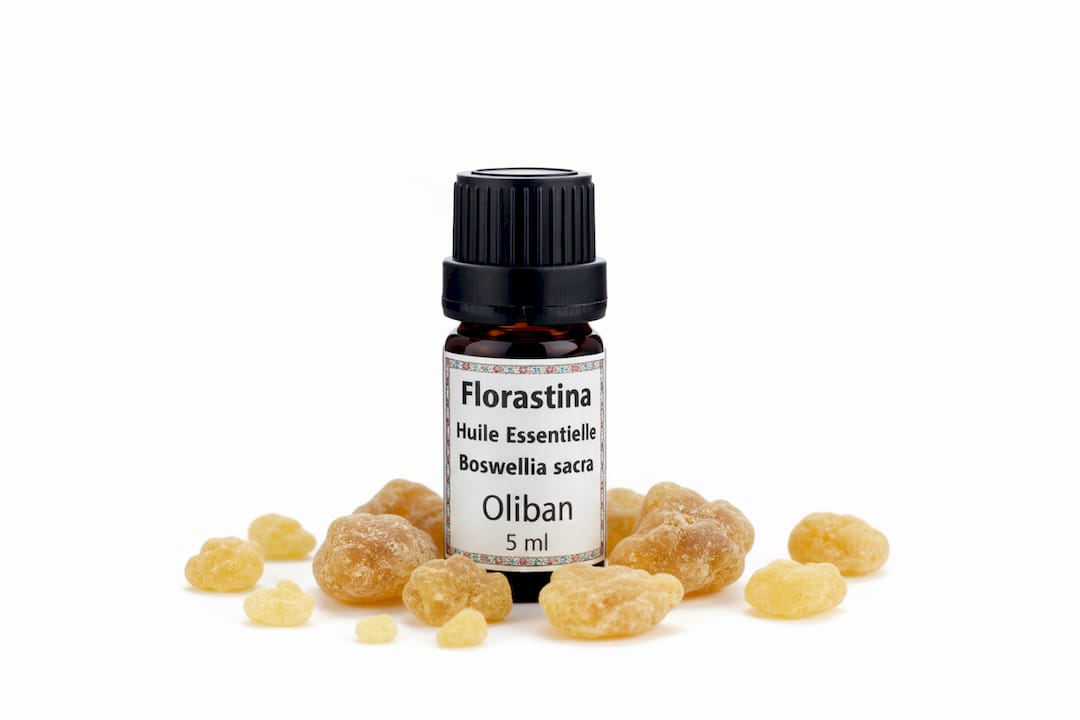
That sourcing matters because seed oil quality varies enormously. Oils cut with fillers or processed with heat lose the tocopherols and unsaturated fatty acids that actually help skin repair itself. If you’re exploring essential oils for calming blends, proper dilution is everything. Products like frankincense essential oil or cypress essential oil should never touch inflamed skin undiluted.
Palinova also offers free aromatherapy consultations to help you figure out which oils fit your specific skin, rather than guessing from a product label. Browse the full skincare collection and book a consultation to build a routine suited to your skin, not a generic one.
Sources
Discuss any of these findings with your dermatologist before adjusting a prescribed treatment plan.
This article is general information, not a substitute for advice from a qualified doctor. Consult a qualified healthcare professional about your own circumstances before acting on anything here.
FAQ
Can Natural Remedies Really Replace Steroid Creams?
One trial found a marshmallow (Althaea officinalis) topical matched steroid results on SCORAD scores after four weeks, but this remains an option to discuss with a dermatologist rather than a blanket replacement.
How Often Should I Take an Oatmeal Bath?
Colloidal oatmeal baths can be used daily during a flare, soaking for 10 to 15 minutes in lukewarm water, followed immediately by moisturizer.
Is Coconut Oil Safe for Eczema-Prone Skin?
Topical virgin coconut oil showed improvement over eight weeks in one study, making it a reasonable option, though patch testing first is still wise since sensitivities vary.
What’s the Difference Between an Ointment and a Cream for Barrier Repair?
Ointments contain more oil and less water, making them better for very dry or cracked skin, while creams work well for daily maintenance on less severe patches.
When Should I Stop Trying Natural Remedies and See a Doctor?
Stop and seek care if you see signs of infection, new blistering, no improvement after 7 to 14 days, or sleep disruption severe enough to affect daily life.
Recommended

Comments