

Palestinian Essential Oils: Methods and Extraction Examples

A bottle of essential oil may hold only a few milliliters, yet it begins with a much larger story: the season of harvest, the altitude of the field, the condition of the leaves, and the care taken between cut plant and sealed bottle. Palestinian essential oils: methods and extraction examples are best understood through that relationship between land and technique. The same aromatic plant can produce a dramatically different oil depending on when it is gathered and how its volatile compounds are captured.
For Palestinian botanicals, extraction is not merely a manufacturing step. It is where traditional plant knowledge meets the precision required for a pure, potent aromatic product. From the green, camphorous lift of pine to the herbaceous intensity of Origanum syriacum and the honeyed, dry-grass character of helichrysum, each plant asks for its own approach.
Why extraction shapes an essential oil
Essential oils are concentrated aromatic compounds drawn from specific parts of a plant, including leaves, flowering tops, needles, peel, resin, seeds, or wood. They are not the same as plant oils such as olive oil, black seed oil, or Barbary fig seed oil. Those are fixed oils, generally pressed from fruit or seeds, with a richer texture and a very different composition.
This distinction matters for both use and expectations. A steam-distilled oil is typically used in a diffuser, diluted body oil, bath ritual, or carefully formulated skincare product. A cold-pressed seed oil may be used more generously as a facial oil, hair treatment, or culinary ingredient, depending on the product. Neither method is inherently better. The right choice depends on the material and on what qualities the maker hopes to preserve.
Extraction also has limits. Heat, time, pressure, and storage can alter an oil's aroma and chemical profile. Too much heat can flatten delicate floral notes. Too little time may leave valuable aromatic constituents behind. A premium oil is not simply about the most dramatic scent. It is about a process that respects the plant while producing a stable, clean, properly identified result.
Palestinian essential oils: methods and extraction examples
Steam distillation for leaves, flowers, and needles
Steam distillation is the most widely recognized method for making essential oils from aromatic herbs and woody plant material. Fresh or partially dried botanicals are placed in a still. Steam rises through the plant matter and carries volatile aromatic compounds upward. When that vapor cools, it becomes a mixture of water and oil. Because essential oil and water separate naturally, the oil can be collected from the surface.
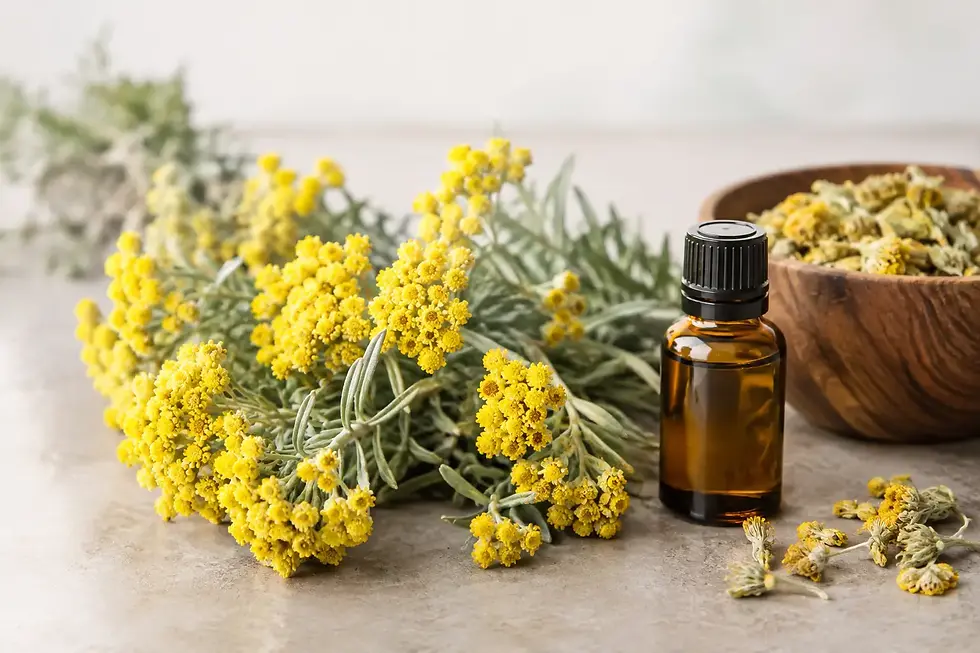
For Palestinian helichrysum, steam distillation offers a way to capture its distinctive warm, herbal aroma from the flowering tops. Helichrysum is often prized in body-care rituals for its grounding scent and its place in formulas designed for the appearance of dry, stressed, or uneven-looking skin. Its yield can be modest, which helps explain why a properly distilled helichrysum oil is a concentrated luxury rather than a casual commodity.
Pine needles and small twigs are also well suited to steam distillation. Pine oil carries a brisk, forest-like profile that works beautifully in seasonal diffuser blends, shower rituals, and home fragrance. The freshness of the final oil depends heavily on the botanical material. Needles that have sat too long after harvest can lose some of their bright aromatic character before distillation even begins.
Steam distillation is effective, but it is not a shortcut. The still must be clean, the temperature controlled, and the distillation run long enough to collect the plant's aromatic range without scorching the material. When these details are handled well, the result feels vivid rather than harsh - an aroma with depth, clarity, and a sense of place.
Hydrodistillation and traditional water-based methods
Hydrodistillation is closely related to steam distillation, but the plant material is immersed in water or placed so near boiling water that it is heated by direct contact with water and vapor. This technique has deep roots in herbal distillation traditions across the Mediterranean and Middle East, especially for aromatic herbs and flowers.
In a traditional setup, the scent of the plant rises with the steam, then cools into aromatic water and essential oil. The fragrant water, often called a hydrosol, can be valued in its own right. It is gentler and far less concentrated than essential oil, making it a useful format for facial mists, linens, and daily rituals when properly preserved and formulated.
Water-based methods can be especially relevant for small-batch aromatic herbs, where local knowledge helps determine whether the plant should be distilled fresh, rested briefly, or dried. Origanum syriacum, the beloved herb associated with za'atar, illustrates why this judgment matters. Its aromatic profile is bold, green, and spicy, with naturally occurring compounds that call for respectful handling. Distillation can yield an intensely concentrated oil, while the dried herb itself remains central to culinary traditions.
An essential oil of Origanum syriacum should never be treated like a spoonful of culinary za'atar. Concentrated oregano-type oils may be irritating when used undiluted and are not a casual internal wellness product. For topical use, they require significant dilution and thoughtful formulation. This is where heritage and safety belong in the same conversation.
Cold pressing for seed and fruit oils
Cold pressing does not produce an essential oil, but it is essential to understanding Palestinian botanical extraction. Mechanical pressure is used to release oil from seeds or fruit without the solvent-intensive processing common in some mass-market oils. The resulting oil retains fatty acids, naturally occurring antioxidants, and a fuller skin-feel than a volatile essential oil.
Barbary fig seed oil is a powerful example. The seeds are tiny, the yield is low, and pressing them is labor-intensive. That scarcity is part of its value. A carefully produced Barbary fig seed oil is lightweight yet nourishing, often chosen for dry-feeling skin, a more supple-looking complexion, and a refined final step in a facial ritual.
Black seed oil is similarly pressed rather than distilled. Its peppery, earthy character reflects the seed itself, and it has long been appreciated in regional beauty and wellness traditions. Olive oil, another Gift of the Earth from Palestinian groves, is also a pressed oil. It may appear in soaps, body oils, cleansing rituals, and culinary preparations, but it should not be confused with an essential oil simply because both begin with plants.
The trade-off with cold-pressed oils is shelf life. Their beneficial fatty components can oxidize with exposure to heat, oxygen, and light. Dark glass, careful filling, and sensible storage help protect quality. Freshness is part of potency.
What purity looks like beyond the label
A beautiful origin story should be matched by disciplined quality practices. Botanical identity matters: the Latin name, the plant part, and the extraction method tell a more useful story than a broad fragrance name alone. A true essential oil should not be diluted with inexpensive carrier oils, synthetic fragrance, or unidentified aromatic materials unless the product is clearly sold as a blend.
Testing adds another layer of confidence. Analytical screening can help verify that an oil's composition aligns with its botanical identity and can flag signs of adulteration. Yet numbers alone do not replace skilled sourcing. Soil, rainfall, elevation, and harvest timing naturally influence an oil's profile. Variation is not automatically a flaw. In many cases, it is the honest signature of a living landscape.
For shoppers, scent can be a helpful clue but not a final test. A natural oil may smell softer, greener, or less uniform than a synthetic fragrance designed to perform identically every time. The better question is whether the product is transparent about what it is, where it comes from, and how it should be used.
Bringing Palestinian oils into a daily ritual
Start with a purpose rather than a crowded shelf. For a clear, restorative home atmosphere, diffuse pine with a softer floral or resinous note. For a quiet evening body ritual, add a properly diluted drop of helichrysum essential oil to a neutral carrier oil. For face and hair care, reach for pressed oils such as Barbary fig seed or black seed oil, choosing the amount that suits your skin and hair type.
Dilution is nonnegotiable with essential oils. For most leave-on body applications, a conservative blend is often around 1 percent or less, especially for sensitive skin. That means roughly one drop of essential oil per teaspoon of carrier oil, though drop size varies. Avoid applying undiluted essential oils to skin, keep them away from eyes and mucous membranes, and patch test a finished blend first. Pregnancy, medical conditions, medications, asthma, and use around children or pets can all change what is appropriate.
The most meaningful ritual is rarely the most complicated one. Choose one oil with a traceable story, learn what it needs, and let its aroma bring a small piece of Palestinian resilience, care, and cultivated beauty into the rhythm of your day.
Comments