
Sumac Seed Oil for Skin Health: Evidence and How to Use

Updated: 1 day ago
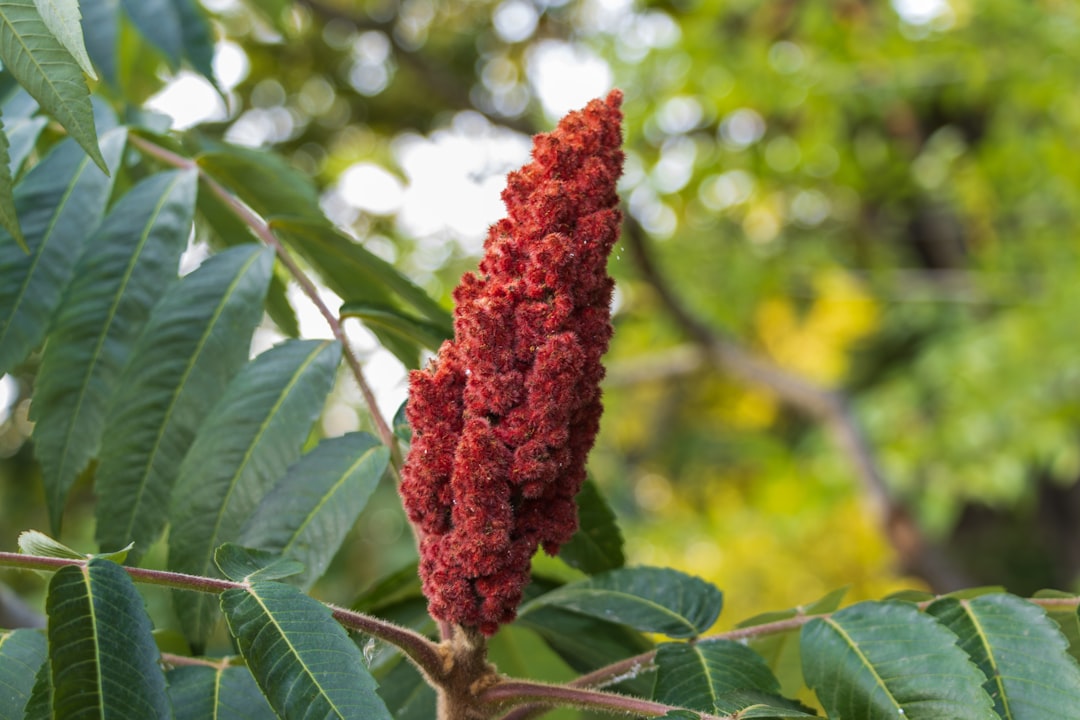
While clinical studies on sumac seed oil are still developing—mostly centered on in vitro and animal research so far—the actual real-world feedback from people using it tells a powerful story.
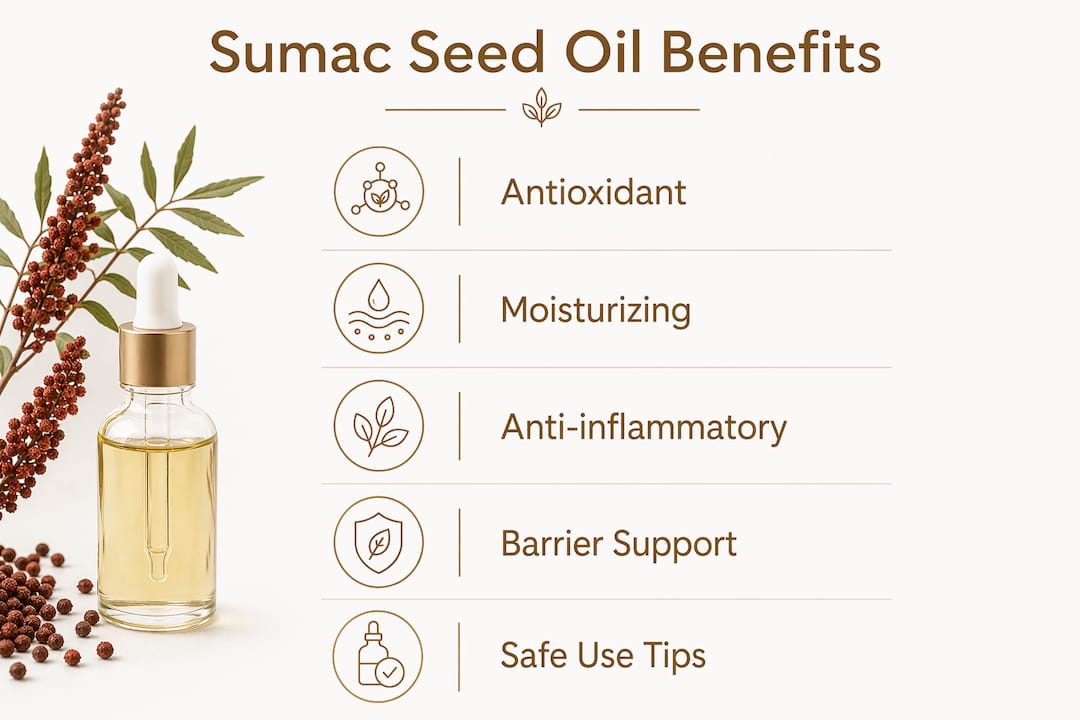
Users consistently share remarkably positive experiences with this oil. Thanks to its rich blend of barrier-supporting fatty acids, natural antioxidants, and calming properties, users frequently report noticeable improvements in how their skin looks and feels:
Visible Calming: Clients with reactive or easily flushed skin regularly mention how quickly it helps take the edge off redness and soothe mild irritation.
Deep, Weightless Hydration: Users love how deeply it nourishes dry patches without feeling heavy or leaving a greasy residue, leaving the skin feeling soft and restored.
A Healthy Glow: With consistent use, clients report a smoother texture and a naturally radiant, well-balanced complexion.
While it’s a supportive botanical oil rather than a prescription treatment for medical skin conditions, the science behind its mechanics aligns directly with what our clients see in the mirror every day: a deeply nourishing, antioxidant-rich ingredient that genuinely supports healthy skin function.
Quick dos and don’ts before you start:
Do patch test on your inner arm for 24 hours before applying to your face.
Do apply it as the last step in your routine, after water-based serums, to lock in moisture.
Don’t use it on broken, actively inflamed, or infected skin without consulting a dermatologist first.
Pro Tip: Start with one drop on a small dry patch or around the nose. If your skin tolerates it after 48 hours, expand use gradually rather than applying it all over on day one.
Table of Contents
What does the research actually say about sumac seed oil for skin?
The science on Rhus coriaria and skin is genuinely interesting, but you need to know which tier of evidence you are looking at before drawing conclusions.
The strongest signals come from in vitro work. A study using human HaCaT keratinocytes found that Rhus coriaria fruit extracts suppressed pro-inflammatory mediators including IL-8, ICAM-1, and MMP-9, and inhibited NF-κB activation. Those are meaningful targets: NF-κB is a master regulator of inflammatory signaling in skin cells, and IL-8 drives neutrophil recruitment in conditions like acne and psoriasis. The IC50 values in that study were in the low microgram-per-milliliter range, which is respectable for a plant extract.
Lab assays also show antimicrobial activity against species including Candida albicans and Acinetobacter baumannii, though the clinical relevance of petri-dish inhibition zones is always uncertain. Animal studies and ethnobotanical records describe wound-healing and anti-inflammatory applications, but controlled topical clinical trials are sparse. The human trial data that does exist focuses mostly on oral supplementation for cardiometabolic endpoints, with limited participant numbers and inconsistent outcomes.
The bottom line on evidence: Sumac seed oil has a credible mechanistic case for topical antioxidant and anti-inflammatory support. The gap is human topical RCTs. Treat it as a well-supported plant oil, not a clinically proven drug.
A narrative review published in Nutrition Today summarized the situation clearly: human trials on sumac have mostly enrolled small numbers of participants, outcomes are heterogeneous, and phytochemical profiles vary by growing region and processing method. That variability matters for topical products too.
Which compounds in sumac seed oil actually matter for your skin?
Understanding the oil’s chemistry makes it easier to set realistic expectations and read a product label intelligently.

Fatty acid profile
Sumac seed oil is rich in unsaturated fatty acids. Oleic and linoleic acids dominate, alongside palmitic and stearic acids. Oleic acid (omega-9) is occlusive and penetrates the lipid bilayer readily, making it useful for dry or mature skin. Linoleic acid (omega-6) is a component of ceramides and supports barrier repair, which is why it shows up in formulations targeting eczema-prone or compromised skin. Palmitic and stearic acids contribute to the oil’s texture and stability.
Phenolic compounds and antioxidants
The antioxidant story is more concentrated in the pericarp (the fruit’s outer layer) than in the seed itself. Pericarp fractions tend to carry higher total phenols, β-carotene, and stronger radical-scavenging activity. The seed oil, by contrast, delivers its value primarily through fatty acids and a lower but still meaningful phenolic load. Tannins, anthocyanins, flavonoids, and gallic acid derivatives are the main polyphenol classes identified across sumac extracts, and these are the compounds linked to the anti-inflammatory signaling suppression seen in keratinocyte studies.
Why plant part and species matter
A product made from sumac leaves carries a different risk profile than seed oil. Leaves contain higher oxalates and are more associated with photosensitivity and allergic reactions. Seed-derived oil sidesteps most of those concerns, but only if the label actually confirms it. Species matters too: Rhus coriaria is the culinary and cosmetic standard, while other Rhus species have different chemical profiles and traditional uses.
Pro Tip: When evaluating a product, look for a GC-MS (gas chromatography-mass spectrometry) report that lists the fatty acid percentages. A legitimate cold-pressed sumac seed oil should show oleic and linoleic acids as the dominant peaks. If a seller cannot provide that, ask before buying.
What topical benefits can you realistically expect?
Here is where it helps to separate what the lab data supports from what traditional use and consumer reports describe.
Antioxidant protection. The phenolic compounds in sumac extracts neutralize free radicals in cell assays. Applied topically, antioxidant-rich oils can reduce oxidative stress from UV exposure and pollution, which contributes to premature aging. This is a plausible benefit, though the concentration of phenolics in a cold-pressed seed oil is lower than in a concentrated extract.
Barrier support and hydration. The oleic and linoleic acid content makes sumac seed oil a solid emollient. Linoleic acid in particular helps reinforce the skin’s lipid barrier, which is why oils with a similar fatty acid profile are used for dry and sensitive skin. You might notice softer texture and reduced tightness within a few days of consistent use.
Mild anti-inflammatory soothing. The NF-κB and IL-8 suppression seen in keratinocyte studies suggests a plausible mechanism for calming mild redness and irritation. Practically, this could translate to reduced post-mask sensitivity, calmer skin around dry patches, or less visible redness after shaving. Do not expect it to control active eczema or psoriasis flares.
Wound-healing support. Ethnobotanical records from Mediterranean and Middle Eastern traditions describe sumac’s topical use for skin inflammation and wound care. Modern data does not yet confirm this with RCTs, so treat it as a traditional signal worth watching rather than a proven outcome.
“Most mechanistic skin evidence is preclinical; consumers should treat sumac seed oil as a supportive, plant-based topical rather than a clinical therapy for chronic inflammatory skin diseases.” — Nutrition Today review
Realistic timeline: barrier and hydration effects within one to two weeks of daily use. Antioxidant and anti-inflammatory effects are cumulative and harder to observe directly. If you are using it for mild redness or post-irritation recovery, give it two to four weeks before drawing conclusions. For anything beyond mild cosmetic concerns, a dermatologist visit is the right call.
How to apply sumac seed oil safely in your skincare routine
Getting the application sequence right matters more than most people realize with heavier oils.
Cleanse. Start with a clean face. A gentle, non-stripping cleanser works best, especially if you are pairing the oil with active ingredients. A sensitive-skin oil-to-milk cleanser is a good option for reactive skin types.
Apply water-based products first. Toners, essences, and water-based serums go on before any oil. Oil applied over water-based layers helps seal in hydration rather than blocking it.
Apply the sumac seed oil last. Warm one to two drops between your fingertips and press gently into the skin. For the face, one drop is usually enough. For the body or larger dry patches, scale up accordingly.
Frequency. Start with once daily in the evening. If your skin tolerates it well after one week, you can add a morning application under SPF. Oily or acne-prone skin types should start with every other night and monitor for congestion.
Spot treatment. For dry patches or localized irritation, apply a single drop directly to the area and leave it undisturbed overnight.
Carrier oil blending for sensitive skin. If you find the oil too rich on its own, blend it with a lighter carrier. A 1:3 ratio of sumac seed oil to jojoba or squalane works well for oily or combination skin. For dry or mature skin, use it straight or blend 1:1 with rosehip oil for added linoleic acid content.
Pro Tip: Avoid applying sumac seed oil immediately before sun exposure until you have confirmed your skin’s tolerance. While seed oil carries lower photosensitivity risk than leaf-derived products, starting your use in the evening routine removes that variable entirely.

Side effects, allergy risk, and when to avoid sumac seed oil
Sumac seed oil is generally well tolerated, but there are real risks worth knowing before you commit to daily use.
Allergic contact dermatitis is the most documented concern with Rhus species. While Rhus coriaria seed oil is distinct from poison ivy (Toxicodendron species, formerly classified under Rhus), case reports of contact dermatitis exist for other Rhus species. Anyone with a known allergy to plants in the Anacardiaceae family, which includes mango, cashew, and pistachio, should exercise particular caution and consult a dermatologist before topical use.
Photosensitivity is primarily a concern with leaf-derived products and whole-fruit infusions rather than cold-pressed seed oil. That said, the data on topical photosensitivity for seed oil specifically is limited, so caution in direct sunlight is reasonable until your skin’s response is established.
Patch test protocol. Apply a small amount to the inner forearm. Leave it on for 24 hours without washing. Check at 24 and 48 hours for redness, itching, swelling, or blistering. If any reaction appears, discontinue use. For eczema-prone skin, extend the observation period to 72 hours.
At-risk groups and contraindications:
People with Anacardiaceae allergies (mango, cashew, pistachio, poison ivy history).
Those currently using prescription retinoids or undergoing chemical peels (compromised barrier increases penetration and reaction risk).
Individuals with an actively broken or infected skin barrier.
Pregnant or breastfeeding individuals should consult a healthcare provider before use, as topical safety data for this group is not established.
Anyone experiencing worsening redness, burning, or a spreading rash after application should stop immediately and seek medical advice.
This article is general information, not medical advice. Confirm suitability with a dermatologist or qualified healthcare provider for your specific situation.
How to choose a quality sumac seed oil: what to look for
Buying the wrong product is the most common mistake people make with specialty plant oils. Here is what actually separates a quality sumac seed oil from a mislabeled or poorly processed one.
Species first. The label must say Rhus coriaria. Other Rhus species exist and have different chemical profiles. A product that says only “sumac oil” without naming the species is a red flag. Palinova’s sumac seed oil specifies Rhus coriaria and seed derivation explicitly.
Plant part confirmation. Confirm the oil is seed-derived, not a leaf infusion or whole-fruit macerate. Leaf-derived products carry higher oxalate content and a greater photosensitivity risk. This distinction should appear on the product page or certificate of analysis.
Extraction method. Cold-pressed is the preferred method for cosmetic seed oils. It preserves the fatty acid profile and avoids solvent residues. Solvent-extracted oils can be cheaper but may carry trace chemical residues and typically show degraded antioxidant activity. Infused oils (where seeds are macerated in a carrier) are a different product category entirely and will not have the same fatty acid concentration.
Quality Signal | What to Look For | Why It Matters |
Species name | Rhus coriaria on label or spec sheet | Different species have different profiles and safety data |
Plant part | “Seed-derived” or “seed oil” explicitly stated | Leaves carry higher photosensitivity risk |
Extraction | Cold-pressed | Preserves fatty acids; avoids solvent residues |
Lab testing | GC-MS report available; third-party preferred | Confirms fatty acid identity and purity |
Packaging | Dark glass bottle | Protects unsaturated fatty acids from oxidation |
Batch date and shelf life | Visible on label or product page | Unsaturated oils oxidize; freshness matters |
Storage matters too. Unsaturated fatty acids oxidize when exposed to light and heat. A dark glass bottle stored away from direct sunlight will extend shelf life meaningfully. If an oil smells rancid or noticeably different from when you opened it, do not apply it to your skin.
For further context on sourcing Palestinian sumac products, Palinova’s practical sourcing guide covers provenance and quality markers in detail.
Key Takeaways
Sumac seed oil from Rhus coriaria is a credible, evidence-aware topical oil for barrier support and antioxidant protection, but it is not a substitute for dermatological care.
Point | Details |
Evidence level | Most skin data is in vitro or animal-based; human topical RCTs are lacking. |
Core skin benefits | Barrier support, antioxidant protection, and mild anti-inflammatory soothing are the most plausible effects. |
Top safety step | Always patch test for 24–48 hours before full application; avoid use with active retinoids or broken skin. |
Sourcing non-negotiable | Confirm Rhus coriaria, seed-derived, cold-pressed, with a GC-MS report and dark glass packaging. |
Palinova option | Palinova’s sumac seed oil specifies Rhus coriaria, seed derivation, and cold-press extraction for verified cosmetic use. |
Why the “natural = proven” assumption gets sumac seed oil wrong
The most common mistake people make when researching plant oils is conflating a strong mechanistic signal with clinical proof. Sumac seed oil has genuinely interesting lab data. The NF-κB suppression in keratinocytes, the antimicrobial activity, the fatty acid profile that mirrors well-studied emollient oils. That is a real foundation. But the jump from “this suppresses IL-8 in a petri dish” to “this will clear your inflammatory skin condition” is a long one, and most popular coverage skips right over it.
What I find more interesting is the sourcing problem. The phytochemical profile of Rhus coriaria varies significantly by growing region, harvest timing, and processing method. A sumac seed oil grown in Palestine and cold-pressed fresh will not have the same phenolic load as one extracted from older stock with heat. That variability is why the human trial data is so inconsistent, and it is also why species and extraction method on the label are not just marketing details. They are the difference between a product that delivers on the mechanistic promise and one that does not.
The right framing is this: sumac seed oil is a well-composed emollient with antioxidant and anti-inflammatory compounds that have earned their place in a thoughtful skincare routine. It is not a treatment. Used consistently, as a barrier-sealing final step with verified sourcing, it is genuinely useful. Expecting more than that sets you up for disappointment.
Palinova Sumac Seed Oil: sourced right, ready to use
If you have read this far, you already know the sourcing checklist: Rhus coriaria, seed-derived, cold-pressed, GC-MS verified, dark glass packaging. Palinova’s sumac seed oil checks each of those boxes, sourced from Palestinian Rhus coriaria and pressed specifically from the seed rather than the pericarp or leaf.
Palinova’s broader Palestinian skincare range includes seed oils, beeswax creams, and botanical treatments, all ethically sourced and free from synthetic additives. If you want to compare sumac seed oil against other seed oils for anti-aging use, the Barbary Fig seed oil page is worth a look for context on how different Palestinian seed oils sit in a routine. Every product page lists batch date, extraction method, and recommended use steps. If you want guidance on which oil fits your skin type or how to layer it with other actives, Palinova offers free aromatherapy consultations. Visit the product page to order or reach out directly for personalized advice.
Useful sources
Peer-reviewed research
Source | What it supports |
Broad pharmacological and antioxidant profile of Rhus coriaria; supports active compounds and science summary sections | |
In vitro evidences of traditional use of Rhus coriaria against skin inflammatory conditions | NF-κB, IL-8, ICAM-1, MMP-9 suppression in HaCaT keratinocytes; core evidence for anti-inflammatory claims |
Phytochemical diversity of segregated Rhus coriaria pericarp and seeds oil | Fatty acid profile, phenolic content, antimicrobial activity; supports active compounds and sourcing sections |
Reviews and narrative analyses
Source | What it supports |
Sumac: Potential Health Benefits — Nutrition Today | Evidence-level framing; human trial limitations; phytochemical variability |
Sumac (Rhus coriaria) — Herbventure Project | Ethnobotanical context; traditional topical uses; gap in modern RCT data |
Product and industry pages
Source | What it supports |
Sumac seed oil product page — ShopPalestine | Practical application guidance; cold-press preference; sealing-step recommendation |
Sumac for health — 1TouchFood | Plant-part safety distinctions; traditional topical recipes; consumer-facing claims context |
FAQ
What is sumac good for on skin?
Rhus coriaria extracts have shown antioxidant and anti-inflammatory activity in keratinocyte studies, suppressing mediators like IL-8 and NF-κB. Topically, sumac seed oil is used as an emollient for barrier support, mild redness, and dry patches, though robust human clinical data are limited.
What are the disadvantages of sumac seed oil for skin?
The main risks are allergic contact dermatitis, particularly for people with Anacardiaceae family allergies, and potential photosensitivity if the product is not confirmed as seed-derived. Human topical safety data are sparse, so a patch test before full use is non-negotiable.
Is sumac the same as turmeric?
No. Sumac comes from the dried fruit of Rhus coriaria, a plant in the Anacardiaceae family. Turmeric is the root of Curcuma longa in the ginger family. Both contain anti-inflammatory compounds, but they are botanically unrelated and have different active constituents and applications.
What did Native Americans use sumac for?
Various Indigenous North American peoples used native Rhus species medicinally and as food, including for tanning hides and treating skin conditions. These applications involved different Rhus species than the culinary Rhus coriaria used in Middle Eastern traditions and modern cosmetic seed oils.
How do I use sumac seed oil in a skincare routine?
Apply it as the final step after water-based serums, using one drop warmed between your fingertips and pressed gently into the skin. Start with evening use only, patch test first, and avoid combining it with active retinoids or chemical exfoliants until your skin’s tolerance is established.
Recommended
Comments