
Best oils for wrinkles: top 10 for ageing skin
- Palinova

- Jul 18
- 9 min read

Oils for wrinkles are natural plant extracts rich in antioxidants and essential fatty acids that reduce fine lines by improving skin hydration, elasticity, and barrier function. The right facial oil does not replace your retinoid or SPF, but it works alongside them to keep skin plump, protected, and visibly smoother. Prickly pear seed oil, rosehip oil, and frankincense oil are among the most studied options, each backed by measurable effects on skin texture and moisture retention. If you are between 30 and 60 and want to add a natural anti-ageing oil to your routine, this guide tells you exactly which to choose and how to use it.
1. Prickly pear seed oil
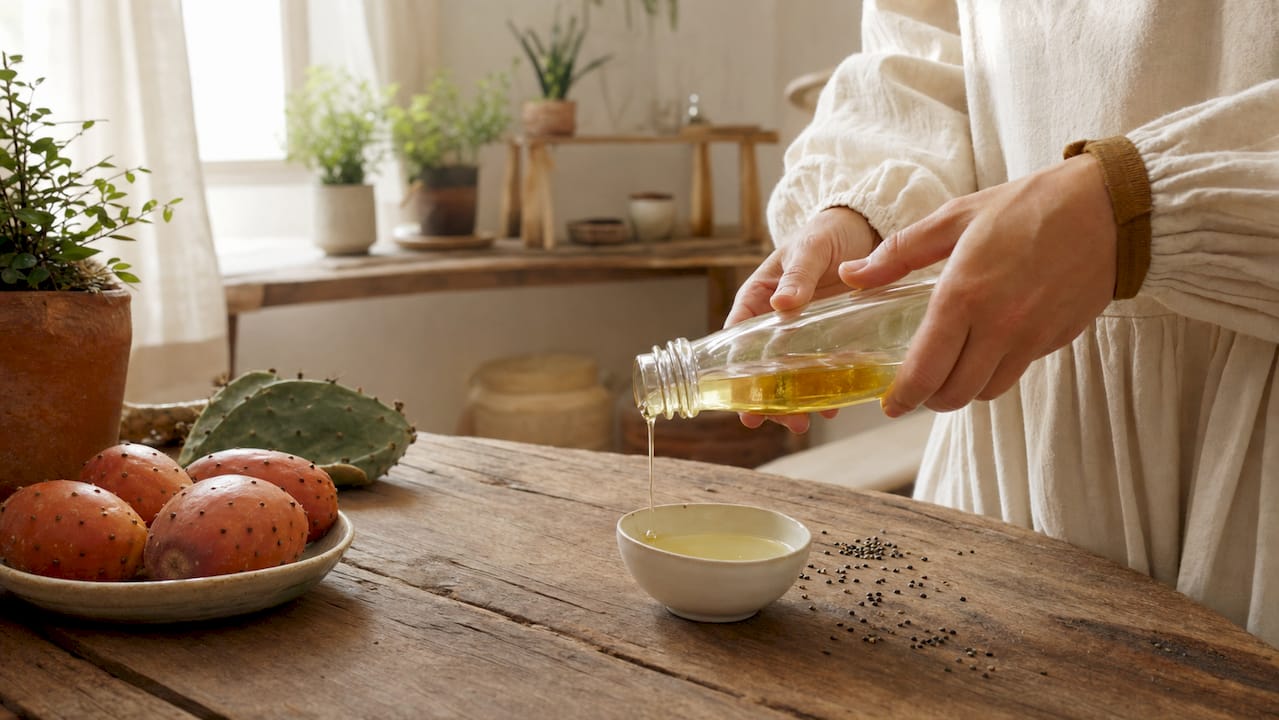
Prickly pear seed oil is one of the richest plant oils in antioxidants and essential fatty acids, making it a standout choice for mature skin. It contains high concentrations of vitamin E, polyphenols, linoleic acid, and amino acids, all of which support collagen repair and strengthen the skin barrier. The result is measurably improved hydration and elasticity, with fine lines appearing softer after consistent use. Palinova sources this oil as Barbary Fig Seed Oil, cold-pressed from Palestinian botanicals with no synthetic additives.
2. Rosehip oil
Rosehip oil delivers concentrated vitamin A and vitamin C directly to the skin, both of which support cell turnover and collagen synthesis. Studies show that rosehip powder reduces periorbital wrinkles and improves elasticity after eight weeks of use. That timeline matters because it sets realistic expectations. You will not see overnight results, but consistent daily application produces visible changes in skin texture and tone.
3. Frankincense oil
Frankincense essential oil supports skin regeneration and improves texture by encouraging healthy cell turnover. It is particularly valued for its ability to tighten the appearance of skin and reduce the look of deeper lines. Palinova offers a pure Boswellia Sacra frankincense oil, steam-distilled and free from fillers. Always dilute it in a carrier oil before applying to the face, as undiluted essential oils can cause irritation.
4. Jojoba oil
Jojoba is technically a liquid wax, not an oil, which is why it so closely mimics the skin’s own sebum. Squalane and jojoba oils are widely recommended for mature or sensitive skin because they restore moisture and elasticity without clogging pores. Jojoba absorbs quickly, leaves no greasy residue, and suits combination skin types well. It works as both a standalone moisturiser and a carrier for essential oils.
5. Squalane oil
Squalane is a stabilised form of squalene, a lipid naturally produced by the skin that declines significantly after the age of 30. This decline is one reason skin becomes drier and more prone to fine lines as you age. Squalane replenishes this lost lipid, restoring suppleness and acting as a protective barrier against moisture loss. It is one of the mildest options available, making it suitable even for reactive or thinning skin.
6. Geranium oil
Geranium essential oil is known for balancing the skin barrier and supporting circulation, which gives skin a healthier, firmer appearance. It suits mature skin particularly well because it works on both dry patches and areas prone to excess oil. Dilute two to three drops in a carrier oil such as jojoba before applying. Palinova’s geranium oil is pure and steam-distilled, sourced with the same ethical standards applied across its Palestinian botanical range.
7. Evening primrose oil
Evening primrose oil is rich in gamma-linolenic acid (GLA), an omega-6 fatty acid that the body struggles to produce in sufficient quantities as it ages. GLA directly supports the skin’s moisture barrier and reduces the inflammation that accelerates visible ageing. This makes evening primrose oil particularly effective for dry or hormonally influenced skin, which is common in women aged 40 and above. Use it as a night oil to allow full absorption without interference from SPF products.
8. Sea buckthorn oil
Sea buckthorn oil is one of the few plant sources of omega-7 fatty acids, which play a direct role in skin tissue repair and moisture retention. Its deep orange colour signals an exceptionally high carotenoid content, including beta-carotene and lycopene, both of which protect against oxidative damage. Because of its intensity, blend it with a lighter carrier oil such as jojoba at a ratio of roughly one part sea buckthorn to five parts carrier. A little goes a long way.
9. Argan oil
Argan oil contains oleic acid, linoleic acid, and tocopherols (vitamin E), which together soften skin and improve its ability to retain moisture. It absorbs well without leaving a heavy film, making it a practical choice for daytime use under SPF. Argan oil suits most skin types and works particularly well on the neck and décolletage, areas where ageing signs often appear before the face. Choose cold-pressed, unrefined argan oil for the highest nutrient content.
10. Citrus essential oils (with caution)
Lemon, bergamot, and sweet orange oils contain compounds that increase UV sensitivity and can accelerate wrinkle formation if misused. This phototoxicity risk is real and often overlooked. Used correctly, these oils offer antioxidant benefits and a brightening effect on uneven skin tone. The rule is firm: use citrus essential oils only in evening routines, always diluted in a carrier oil, and never before sun exposure.
How do oils for wrinkles work, and what are their limits?
Oils improve wrinkle appearance primarily by optimising hydration and skin barrier health rather than directly stimulating collagen production. Fine lines look softer because well-hydrated skin plumps up, reducing the shadow effect that makes lines visible. That is a meaningful benefit, but it is not the same as structural collagen repair.
Here is what oils do well, and where they stop:
Hydration. Oils seal moisture into the skin, preventing the dryness that makes fine lines more pronounced.
Antioxidant protection. Oils rich in vitamin E and polyphenols neutralise free radicals from UV and pollution, slowing oxidative ageing.
Barrier repair. Fatty acids in oils reinforce the lipid layer that keeps irritants out and moisture in.
Texture improvement. Regular use softens rough patches and improves the overall feel and appearance of skin.
Supportive role. Face oils work best alongside proven ingredients such as retinoids and broad-spectrum SPF, not as replacements for them.
Oils do not permanently erase wrinkles. Visible line reduction from oils alone is mostly due to plumping rather than any structural change. For deeper lines or significant laxity, retinoids and photoprotection remain the evidence-based standard. Oils make those actives more tolerable and the overall routine more effective.
Safe and effective ways to use oils in your daily routine
Getting the technique right matters as much as choosing the right oil. Applying 2–3 drops to damp skin after your serum or toner seals in moisture far more effectively than applying to dry skin. Dry skin application often results in poor absorption and a greasy finish.
Key rules for daily use:
Apply to damp skin. Pat your face dry after cleansing but leave it slightly moist before applying oil.
Layer correctly. Apply oil after water-based serums and before SPF in the morning, or as the final step at night.
Dilute essential oils. Never apply essential oils neat to the face. Two to three drops in a teaspoon of carrier oil is the standard ratio.
Avoid phototoxic oils before sun exposure. Citrus essential oils belong in evening routines only.
Match oil to skin type. Lighter oils suit oily or combination skin; richer oils suit dry or mature skin.
Use consistently. Results from anti-ageing oils build over weeks, not days.
Pro Tip: If you use a retinoid at night, apply your facial oil after the retinoid has fully absorbed. This reduces the dryness and flaking that retinoids commonly cause, without diluting their effect.
For detailed application guidance, Palinova’s geranium oil usage tips offer a practical walkthrough that applies to most facial oils.
Which oils suit different skin concerns and ages?
Not every oil works for every person. Skin type, age, and specific concerns all affect which oil will perform best for you.
Skin concern | Best oil choices | Why it works |
Dry or mature skin (40+) | Rosehip, evening primrose, prickly pear | Rich in fatty acids and vitamins that restore moisture and elasticity |
Oily or combination skin | Jojoba, squalane | Mimic natural sebum, absorb quickly, and do not block pores |
Sensitive or reactive skin | Squalane, jojoba | Mild, fragrance-free options that calm rather than irritate |
Environmental damage | Prickly pear, sea buckthorn | High antioxidant content neutralises oxidative stress |
Uneven tone or texture | Rosehip, frankincense | Support cell turnover and improve surface texture over time |
Proper oil choice and moderate amounts prevent the pore-clogging issues that put many people off facial oils. Problems arise mainly with heavy or heavily fragranced oils applied in excess. If you are new to facial oils, start with squalane or jojoba and introduce richer oils gradually. For a broader view of how oils fit into a natural anti-ageing skincare routine, Palinova’s editorial covers the topic in depth.
Key takeaways
The most effective oils for wrinkles are those rich in antioxidants and essential fatty acids, used consistently on damp skin alongside proven actives like retinoids and SPF.
Point | Details |
Oils work by hydrating, not rebuilding | Fine lines soften because skin plumps with moisture, not because collagen is directly stimulated. |
Application technique is critical | Apply 2–3 drops to damp skin after serum for best absorption and moisture retention. |
Match oil to skin type | Jojoba and squalane suit oily or sensitive skin; rosehip and evening primrose suit dry or mature skin. |
Citrus oils carry a phototoxicity risk | Lemon, bergamot, and orange oils must be diluted and used only in evening routines. |
Oils are supportive, not standalone | Pair facial oils with SPF and retinoids for measurable anti-ageing results. |
What I have learned from years of working with facial oils
The biggest mistake I see is treating facial oils as the centrepiece of an anti-wrinkle routine. They are not. They are the supporting cast, and a very good one, but they need a lead actor. In practice, that means pairing your oil with a broad-spectrum SPF every morning and a retinoid or vitamin C serum at night. The oil makes those actives more comfortable to use and helps the skin recover from any irritation they cause.
The second mistake is choosing an oil based on marketing rather than skin type. I have seen people with oily skin reach for rich rosehip oil because it sounds luxurious, then abandon oils entirely when their skin breaks out. Jojoba or squalane would have worked perfectly. The oil itself was not the problem.
Patience is the third factor most people underestimate. Rosehip oil shows measurable improvement in periorbital wrinkles after eight weeks. Eight weeks is a long time when you are looking in the mirror every morning. The people who see results are the ones who commit to a consistent routine and resist the urge to switch products every fortnight.
My honest recommendation: start with one well-chosen oil, apply it correctly to damp skin every evening, and give it two full months before judging. The results, when they come, are real.
— abdelmuhsen
Palinova’s pure oils for ageing skin
Palinova brings together pure, ethically sourced Palestinian botanicals into a range built specifically for people who want results without synthetic additives.

The Barbary Fig Seed Oil is cold-pressed from prickly pear seeds and delivers one of the highest antioxidant profiles of any plant oil available. The pure frankincense essential oil is steam-distilled from Boswellia Sacra resin and supports skin texture and regeneration. Both sit within Palinova’s broader natural Palestinian skincare range, which includes soothing creams and botanical blends for mature skin. Every product comes with access to free aromatherapy consultations, so you can find the right oil for your specific skin concerns without guesswork.
FAQ
What is the best oil for wrinkles on mature skin?
Prickly pear seed oil and rosehip oil are the strongest choices for mature skin, as both are rich in antioxidants, vitamin E, and essential fatty acids that improve hydration and elasticity. Squalane is the best option for sensitive or thinning skin.
Can olive oil reduce wrinkles?
Olive oil provides some moisturising benefit due to its oleic acid content, but it is heavier than most dedicated facial oils and can block pores for some skin types. Purpose-specific oils such as rosehip or jojoba deliver more targeted anti-ageing benefits.
How long does it take for facial oils to reduce fine lines?
Rosehip oil shows measurable improvement in periorbital wrinkles after eight weeks of consistent use. Most facial oils require at least six to eight weeks of daily application before visible changes appear.
Are essential oils safe to apply directly to the face?
Essential oils must always be diluted in a carrier oil before applying to the face. Two to three drops per teaspoon of carrier oil is the standard ratio, and citrus essential oils should only be used in evening routines due to their phototoxicity risk.
Do facial oils clog pores on ageing skin?
Oils do not automatically clog pores when chosen correctly and applied in moderate amounts. Problems occur mainly with heavy or fragranced oils used in excess. Jojoba and squalane are the safest choices for those concerned about pore congestion.
Recommended
Comments