
Why Inula Viscosa Oleoresin Is a Botanical Powerhouse
- Palinova

- Aug 10
- 19 min read
Inula viscosa oleoresin is a concentrated, lipophilic plant extract that combines high sesquiterpene-lactone and polyphenol content to deliver broad antimicrobial, antifungal, antioxidant, and enzyme-inhibition activities with clear translational potential across nutraceuticals, cosmetics, and sustainable agriculture. That one sentence is the bottom line. Everything below unpacks the evidence behind it.
Three proof points establish the claim immediately:
UHPLC-HRMS profiling of a fractionated leaf extract identified 43 secondary metabolites, including shikimoyl depsides of caffeic acid, dihydrobenzofuran lignans, and cinchonain-type phenols, with a total phenolic content (TPC) of 299.1 ± 34.5 GAE mg/g and DPPH radical-scavenging activity at low microgram per milliliter concentrations, confirming potent radical-scavenging activity.
In vitro MIC and zone-of-inhibition assays across multiple studies document activity against both Gram-positive and Gram-negative bacteria, while field-formulated EC preparations containing 37.5% I. viscosa paste controlled late blight and downy mildew under real agricultural conditions.
Comparative climate studies show that arid-origin phenotypes produce sesquiterpene-shifted essential oils with enhanced antioxidant and antidiabetic in vitro activity, confirming that chemotype selection is a lever researchers can actually pull.
No GLP-compliant animal studies or human clinical trials have been published. Every translational claim in this article rests on in vitro or early field evidence. Treat it accordingly.
Pro Tip: When reading any Inula viscosa study, check whether the tested material is an oleoresin, an essential oil, or a polar (methanolic/aqueous) extract before comparing effect sizes. These are chemically distinct fractions with different active compound profiles and very different dose-response curves.
Key Takeaways
Inula viscosa oleoresin’s translational potential is grounded in a well-characterized polyphenol and sesquiterpene-lactone matrix, field-validated antifungal activity, and a sustainability profile that supports ethical scale-up, but clinical evidence remains absent and GLP toxicology is the immediate bottleneck.
Point | Details |
Chemical complexity drives activity | UHPLC-HRMS identified 43 metabolites including caffeoylquinic acids, sesquiterpene lactones, and dihydrobenzofuran lignans; TPC reached 299.1 ± 34.5 GAE mg/g in a fractionated extract. |
Extraction method determines chemistry | Nonpolar Soxhlet yields sesquiterpene-rich oleoresin; polar solvents enrich polyphenols; hydrodistillation produces essential oil — these are not interchangeable in bioassays. |
Field evidence is the strongest translational signal | EC formulations with 37.5% I. viscosa paste controlled late blight and downy mildew under real field conditions, the most advanced translational evidence in the literature. |
Cytotoxicity and ROS induction require attention | IvE fraction increased intracellular ROS in SH-SY5Y cells; GLP toxicology is required before any human-use claim. |
Palinova offers traceable research-grade material | Palinova’s oleoresin comes with COA, documented origin, and sample availability for independent analytical verification. |
Table of Contents
Why Inula viscosa oleoresin is a botanical powerhouse: chemical composition
How extraction method shapes the oleoresin’s chemistry and activity
Profiling and quality control: what a rigorous COA should contain
Sustainability, wildcrafting, and what sourcing actually means for chemistry
Why Inula viscosa deserves prioritized translational attention
Palinova’s research-grade Inula viscosa oleoresin: how to request samples and COAs
Why Inula viscosa oleoresin is a botanical powerhouse: chemical composition
The chemical identity of I. viscosa oleoresin is what separates it from most Mediterranean botanicals. It is not one class of compound doing one job. It is a layered matrix of at least five distinct phytochemical families, each contributing to a different bioactivity.
Major compound classes
Caffeoylquinic acids are the dominant polyphenol family. Mono- and dicaffeoylquinic acids (including 3,5-dicaffeoylquinic acid and related isomers) account for a large share of the total phenolic pool. These compounds drive radical-scavenging activity and are the primary targets for UHPLC-HRMS quantification in quality-control workflows.
Sesquiterpene lactones are the lipophilic signature of the oleoresin fraction. Costic acid and related guaianolide-type lactones concentrate in nonpolar extracts and are responsible for much of the antifungal and antimicrobial activity. Their α,β-unsaturated lactone moiety reacts with thiol groups in microbial enzymes, which is the proposed membrane-disruption mechanism.
Flavonoids including hispidulin, nepetin, and methylated quercetin derivatives contribute anti-inflammatory activity through 5-LOX and COX pathway modulation. Hispidulin in particular has been studied for its α-glucosidase inhibitory potential, giving the extract relevance for antidiabetic applications.
Dihydrobenzofuran lignans and cinchonain-type phenols were identified in the UHPLC-HRMS study as unexpected structural classes. Their biological roles in I. viscosa are still being characterized, but their presence signals that the extract’s bioactivity is broader than earlier methanolic-extract studies suggested.
Volatile terpenoids dominate the essential oil fraction rather than the oleoresin, but camphor, eucalyptol (1,8-cineole), and α-pinene appear in GC-MS profiles of oleoresin-adjacent fractions and contribute to the antimicrobial and respiratory-support properties associated with the plant. A comprehensive review confirms that sesquiterpene lactones, flavonoids, and hydroxycinnamic acids are the three pillars of I. viscosa bioactivity across the published literature.
Analytical fingerprint reference
Compound class | Key markers | Primary analytical method | Linked bioactivity |
Caffeoylquinic acids | 3,5-dicaffeoylquinic acid | UHPLC-HRMS, HPLC-UV | Antioxidant, anti-inflammatory |
Sesquiterpene lactones | Costic acid, iso-costic acid, guaianolides | HPLC-UV, NMR | Antimicrobial, antifungal, cytotoxic |
Flavonoids | Hispidulin, nepetin, methylquercetin glycosides | UHPLC-HRMS, HPLC-UV | Anti-inflammatory, antidiabetic |
Dihydrobenzofuran lignans | Cinchonain-type phenols | UHPLC-HRMS, NMR | Antioxidant (under investigation) |
Volatile terpenoids | Camphor, eucalyptol, α-pinene | GC-MS | Antimicrobial, respiratory |
Geography and harvest season drive meaningful variability. Arid-climate specimens shift toward higher sesquiterpene content; cooler, wetter origins tend to favor polyphenol accumulation. This means a COA without an origin declaration is essentially incomplete for research purposes.
How extraction method shapes the oleoresin’s chemistry and activity
The word “extract” covers at least five distinct products when applied to I. viscosa, and conflating them is one of the most common errors in the literature. Method determines chemistry, and chemistry determines activity.
What each method actually produces
Soxhlet extraction with nonpolar solvents (hexane, dichloromethane) yields the true oleoresin: a viscous, lipid-rich fraction concentrated in costic acid, sesquiterpene lactones, and waxes. Polar Soxhlet runs (methanol, ethanol) shift the output toward caffeoylquinic acids and flavonoids. Combining sequential Soxhlet fractionation with UHPLC-HRMS profiling produced the IvE fraction with a Total phenolic content measured at a high level typical of fractionated extracts, roughly three times higher than some earlier crude methanolic extracts.
Hydrodistillation produces the essential oil, a volatile-terpenoid-dominant fraction (camphor, eucalyptol, α-pinene, sesquiterpene hydrocarbons). This is chemically distinct from the oleoresin and should never be used as a proxy for it in bioassays. Palinova’s Inula viscosa essential oil and oleoresin are separate products precisely because of this compositional difference.
Organic solvent maceration (acetone, ethyl acetate, ethanol) produces intermediate polarity extracts. Acetone extracts of I. viscosa shoots showed at least 11 compounds by TLC, with seven demonstrating antifungal activity in vitro. These are the fractions most commonly used in the agricultural fungicide literature.
Supercritical CO2 extraction is the cleanest route to a lipophilic-enriched oleoresin with no residual solvent. It preserves thermolabile sesquiterpene lactones better than Soxhlet at elevated temperatures, though equipment cost limits its use to industrial or well-funded research settings.
Aqueous decoctions produce the lowest-potency extracts for most bioassays but are the traditional preparation method across Mediterranean ethnobotany. They are appropriate for ethnopharmacological context but not for standardized research-grade material.
Extraction comparison at a glance
Method | Primary fraction | Key compounds enriched | Typical use case | Main limitation |
Soxhlet (nonpolar) | Oleoresin | Costic acid, sesquiterpene lactones, waxes | Antimicrobial, antifungal R&D | Residual solvent; heat degrades some lactones |
Soxhlet (polar) | Polyphenol extract | Caffeoylquinic acids, flavonoids | Antioxidant, antidiabetic R&D | Lower sesquiterpene content |
Hydrodistillation | Essential oil | Camphor, eucalyptol, α-pinene | Aromatherapy, volatile profiling | No polyphenols; not oleoresin |
Organic maceration | Mixed extract | Intermediate polarity compounds | Agricultural fungicide formulations | Batch variability; solvent traces |
Supercritical CO2 | Clean oleoresin | Sesquiterpene lactones, lipophilics | Nutraceutical, cosmetic grade | High equipment cost |
Aqueous decoction | Polar extract | Polyphenols (low yield) | Ethnopharmacology reference | Low potency; not standardizable |
Pro Tip: To maximize polyphenol retention during Soxhlet extraction, pre-dry plant material at no more than 40°C and run the polar solvent step first before switching to nonpolar solvents. Oxidative degradation of caffeoylquinic acids accelerates above 50°C and during prolonged exposure to light. Amber glassware and nitrogen blanketing during evaporation are not optional for research-grade work.
Harvest season matters as much as solvent choice. Plants harvested in late summer, when the plant is under water stress, tend to produce higher resin yields. Post-harvest handling, specifically rapid drying and cold storage, preserves the sesquiterpene lactone profile better than slow ambient drying.
Profiling and quality control: what a rigorous COA should contain
A COA for I. viscosa oleoresin that lists only total polyphenols and microbial limits is not fit for research purposes. Here is what a defensible analytical package looks like.
Primary analytical methods
UHPLC-HRMS (or LC-HRMS): The reference method for polyphenol profiling. Identifies and quantifies caffeoylquinic acid isomers, flavonoid glycosides, and unexpected structural classes (lignans, cinchonains) that HPLC-UV misses entirely. The 43-metabolite identification in the IvE study was only possible with HRMS.
GC-MS: Required for volatile terpenoid profiling. Camphor, eucalyptol, and α-pinene are the primary markers. Run on a DB-5 or equivalent column with a standard terpenoid library.
NMR (¹H and ¹³C): Used for structural confirmation of novel or unusual compounds, particularly sesquiterpene lactones and lignans. Not routine for every batch but necessary for characterizing a new chemotype or supplier.
HPLC-UV (280 nm / 330 nm): The practical routine method for quantifying costic acid, hispidulin, and caffeoylquinic acids in batch-to-batch QC once the UHPLC-HRMS fingerprint is established.
Recommended COA checklist
Parameter | Method | Acceptance criterion |
Moisture content | Karl Fischer or loss on drying | ≤ 8% |
Total polyphenols (TPC) | Folin-Ciocalteu (GAE mg/g) | Report with batch range |
3,5-Dicaffeoylquinic acid | HPLC-UV | Quantify; flag outliers vs. reference batch |
Costic acid / iso-costic acid | HPLC-UV or GC-MS | Quantify; confirm presence |
Hispidulin / nepetin | HPLC-UV | Quantify |
Camphor + eucalyptol | GC-MS | Report % of volatile fraction |
α-Pinene | GC-MS | Report % of volatile fraction |
Residual solvents | GC headspace | Per USP <467> limits |
Heavy metals (Pb, Cd, As, Hg) | ICP-MS | Per USP <232> or equivalent |
Total aerobic count / yeast/mold | USP <61> | Per intended use category |
Stability data | Accelerated stability (40°C) | Projection minimum |
Method validation checklist
Establish LOD and LOQ for each marker compound using serial dilution of a certified reference standard.
Confirm linearity across the expected concentration range (R² ≥ 0.999 for routine markers).
Assess matrix effects using post-column infusion or standard addition in the actual oleoresin matrix.
Run intra- and inter-day precision (RSD ≤ 5% for HPLC-UV; ≤ 10% for UHPLC-HRMS quantification).
Document sample prep: solvent, dilution factor, sonication time, and centrifugation conditions.
Batch-to-batch variability is the single biggest obstacle to reproducible research. Standardized cultivation, with documented chemotype selection and consistent harvest timing, reduces marker drift far more reliably than post-hoc blending. Suppliers who cannot provide origin documentation and harvest date are not research-grade suppliers.
What the biological evidence actually shows
The bioactivity literature on I. viscosa is large but heterogeneous. Assay conditions, extract types, and concentration ranges vary enough that direct cross-study comparisons require caution. The table below maps the strongest findings to their assay and extract type.
Bioactivity summary
Bioactivity | Extract type | Key assay | Reported effect | Source note |
Radical scavenging | Fractionated leaf (IvE) | DPPH | ID50 = 14 μg/mL | UHPLC-HRMS study |
Radical scavenging | Fractionated leaf (IvE) | ABTS | ID50 = 24 μg/mL | UHPLC-HRMS study |
α-Amylase inhibition | Methanolic leaf extract | Enzyme inhibition assay | Stronger than aqueous extract | PMC9000642 |
α-Glucosidase inhibition | Methanolic leaf extract | Enzyme inhibition assay | Stronger than aqueous extract | PMC9000642 |
Antibacterial | Methanolic leaf extract | MIC / zone of inhibition | Active vs. P. mirabilis, B. subtilis | PMC9000642 |
Antifungal (field) | EC formulation (37.5% paste) | Field trial | Late blight + downy mildew control | Fungicidal Preparations study |
Cytotoxicity | Fractionated leaf (IvE) | MTT / cell viability | Dose-dependent; spares HaCaT keratinocytes | UHPLC-HRMS study |
Antidiabetic (in silico) | Essential oil (arid phenotype) | In silico docking + ADME | Enhanced activity vs. temperate phenotype | Climate/ADME study |
Mechanisms worth knowing
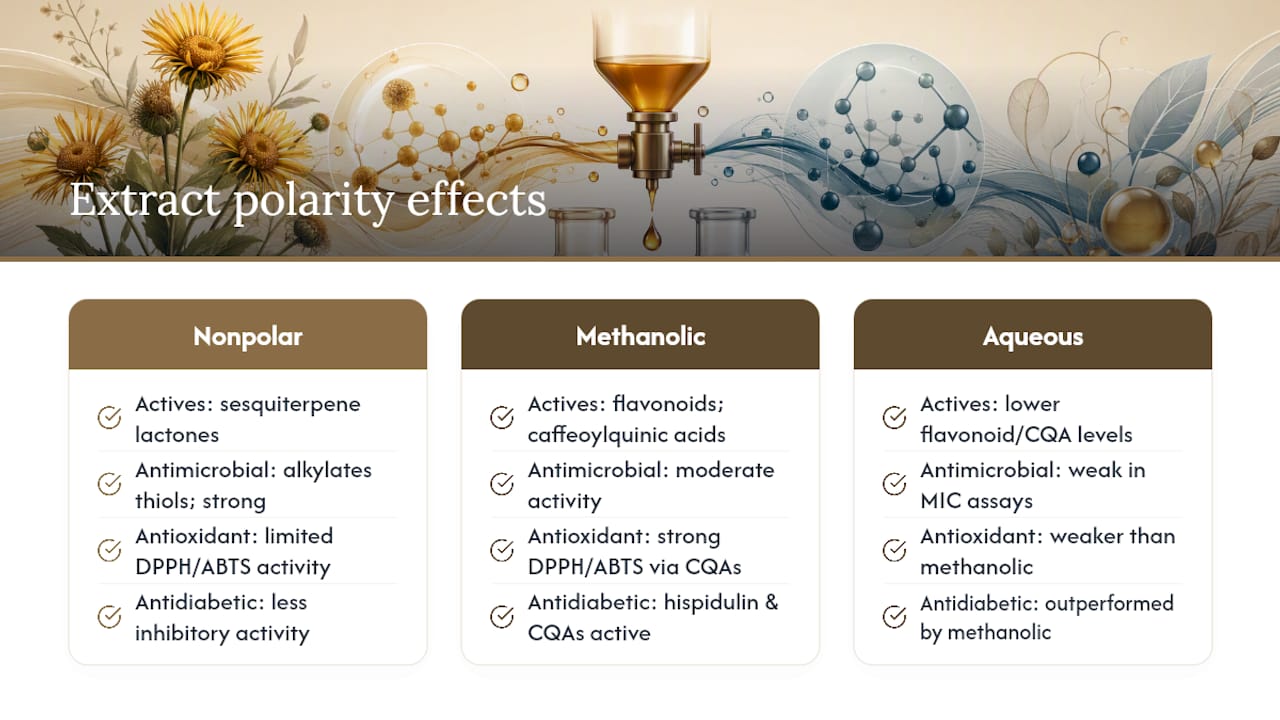
Antimicrobial action is primarily driven by the lipophilic sesquiterpene lactones. The α,β-unsaturated lactone ring alkylates thiol groups in bacterial membrane proteins and enzymes, disrupting membrane integrity. This mechanism is concentration-dependent and explains why nonpolar fractions consistently outperform aqueous extracts in MIC assays.
Antioxidant activity operates through two parallel routes: direct hydrogen-atom transfer from the phenolic hydroxyl groups of caffeoylquinic acids (DPPH/ABTS assays capture this), and metal chelation by the catechol moieties of flavonoids. The IvE fraction’s DPPH radical-scavenging activity at low microgram per milliliter concentrations places it among the more potent plant-derived antioxidants in the published literature.
Antidiabetic enzyme inhibition is mediated primarily by hispidulin and related flavonoids acting on α-glucosidase, and by caffeoylquinic acids inhibiting α-amylase. Methanolic extracts consistently outperform aqueous preparations in these assays, which aligns with the higher flavonoid content of polar organic extracts.
Anti-inflammatory effects involve 5-LOX and COX pathway modulation by hispidulin and nepetin. These are well-characterized mechanisms for methylated flavones generally; the I. viscosa-specific evidence is primarily in vitro.
Fungicidal field activity is the most translationally advanced evidence. EC formulations containing I. viscosa paste controlled late blight (Phytophthora infestans) in potato and tomato and downy mildew in grape under field conditions. The lipophilic antifungal compounds, particularly costic acid and related sesquiterpene lactones, are the proposed active agents. Greenhouse trials have also reported Botrytis incidence reductions reported in Brussels sprouts in some greenhouse trials and improved vegetative and root biomass in treated vegetables.
Cytotoxicity and pro-oxidant effects are the safety-relevant findings. At concentrations of 25–50 μg/mL, the IvE fraction reduced viability in several tumor cell lines while sparing HaCaT keratinocytes. This hormetic, dose-dependent pattern is common in polyphenol-rich extracts and is not automatically a therapeutic advantage. It is a signal that dose range and cell-type specificity require careful investigation before any clinical claim.
Limitations: Assay heterogeneity across studies makes meta-analysis unreliable. Most MIC values come from disk-diffusion or broth microdilution with crude extracts at unspecified purity. Standardized dosing, defined extract composition, and head-to-head comparisons against reference antibiotics or antifungals are largely absent. The gap between a 14 μg/mL DPPH ID50 in a test tube and a clinically meaningful antioxidant dose in a human is substantial and has not been bridged.
ADME, toxicology signals, and U.S. regulatory context
What ADME modeling tells us
In silico ADME analyses of I. viscosa constituents, including work on arid-phenotype essential oil components, suggest that the major sesquiterpene lactones and terpenoids have moderate lipophilicity (predicted logP values consistent with passive membrane permeation) but may face first-pass hepatic metabolism that limits oral bioavailability. Caffeoylquinic acids are well-characterized pharmacokinetically in other plant systems: they undergo extensive colonic microbial transformation to phenylpropionic acid derivatives, which are the circulating forms. Whether the specific isomers in I. viscosa follow the same metabolic fate has not been directly tested.
Climate-phenotype ADME analysis of essential oil constituents reported favorable predicted ADME parameters for several sesquiterpene components, including acceptable predicted oral absorption and no predicted hERG channel inhibition at tested concentrations. These are in silico outputs, not experimental pharmacokinetic data.
Toxicology signals
The in vitro cytotoxicity data are the clearest safety signal in the current literature. The selective sparing of HaCaT keratinocytes is encouraging for topical applications but does not establish dermal safety under repeated-use conditions.
No GLP-compliant rodent toxicology studies have been published. No maximum tolerated dose, no NOAEL, and no genotoxicity data exist in the peer-reviewed record for oleoresin-specific preparations. Methanolic extracts showed no toxicity to normal PBMCs in one study, which is a positive signal, but PBMCs are not a substitute for a full safety package.
U.S. regulatory checkpoints
The regulatory pathway depends entirely on the intended use:
Dietary supplement (FDA, 21 CFR Part 111): I. viscosa oleoresin is not currently listed as a Generally Recognized As Safe (GRAS) ingredient. A new dietary ingredient (NDI) notification to FDA is required if the ingredient was not marketed in the U.S. before October 15, 1994. The NDI notification must include safety data; in vitro cytotoxicity alone is insufficient. Structure/function claims require substantiation and a 30-day FDA notification.
Cosmetic ingredient (FDA, FD&C Act): Cosmetics do not require pre-market approval, but manufacturers bear responsibility for safety substantiation. Repeated-insult patch testing (RIPT), dermal sensitization studies, and stability data are the practical minimum before commercial launch. The FDA’s voluntary cosmetic registration program (now under MoCRA, effective 2024) requires facility registration and product listing.
Pesticide/biopesticide (EPA, FIFRA): Agricultural fungicide formulations require EPA registration. Botanical pesticides may qualify for the reduced-risk or biopesticide pathway, which has lower data requirements than conventional pesticide registration, but field efficacy data, environmental fate data, and a minimum toxicology package are still required.
Practical regulatory checklist for developers
Confirm NDI status or GRAS pathway before any dietary supplement launch.
Commission a GLP-compliant Ames test and in vitro micronucleus assay as minimum genotoxicity screening.
For topical products, run a 21-day cumulative irritation study and a HRIPT in at least 50 subjects.
Document extraction solvent and residual solvent levels against USP <467> limits.
Establish a stability protocol (ICH Q1A conditions) before making any shelf-life claim.
For agricultural use, consult EPA’s biopesticide registration requirements early; the data package is smaller than conventional registration but still substantial.
A rinse-off product at higher concentration requires the same safety data but carries lower systemic exposure risk, which simplifies the toxicological argument.*
This article provides general scientific information only, not legal or regulatory advice. Confirm current requirements directly with FDA, EPA, or a qualified regulatory consultant before making product or labeling decisions.
Realistic near-term applications and formulation notes
The evidence base supports four near-term translational directions. None of them is ready for a health claim without additional safety and efficacy data, but each has a clear development path.
[
Nutraceuticals and standardized extracts
A standardized polyphenol extract, quantified for caffeoylquinic acid content and costic acid as a sesquiterpene marker, is the most defensible nutraceutical starting point. The antioxidant and enzyme-inhibition data are the strongest in vitro signals. Target a TPC of at least 200 GAE mg/g (dry weight basis) and quantify the two dominant caffeoylquinic acid isomers as primary markers. Encapsulation in a lipid-based delivery system (soft gel or self-emulsifying formulation) would address the oral bioavailability limitations of both polyphenol and sesquiterpene components.
Topical cosmetics and wound-healing applications
The selective sparing of HaCaT keratinocytes in cytotoxicity assays, combined with the anti-inflammatory flavonoid content, supports a topical anti-inflammatory or wound-healing application. Palinova’s Inula viscosa skincare range represents a practical formulation model. Fragrance-free formulation strategies are worth considering early in development. Stability of caffeoylquinic acids in aqueous emulsions is also a concern; antioxidant co-formulation (vitamin E, ascorbyl glucoside) and nitrogen-purged packaging extend shelf life meaningfully.
Agricultural fungicides and biostimulants
This is the most evidence-advanced translational path. I. viscosa paste has demonstrated field-level control of late blight and downy mildew. The next development step is a dose-response field trial to establish the minimum effective concentration, followed by environmental fate and ecotoxicology studies for EPA biopesticide registration. Biostimulant applications (growth promotion, disease resistance priming) have greenhouse-level evidence and represent a lower-regulatory-burden entry point than a pesticide claim.
Pharmacological lead discovery
The sesquiterpene lactone scaffold (guaianolide-type costic acid derivatives) and the unusual dihydrobenzofuran lignans identified by UHPLC-HRMS are structurally interesting leads for medicinal chemistry. Isolation, full structural characterization by NMR, and single-compound bioassays against defined molecular targets (specific kinases, 5-LOX, α-glucosidase) would establish whether any individual compound drives the observed activities or whether synergy is required.
Sustainability, wildcrafting, and what sourcing actually means for chemistry
Inula viscosa (also known as Dittrichia viscosa) is a common Mediterranean shrub that colonizes disturbed soils, roadsides, and field margins. Its ecological role is more significant than its weed-like distribution suggests.
Ecological role
The plant flowers in late summer and autumn, making it one of the few significant nectar sources for honey bees during a period when most other Mediterranean plants have finished flowering. This winter-forage role gives it genuine agroecosystem value beyond its pharmaceutical and agricultural applications. Overharvesting wild populations would remove a resource that local bee populations depend on during a nutritionally critical window.
Wildcrafting vs. cultivation
Wild-harvested material carries three problems for research-grade use:
Genetic variability: Natural populations span multiple chemotypes. A batch from a Moroccan hillside and one from a Palestinian valley can have substantially different sesquiterpene-to-polyphenol ratios, making cross-batch comparisons unreliable.
Seasonal drift: Resin content peaks under late-summer water stress. Plants harvested in spring or after rainfall produce lower-yield, lower-potency oleoresin.
Contamination risk: Roadside and field-margin plants accumulate heavy metals and pesticide residues from adjacent agricultural land.
Cultivated material, grown from selected chemotypes on pesticide-free land with documented harvest timing, solves all three problems. Climate-stressed southern phenotypes tend to produce higher defensive-resin yields, a finding supported by the arid-phenotype essential oil study. That advantage is only ethically and commercially sustainable through cultivation, not through intensified wildcrafting.
Sourcing checklist for ethical procurement
Documented geographic origin (country, region, GPS coordinates for wild-harvest)
Chemotype or ecotype designation if available
Cultivation or wild-harvest declaration
Harvest date and plant growth stage at harvest
Post-harvest handling protocol (drying temperature, storage conditions)
Pesticide-free certification or residue testing results
Heavy metal testing results (ICP-MS)
Lot number traceable to a specific harvest batch
Pro Tip: *When evaluating a new supplier, request two batches from different harvest seasons and run a side-by-side UHPLC-HRMS comparison.
How to evaluate a commercial Inula viscosa oleoresin batch
Receiving a sample is not the same as qualifying a supplier. Here is a practical acceptance framework.
Acceptance checklist
COA includes TPC (Folin-Ciocalteu, GAE mg/g), costic acid quantification, and at least two caffeoylquinic acid isomers
Residual solvents tested and within USP <467> Class 2 limits
Heavy metals (Pb ≤ 10 ppm, Cd ≤ 1 ppm, As ≤ 3 ppm, Hg ≤ 0.1 ppm) per USP <232>
Total aerobic microbial count and yeast/mold within limits for intended use category
Stability data or at minimum a retest date with storage conditions specified
Extraction method and solvent system declared
Harvest date and geographic origin declared
Sample request template
When contacting a supplier, request the following in writing:
Field | What to request |
Lot number | Unique identifier traceable to a single harvest batch |
Harvest date | Month and year; growth stage at harvest |
Geographic origin | Country, region, cultivation vs. wild-harvest |
Extraction method | Solvent(s), temperature, equipment type |
Processing notes | Drying method, storage conditions, any additives |
Sample size | Minimum 5 g for full analytical panel; 50 g for formulation trials |
COA | Full document, not a summary; include raw instrument data if available |
Analytical panel to run on received samples
UHPLC-HRMS full scan: Confirm compound class fingerprint matches reference literature; flag unexpected peaks.
HPLC-UV quantification: Costic acid, 3,5-dicaffeoylquinic acid, hispidulin. Compare against COA values.
GC-MS volatile profile: Camphor, eucalyptol, α-pinene ratios. Confirm absence of synthetic adulterants.
Microbial testing: Total aerobic count, yeast/mold, absence of specified pathogens per intended use.
A supplier who resists providing lot-traceable COAs or declines to share extraction method details is not a research-grade supplier, regardless of price or marketing language.
Priority research gaps and a pragmatic agenda
The evidence base is genuinely promising. The translational gap is also genuinely large. Here is where the work needs to go.
Top research gaps
No standardized chemotype panel exists for I. viscosa. Without it, cross-study comparisons remain unreliable.
No GLP-compliant rodent toxicology study has been published for oleoresin-specific preparations.
No pharmacokinetic data exist for costic acid or the major caffeoylquinic acid isomers in any animal model.
No human clinical trial, even a Phase I safety study, has been published for any I. viscosa preparation.
Mechanism-focused isolation studies for the dihydrobenzofuran lignans and cinchonain-type phenols are absent.
Agricultural dose-response data are limited to a small number of field trials with a single EC formulation concentration.
Prioritized research agenda
Chemotype panel development: Collect 15–20 accessions from across the Mediterranean range, grow under controlled conditions, and profile by UHPLC-HRMS and GC-MS to establish a reference chemotype library. This is the foundational study that makes everything else reproducible.
GLP 28-day oral toxicology in rats: Use a standardized oleoresin (defined TPC and costic acid content) at three dose levels. Primary endpoints: body weight, organ weights, clinical chemistry, histopathology. This establishes a NOAEL and supports NDI notification.
Oral pharmacokinetics in rats: Single-dose PK for costic acid and 3,5-dicaffeoylquinic acid in a lipid-based formulation vs. aqueous suspension. Establishes bioavailability and informs human dose projection.
Topical irritation and sensitization study: 21-day cumulative irritation and LLNA (murine local lymph node assay) for a 1% w/w oleoresin topical formulation. Required before any human topical trial.
Small randomized topical wound-healing trial (n = 40–60): Standardized oleoresin cream vs. vehicle control in a minor wound or dermatitis model. Primary endpoint: time to re-epithelialization or SCORAD reduction. This is the minimum clinical evidence needed for a cosmetic efficacy claim.
Agricultural dose-response field trial: Three EC formulation concentrations (including the established 37.5% paste level) against P. infestans in potato across two growing seasons. Establishes minimum effective concentration and supports EPA biopesticide registration data package.
Mechanism isolation study: Fractionate oleoresin to isolate costic acid and the dominant caffeoylquinic acid isomer at ≥ 95% purity; run single-compound MIC, α-glucosidase inhibition, and 5-LOX assays. Determines whether activity is compound-specific or synergistic.
Industry-academic collaboration model: Partner analytical chemistry labs (for chemotype standardization) with a clinical research organization (for Phase I design) and an agricultural research station (for field trials). Shared material from a single standardized batch eliminates the inter-study variability that currently makes the literature hard to interpret.
For early-phase human studies, a crossover design with a washout period is preferable to a parallel-group design given the small populations likely available.
Why Inula viscosa deserves prioritized translational attention
The standard argument for any Mediterranean plant extract follows a familiar arc: rich phytochemistry, promising in vitro data, traditional use as validation, and a call for more research. I. viscosa fits that arc, but it has something most candidates in that category lack: field-level evidence that actually works at scale.
The agricultural fungicide data are not preliminary. EC formulations containing I. viscosa paste controlled two of the most economically damaging plant pathogens in Mediterranean agriculture under real field conditions. That is a translational milestone that most botanical extracts never reach. It means the chemistry is potent enough to survive formulation, dilution, and outdoor exposure and still perform. That is a meaningful signal for pharmaceutical and cosmetic developers, not just agrochemists.
The sustainability profile adds a second dimension that is genuinely unusual. A plant that colonizes disturbed land, supports bee populations during a critical foraging window, and can be cultivated as a pesticide-free specialty crop is not just a source of bioactive compounds. It is a candidate for a genuinely circular supply chain. That matters to product developers working under ESG constraints and to researchers who want their work to scale without creating new ecological problems.
The honest caveat is that the clinical evidence is essentially zero. Every therapeutic claim rests on in vitro data and one class of field evidence. The path from a 14 μg/mL DPPH ID50 to a validated health claim is long, expensive, and uncertain. Prioritizing I. viscosa means committing to the GLP toxicology, the PK studies, and the clinical trials that the current literature has not yet produced.
The case for that commitment is stronger here than for most Mediterranean botanicals. The chemistry is unusually well-characterized for a plant that has not yet attracted major pharmaceutical investment. The agricultural application provides a near-term revenue pathway that could fund the longer clinical development arc. And the sustainability story is real, not manufactured.
Researchers and product developers who want to explore this further are welcome to reach out directly. The most productive collaborations at this stage would involve analytical chemistry labs with UHPLC-HRMS capability, toxicologists with GLP infrastructure, and clinical partners with experience in small Phase I botanical trials.
Palinova’s research-grade Inula viscosa oleoresin: how to request samples and COAs
If you have read this far, you need material you can actually work with, not just a literature review.
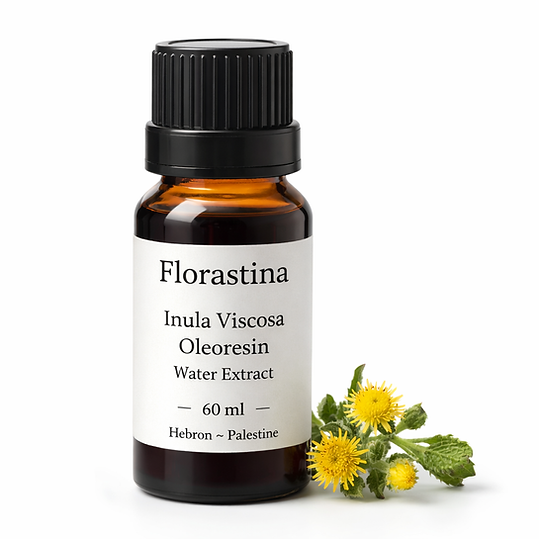
Palinova sources its Inula viscosa oleoresin from ethically cultivated Palestinian botanicals, with documented geographic origin and harvest practices that align with the sourcing standards described in this article. The oleoresin is available with a COA covering TPC, marker compound quantification, residual solvents, and microbial limits.
For researchers and product developers evaluating a batch, Palinova provides sample quantities suitable for a full analytical panel (UHPLC-HRMS, HPLC quantification, GC-MS volatile profile, and microbial testing). COA documentation is available on request, and the team can provide extraction method details and harvest lot traceability. Independent analytical verification is not just permitted; it is encouraged. A supplier confident in their material has no reason to discourage third-party testing.
To request a research sample, a COA, or technical information about the oleoresin’s composition and sourcing, visit Palinova’s natural skincare and botanical products page or contact the team directly through the store. For researchers interested in the broader Palestinian botanical range, the new arrivals page shows current inventory and availability.
Sources
The following primary sources underpin the key claims in this article. Each is linked to its original publication.
FAQ
What is Inula viscosa in English?
Inula viscosa is commonly called sticky fleabane or false yellowhead in English. It is a perennial Mediterranean shrub in the Asteraceae family, also classified as Dittrichia viscosa in some taxonomic systems, known for its sticky resinous leaves and late-season yellow flowers.
What makes Inula viscosa oleoresin different from its essential oil?
The oleoresin is a lipophilic, resinous extract concentrated in sesquiterpene lactones (costic acid, guaianolides) and polyphenols, produced by nonpolar solvent extraction. The essential oil, obtained by hydrodistillation, is a volatile-terpenoid fraction (camphor, eucalyptol, α-pinene) with a distinct chemical profile and different bioactivity range — the two are not interchangeable in research or formulation.
What is the strongest evidence for Inula viscosa’s antifungal activity?
viscosa* paste demonstrated effective control of late blight (Phytophthora infestans) in potato and tomato and downy mildew in grape under real agricultural conditions, making agricultural antifungal activity the most translationally advanced evidence in the published literature.
Is Inula viscosa oleoresin safe for human use?
No human clinical safety data have been published. GLP-compliant animal toxicology and pharmacokinetic studies are required before any human-use claim can be substantiated. This is general scientific information, not medical advice.
How does climate affect Inula viscosa oleoresin quality?
Plants from arid or southern-edge habitats tend to produce sesquiterpene-shifted profiles with enhanced antioxidant and antidiabetic in vitro activity compared with plants from cooler, wetter climates. This climate-driven chemotype variation means geographic origin and harvest conditions are material information for any research-grade COA.
Recommended

Comments