
Can Pine Oil Irritate Skin? Safe Use Guide

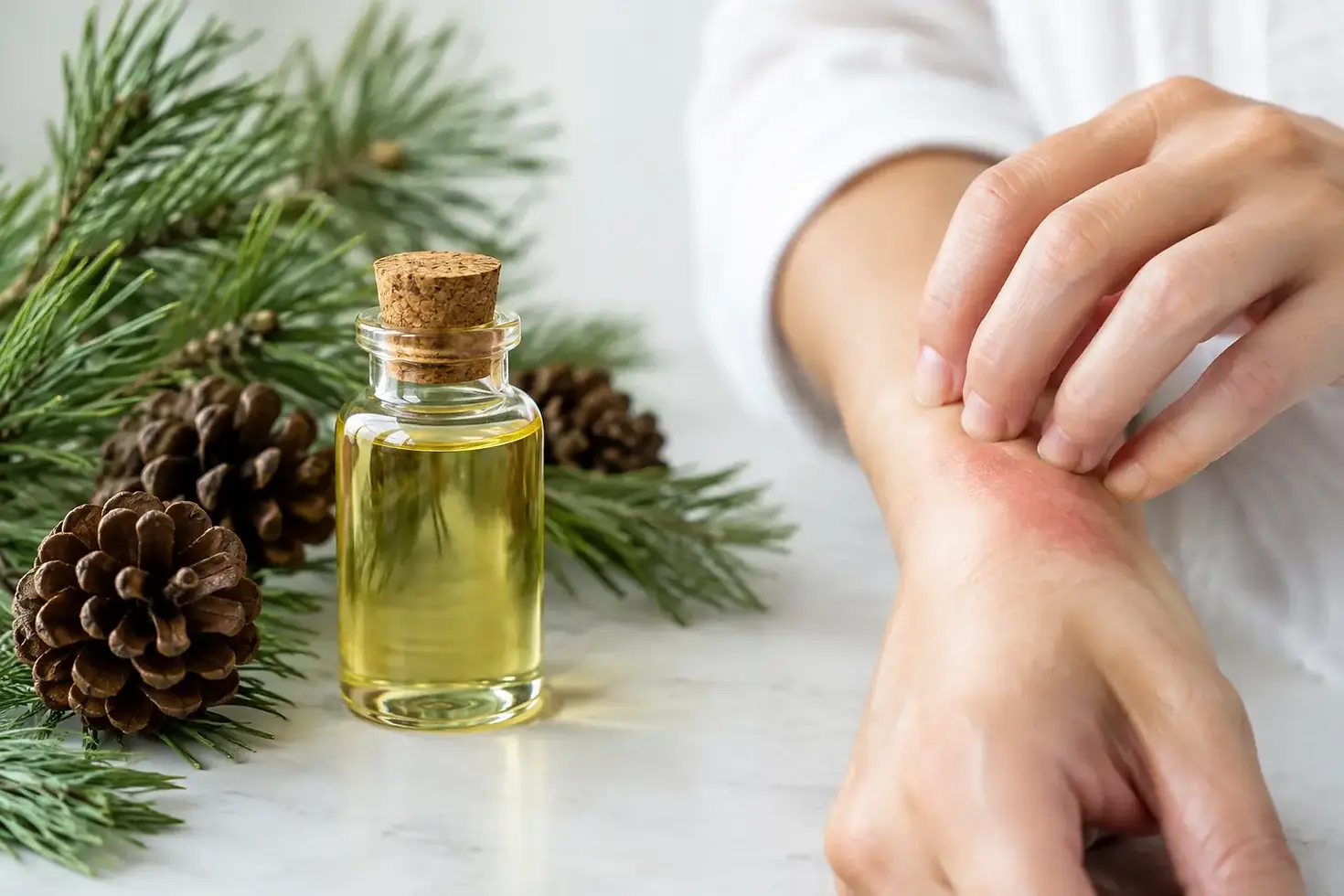
The bright, forest-like aroma of pine can make a bath, massage ritual, or shower steam feel like a walk through highland woods. Yet aromatic intensity is not the same thing as skin compatibility. Can pine oil irritate skin? Yes - especially when it is used undiluted, applied too often, stored poorly, or introduced to already stressed skin.
Pine has a long place in Mediterranean botanical traditions, valued for its fresh, clarifying scent and grounding character. But as with every concentrated essential oil, respectful use matters. A thoughtful ritual protects both the potency of the plant and the comfort of your skin.
Why Pine Oil Can Irritate Skin
Pine essential oil is highly concentrated. It contains naturally occurring aromatic compounds, including monoterpenes, that give it its distinctive resinous scent. These compounds can be stimulating to the skin, particularly at high concentrations. For some people, exposure may cause temporary redness, stinging, itching, dryness, or a rash known as contact dermatitis.
A reaction does not mean pine is inherently poor quality or that natural ingredients are unsafe. It means your individual skin barrier, dose, and method of application did not agree with that particular use. Pure botanical ingredients deserve the same care as any active ingredient in a personal-care routine.
The words “pine oil” can also describe very different products. A true essential oil distilled from pine needles, twigs, or cones is not the same as a pine-scented household cleaner, fragrance oil, or industrial pine product. Never apply a cleaning product or an oil not explicitly labeled for topical aromatic use to the skin.
Oxidation Can Change the Experience
Freshness matters with essential oils. Once an oil is repeatedly exposed to air, heat, and light, some of its constituents can oxidize. Oxidized oils may be more likely to sensitize the skin than properly stored, fresh oils.
Keep pine essential oil tightly closed in its original dark glass bottle, away from direct sunlight and humid bathroom shelves. If the aroma has become dull, sharp in an unpleasant way, or noticeably different from when you opened it, it is wise to retire it from skin use. An oil’s shelf life depends on its composition and storage, but careful handling is part of preserving its botanical integrity.
Who Is More Likely to React to Pine Oil?
Even a well-diluted blend may not suit everyone. Those with eczema, psoriasis, rosacea, very dry skin, fragrance allergies, or a compromised skin barrier should be particularly cautious. Skin can be more reactive after shaving, waxing, exfoliating, sun exposure, or use of retinoids and strong acids.
A person can also develop sensitivity after repeated exposure. Perhaps you used pine oil comfortably for months, then notice itchiness during a later application. That change is worth honoring. Stop use rather than trying to push through discomfort.
Children, pregnant or nursing people, and anyone managing a health condition or taking prescription medications should seek personalized advice from a qualified health professional before using essential oils on the body. “Natural” is a beautiful origin story, but it is not a substitute for appropriate precautions.
How to Use Pine Oil on Skin More Safely
The central rule is simple: do not apply undiluted pine essential oil directly to the skin. Dilute it first in a suitable carrier oil, such as jojoba, olive, or a lightweight plant oil chosen for your skin type. Carrier oils soften the intensity of an essential oil and help spread it evenly across the skin.
For sensitive skin or first-time use, begin at a 0.5% to 1% dilution. For most adult body-care applications, a 1% to 2% dilution is generally a cautious range. In practical terms, one ounce of carrier oil can hold approximately 6 drops for a 1% blend or 12 drops for a 2% blend, though drop size varies by bottle and oil viscosity.
Use the lower end when creating a bath oil, a massage blend for a small area, or a ritual intended for frequently used skin. A higher concentration is not automatically more effective. Often, it is simply more likely to irritate.
For a bath, do not drop essential oil straight into the water. Oil and water do not truly mix, so concentrated droplets can sit against the skin. Blend the pine oil into a carrier oil or an unscented bath product first, then add that mixture to the bath. Take care when exiting, since oils can make the tub slippery.
Avoid using pine oil around the eyes, on lips, inside the nose, on broken skin, or over fresh cuts and burns. Wash your hands after blending and applying. If you use an aromatic body blend before spending time outdoors, follow with appropriate sun protection. Pine is not typically known as a major phototoxic essential oil, but healthy sun habits remain essential for every skin ritual.
Do a Patch Test Before Full Use
A patch test is one of the smallest, most useful acts of skin wisdom. Make your intended diluted blend, then apply a small amount to the inner forearm or behind the ear. Leave the area uncovered and watch for a reaction over 24 hours.
Mild warmth from a scented product is not a signal to ignore. Stop if you feel burning, significant itching, swelling, persistent redness, or discomfort. A patch test cannot predict every possible reaction, but it can reveal whether a blend is a poor match before you apply it to a larger area.
What to Do If Pine Oil Irritates Your Skin
If you feel stinging or burning, remove the product promptly. Do not rinse concentrated essential oil off with water alone first, because water does not dissolve oil well. Instead, gently wipe the area with a plain carrier oil or a mild cleanser, then rinse with cool to lukewarm water.
Do not add more essential oil, scrub the area, or use strong exfoliants in an effort to “neutralize” the sensation. Give the skin time and keep the routine simple. A fragrance-free moisturizer can support comfort once the product has been removed.
Seek urgent medical care for trouble breathing, facial or throat swelling, widespread hives, severe blistering, or symptoms that feel alarming. For a rash that persists, spreads, or repeatedly returns after scented products, contact a dermatologist or healthcare professional. They can help identify whether you are dealing with irritant contact dermatitis, allergic contact dermatitis, or another skin concern.
Pine Essential Oil Is Best as Part of a Measured Ritual
Pine’s value is often aromatic as much as topical. If your skin is reactive, you do not have to abandon the experience entirely. A diffuser used according to its directions, a brief shower-steam ritual with oil kept off the skin, or a carefully diluted body oil used only on resilient areas may offer a gentler path.
Choose oils with clear botanical identification, transparent sourcing, and storage guidance. For botanical oils rooted in Palestinian landscapes and inherited plant knowledge, purity should be paired with precision. At PALINOVA, that respect for the land extends to how these potent gifts are brought into everyday care.
Let your skin set the terms. A pine ritual should leave you feeling refreshed and restored, not challenged by redness or discomfort.
Comments