
Two Essential Oils Actually Backed by Headache Research
- Palinova

- 6 hours ago
- 10 min read

Lavender and peppermint have the strongest clinical support for headache relief, and they work best used two different ways. Inhaling lavender oil for 15 minutes eased headache severity in a randomized trial of 47 participants, while a diluted 10% peppermint solution applied to the skin reduced pain in a 211-person trial on tension headaches. Neither replaces medical treatment for frequent or severe migraines. Think of them as a fast, low-risk first move while you figure out whether you need something stronger.
A few ground rules before you reach for a bottle:
Always dilute oils before skin contact. Undiluted peppermint or lavender can irritate skin, especially near the eyes or hairline.
Stop immediately if you notice burning, rash, or worsening pain.
See a doctor for sudden, severe, or new headache patterns, especially with vision changes, confusion, or fever.
Quick stat check: the lavender inhalation study showed a measurable drop in headache scores within two hours. The peppermint trial used a 10% ethanolic solution, meaningfully more concentrated than most home recipes.
TL;DR:
Inhaling lavender oil for 15 minutes can reduce headache severity within two hours, but it does not prevent frequent or severe migraines.
Applying a 10% diluted peppermint solution to the skin may alleviate tension headaches, though concentrations stronger than typical home recipes have been used clinically.
The overall evidence for essential oils’ effectiveness is mixed, with some trials showing benefits for specific symptoms but no consistent advantage over placebo for preventing migraines.
Proper dilution, patch testing, and cautious inhalation are crucial to avoid skin irritation or respiratory reactions, especially for children, pregnant women, or individuals with asthma.
Quality sourcing with transparent botanical naming and batch tracking is essential when selecting oils, as many low-cost options may be diluted or contaminated.
Table of Contents
Best Essential Oils for Headaches and How to Use Each One
Not every oil marketed for headaches has research behind it. Here’s what the evidence actually supports, oil by oil, along with how people typically apply each one.
1. Peppermint oil
[
Peppermint’s active compound, menthol, binds to cold-sensitive nerve receptors called TRPM8, producing a cooling sensation that appears to interrupt local pain signaling. That’s the mechanism identified in menthol receptor research, and it’s a plausible explanation for why the 10% topical solution outperformed placebo in the tension-headache trial mentioned above. The effect is distinct from how ibuprofen or aspirin work. Those drugs reduce inflammation; peppermint appears to numb and cool the area instead, which is part of why some people compare it to an over-the-counter analgesic even though the mechanism is completely different.
For home use, a 10% concentration is far stronger than what most safety guides recommend for daily topical use.
Apply diluted peppermint oil to the temples, forehead, and back of the neck, avoiding the eyes and hairline.
Use a rollerball applicator for even coverage without over-application.
Reapply no more than every few hours; stop if skin becomes irritated.
Pro Tip: Keep a pre-diluted peppermint rollerball in your bag. Mixing oil on the spot during a headache, when you’re already uncomfortable, almost never goes well.
2. Lavender oil
[
Lavender’s headache benefit likely isn’t purely about pain signaling. Its anxiolytic and sedative properties matter too, since stress and poor sleep are common migraine and tension-headache triggers. That dual action, calming the nervous system while possibly easing pain perception, may explain why inhalation alone (no skin contact required) produced results in the clinical trial.
The protocol used in that research was simple: 2 to 3 drops on a cloth or the upper lip, breathed in for 15 minutes. Relief showed up within two hours for many participants.
Place 2 to 3 drops of lavender oil on a tissue or cotton pad.
Hold it a few inches from your nose and breathe normally for 15 minutes.
Repeat once more later if the headache persists, rather than immediately.
3. Chamomile oil
Chamomile doesn’t have the same trial data behind it as lavender or peppermint, but its calming properties make it a reasonable complement for headaches tied to tension or poor sleep. Roman chamomile in particular is used in aromatherapy for its mild sedative effect, which may help with headaches that flare alongside anxiety or a wound-up nervous system before bed.
Diffuse a few drops in the bedroom an hour before sleep if stress-related headaches are a pattern.
Blend with a carrier oil for a light temple massage during a tension headache.
Avoid if you have a known ragweed allergy, since chamomile is part of the same plant family.
4. Rosemary oil
Rosemary is often recommended for headaches linked to poor circulation or tight neck and shoulder muscles, though direct clinical trial evidence for headache relief specifically is thinner than what exists for peppermint or lavender. Its traditional use leans on stimulating blood flow and easing muscular tension, which can matter for headaches that build from a stiff neck or hunched posture at a desk.
Massage a diluted blend into the neck and shoulders, not just the head, if muscle tension seems to be the trigger.
Use in the daytime; rosemary is more stimulating than calming and can interfere with sleep if used at night.
Skip it if you have epilepsy or high blood pressure, since rosemary can affect both.
5. Eucalyptus oil
Eucalyptus earns its place for one specific headache type: the kind that comes from sinus pressure or congestion rather than tension or migraine. Its cooling, decongestant qualities can make breathing easier when clogged sinuses are the actual source of the pain, even though it’s not typically studied as a standalone headache treatment.
Add a few drops to a bowl of hot water and inhale the steam for sinus-related pressure.
Diffuse in a closed bathroom while running a hot shower for a similar steam effect.
Avoid direct inhalation of concentrated eucalyptus in anyone with asthma or another reactive airway condition.
How to Apply Essential Oils Safely for Headache Relief
Getting the dilution right matters more than which oil you pick. Too concentrated, and you risk irritation. Too diluted, and you’re just smelling nice with no measurable effect.
Choose your carrier oil (jojoba, coconut, or sweet almond oil all work).
Measure the carrier into a small glass bottle or bowl.
Add essential oil drops based on your target dilution percentage.
Mix thoroughly before applying, since oils don’t blend evenly on their own.
Apply to temples, forehead, and the base of the skull, avoiding eyes and broken skin.
For inhalation methods, options include direct inhalation from the bottle, a few drops on a cloth or tissue, steam inhalation over hot water, or a diffuser running in the room. Clinical trials tend to favor short, defined sessions rather than all-day exposure. Fifteen minutes was the window used in the lavender inhalation study, and that’s a reasonable default for most inhalation use.
Limit topical reapplication to every 3 to 4 hours at most.
Stop diffusing if you notice dizziness, nausea, or a headache that worsens instead of improves.
Avoid inhalation methods around infants and use extra caution with children under six, since their airways are more sensitive.
Essential Oil Safety Checklist Before You Try Headache Relief
A patch test takes two minutes and prevents most bad reactions. Dilute your oil at the intended concentration, apply a small amount to the inner forearm, and wait 24 hours. Redness, itching, or bumps mean skip that oil, at least at that concentration.
A few groups need extra caution. Peppermint oil isn’t recommended for young children, since menthol has been linked to breathing difficulty in infants and toddlers. Pregnant readers should check with a doctor before using rosemary or several other oils, as some are discouraged during pregnancy. Anyone with asthma or another reactive airway condition should be careful with strong inhalation methods, particularly eucalyptus and peppermint, since concentrated vapors can trigger a reaction rather than ease one. If you take medication for blood pressure, blood thinning, or seizures, mention any regular essential oil use to your doctor, since a few oils can interact.
Patch test any new oil 24 hours before applying it to your face or neck.
Never apply undiluted oil near the eyes, ears, or mucous membranes.
Discontinue use if headaches become more frequent or intense after starting oils.
Seek urgent care for a sudden, severe headache unlike any before, or one accompanied by slurred speech, numbness, or vision loss.
Pro Tip: If you’re not sure whether an oil is safe alongside a current medication, a quick note to your pharmacist usually gets you a faster, more specific answer than a general search.
What Does the Research Actually Say About Essential Oils and Headaches?
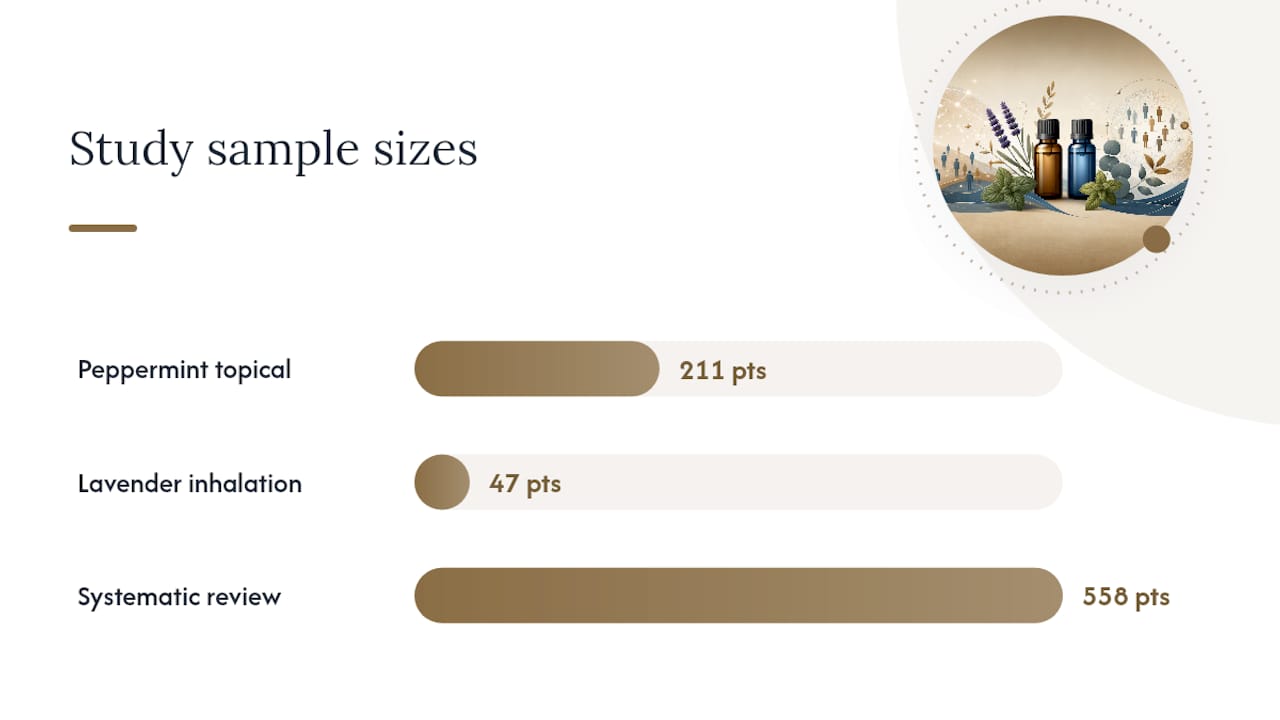
The honest answer: it’s mixed, and that’s worth sitting with rather than glossing over. A systematic review and meta-analysis pooling seven randomized trials and 558 participants found no consistent advantage for essential oils over placebo when it came to migraine attack frequency or overall headache severity across the pooled data. That’s the wide-lens view, and it’s a fair caution against treating oils as a guaranteed fix.
Zoom into the individual trials, though, and the picture looks more encouraging for specific uses. The same review noted that some single trials reported real benefit for particular outcomes, including reduced phonophobia and photophobia (sound and light sensitivity), even though the evidence quality on those subgroup findings runs low to moderate. The lavender and peppermint trials cited throughout this guide are examples of that pattern: individual studies showing a measurable acute effect, even when the broader meta-analysis lands on “inconclusive.”
The gap between the meta-analysis and the individual trials isn’t a contradiction. Small trial sizes, different administration routes (inhalation versus topical), and the difference between treating an acute headache versus preventing future ones all get blurred together when you pool everything into one number.
Study Type | Sample Size | Key Finding |
Peppermint topical RCT | 211 participants | 10% solution reduced pain intensity in tension headaches |
Lavender inhalation RCT | 47 participants | 15-minute inhalation lowered headache severity within 2 hours |
Systematic review/meta-analysis | 558 participants | No consistent benefit over placebo for migraine frequency, mixed results on individual outcomes |
The practical takeaway sits between blind faith and dismissal. Essential oils look like a reasonable complementary option for acute, occasional headaches, particularly tension-type. They’re not shown to prevent migraines or replace prescribed treatment for chronic or severe cases.
What to Check Before Buying Essential Oils for Headaches
Quality varies enormously between brands, and price alone won’t tell you which oil is genuine. A few label checks separate a trustworthy product from a diluted or synthetic one.
Look for the botanical (Latin) name printed on the label, such as Mentha piperita for peppermint or Lavandula angustifolia for lavender. A supplier that only lists the common name is often cutting corners elsewhere too. Batch or lot numbers indicate traceability back to a specific harvest, which matters if a quality issue ever comes up.
The FDA classifies most aromatherapy products as cosmetics rather than drugs unless the label makes a therapeutic claim, which means oversight on purity and labeling accuracy falls largely on the supplier’s own standards, not a government inspector. That makes sourcing transparency your best filter.
Confirm the botanical name matches the plant you intend to use.
Ask for or look up GC/MS testing documentation.
Check for batch/lot numbers on the bottle or packaging.
Store oils in dark glass, away from heat and direct sunlight, to preserve potency.
Treat unusually low prices on popular oils like lavender or peppermint as a red flag, not a bargain.
Palinova’s helichrysum and eucalyptus product pages list this kind of sourcing detail directly, which is the standard worth expecting from any supplier you’re considering. If you’re unsure about dilution for your skin type before buying, this guide to matching oils with skin type walks through the basics.
What realistic expectations look like
Essential oils are not a substitute for evaluating why headaches happen in the first place. Anyone hoping to actually understand their headache pattern, not just mask it, benefits from combining oils with basic tracking of triggers, sleep, and hydration. If skin sensitivity or a broader skin reaction is part of the picture, this primer on essential oils for itchy skin covers dilution and patch testing in more depth, and the broader principles carry over directly to headache use.
Most guidance in this space overpromises or underdelivers. The research supports lavender and peppermint for acute, occasional relief. It doesn’t support the idea that any single oil prevents migraines or replaces medical care for a headache disorder that’s getting worse over time. If you have ongoing concerns about interactions with medication, dilution for your skin type, or which oil actually fits your headache pattern, a free aromatherapy consultation is a low-effort way to get a second opinion before you commit to a routine.
— abdelmuhsen
Where quality sourcing meets the checklist you just read
Palinova’s oils are sourced from Palestinian botanicals with the same transparency this guide recommends looking for: botanical naming, batch tracking, and no synthetic fillers. If you’ve read through the dilution ranges and label checks above and want a supplier that already meets them, the new arrivals collection is a practical place to start, and it’s updated as fresh harvests come in.

Beyond peppermint and lavender, oils like cypress and frankincense are worth exploring for general stress relief and muscle tension, both common headache contributors. Every product page lists sourcing and purity details up front, so you’re not guessing at concentration or origin. If you’re dealing with a specific health concern or aren’t sure which oil fits your situation, book a free consultation and get guidance tailored to your actual symptoms before you buy anything.
Key Takeaways
Lavender inhalation and diluted topical peppermint have the strongest trial support for acute headache relief, but neither prevents migraines or replaces medical care for severe cases.
Point | Details |
Lavender works through inhalation | A 15-minute inhalation session eased headache severity in a 47-person trial within two hours. |
Peppermint needs dilution | The 10% solution tested clinically is stronger than the 1 to 3% recommended for regular home use. |
Evidence is mixed at scale | A meta-analysis of 558 participants found no consistent benefit over placebo for migraine frequency. |
Patch test every new oil | Wait 24 hours after a forearm test before applying any oil to the face or neck. |
Sourcing transparency matters | Palinova lists botanical names and sourcing details on product pages like helichrysum and eucalyptus. |
Sources
FAQ
Which essential oil works best for headaches?
Lavender and peppermint have the most clinical support: lavender for inhalation-based relief and peppermint for diluted topical use on tension headaches.
What gets rid of a headache fast?
Inhaling lavender oil for 15 minutes or applying diluted peppermint oil to the temples are the two fastest research-backed options, though hydration and rest matter too.
What essential oil is like ibuprofen?
Peppermint oil is sometimes compared to ibuprofen because both relieve pain, but peppermint works through menthol’s cooling effect on cold receptors, not through reducing inflammation the way ibuprofen does.
Where do you apply peppermint oil for a headache?
Diluted peppermint oil is typically applied to the temples, forehead, and back of the neck, always avoiding the eyes and hairline.
Can essential oils replace medication for migraines?
No.
Recommended


Comments