
Nigella Sativa Oil vs Black Seed Oil: Are They the Same?
- Palinova

- 1 day ago
- 9 min read
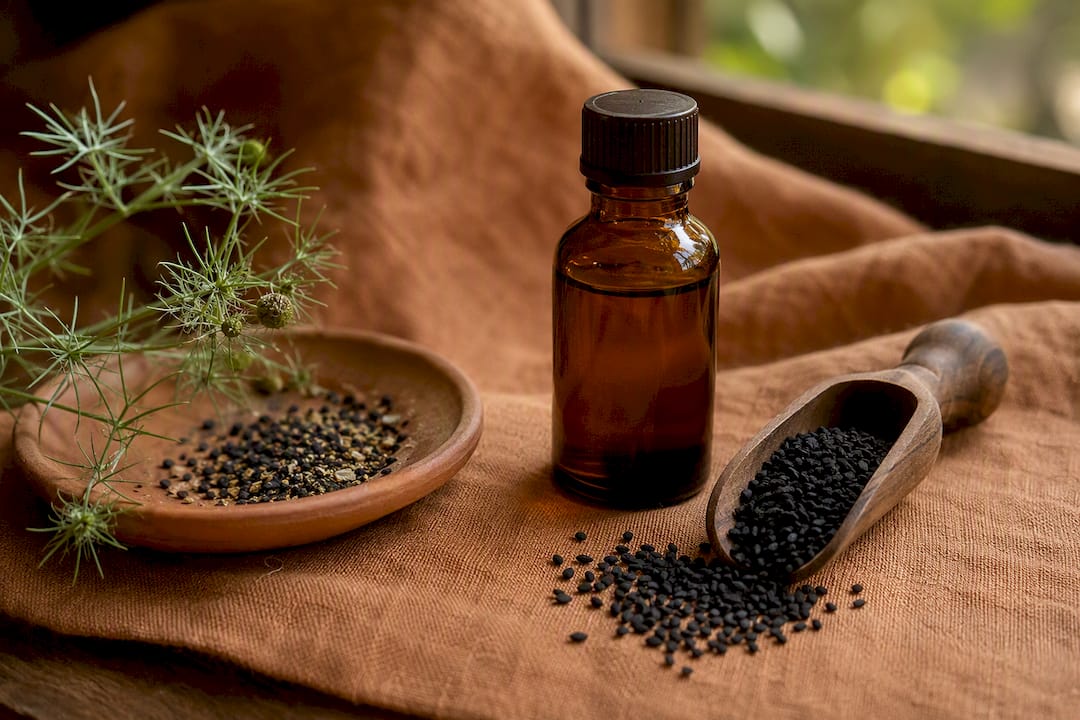
Yes — in practice, Nigella sativa oil and black seed oil refer to the same botanical oil when the label lists Nigella sativa. The naming split comes mostly from context: “black seed oil” shows up more in wellness marketing and kitchens, while “Nigella sativa oil” tends to appear on clinical labels and research papers. A few unrelated plants get called “black cumin” too, which is where real confusion starts.
The oil is the same substance regardless of which name sells better on a bottle.
Check the ingredient list for “Nigella sativa” specifically, not just “black seed” or “black cumin.”
Skip products that don’t name the species; some use similar common names for entirely different plants.
Talk to a clinician first if you take medication, are pregnant, or have surgery scheduled soon.
Key Takeaways
Nigella sativa oil and black seed oil are the same product under different names, and product quality depends far more on extraction method and sourcing than on which label term a bottle uses.
Point | Details |
Same botanical source | Both names refer to Nigella sativa; confirm the botanical name appears on the ingredient list. |
Watch for lookalikes | Some “black cumin” products come from unrelated Bunium species, not Nigella sativa. |
Thymoquinone drives the effect | TQ’s antioxidant and anti-inflammatory activity underlies most reported benefits, per small clinical trials. |
Safety first | Stop use before surgery, avoid unsupervised use in pregnancy, and check interactions with blood thinners or diabetes medication. |
Choose cold-pressed sourcing | Palinova’s Nigella sativa oil is cold-pressed, single-ingredient, and packaged in dark glass to preserve potency. |
This article is general information, not a substitute for advice from a qualified doctor. Consult a qualified healthcare professional about your own circumstances before acting on anything here.
Table of Contents
Nigella Sativa Oil vs Black Seed Oil: Sorting Out the Names
“Black seed oil,” “kalonji oil,” “black caraway oil,” and “Nigella sativa oil” are four labels for one plant, as long as the botanical name Nigella sativa appears somewhere on the packaging. Kalonji is the common name used across South Asian and Middle Eastern kitchens. Black caraway shows up in older European texts. None of that changes the seed inside the bottle.
The real trap is a different plant family entirely. Some products marketed as “black cumin” or “black caraway” actually come from Bunium species, an unrelated genus with a similar look and smell but a different chemical profile. A shopper who assumes all “black cumin” products are interchangeable can end up with something that has none of the research backing behind Nigella sativa.
Three checks catch this before checkout:
Scan the ingredient panel for the words “Nigella sativa” printed in full, not just a common name.
Confirm it’s a single-ingredient oil rather than a blend padded with cheaper carrier oils.
Look for a country or region of origin. Oils from Palestinian and broader Levant farming regions carry a long agricultural history with this specific crop.
Palinova’s Nigella sativa oil lists the botanical name directly, which is the fastest way to confirm you’re getting the plant the research is actually about.
What Thymoquinone Does and What the Research Actually Shows
Thymoquinone (TQ) is the compound doing most of the work in Nigella sativa oil, and it’s the reason the seed shows up in pharmacology journals rather than just spice cabinets. Lab and animal research point to antioxidant, anti-inflammatory, and immune-modulating activity from TQ, which plausibly explains why the oil shows up in studies on skin conditions, allergies, and metabolic markers, according to a pharmacological review of thymoquinone.
Where human evidence gets interesting: one small trial found topical black seed oil reduced hay fever symptoms in most participants, and a black seed oil gel noticeably reduced acne severity after twice-daily use for about two months, per small clinical trials on topical Nigella sativa. Those numbers sound impressive, and they are, within the limits of a small sample. Studies this size can’t rule out chance, and they rarely get replicated at scale.
A 2024 review in the MDPI journal documents several bioactive constituents beyond TQ, including thymohydroquinone and carvacrol, and reports clinical benefits across multiple small trials. But it also flags an unresolved problem: TQ content swings widely depending on seed origin and extraction method, so two bottles labeled identically can contain meaningfully different doses.
Antioxidant and anti-inflammatory activity is well supported at the mechanistic level.
Human trials for acne, hay fever, and metabolic markers show promise but involve small groups.
Reviewers consistently call for standardized formulations and larger randomized trials before firmer recommendations, according to an integrative review of Nigella sativa.
How to Use Nigella Sativa Oil: Forms, Dosages, and Application
Most people encounter this oil in one of four forms: cold-pressed liquid oil, soft-gel capsules, topical gels or creams, and finishing oil for food. Each suits a different goal, and mixing them up wastes the product.
Cold-pressed liquid oil works for both culinary and topical use, but heat destroys some of its volatile compounds, so it belongs on finished dishes, not in the pan.
Soft-gel capsules offer a fixed dose, which matters if you’re trying to match what a study used rather than guessing with a spoon.
Topical gels and creams target skin conditions directly and usually get applied once or twice daily in trial settings.
Straight culinary oil works as a drizzle over salads, yogurt, or roasted vegetables, similar to how people use extra virgin olive oil.
Dosages in published research vary enough that no single number applies to everyone. Trials on skin conditions often used topical application once or twice daily for several weeks; oral studies have ranged from small capsule doses up to a couple of teaspoons of oil per day. Because phytochemical content varies by extraction and origin, a dose that worked in one study batch may not translate directly to a different product on a shelf.
Pro Tip: Never heat Nigella sativa oil for cooking. Use it as a finishing oil, similar to how you’d treat a good extra virgin olive oil, so the heat-sensitive compounds survive to your plate.

For topical use, patch test on your inner forearm for 24 hours before applying anywhere on your face, and avoid using it undiluted on broken or highly sensitive skin. Readers exploring skin routines built around oils may find it useful to compare notes with the oil cleansing method or check guidance on non-comedogenic facial oils for sensitive skin types before committing to daily use.

Is Black Seed Oil Safe? Side Effects and Interactions to Know
The most commonly reported side effects are mild: stomach upset, nausea, or a skin reaction at the application site. These usually resolve with a lower dose or less frequent use.
The bigger concerns are less common but worth taking seriously. Clinical reviews and safety commentary point to a possible bleeding risk, interactions with anticoagulant or antiplatelet medications, and effects on blood sugar that could compound the action of hypoglycemic drugs, according to Cleveland Clinic’s overview of black seed oil. There are also isolated case reports touching on kidney function that haven’t been confirmed at scale but justify caution in anyone with existing kidney concerns.
Stop use at least two weeks before any scheduled surgery, given the bleeding-risk signal.
Avoid unsupervised use during pregnancy; safety data in pregnant populations is thin.
Check with your doctor before combining with blood thinners, diabetes medication, or blood pressure drugs.
Start with a low dose (a few drops on food or a short trial period topically) rather than a full serving on day one.
If you feel unusually lightheaded, notice unexplained bruising, or develop a rash after starting the oil, stop and talk to a clinician rather than pushing through it.
How to Choose a High-Quality Nigella Sativa Oil
Extraction method changes what actually ends up in the bottle. Cold-pressed, virgin Nigella sativa oil retains more of its volatile compounds, TQ included, than oils pulled out with heat or solvents, based on research on extraction methods and oil stability. Solvent-extracted versions are cheaper to produce and correspondingly weaker in what they deliver.
Confirm the label says “cold-pressed” or “virgin” and lists Nigella sativa as the sole ingredient.
Buy oil packaged in dark glass, which slows the breakdown that happens when light and air hit these compounds over time.
Check for a lot number and expiration date. An oil with no traceability information is a red flag regardless of price.
Look for a certificate of analysis or third-party testing that confirms potency, especially if the seller states a specific TQ percentage.
Pro Tip: Store your bottle in a cool, dark cabinet, not next to the stove. Heat and light are the two fastest ways to degrade an otherwise good oil before you’ve used a third of it.
Readers weighing seed oils against each other for skin goals specifically might also compare notes on Barbary Fig seed oil’s benefits for skin, since extraction quality matters the same way across both.
What Actually Matters Once You Get Past the Naming Question
The naming debate settles fast once you check a label. The harder question, and the one most articles skip, is whether the bottle in front of you delivers anything close to what the research measured. Two products can both say “100% Nigella sativa” and still differ enormously in thymoquinone content, because seed origin and extraction method swing potency significantly. That variability is the actual consumer risk here, not the synonym confusion.
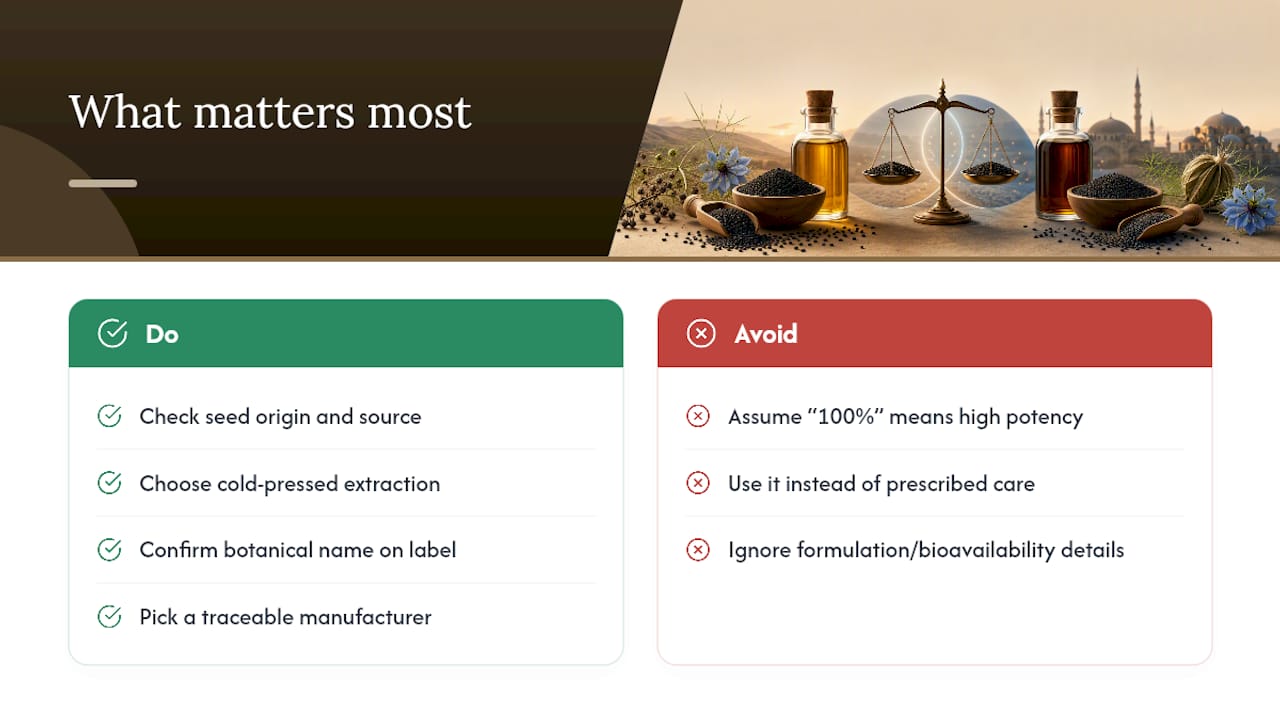
Conventional advice tends to stop at “look for cold-pressed and check the botanical name.” That’s necessary but incomplete. Bioavailability research suggests thymoquinone itself is unstable and doesn’t absorb particularly well in its raw form, which is part of why some studies explore specialized formulations to boost its effect. A shopper can do everything right on the label check and still get a mediocre result if the product’s TQ content was already low before it reached the shelf.
Treat this oil as a supporting player, not a cure. The clinical signal for skin and respiratory benefits is real but small in scale, and nothing here should replace a prescribed treatment. Start with a known, traceable source, use a low dose, and give it a few weeks before judging results.
— abdelmuhsen
Where to Find a Trustworthy Nigella Sativa Oil
Sourcing is where most of the label checks above actually get tested. Palinova’s Nigella sativa oil is cold-pressed, single-ingredient, and packaged in dark glass, the same quality markers this article recommends checking for before you buy anything.
Every batch traces back to Palestinian agricultural land with a long history growing this specific crop, and the oil ships without synthetic additives or solvent processing cutting corners on potency. If you’re unsure whether oral or topical use fits your goals, or how it might sit alongside a medication you’re already taking, Palinova offers free aromatherapy consultations to walk through your specific situation before you commit to a bottle. Readers exploring other single-origin seed oils for skin can also look at Barbary Fig oil as a comparison point, and anyone curious about supplement-side options for skin health might browse a partner’s skin health supplement collection for context on formulated alternatives. Visit the Nigella sativa oil product page to check current stock and request a consultation before your first order.
Sources
FAQ
Are Black Seed Oil and Nigella Sativa the Same Thing?
Yes, both terms describe the same oil pressed from the same plant, as long as the label lists Nigella sativa as the botanical source rather than an unrelated “black cumin” species.
Why Do I Feel Weird After Taking Black Seed Oil?
Mild stomach upset, nausea, or lightheadedness has been reported by some users, often tied to taking too high a dose too quickly; lowering the amount usually resolves it, but persistent symptoms warrant a call to your doctor.
What Does Nigella Sativa Do for the Body?
Its main compound, thymoquinone, shows antioxidant, anti-inflammatory, and immune-modulating activity in research, which is linked to reported benefits for skin conditions, allergy symptoms, and metabolic markers in small clinical trials.
What Does Black Seed Oil Do to Your Kidneys?
Most people tolerate it without kidney issues, but isolated case reports have raised concerns in specific circumstances, so anyone with existing kidney conditions should check with a clinician before regular use.
How Do I Know if a Black Seed Oil Product Is High Quality?
Look for cold-pressed, single-ingredient oil labeled Nigella sativa, packaged in dark glass with a visible lot number and expiration date, ideally backed by third-party testing for potency.
Recommended


Comments