
0.8% Acidity and Taste: What Extra Virgin Olive Oil Really Means

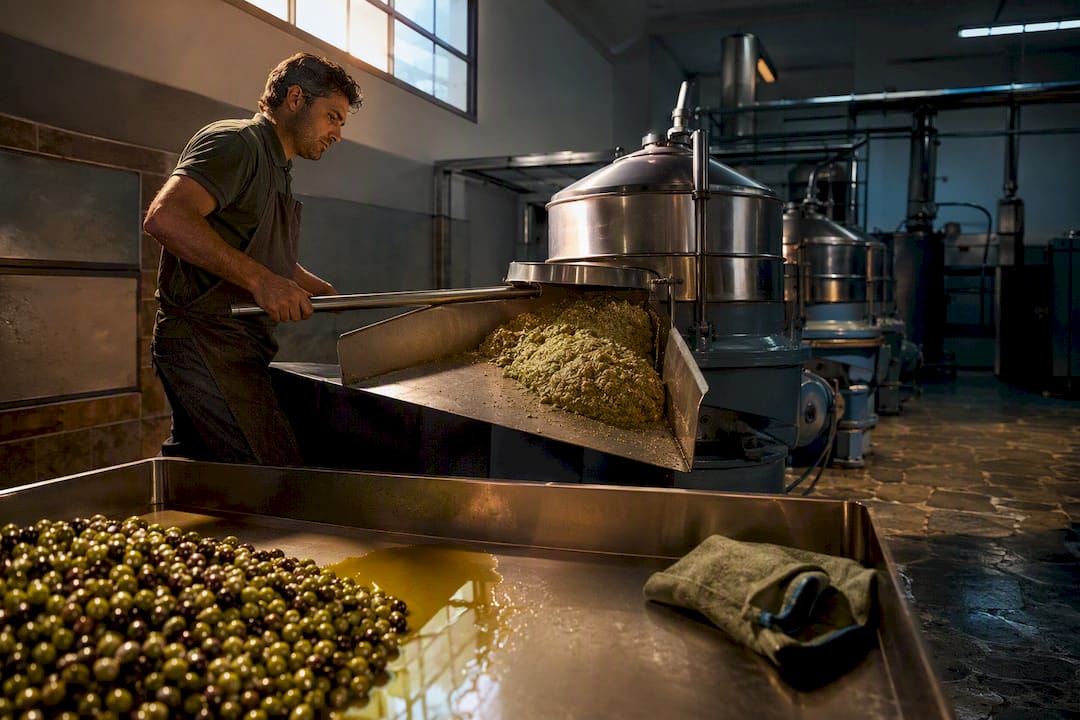
Extra virgin olive oil (EVOO) is the highest grade of olive oil made, defined by mechanical extraction with no heat or chemical processing, a free-acidity limit of no more than 0.8 grams per 100 grams (measured as oleic acid), and zero detectable sensory defects. The International Olive Council sets these criteria, and Codex Alimentarius mirrors them for global trade. Anything that fails a taste panel or exceeds the acidity ceiling gets demoted to a lower grade, no matter how the bottle is marketed.
TL;DR:
Only freshly pressed EVOO from last 12 to 18 months can deliver the expected flavor and health benefits, especially when stored properly in dark bottles.
Cutting through marketing terms, genuine EVOO is made solely through mechanical, cold extraction without heat or chemicals, preserving its polyphenols and flavor.
An oil labeled as extra virgin must pass chemical tests and taste panels; lab results alone do not guarantee quality.
High-quality EVOO contains at least 5 mg of hydroxytyrosol per 20 grams, crucial for its cardiovascular protection claims.
Price and provenance cues, such as a harvest date and origin, help identify authentic, fresh EVOO beyond the label.
Table of Contents
What Standards Actually Define Extra Virgin Olive Oil?
The extra virgin olive oil definition comes down to two authorities: the International Olive Council and Codex Alimentarius, the joint FAO/WHO body that harmonizes food standards worldwide. Both groups grade olive oil the same way. Oil has to be extracted mechanically, with nothing added and nothing stripped out chemically, and it has to land at or under 0.8 grams of free acidity per 100 grams, expressed as oleic acid.
Free acidity is a proxy for how the fruit was treated before pressing. Bruised, overripe, or slow-processed olives break down fat molecules into free fatty acids, and that number climbs fast. A low reading tells you the olives were healthy and pressed quickly.
Acidity is just one marker, though. Labs also check peroxide value, which flags early oxidation, and UV absorbance, which can catch oils that have been blended, deodorized, or otherwise doctored to hide flaws. None of these numbers work alone. An oil can pass every chemical test and still get bumped down a grade if it fails the sensory panel, which is why extra virgin olive oil standards always combine lab data with trained human taste.
How Extra Virgin Olive Oil Is Actually Made
Real extra virgin olive oil is made through pure mechanical extraction: olives get crushed into a paste, that paste is slowly churned in a process called malaxation to help the oil droplets merge, and then a centrifuge spins the oil away from the water and solids. No heat, no hexane, no chemical solvents. That restriction is what separates virgin-category oils from refined ones.
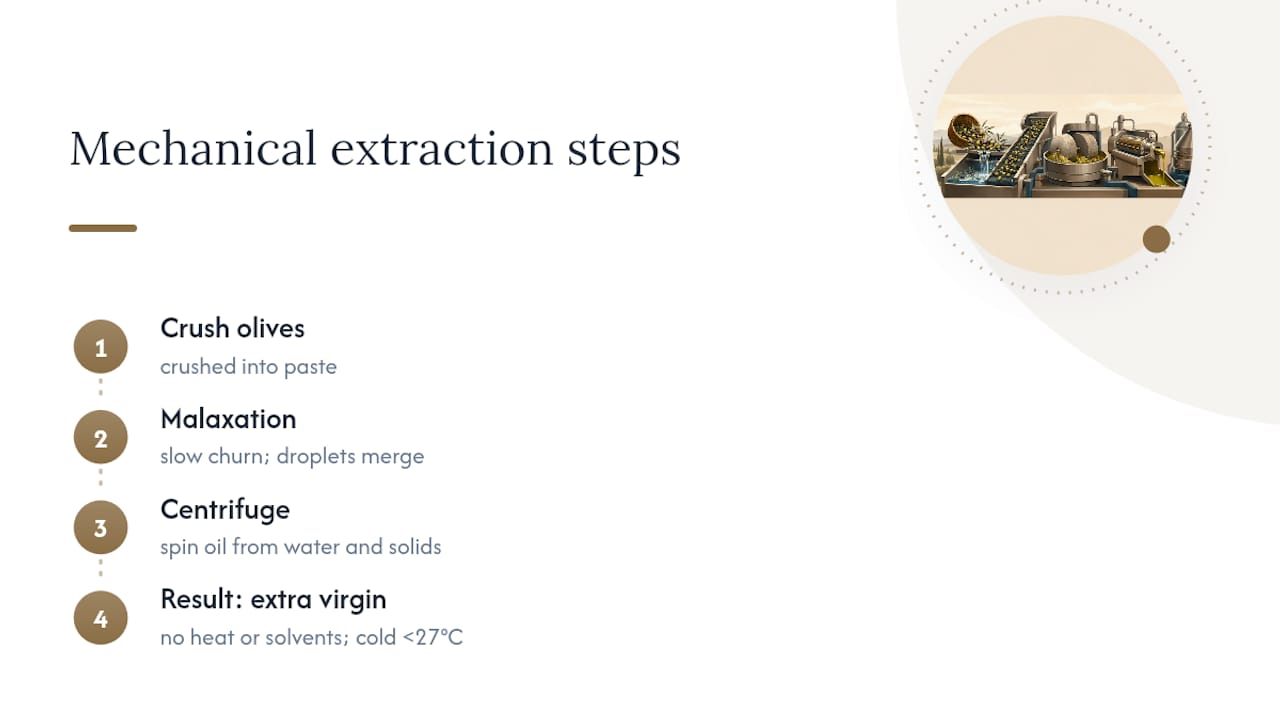
The phrase “first cold pressed” is a holdover from an older era when hydraulic presses squeezed oil out in a single pass. Nearly all modern mills use centrifugation instead, so that phrase is largely a marketing artifact rather than a technical description of what’s in the bottle. “Cold extraction” is the more accurate term today, and it just means the paste stayed under roughly 27°C during processing, which protects the fragile aroma compounds and polyphenols from breaking down.
Timing matters more than terminology. Olives pressed within hours of harvest, from fruit that was not bruised or piled too deep in transport bins, produce sharper flavor and better chemistry than olives left sitting for days.
What Acidity, Defects, and Polyphenols Tell You
Free acidity measures the breakdown of triglycerides into individual fatty acids. Fresh, undamaged olives pressed promptly stay well under that 0.8% ceiling; stressed or rotting fruit pushes the number up fast.
Chemistry only tells half the story. A trained tasting panel has to confirm the oil shows no off-flavors, such as rancidity, mustiness, or a “fusty” fermented note, while displaying at least some positive fruitiness, bitterness, or pungency. An oil can post perfect lab numbers and still get downgraded to “virgin” or “lampante” if the panel detects a defect the instruments miss.

That bitterness and pungency come from polyphenols, particularly oleocanthal and hydroxytyrosol. These compounds are why fresh EVOO can make you cough slightly at the back of your throat, a sensation oleocanthal shares with ibuprofen at the molecular level. They are also the main reason EVOO outperforms refined oils on the health front, since refining strips most of them out.
Extra Virgin vs. Virgin vs. Pure vs. Refined: What’s the Real Difference?
The label hierarchy on a grocery shelf reflects real chemical differences, not just marketing tiers. EVOO stays unrefined; everything below it has been treated to fix flaws that would otherwise make it unsellable.
Extra virgin: mechanically extracted, unrefined, free acidity ≤0.8%, no sensory defects, richest in polyphenols.
Virgin olive oil: same mechanical process, but free acidity runs higher (up to 2%) or it carries a minor sensory flaw.
“Pure” or “refined” olive oil: oil that failed virgin-grade standards is deodorized and chemically refined to neutralize bad flavors, then often cut with a small amount of virgin oil for taste; this strips out most polyphenols along with the defects.
“Light” olive oil: refined oil marketed on a neutral flavor, not a lower calorie count, since all olive oil has roughly the same fat content.
For a salad dressing or a finishing drizzle, spend the money on EVOO. For high-heat searing where flavor matters less than a stable smoke point, refined or “pure” olive oil does the job for less.
Does Extra Virgin Olive Oil Actually Deliver Health Benefits?
The strongest evidence for olive oil’s health reputation centers specifically on the extra virgin grade, not olive oil in general. An umbrella review of meta-analyses found consistent links between higher EVOO intake and reduced cardiovascular risk, with its polyphenol content flagged as a likely driver of the effect.
Cleveland Clinic points to EVOO’s monounsaturated fat content and compounds like oleocanthal as contributors to reduced inflammation, the same anti-inflammatory pathway that gives EVOO its peppery bite. The European Food Safety Authority has set a formal benchmark for this: an oil needs at least 5 mg of hydroxytyrosol and its derivatives per 20 g to legally claim it helps protect blood lipids from oxidative stress, a threshold that only survives in oils that were never refined.
None of this means EVOO is a cure for anything on its own. The benefit shows up when it replaces saturated fats like butter or shortening in an otherwise reasonable diet, not when it’s added on top of one. In the kitchen, save your best bottle for raw or low-heat uses, since high heat degrades the same polyphenols responsible for the flavor and the health claim alike.
How Do You Pick a Genuine, Fresh Bottle?
Grocery shelves are full of bottles labeled “extra virgin” that never see a sensory panel before reaching the U.S. market. Enforcement of the IOC grading standard has historically been inconsistent in the United States, which means the label alone isn’t proof of quality.
Check for a harvest date, not just a “best by” date. Oil pressed within the last 12 to 18 months is what you want.
Look for the country or region of origin printed clearly, not just “packed in” a location.
Favor dark glass or tin. Clear glass lets light degrade the polyphenols that give EVOO its edge.
Be skeptical of the cheapest bottle on the shelf. Producing real EVOO is labor-intensive, and a price far below its neighbors usually means shortcuts somewhere in the chain.
Once opened, keep the bottle sealed, away from your stove’s heat, and use it within two to three months for the best flavor.
Pro Tip: Pour a small amount into a glass and taste it plain. Genuine EVOO should taste grassy or fruity with a peppery finish in the back of your throat. If it tastes flat, waxy, or like crayons, the oil is either old or was never truly extra virgin.
Why Sourcing Transparency Matters as Much as the Label
Grading standards tell you what an oil is supposed to be. They don’t tell you how the olives were grown, who pressed them, or how long the oil sat in a warehouse before it reached a shelf. That gap is where a lot of mediocre oil hides behind a technically accurate label.
Some producers approach oils the same way whether they’re headed for a kitchen or a skincare routine: sourcing from known growers, checking for sensory defects before anything gets bottled, and keeping batches small enough that freshness doesn’t become a guessing game. The same principle applies to cold-pressed seed oils used in skincare, where low-heat processing preserves the antioxidant compounds that support skin barrier function, much like polyphenols protect flavor in a good EVOO. Readers who want to see what that looks like in practice can check the extra virgin olive oil page directly.
— abdelmuhsen
Where to Find Small-Batch Cold-Pressed Oils
Palinova exists for the reader who just learned what “extra virgin” actually requires and now wants a bottle that meets that bar without guesswork. That’s the gap between grocery-shelf labeling and a producer who can tell you exactly where the olives grew and how fast they were pressed.
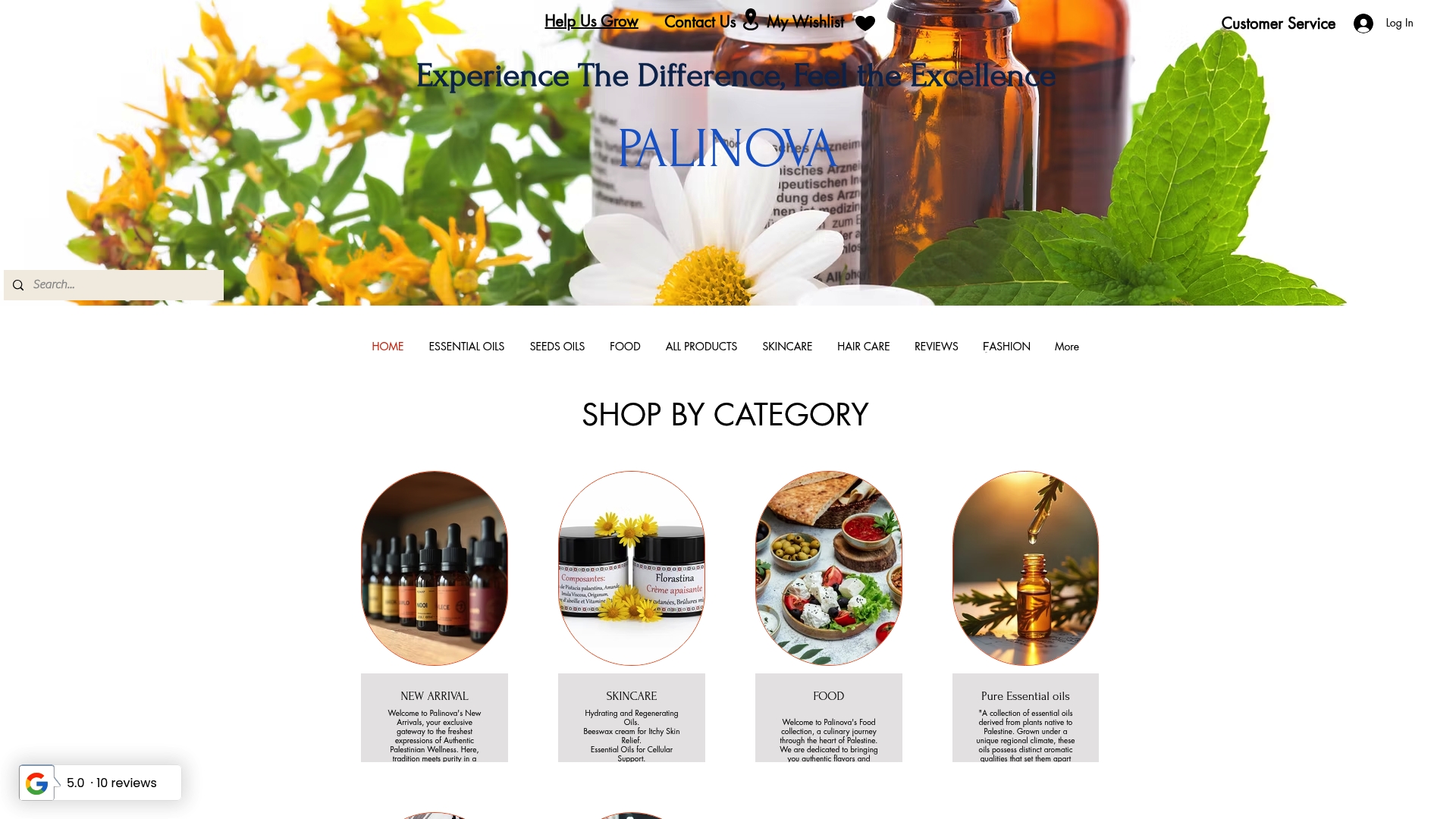
Some producers source extra virgin olive oil and Palestinian botanicals directly, with transparency about origin and processing that a supermarket label rarely offers. Similar sourcing standards may apply across some catalogs, including oils formulated for skincare that rely on the same cold-extraction logic covered above. Antioxidant-rich formulations matter for skin the same way polyphenols matter for flavor, a connection explored further in the science of antioxidants in skincare. If you want an EVOO you can trust before you even open the bottle, visit the extra virgin olive oil product page to see harvest details and place an order.
Sources
FAQ
Is There a Real Difference Between Olive Oil and Extra Virgin Olive Oil?
Yes. “Olive oil” on a label usually means refined oil blended with a small amount of virgin oil for flavor, while extra virgin olive oil is unrefined and must meet the IOC’s 0.8% acidity limit plus a clean sensory panel.
What Is the Difference Between Extra Virgin Olive Oil and Pure Olive Oil?
“Pure” olive oil is refined oil that failed virgin-grade standards, then chemically deodorized to remove defects, which also strips out most of its polyphenol content. Extra virgin skips that processing entirely.
Can Extra Virgin Olive Oil Be Used for Cooking?
Yes, for low to medium heat cooking, sautéing, and finishing dishes, extra virgin olive oil holds up well and adds far more flavor than refined oil. For very high-heat searing or deep frying, a refined oil with a higher smoke point is the more practical choice.
What Makes Extra Virgin Olive Oil So Special?
It’s the only grade that combines mechanical extraction, a strict acidity ceiling, a zero-defect taste requirement, and the highest polyphenol content of any olive oil grade, a combination linked to measurable cardiovascular benefits that refined oils simply don’t carry.
Recommended
Comments