
6 Steps to Make a Safe Essential Oil Roller Blend at Home

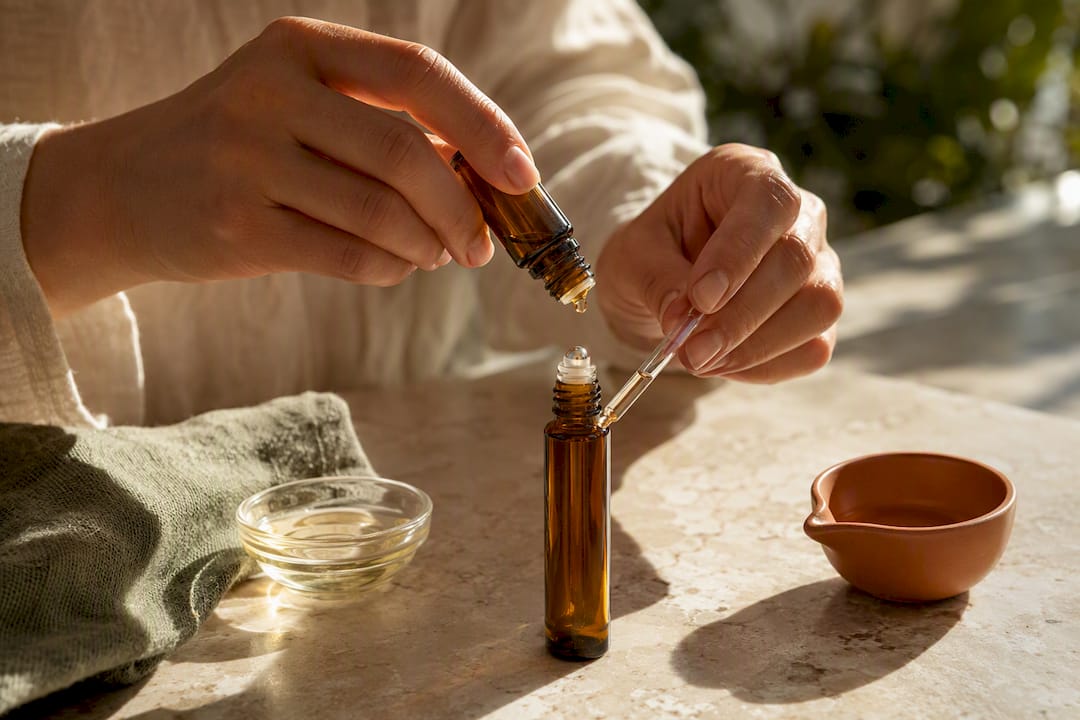
Making an essential oil roller blend at home is safe and straightforward once you get the dilution right. Keep your total essential oil content between 1% and 3% for adult skin, patch-test the finished blend on your inner forearm for 24 hours, and you’re set. You need three things: a roller bottle, a carrier oil, and a small selection of essential oils.
TL;DR:
A 10 ml roller bottle typically fits 6 to 10 drops of essential oil for a 2% to 3% dilution, with lower amounts for children or sensitive skin.
Use dark glass bottles to prevent UV degradation and choose stainless steel rollerballs for durability over plastic.
Store blends in a cool, dark place for up to a year, with carrier oils like fractionated coconut or jojoba lasting longer than others.
Patch tests are crucial; apply a diluted small amount to the forearm and wait 24 hours to check for irritation before broader use.
Proper dilution, accurate drop counting, and thorough patch testing are key to safe and effective home herbal aromatherapy.
Table of Contents
What Do You Need to Make an Essential Oil Roller Blend?
Before you start, gather everything so you’re not hunting for a funnel with oil dripping down your hand. Roller bottles typically come in small sizes common for personal care, including about 5 ml and 10 ml, and dark glass (amber or cobalt) is worth the extra cost over clear glass because it blocks the UV light that breaks down essential oil compounds over time.
The rollerball itself matters more than most people expect. Plastic rollerballs are cheap and fine for a one-off gift blend, but they wear down faster and can degrade slightly with citrus oils like bergamot or lemon. Stainless steel rollerballs cost a little more, roll smoother, and hold up over months of daily use.
Your carrier oil options each bring something different to the bottle:
Fractionated coconut oil stays liquid indefinitely, has almost no scent, and works for nearly every recipe.
Jojoba oil closely mimics skin’s natural sebum and has one of the longer shelf lives of any carrier, making it a smart pick for facial or daily-wear blends.
Sweet almond oil is nourishing and slightly heavier, good for dry skin, but it oxidizes faster than jojoba.
Grapeseed oil is light and absorbs quickly, though it has a shorter shelf life than fractionated coconut.
Round out your kit with glass pipettes for precise measuring, a mini funnel, and adhesive labels with a permanent marker for tracking dilution and date. If you’re trying an oil you haven’t used before, buy the smallest bottle available before committing to a full-size purchase.
How Much Essential Oil Should You Use for Safe Dilution?
Dilution is the one step you cannot skip. Essential oils run 50 to 100 times more concentrated than the plant material they came from, and that concentration is exactly why skipping proper dilution raises your risk of skin sensitization.
For a standard 10 ml roller, the conversion works out fairly simply: roughly 6 to 10 drops gets you into a typical 2% to 3% dilution range many adults use for topical blends.
Drops in 10 ml | Approximate dilution | Typical use |
About 3 drops | Approximately 1% | Children, sensitive skin, large-area massage |
About 6 drops | Approximately 2% | Typical adult roller blends |
About 10 drops | Approximately 3% | Targeted adult use (focus, sinus, muscle) |
Children and infants need far less. Most safety references, including the Tisserand Institute, point toward significantly lower percentages for kids, often a fraction of the adult range, and some oils should be avoided in young children entirely regardless of dilution. If you’re blending for a child, treat 1% as your ceiling, not your starting point.
A few rules apply no matter who’s using the blend: never ingest essential oils, keep them away from eyes and mucous membranes, and if you’re pregnant, check with a healthcare provider before using specific oils topically.
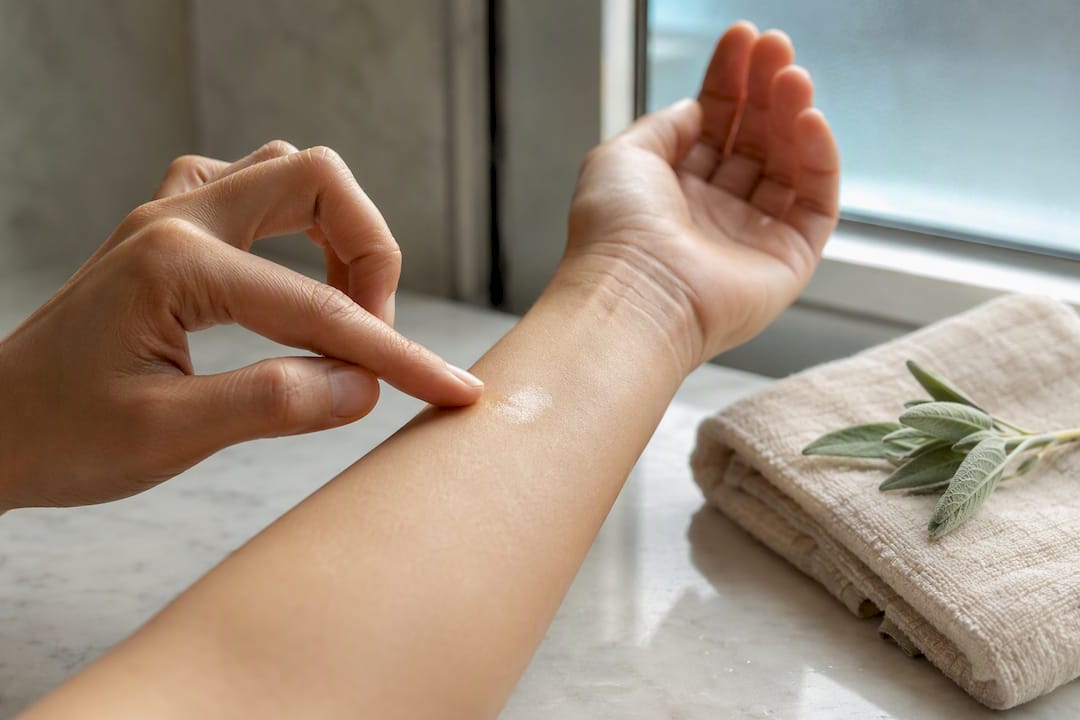
Patch test standard: wait 24 hours. Apply a small amount of your diluted blend to the inside of your forearm and watch for redness, itching, or irritation before using it anywhere else on your body.
Step-by-Step: Mixing Your Roller Blend
Once your dilution math is settled, the actual mixing takes about five minutes.
Clean your workspace and hands. If you’re reusing a bottle, sterilize it with rubbing alcohol and let it dry fully.
Add your essential oil drops first, straight into the empty roller bottle, counting carefully based on your dilution target.
Fill the rest of the bottle with carrier oil, leaving a small gap at the top so the rollerball has room to seat properly.
Insert the rollerball firmly and snap the cap into place.
Mix gently by rolling the bottle between your palms rather than shaking it. Vigorous shaking introduces air into the mixture, which can speed up oxidation of both the carrier and the essential oils.
Label the bottle with the blend name, the dilution percentage, and the date you made it.
Pro Tip: Let your blend rest for 24 to 48 hours before that first real-world use. This gives the essential oils time to fully meld with the carrier, and many experienced blenders say the scent rounds out and smooths over during that resting window.
That mixing order (oils first, carrier second) isn’t just tradition. It makes it far easier to count drops accurately, since you’re not trying to gauge concentration in a bottle that’s already partly full of carrier oil.
Roller Blend Recipes for Calm, Sleep, Focus, and More
These recipes are all written for a 10 ml roller bottle at roughly 2% to 3% dilution for adults. If you’re blending for a child, someone pregnant, or anyone with sensitive skin, cut the essential oil drops in half or more and stick closer to 1%.
Calm/Relaxation: 4 drops lavender, 2 drops sweet orange, 2 drops ylang ylang, topped with carrier oil.
Sleep Support: 5 drops lavender, 2 drops cedarwood, 1 drop chamomile, topped with carrier oil.
Focus: 3 drops rosemary, 3 drops peppermint, 2 drops lemon, topped with carrier oil.
Energize: 4 drops grapefruit, 2 drops peppermint, 2 drops spearmint, topped with carrier oil.
Headache/Sinus Relief: 4 drops peppermint, 3 drops eucalyptus, 1 drop lavender, topped with carrier oil. Reduce peppermint for children.
Muscle Soothing: 4 drops marjoram, 3 drops black pepper, 2 drops lavender, topped with carrier oil.
Don’t have one of these oils on hand? Swap it for something in the same family, lavender for chamomile in a calming blend, or grapefruit for lemon in an energizing one, and patch-test the new version separately, since a substitution changes the blend’s overall chemistry.
How Long Do Roller Blends Last, and How Should You Store Them?
Store finished blends in dark glass, kept in a cool, dry spot away from direct sunlight and heat sources like a windowsill or a bathroom radiator. Both heat and UV exposure speed up oxidation in the carrier oil and degrade the essential oil compounds faster than normal.
Shelf life depends heavily on your carrier choice:
Fractionated coconut oil blends can last well over a year.
Jojoba-based blends also hold up for many months thanks to jojoba’s natural resistance to oxidation.
Sweet almond or grapeseed blends have a shorter window and should be used within a few months.
Avocado oil, if you use it, oxidizes fastest of the common carriers and benefits from refrigeration.
A blend that’s gone off usually smells sour, muddy, or “off” compared to when you made it, sometimes with a slightly rancid, greasy note. If it smells wrong, toss it rather than risk skin irritation. For more detail on extending shelf life across different oils, A guide on storing essential and seed oils fresh covers the specifics.
How Do You Patch-Test a New Blend Safely?
Patch testing takes one day and prevents most bad reactions before they start.
Apply a small amount of your diluted blend to the inside of your forearm.
Wait 24 hours and watch for redness, itching, or irritation.
Never apply undiluted essential oil directly to skin, and never drop it straight into bath water, since oil and water don’t mix and can leave concentrated droplets sitting on your skin.
Keep all blends away from your eyes and mucous membranes.
If you have a known skin condition, allergy, or you’re pregnant or nursing, talk to a doctor before trying a new blend.
For a deeper look at sensitive-skin testing protocols, Aromatick’s patch test guide walks through timing and dilution for fragrance-sensitive users specifically.
Where Can You Learn More About Blending and Sourcing Quality Oils?
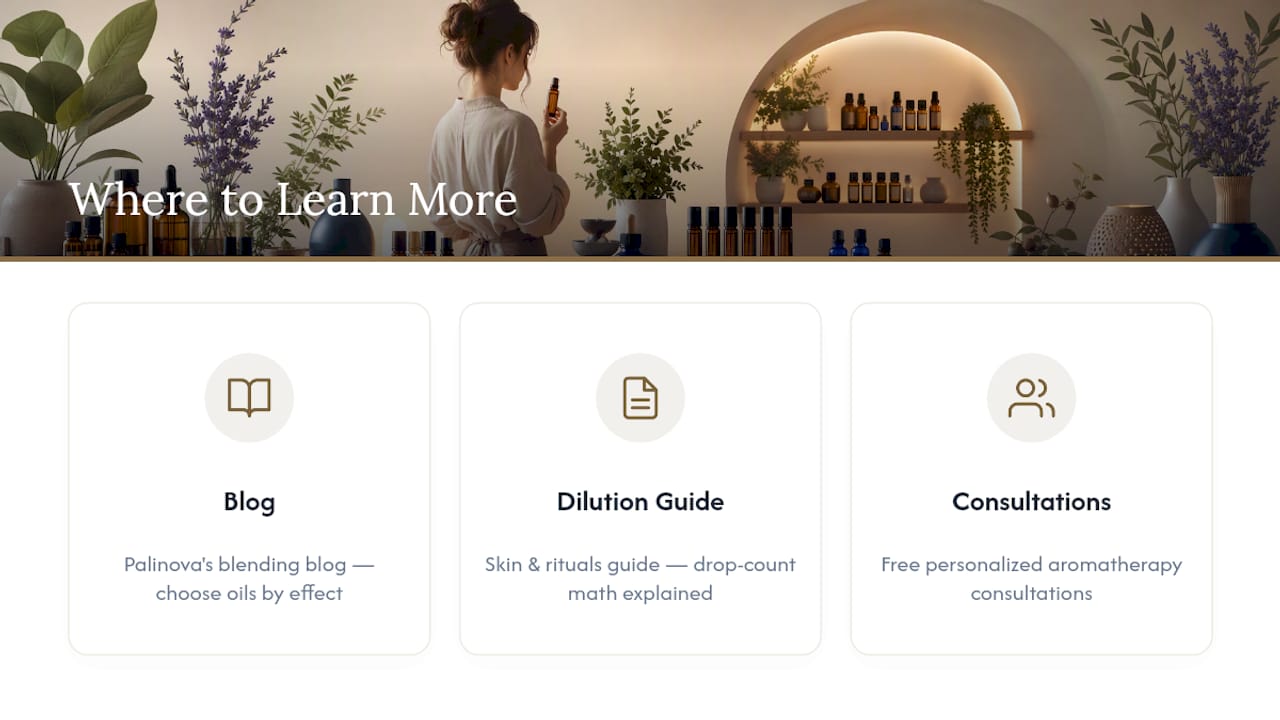
Palinova’s blog on blending essential oils breaks down how to choose oils by intended effect, and the dilution guide for skin and rituals walks through drop-count math in more depth than a single article can cover.
If you’d rather talk through your specific goals, whether that’s sleep, stress, or a skin concern, free personalized aromatherapy consultations can help you pick oils and dilutions suited to your situation, rather than guessing from a general recipe list.
A Note on Safety-First Blending
The biggest mistake in home aromatherapy isn’t picking the “wrong” oil. It’s skipping the boring parts: measuring drops instead of eyeballing them, skipping the patch test because you’re excited to use a new blend, or assuming more oil means a stronger effect. Dilution and testing aren’t obstacles between you and a good blend. They’re what turns a bottle of concentrated plant compounds into something you can actually wear on your skin without regret. Treat the math as part of the ritual, not a chore that gets in its way.
— abdelmuhsen
Where to Find Quality Oils for Your Roller Blends
If measuring, sourcing, and testing multiple oils sounds like more than you want to manage right now, Palinova’s pure essential oils are ethically sourced from Palestinian botanicals and free of synthetic additives, so you’re starting your blend with a clean base rather than wondering what’s actually in the bottle.
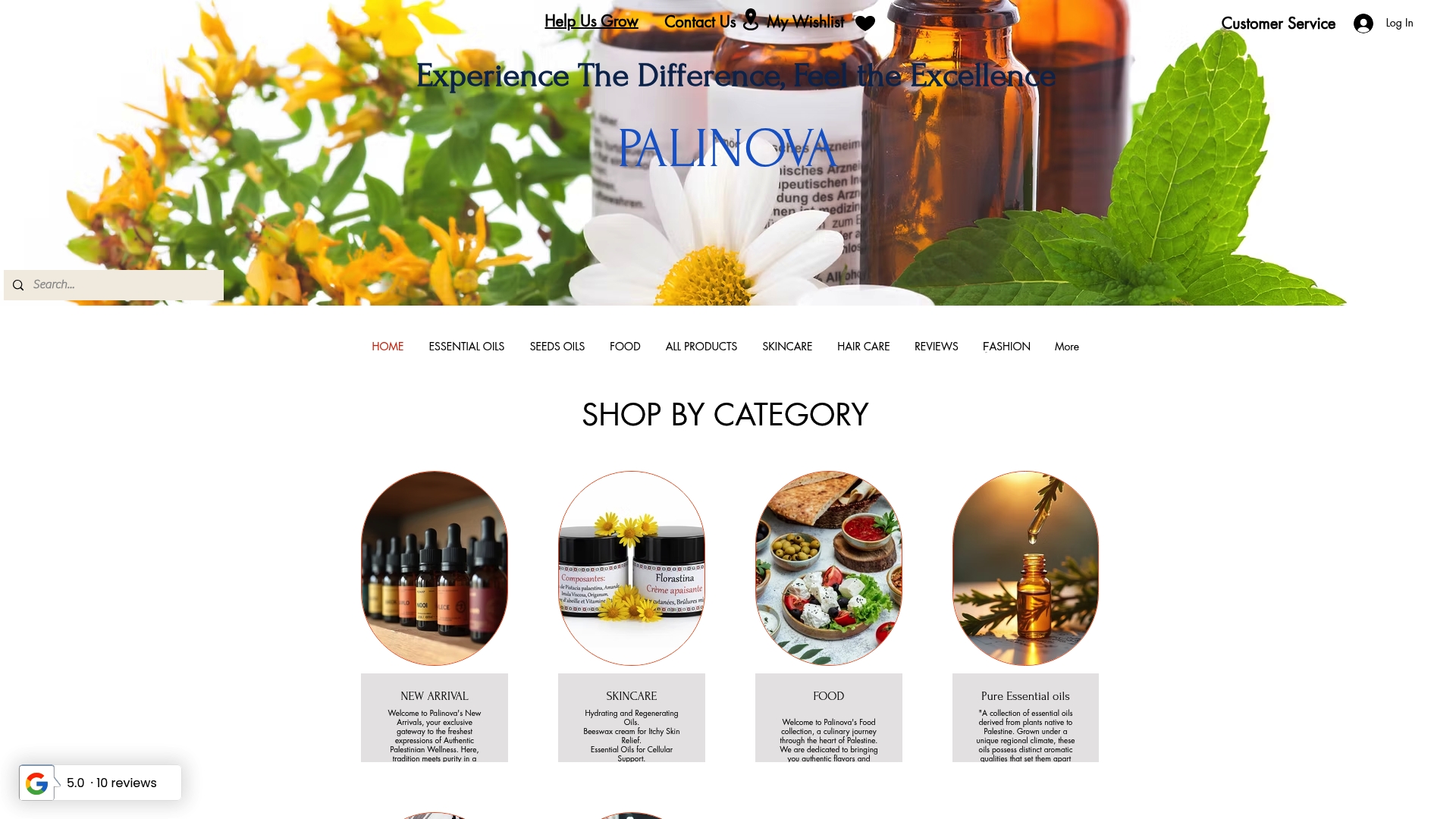
Every oil in the collection, from Achillea fragrantissima to za’atar, comes from land with generations of agricultural history behind it, and Palinova’s free aromatherapy consultations mean you don’t have to figure out dilution ratios alone if you’d rather get a recommendation tailored to what you’re trying to solve. Browse the essential oils category to pick your starting oils, or check out personal care essentials for carrier oils and accessories to round out your first blend.
Sources
This article is general information, not a substitute for advice from a qualified doctor. Consult a qualified healthcare professional about your own circumstances before acting on anything here.
FAQ
How can I make my own essential oil roll-on blend?
Add your essential oil drops to an empty roller bottle first, fill the rest with a carrier oil like fractionated coconut or jojoba, seat the rollerball, cap it, and roll gently between your palms to mix.
What are some good essential oil roller blend recipes?
Lavender with sweet orange and ylang ylang makes a solid calming blend, while rosemary, peppermint, and lemon work well for focus. Both use 6 to 10 total drops in a 10 ml bottle for a standard adult dilution.
What are the best carrier oils for essential oil rollers?
Fractionated coconut oil and jojoba oil are the top choices for most rollers because they resist oxidation well and have minimal scent of their own. Sweet almond and grapeseed work too, but oxidize faster.
How many drops of essential oil go in a 10 ml roller?
Drop to about 3 drops or fewer for children or sensitive skin.
Recommended


Comments