
Traceable Micromeria fruticosa From Palestine: Chemistry, Safety
- Palinova
- 9 hours ago
- 8 min read
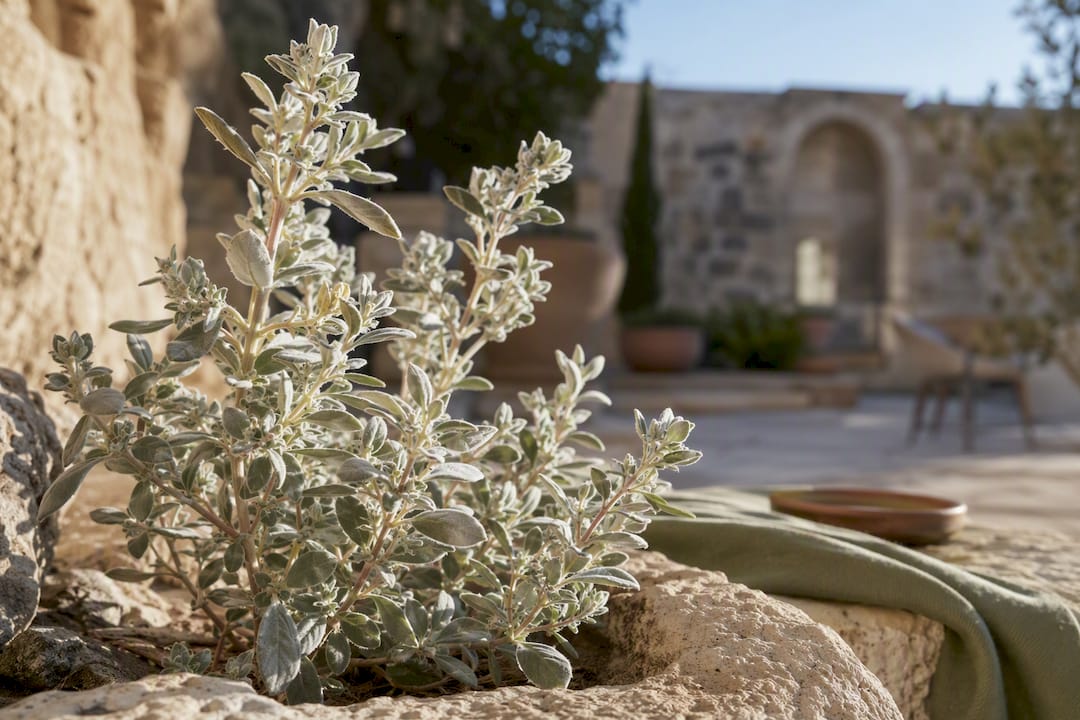
Micromeria fruticosa is a dwarf evergreen in the mint family prized for two reasons: its lemony, cooling flavor makes it a staple herbal tea and seasoning across the Levant, and its essential oil packs an unusually potent concentration of pulegone and menthol. That same potency is why the oil demands careful handling, which we cover in detail below.
TL;DR:
Pulegone can reach concentrations as high as 81.77% in some oils, making pure or concentrated forms potentially hepatotoxic if misused internally or topically.
Plant chemotype and harvest timing significantly influence the oil’s pulegone and menthol levels, affecting both safety and aroma.
Dried Micromeria fruticosa leaves used for tea should be freshly crushed to detect their fresh, minty-lemon scent, indicating good quality.
Growing Micromeria in well-drained, poor soil with full sun produces fragrant, low-maintenance shrubs suitable for Mediterranean climates or containers.
Always verify GC-MS testing and sourcing details before purchasing essential oil, especially regarding pulegone content, to ensure safety and authenticity.
Table of Contents
What Is Micromeria Fruticosa? Botanical Profile and Distribution
Micromeria fruticosa belongs to the Lamiaceae, the same family as mint, sage, and thyme. Botanists sometimes list it under older synonyms, including Clinopodium fruticosum and Satureja fruticosa, and it’s widely known by its common names, white micromeria and white zuta. Herders and foragers across Israel, Jordan, Lebanon, and Syria have called it that for generations, referring to the pale, felted look of its leaves.
The plant grows as a compact evergreen shrub, typically 20 to 80 centimeters tall, with woody lower stems and soft new growth. Its leaves are small, oval, and silvery gray green, covered in fine hairs that give the whole plant a dusty, matte sheen. From late spring into summer it sends up spike like racemes of small white to pale lilac flowers that draw bees and other pollinators in large numbers.
Look for it in the wild and you’ll find it on:
Rocky, sun-baked hillsides and limestone outcrops
Dry Mediterranean scrubland with thin, well-drained soil
Roadside banks and terrace walls across the eastern Mediterranean
The GRIN taxonomic database places its native range across Western Asia and parts of southern Europe, including Israel, Syria, Turkey, Italy, and Spain. It has adapted to poor, alkaline soils where most garden herbs would struggle, which is exactly why it thrives on neglect.
What Gives Micromeria Fruticosa Its Fragrance and Flavor?
The scent comes down to a small group of monoterpenes, and their ratios shift dramatically from one population to the next. Pulegone and menthol usually dominate, but menthone, piperitenone, and isomenthone show up in meaningful amounts too, depending on where the plant grew and when it was harvested.
Pro Tip: If you’re buying dried Micromeria fruticosa for tea, crush a leaf between your fingers first. A sharp, minty-lemon burst with a cooling aftertaste signals a fresh, chemically potent batch; a flat or musty smell means it’s been sitting too long.
By the numbers: One phytochemical review found pulegone concentrations reaching as high as 81.77% in certain oil samples, while menthol has been reported at up to 60.2% in others, depending on chemotype.
Several factors drive that swing:
Geographic origin and local microclimate
Time of harvest relative to flowering
Distillation method and how the plant material was dried beforehand
Genetic chemotype variation within the species itself
Drought stress and intense sun exposure appear to concentrate these compounds further, a phenomenon researchers describe as phytochemical priming in Mediterranean aromatic species. The net effect on the nose is a bright, lemony mint with a cooling menthol finish, sharper and more medicinal than garden spearmint.
How Is Micromeria Fruticosa Used Traditionally?
Levantine households have brewed Micromeria fruticosa as a hot infusion for generations, often alongside or in place of common mint. Herbalists in the region reach for it as a cooling summer drink and as a seasoning for soups, grilled meats, and legume dishes, where its lemony bite cuts through richness.
Traditional uses extend beyond the teacup:
Infused as tea for digestive discomfort and general “cooling” of the stomach
Crushed into poultices applied to minor cuts and skin irritation
Used in folk practice as a topical antiseptic wash
Blended into seasoning mixes for stews and roasted vegetables
Pro Tip: For a traditional-style infusion, steep one to two teaspoons of dried leaf in hot, just-off-the-boil water for five to seven minutes. Longer steeping pulls out more of the bitter, pulegone-heavy compounds and can overpower the lemon-mint character you’re after.
These practices sit within a broader Levantine herbal tradition that treats aromatic shrubs as both food and medicine, rarely drawing a hard line between the two.
What Does Research Say About Micromeria Fruticosa’s Bioactivity?
Laboratory studies on Micromeria fruticosa extracts show real, measurable activity, though almost all of it comes from cell cultures and test tubes rather than living patients.
One notable finding: ethanolic extracts tested against MCF-7 breast cancer cells and HCT-116 colon cancer cells triggered apoptosis and G2/M cell-cycle arrest, with an IC50 around 100 µg/mL in both lines.
Separately, a hexane extract demonstrated 88.1% xanthine oxidase inhibition at 100 µg/mL, a marker relevant to antioxidant and anti-gout research, with menthol as its major constituent in that particular preparation.
A few things matter when weighing these results:
Extraction solvent changes everything: ethanol, water, and hexane pull out different compound profiles and produce different bioactivity readings in the same GC-MS comparisons
Chemotype variability means one region’s Micromeria fruticosa may behave nothing like another’s in the same assay
Nearly all published data comes from in vitro work, not human trials
None of this makes Micromeria fruticosa a proven cancer treatment or antioxidant supplement. It makes it a plant worth watching, with a chemical profile that keeps producing interesting lab signals researchers haven’t yet standardized or confirmed in people.
How Do You Grow Micromeria Fruticosa at Home?
Give this shrub the conditions of a Mediterranean hillside and it rewards you with fragrant, low-maintenance growth for years.
Plant in full sun, at least six hours a day, in soil that drains fast and stays lean rather than rich.
Skip the compost. Overly fertile, moisture-retentive soil encourages root rot faster than any pest.
Water sparingly once established; this is a plant built for drought, not for weekly soakings.
In climates below USDA zone 8, grow it in a container and bring it indoors before frost, since it behaves as a tender perennial outside warm, dry zones.
Propagate from softwood cuttings in spring for reliable results, since seed germination tends to be slow and inconsistent.
Prune lightly after flowering to keep growth compact and encourage fresh, oil-rich foliage.
Aphids and spider mites occasionally show up on stressed plants, but good airflow and restrained watering usually keep both in check.
Is Micromeria Fruticosa Essential Oil Safe to Use?
Producers extract Micromeria fruticosa oil through steam or hydrodistillation, running plant material and steam together so the volatile aromatic compounds separate out and condense. Yield and final composition swing widely based on harvest timing, plant part, and how the material was dried beforehand.
The safety picture deserves real attention here. Pulegone is a recognized hepatotoxin at high doses, and multiple phytochemical reviews flag it as a dominant, and sometimes concerning, component in certain Micromeria fruticosa chemotypes.
Safety threshold: Topical use of pulegone-rich oils should stay conservative, generally at or below a 0.5% final dilution for short-term adult use, with internal use avoided entirely outside qualified clinical supervision.
Practical guardrails worth following:
Never ingest the essential oil without guidance from a qualified aromatherapist or clinician
Avoid use entirely during pregnancy and with young children
Always patch-test diluted oil on a small skin area before broader application
Ask any seller for GC-MS or Certificate of Analysis documentation before buying
Pro Tip: If a supplier can’t produce a GC-MS report showing pulegone and menthol percentages, treat that as a red flag, not a minor omission. Our own dilution and safety guidance walks through safe topical ratios in more detail.
Where Should You Buy Micromeria Fruticosa Herb or Oil?
Quality varies enormously between suppliers, so it pays to check a few specifics before you commit to a bottle or a bag of dried leaf.
Look for these markers on any listing:
The full Latin name, Micromeria fruticosa, not just a generic “wild mint” label
Chemotype or major-constituent percentages from GC-MS testing
Country or region of origin, since chemistry shifts with geography
Harvest date, since volatile oils degrade over time
Clear sourcing claims, whether wild-harvested or cultivated
Wild-harvest sourcing tends to carry stronger, more variable aromatic profiles, while cultivated stock offers more consistency batch to batch. Palinova’s Micromeria fruticosa essential oil is wildcrafted from Palestinian hillsides, with sourcing details tied directly to that heritage.
A Botanical Program Built on Traceable Sourcing
Palinova works directly with Palestinian growers and wildcrafters who know these hillsides intimately, and Micromeria fruticosa fits squarely into that sustainability commitment. Every batch ties back to a specific harvest, not an anonymous supply chain. Understanding this plant’s chemistry, explored in our heritage and healing feature, shapes how we educate customers on safe, informed use rather than vague wellness claims.
— abdelmuhsen
Try Traceable Micromeria Fruticosa From Palestinian Hillsides
Most essential oils on the market arrive with vague origin labels and no batch-specific testing, which makes it hard to know what pulegone or menthol level you’re actually applying to your skin. Palinova’s Micromeria fruticosa oil comes wildcrafted from Palestinian hillsides, with sourcing tied to a specific harvest rather than an anonymous blend.
Given the pulegone content discussed above, review our dilution guidance before your first topical use, and consider one of our free aromatherapy consultations to get a dilution ratio suited to your skin. If you’re building out a broader natural skincare routine, our seed oil collection and partner research on natural oils for mature skin hydration are worth a look too. Ready to bring one home? Check our new arrivals for current Micromeria fruticosa stock and harvest details.
This article is general information, not a substitute for advice from a qualified doctor. Consult a qualified healthcare professional about your own circumstances before acting on anything here.
Sources
FAQ
Is Micromeria Fruticosa the Same as White Zuta?
Yes. White zuta and white hyssop savory are common names used across the Levant for Micromeria fruticosa.
Can I Drink Micromeria Fruticosa Tea Safely?
Traditional infusions made from the dried leaf, steeped briefly in hot water, are widely consumed in Levantine households, but the concentrated essential oil should never be ingested without professional guidance.
What Does Micromeria Fruticosa Smell Like?
It carries a bright, lemony mint aroma with a cooling menthol finish, driven by high pulegone and menthol content that varies by chemotype.
Is Micromeria Fruticosa Oil Proven to Fight Cancer?
No. Preclinical studies show extracts triggering apoptosis in breast and colon cancer cell lines with an IC50 near 100 µg/mL, but this is in vitro evidence only, not proof of effect in humans.
Where Can I Buy Traceable Micromeria Fruticosa Oil?
Look for suppliers who disclose GC-MS testing, harvest region, and harvest date; Palinova’s product page lists its Palestinian wildcrafted origin directly.
Recommended


Comments