
A Tailored Wellness and Aromatherapy Consultation, Explained
- Palinova

- 10 hours ago
- 10 min read
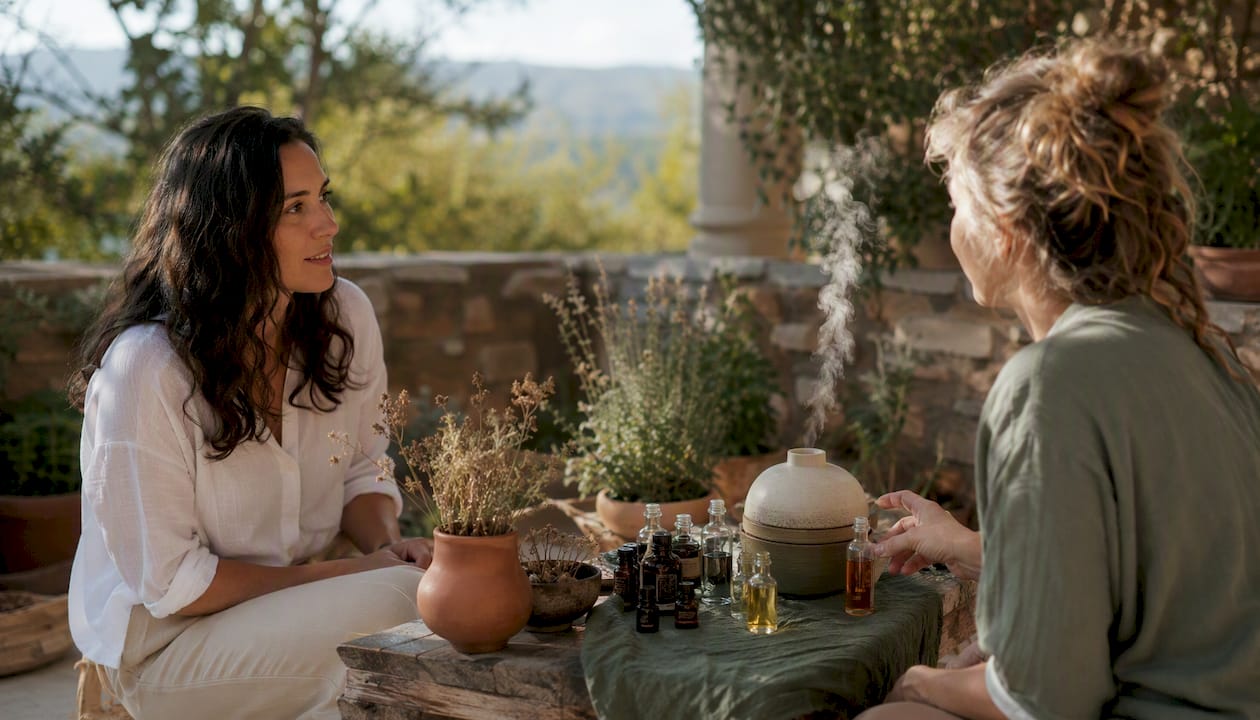
A tailored aromatherapy consultation builds you a custom essential-oil blend and a personalized wellness plan around one or two specific goals, whether that is falling asleep faster, steadying anxious afternoons, or getting through a low-energy stretch at work. You share your health history and goals with a practitioner, they formulate a blend suited to your body and lifestyle, and you leave with a product plus written instructions for using it. The next step is simple: book a short intake form or a free consultation online, usually before you ever pay for anything.
Here’s what a typical session includes:
Format: virtual (Zoom or phone) or in-person, typically lasting between half an hour and one hour
Deliverable: a custom-formulated blend, shipped or handed over, with dosage and safety notes
Cost: many providers, including Palinova, offer the initial consult free
Follow-up: a check-in, often around the 4-week mark, to adjust the formula
Pro Tip: Write down your top one or two goals before you book. A consultant can do more with “I want to fall asleep within 20 minutes” than with “I want to feel better.”
Key Takeaways
A tailored aromatherapy consultation pairs a custom-formulated essential-oil blend with a personalized wellness plan built around your specific health history and goals.
Point | Details |
Session format and length | Expect 30 to 60 minutes, virtual or in-person, with a full intake before formulation begins. |
Safety disclosure is non-negotiable | Share medications, allergies, pregnancy status, and skin sensitivities before any blend is finalized. |
Choose single sessions or coaching | A single consult suits a narrow goal; a six-session coaching series suits habit change or chronic patterns. |
Follow-up matters | Expect a check-in around the 4-week mark to adjust the formula based on your response. |
Palinova offers a free path in | Palinova provides free online consultations using ethically sourced Palestinian botanicals as a credible starting point. |
This article is general information, not a substitute for advice from a qualified doctor. Consult a qualified healthcare professional about your own circumstances before acting on anything here.
Table of Contents
What Happens During a Tailored Aromatherapy Consultation?
Most consultations typically last between 30 minutes and one hour and may be conducted via video, phone, or in person, according to a Dana-Farber aromatherapy resource describing standard practice. You attend alone in almost all cases, though some providers allow a caregiver to join if the consultation is tied to a shared household routine, like helping a family member sleep better.
The session itself tends to follow a predictable arc:
Review of your intake form and health history
Clarifying conversation about your specific goals and what has or hasn’t worked before
Scent testing, where you react to individual oils so the practitioner can gauge preferences and aversions
Discussion of the proposed blend and why each oil was chosen
Safety and usage guidance, including how and when to apply it
Scheduling of a follow-up or check-in
You walk away with a written recipe, a sample or fully shipped blend, and usage instructions that tell you exactly how much to use and how often. Some practitioners also flag a follow-up window, often around four weeks out, to check whether the formula still fits, a practice noted by providers like Now’s The Time For Change.
Pro Tip: If your consultation is virtual, ventilate the room beforehand and avoid wearing perfume, scented lotion, or having candles burning nearby. A neutral-smelling space and a stable camera setup help the practitioner walk you through scent testing accurately.
What Information Does the Intake Process Cover?
The intake form is where the actual personalization begins, and it’s more thorough than a typical retail questionnaire. Expect questions across several categories:
Current physical symptoms (headaches, digestive discomfort, muscle tension)
Emotional state and stress patterns (anxiety, low mood, burnout)
Sleep quality and energy levels throughout the day
Medications and supplements you’re currently taking
Known allergies or sensitivities
Pregnancy or breastfeeding status
Skin sensitivities, especially for topical blends
Scent preferences and scents you actively dislike
Each of these matters for a concrete reason, not just thoroughness for its own sake. Certain citrus oils cause photosensitivity, so a practitioner needs to know if you spend time outdoors. Some oils interact with medications or aren’t recommended during pregnancy. Skin sensitivities determine dilution ratios and carrier oil choice. Providers like Forward Health Forensics require this kind of disclosure before formulating anything, precisely because a blend built without it can backfire.
Before you book, gather this information:
A list of current medications and supplements
Your top two or three goals, ranked by priority
Any known allergies, including to plants or fragrances
Notes on scents you’ve liked or disliked in the past
Completing an intake form ahead of time, ideally more than a day before your appointment, lets the practitioner spend the live session on strategy instead of basic data collection.
How Is a Custom Essential-Oil Blend Formulated?
Formulation starts with matching oils to your stated goals, then adjusting for safety and skin tolerance. A practitioner might choose lavender and cedarwood for sleep support, or cypress and geranium for a grounding, energy-balancing blend, weighing each oil’s traditional and practical use against what you’ve told them about your body and lifestyle.
[
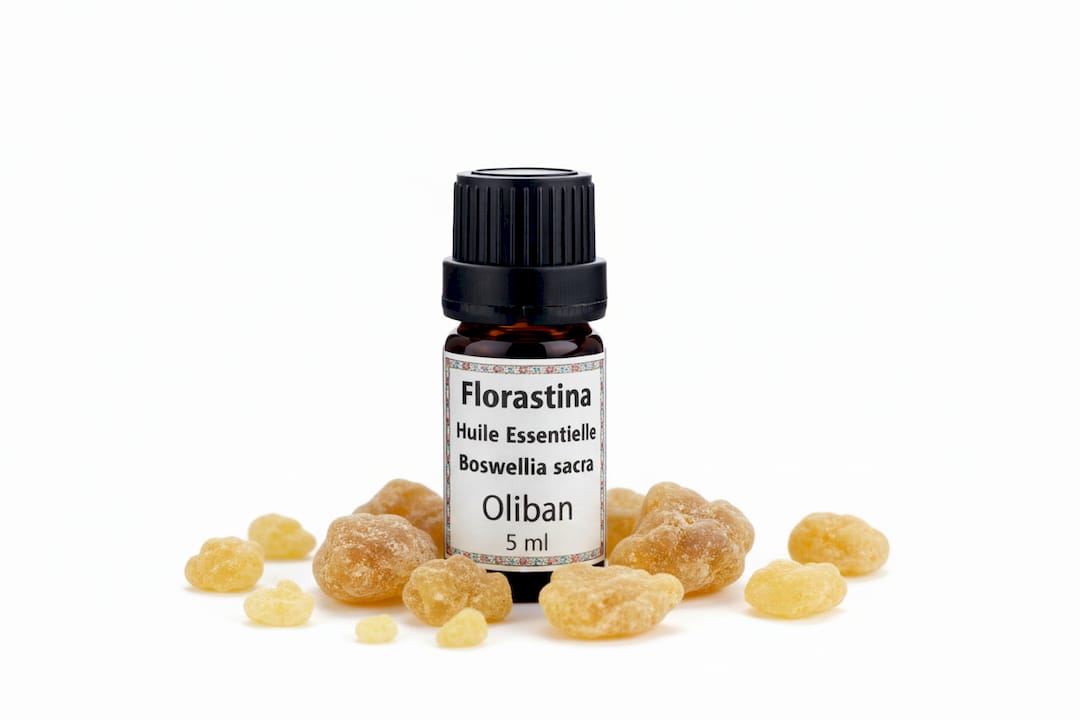
Dilution comes next, and it’s not a minor detail. A topical blend for daily use gets diluted far more than a blend meant for occasional diffuser use, and the carrier oil matters too. A carrier like Barbary fig oil absorbs differently than a heavier base, which changes how the blend feels on skin and how quickly the active compounds are absorbed.
Testing happens in stages:
Scent trial during the consultation to confirm you like the direction
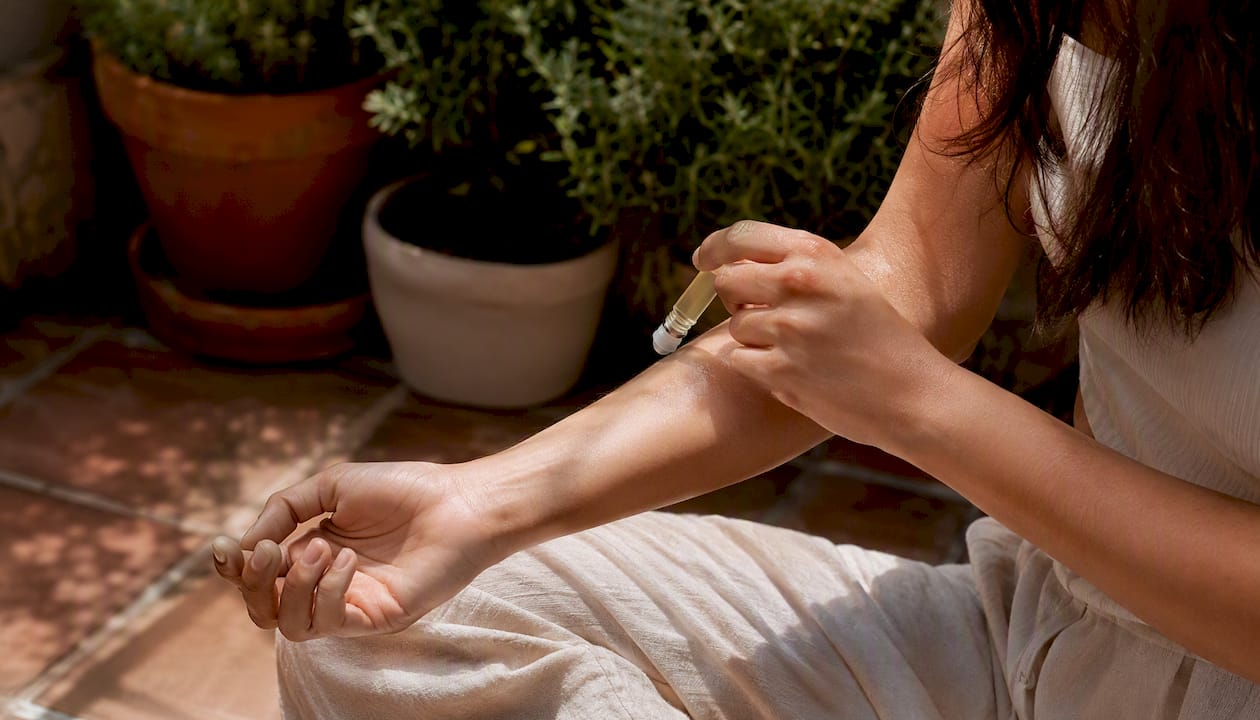
Patch test on a small area of skin, usually the inner forearm, before full use
A recommended first-dose protocol, often a smaller amount than the eventual regular dose, to watch for reactions
Delivery formats vary depending on the goal:
Roll-ons for on-the-go topical application
Sprays for room or linen use
Small bottles for diffuser blends
Labeled containers with dilution ratio, ingredients, and usage frequency printed clearly
A blend that ships without clear labeling is a red flag. Reputable providers document exactly what’s in the bottle and how to use it.
How Does Aromatherapy Fit Into a Larger Wellness Plan?
A single blend rarely does the work alone. What actually moves the needle is pairing a custom scent with a specific behavior, a concept practitioners call scent anchoring. You apply your blend right before a task you’re trying to reinforce, like a wind-down routine before bed, and over time your brain starts associating that scent with the desired mental state. This is the same principle behind using Palestinian essential oils in a daily wellness ritual: the scent becomes a repeatable cue, not a one-off product.
A single consultation works well for a narrow, defined goal, like finding a blend to support better sleep this month. Ongoing coaching programs go further. Practitioners describe emotional aromatherapy coaching as a series of sessions, often structured as weekly meetings over multiple weeks, combining scent-based interventions with mindset work and homework tasks, according to a Dana-Farber resource on such programs. That kind of cadence suits goals like habit change or chronic stress management, where progress builds gradually rather than in one sitting.
Here’s an anonymized example of how this plays out: a client struggling with afternoon energy crashes started with a rosemary and cypress blend applied at 2 p.m. daily, paired with a five-minute walk. Over four coaching touchpoints, the practitioner adjusted the ratio twice based on feedback, and the client reported consistently avoiding the crash by week three. That’s not a guaranteed outcome for everyone, but it illustrates how blend and behavior work together rather than the oil doing all the lifting on its own.
Pro Tip: Use your blend at the same time and place every day, tied to an existing habit like brushing your teeth or sitting down at your desk. Consistency in timing matters more than the oil itself for building the scent-behavior association.
What Safety Checks Matter Before Starting Aromatherapy?
Full disclosure during intake isn’t optional. Pregnancy, epilepsy, certain medications, and known allergies all change what a practitioner can safely recommend, and photosensitizing oils like bergamot or lemon require a warning if you’ll be in the sun. A responsible provider will ask about all of this before finalizing any blend, and will also make clear that a personalized formula isn’t meant to be shared with someone else, since a blend built for your body may not suit theirs, a point emphasized on provider pages like Forward Health Forensics.
Patch testing before regular use catches most reactions before they become a problem. Apply a small diluted amount to your inner forearm, wait 24 hours, and check for redness or irritation before using the blend as directed.
Safety Callout: Aromatherapy consultations are wellness support, not medical treatment. If you’re managing a chronic condition, taking prescription medication with known interaction risks, or dealing with a complex health issue, loop in a licensed clinician before starting a new blend, and choose a practitioner who will refer you to clinical aromatherapy or medical oversight when a case falls outside standard wellness support.
Safety Callout: The same caution applies to pregnancy and breastfeeding. Several common oils, including certain varieties of rosemary and clary sage, carry specific pregnancy precautions, so this status should be disclosed at intake regardless of how minor the concern seems.
How Long Does It Take to See Results?
A single 30 to 60 minute consultation suits a focused, immediate need, like finding a sleep blend before a stressful travel week. A coaching series suits deeper or longer-standing goals, where change happens over weeks rather than days.
Session Type | Typical Duration | Typical Session Count |
Single consultation | about half an hour to one hour | one session |
Follow-up check-in | typically under half an hour | one session, often around one month later |
Coaching program | usually about an hour to an hour and a half per session | multiple weekly sessions, often around six |
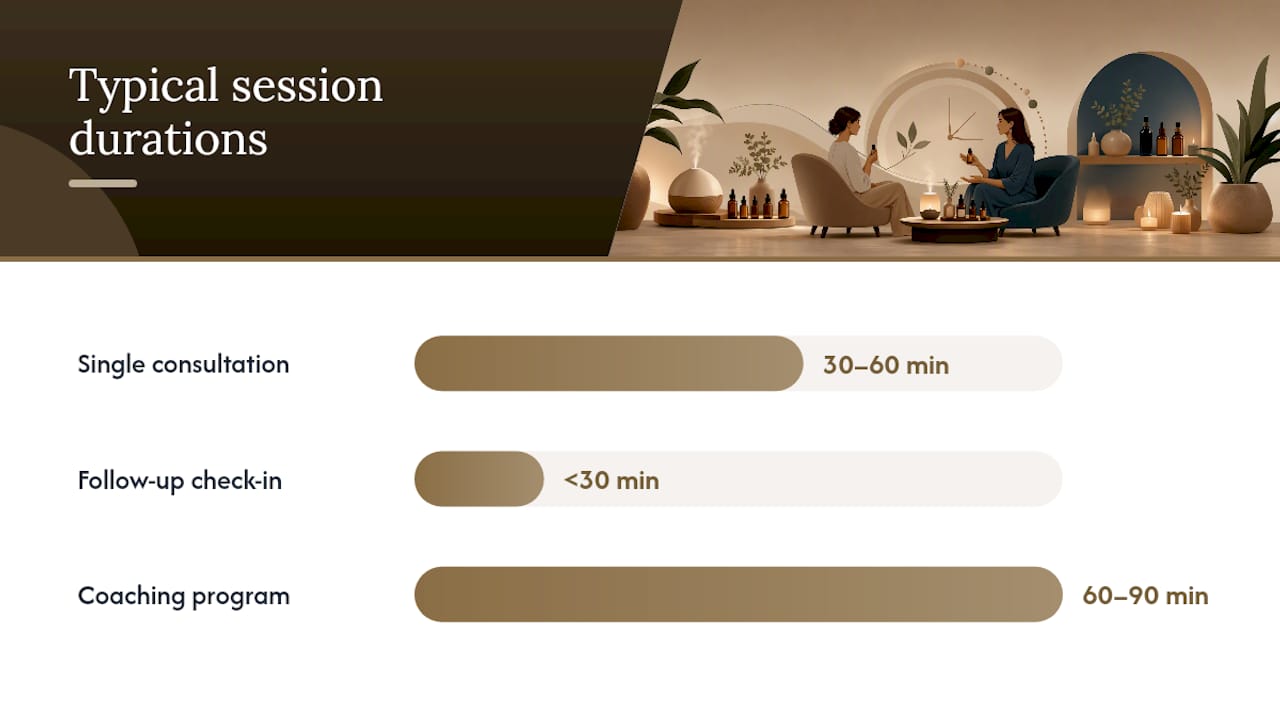
This structure reflects common aromatherapy coaching program designs, with sessions building progressively rather than one-off appointments, as noted in a Dana-Farber resource.
At the 4-week check-in, expect the practitioner to ask how the blend is performing against your original goal, whether any sensitivities showed up, and whether the ratio needs adjusting. This is also when many providers ship a refreshed or reformulated bottle if your response to the original blend has shifted.
Book a single session if your goal is narrow and immediate
Choose a coaching series if you’re working on habit change or a chronic pattern
Expect a check-in around the one-month mark regardless of which path you pick
What Should You Look for in an Aromatherapy Consultant?
Credentials matter more than marketing copy here. Look for a certified aromatherapist with documented clinical training, allied health credentials where relevant, and evidence of supervised practice hours rather than a weekend certificate. Personalized wellness plans work best when they’re built on the same kind of individualized, evidence-informed approach a good aromatherapist brings to blend formulation, not a generic template applied to every client.
Beyond formal credentials, a handful of practical signals separate a serious provider from a hobbyist:
Clear safety screening built into the intake process, not an afterthought
A documented formulation process you can ask about, including dilution ratios and carrier oil choices
Written usage instructions that ship with every blend
Patch testing recommendations before regular use
Real client outcomes or case studies, not vague testimonials
Before booking, ask a few direct questions: What’s your typical dilution ratio for topical blends? Where do you source your oils? What happens if I have a reaction? Is there a follow-up included, and what’s your policy if I need to adjust the formula? A provider who answers all of this clearly, without hedging, is one worth trusting with something you’ll be applying to your skin.
Why Bespoke Beats Off-the-Shelf, Most of the Time
The wellness industry sells a lot of pre-blended “calm” and “energy” oils, and some of them work fine for casual use. But a bottle formulated for a general audience can’t account for your medication list, your skin sensitivity, or the fact that you specifically hate the smell of lavender, which happens to be in almost every commercial sleep blend on the shelf. That mismatch is why adherence tends to fall apart with generic products: people stop using something they don’t enjoy, no matter how well-researched the formula is on paper.
A tailored consultation solves the adherence problem before it starts, because the blend is built around what you’ll actually tolerate and use consistently. That’s not a minor convenience. Consistency is the entire mechanism behind scent anchoring, and a blend nobody wants to smell twice a day doesn’t get the chance to work.
Palestinian botanicals bring something distinct to this process too. Oils like frankincense, cypress, and geranium have centuries of traditional use tied to Palestinian agricultural land, and sourcing them ethically from that heritage adds a layer of quality and story that mass-produced alternatives don’t carry. Palinova builds its free consultations around exactly this kind of personalization, which is worth factoring in if you’re weighing where to start. The biggest gap in this space right now is published outcome data. More documented case studies and client follow-up results would strengthen trust across the entire industry, not just for one provider.
Get a Free, Personalized Aromatherapy Consultation From Palinova
Palinova offers a free online aromatherapy consultation, which removes the biggest barrier most people face: paying upfront just to find out whether a custom blend is worth it. You share your goals and health background, and a consultant builds a blend using ethically sourced Palestinian botanicals, oils like frankincense, cypress, and geranium, each rooted in a specific tradition of use rather than picked for marketing appeal.
Booking works the same way as the process described throughout this article: you fill out a short intake covering your goals, health history, and scent preferences, then a free online consultation walks you through formulation and usage. If you’re also exploring topical routines, Palinova’s skincare line pairs well with carrier oils used in custom blends for anyone dealing with skin sensitivity alongside their wellness goals. Visit Palinova’s site to book your free consultation and get a blend built specifically around what you told them, not around what’s easiest to mass-produce.
Sources
FAQ
How much does an aromatherapy consultation cost?
Costs vary by provider and whether it’s a single session or a coaching series, but many providers, including Palinova, offer the initial consultation free and charge only for the resulting blend.
What happens during an aromatherapy consultation?
You complete an intake covering health history and goals, then a practitioner walks through scent testing and formulates a custom blend, typically within a 30 to 60 minute session.
What are the main types of aromatherapy?
Common categories include aerial diffusion (inhaling scent from a diffuser), direct inhalation, and topical application with a diluted carrier oil, each suited to different goals like sleep, mood, or skin support.
Is an aromatherapist a licensed doctor?
No, an aromatherapist is not a medical doctor, and a tailored consultation is wellness support rather than medical treatment. Anyone managing a chronic condition or complex medication regimen should involve a licensed clinician alongside any aromatherapy plan.
How often should I follow up after my first blend?
Many providers schedule a check-in around the 4-week mark to review your response and adjust the formula, with coaching programs building in more frequent touchpoints along the way.
Recommended


Comments