
Achillea Fragrantissima Essential Oil: The Rare Desert Secret
- Palinova
- 1 day ago
- 13 min read
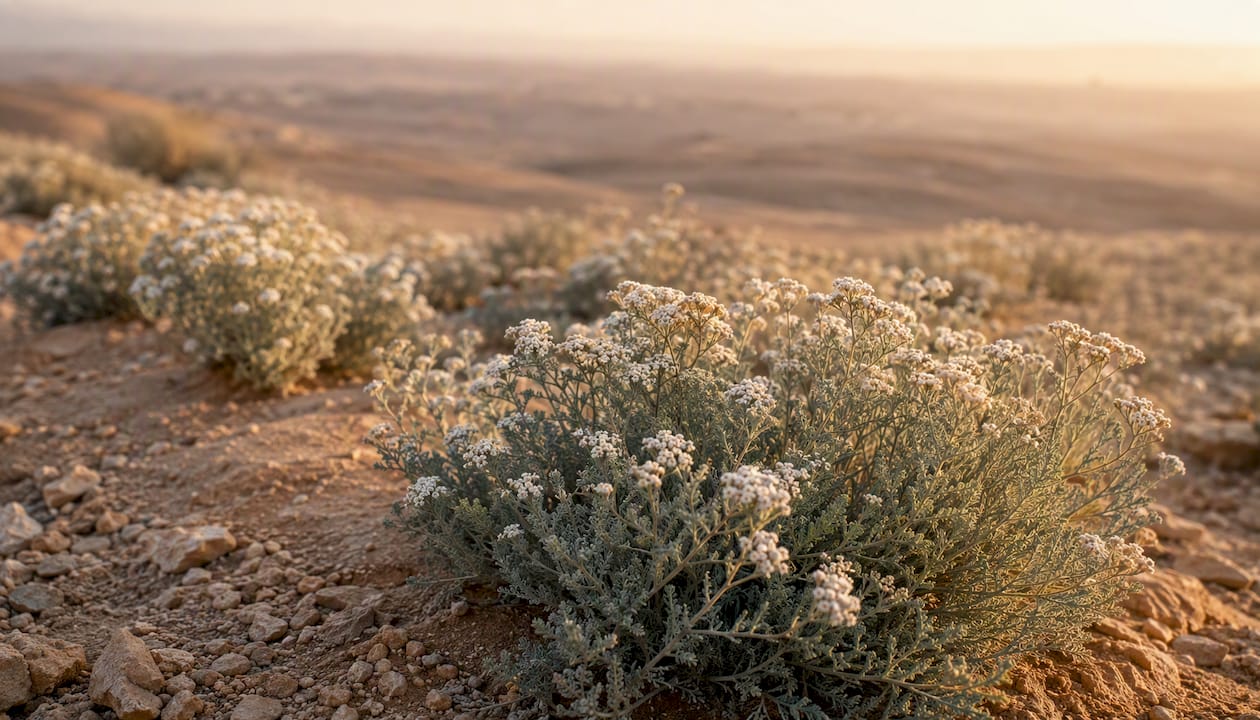
Achillea fragrantissima essential oil is a rare desert-sourced botanical extract with reproducible antioxidant, antibacterial, and anti-inflammatory activity confirmed across multiple peer-reviewed laboratory studies. This is not a folk remedy waiting for science to catch up — the science is already there, and the numbers are worth knowing before you buy or research it.
Biofilm inhibition: Supercritical fluid extraction yields inhibition of 65.12–80.84% against tested bacterial strains, a range that places this oil among the more potent plant-derived antibiofilm candidates in the literature.
Antioxidant activity: DPPH IC50 values of 30.94 and 28.72 mg/L and ABTS IC50s near 37–39 mg/L have been reported for Saudi and Egyptian ecospecies, indicating meaningful free-radical scavenging capacity.
GC-MS markers: α-thujone, artemisia ketone, and myrcenyl acetate are the dominant constituents most commonly flagged in peer-reviewed profiles, though their relative abundance shifts with geography and extraction method.
Key Takeaways
Achillea fragrantissima essential oil has reproducible antioxidant and antibacterial activity in peer-reviewed lab studies, but no human clinical trials exist yet — making verified sourcing and realistic expectations equally important.
Point | Details |
Bioactivity with numeric anchors | Biofilm inhibition of 65.12–80.84% and DPPH IC50s of 28.72–30.94 mg/L confirmed in published assays. |
GC-MS markers to verify | Artemisia ketone and α-thujone are the key authenticity markers; oxygenated monoterpenes should exceed 50% of total composition. |
Safety and dilution | Dilute to 1–2% for general topical use; α-thujone content contraindicates use in epilepsy and pregnancy without medical clearance. |
Supplier documentation required | Always request a batch GC-MS report, extraction method, harvest origin, and third-party COA before purchasing. |
Palinova as a verified source | Palinova’s Achillea Fragrantissima Essential Oil includes batch GC-MS, extraction method disclosure, and traceable Palestinian origin. |
Table of Contents
What the GC-MS data reveals about Achillea fragrantissima essential oil
Antibacterial, antioxidant, and anti-inflammatory evidence from lab studies
How extraction method and harvest conditions change what you get
Traditional and ethnobotanical uses that drove laboratory research
Safety, dilution guidance, and what the lab data does not prove
How to source authentic Achillea fragrantissima oil and verify what you’re buying
Where the evidence is thin and what research should come next
Why traceability is the real differentiator for rare desert oils
Palinova’s Achillea Fragrantissima Essential Oil: research-grade documentation, direct from source
What the GC-MS data reveals about Achillea fragrantissima essential oil
No two batches of this oil smell or perform identically, and the GC-MS data explains why. The chemical profile of Achillea fragrantissima is highly chemotype-dependent, shaped by harvest geography, altitude, season, and extraction method. A genus-level phytochemistry review confirms that sesquiterpene lactones and oxygenated monoterpenes are the principal bioactive markers across Achillea species — and A. fragrantissima is no exception.
Commonly reported major constituents:
α-thujone — typically the dominant oxygenated monoterpene in Egyptian and Palestinian ecospecies; percentage varies widely (often 15–40% depending on extraction)
Artemisia ketone — a characteristic marker of arid-zone Achillea; its presence helps distinguish authentic A. fragrantissima from related species
Myrcenyl acetate — reported as a major constituent in Saudi ecospecies in comparative profiling
4-terpineol — present in moderate amounts; associated with antimicrobial activity across multiple essential oil studies
Spathulenol — a sesquiterpene alcohol found in several Achillea species; useful as a secondary chemotaxonomic marker
Santolina alcohol and β-thujone — reported in smaller fractions; their ratio to α-thujone is a useful authenticity indicator
Piperatone — detected in some Middle Eastern ecospecies; less consistent across geographic sources
The comparative profiling of Saudi and Egyptian ecospecies found meaningfully different dominant constituents between the two populations, with myrcenyl acetate leading in one and α-thujone in the other. That single study makes a compelling case for why “Achillea fragrantissima oil” without a geographic qualifier is an incomplete specification.
Study / Source | Top Constituents Reported | Notable Chemotype Difference |
α-thujone, artemisia ketone, spathulenol | Higher oxygenated monoterpene fraction | |
Saudi ecospecies (MDPI 2023) | Myrcenyl acetate, 4-terpineol, β-thujone | Ester-dominant profile; lower thujone |
Egyptian wild-grown (BMC 2024) | α-thujone, piperatone, santolina alcohol | Supercritical fluid shifts dominant markers vs. HD |
Genus-level review (MDPI 2022) | Sesquiterpene lactones, flavonoids, phenolic acids | Consistent across species; ratios vary |
Pro Tip: When reading a GC-MS certificate for A. fragrantissima, look for artemisia ketone as a species-specific marker. Its absence in a claimed A. fragrantissima oil is a red flag worth investigating. A certificate showing mostly hydrocarbons with minimal oxygenated compounds suggests either a different species or a poorly executed extraction.
Antibacterial, antioxidant, and anti-inflammatory evidence from lab studies
The bioactivity data for A. fragrantissima is more developed than most consumers realize, though it remains almost entirely in vitro. Here is what the peer-reviewed record actually shows.
Biofilm inhibition of 65.12–80.84% was recorded for supercritical fluid-extracted A. fragrantissima oil against tested bacterial strains, with MAHD-extracted oil showing MICs as low as 0.25–2 mg/mL — figures that rank among the stronger plant-derived antibacterial results in the recent literature.
The 2024 BMC Complementary Medicine study is the most methodologically detailed source currently available. It compared hydrodistillation (HD), microwave-assisted hydrodistillation (MAHD), and supercritical fluid (SF) extraction, then ran agar diffusion and broth microdilution assays against multiple bacterial strains. MAHD produced the lowest MICs (0.25–2 mg/mL), while HD showed MICs of 13–52 mg/mL in microdilution — a 50-fold difference that comes entirely from the extraction method, not the plant.
Study-by-study summary:
PMC11546401 (2024): Broth microdilution and biofilm assays; SF extract achieved 65.12–80.84% biofilm inhibition; DPPH/ABTS IC50s in the 28.72–39.02 mg/L range. Limitation: in vitro only; bacterial strains not representative of all clinical pathogens.
MDPI 2023 comparative profiling: DPPH IC50 of 30.94 mg/L (Saudi) and 28.72 mg/L (Egyptian); ABTS IC50s of 39.02 and 37.13 mg/L respectively. Antibacterial activity confirmed by agar diffusion. Limitation: allelopathic activity tested alongside antibacterial — different mechanisms, not directly comparable.
PMC3742169 (A. millefolium comparator): LPS-stimulated RAW 264.7 macrophage assay; NO production reduced by approximately 35% at 80 μg/mL; iNOS, COX-2, TNF-α, and IL-6 all down-regulated. This is an A. millefolium study — it functions as a mechanistic comparator for A. fragrantissima, not direct evidence.
What these assays can and cannot tell you:
DPPH and ABTS assays measure electron-transfer capacity in a test tube. They are reproducible and widely used, but they do not predict bioavailability or in vivo antioxidant effect. Agar diffusion gives a zone of inhibition — useful for screening but sensitive to oil volatility and agar composition. Broth microdilution is more quantitative and gives the MIC directly. Macrophage NO assays (like the RAW 264.7 model) are a step closer to a biological system, but cell-line results still require animal and human validation before any clinical claim is warranted.
The A. millefolium macrophage study is worth citing as a mechanistic template: it shows how Achillea essential oils can suppress inflammatory signaling at the gene-expression level, which gives researchers a testable hypothesis for A. fragrantissima. It does not prove A. fragrantissima does the same thing.
How extraction method and harvest conditions change what you get
Extraction is not a neutral step. The BMC 2024 study makes this concrete: supercritical fluid extraction yielded 1.50 mL v/w of oil, and the resulting extract showed dramatically different dominant markers compared to hydrodistilled material from the same plant source. MAHD produced the most potent antibacterial fractions. HD yielded the most familiar aromatic profile but the weakest MICs.
What this means for buyers and researchers:
A product labeled simply “Achillea fragrantissima essential oil” without specifying extraction method could be any of three meaningfully different chemical products.
Steam distillation and hydrodistillation produce the classic aromatherapeutic profile most consumers recognize; these are the appropriate formats for topical and aromatic use.
MAHD and SF extracts may show stronger antibacterial activity in lab assays but are less standardized for consumer use.
Verification checklist for lab-grade or consumer oil:
Batch GC-MS report with peak identification and percentage composition
Extraction method stated explicitly (HD, MAHD, SF, or steam distillation)
Harvest location (country, region, or GPS coordinates) and harvest date
Voucher specimen or herbarium accession number confirming botanical identity
Percentage of oxygenated monoterpenes reported (expect >50% for authentic desert-harvested material)
Certificate of Analysis (COA) from a third-party or in-house accredited laboratory
Pro Tip: Ask your supplier for the isotope ratio analysis (IRMS) if you suspect adulteration. Synthetic α-thujone has a distinct carbon isotope signature compared to plant-derived material. Also request the full GC-MS trace, not just the summary table — the minor peaks below 1% are where adulterants and incorrect chemotypes most often show up. A supplier who cannot provide the full trace is not operating at research grade.
Numbered steps for supplier verification:
Request the batch-specific GC-MS report before ordering.
Confirm the extraction method matches your intended application.
Cross-reference the dominant constituents against published profiles for the stated geographic origin.
Ask for the harvest date and location; wild-harvested desert material should have a specific collection record.
Verify third-party testing or laboratory accreditation credentials.
Traditional and ethnobotanical uses that drove laboratory research
Achillea fragrantissima has been used medicinally across North Africa, the eastern Mediterranean, and the broader Middle East for generations. In Egypt, it is known locally as “qaysoom” and has been applied as a topical wash for skin infections, a steam inhalation for respiratory complaints, and a decoction for gastrointestinal discomfort. In the Levant and parts of the Arabian Peninsula, the dried herb has been used in wound care and as an anti-inflammatory poultice.
[
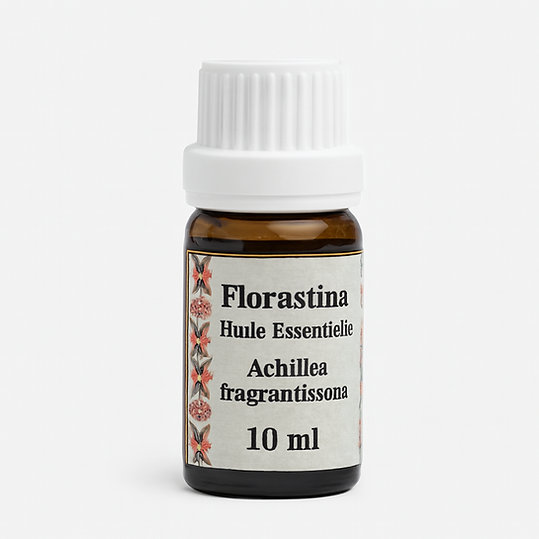
These documented folk uses are not anecdotal noise — they are the hypothesis engine that drove the laboratory work. When researchers surveyed medicinal plants of arid regions, they found hundreds of locally used taxa with minimal formal study, and A. fragrantissima was among the species flagged as pharmaceutically promising precisely because its traditional indications aligned with testable bioactivity mechanisms.
How ethnobotany shaped the assay selection:
Skin infection uses → antibacterial and biofilm inhibition assays against Staphylococcus aureus, E. coli, and Pseudomonas aeruginosa
Inflammation and wound-healing claims → macrophage NO assays, COX-2 pathway studies
Gastrointestinal applications → antispasmodic and antimicrobial screening
Respiratory uses → volatile compound profiling (relevant to inhalation delivery)
The genus-level phytochemistry review documents how sesquiterpene lactones and flavonoids — the same compound classes concentrated in A. fragrantissima — are consistently linked to the anti-inflammatory and antimicrobial activities reported across Achillea species. Desert-adapted plants biosynthesize these metabolites as survival mechanisms against UV radiation, desiccation, and microbial pressure, which likely explains why arid-zone ecospecies tend to show higher oxygenated monoterpene fractions than their temperate relatives.
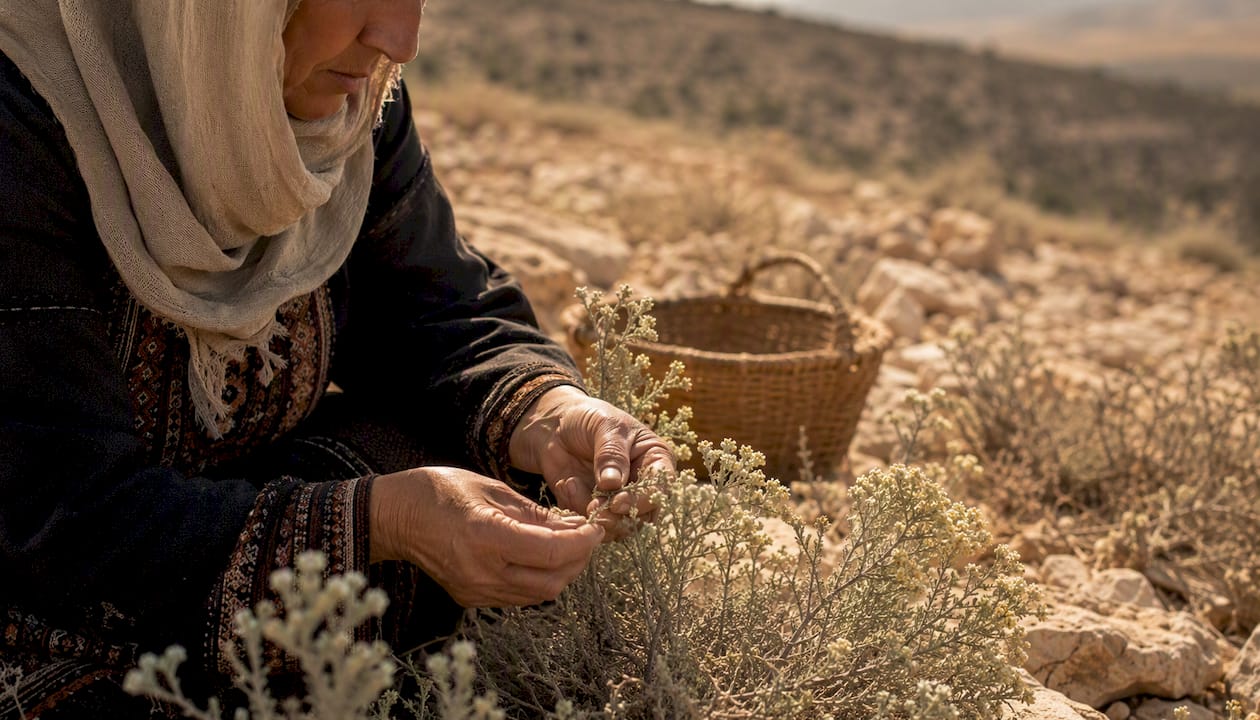
Ethical sourcing matters here. Wild-harvested desert botanicals are vulnerable to overharvesting when demand rises without supply-chain oversight. Responsible collection involves working with local communities, respecting seasonal harvest windows, and leaving sufficient plant material for natural regeneration — practices that also protect the chemical consistency of the oil, since stressed or immature plants produce different secondary metabolite profiles.
Safety, dilution guidance, and what the lab data does not prove
α-thujone, the dominant constituent in many A. fragrantissima profiles, is a neurotoxic compound at high doses. This is well established in the broader monoterpene literature. At the concentrations present in properly diluted topical applications, the risk is low, but it is not zero — and it is the primary reason this oil should never be used undiluted on skin or taken internally without clinical supervision.
A critical reminder: Laboratory bioactivity results — including the biofilm inhibition and IC50 values cited in this article — are in vitro findings. They do not constitute proof of clinical efficacy in humans. Consult a qualified healthcare provider before using any essential oil therapeutically, particularly if you are pregnant, nursing, have a seizure disorder, or are taking medications metabolized by the liver.
Topical dilution guidance:
Use Case | Recommended Dilution | Carrier Oil Example |
General skin application | 1–2% | Jojoba, sweet almond |
Targeted spot treatment | 2–3% | Rosehip, argan |
Massage blend | 0.5–1% | Coconut, grapeseed |
Research patch test | 0.1–0.5% | Mineral oil (standardized) |
Key safety points:
Always perform a patch test on a small area of skin before broader topical use; leave for 24 hours and check for redness, itching, or swelling.
Avoid use near eyes, mucous membranes, or broken skin.
α-thujone content makes this oil contraindicated for individuals with epilepsy or seizure disorders.
Pregnant and breastfeeding individuals should avoid therapeutic use without medical clearance.
Store in amber glass, away from heat and light, at 59–68°F (15–20°C); properly stored oil retains its chemical profile for 1–2 years. Oxidized oil (detectable by a sharp, rancid shift in aroma) should not be used on skin.
For broader context on antioxidant oils and topical formulation.
Palinova’s skincare content covers dilution principles that apply across the essential oil category.
How to source authentic Achillea fragrantissima oil and verify what you’re buying
The market for rare essential oils has a well-documented authenticity problem. Oils are mislabeled, adulterated with cheaper monoterpenes, or sourced from the wrong species entirely. For A. fragrantissima specifically, the risk is compounded by the fact that most buyers cannot distinguish it from related Achillea species by smell alone.
Documentation checklist — request all of these before purchasing:
Batch-specific GC-MS report with full peak list and percentage composition
Extraction method (HD, MAHD, or steam distillation for consumer use)
Harvest region and date (country, province, or GPS coordinates)
Voucher specimen or herbarium accession number confirming botanical identity
Certificate of Analysis from an accredited third-party laboratory
Sustainability statement or wild-harvest protocol
Numbered supplier verification steps:
Ask for the GC-MS report and confirm artemisia ketone is present — its absence suggests the wrong species or significant adulteration.
Verify the oxygenated monoterpene fraction exceeds 50% of total composition for desert-harvested material.
Check that the extraction method is stated and matches the intended use case.
Confirm the supplier can trace the oil to a specific harvest batch, not just a country of origin.
Look for third-party laboratory accreditation (ISO 17025 or equivalent) on the COA.
Palinova’s Achillea Fragrantissima Essential Oil is sourced from Palestinian desert botanicals with traceability documentation, making it a practical option for both informed consumers and researchers who need a verified starting material. The brand’s approach to Palestinian desert botanicals is documented in detail for those who want to understand the sourcing context before ordering.
Where the evidence is thin and what research should come next
The laboratory foundation for A. fragrantissima is solid for a plant-derived compound at this stage of investigation. The clinical foundation is essentially nonexistent. That gap is the most important thing a researcher or informed consumer should understand about this oil right now.
Major evidence gaps:
No published human clinical trials for any indication
No standardized chemotype-to-activity mapping (we know Saudi and Egyptian ecospecies differ chemically, but we do not know whether that difference translates to meaningfully different bioactivity)
No dermal sensitization or repeated-dose toxicity data in humans
No pharmacokinetic data (absorption, distribution, metabolism, excretion after topical or inhalation exposure)
No mechanism-of-action studies beyond cell-line assays for A. fragrantissima specifically
Prioritized research roadmap:
Near-term: Standardized GC-MS profiling across at least five geographic ecospecies using a single extraction method, with parallel bioactivity assays — this would establish which chemotype markers correlate with which activities.
Near-term: Dermal sensitization patch-test series in healthy volunteers, following OECD 406 or equivalent protocol, to establish a safety baseline for topical use.
Medium-term: Small-scale clinical safety trials (Phase I equivalent) for topical application in a defined indication (wound care or anti-inflammatory skin condition).
Medium-term: In vivo mechanism-of-action studies (rodent models) targeting the iNOS/COX-2 pathway, using the A. millefolium macrophage data as a mechanistic template.
Medium-term: Formulation stability studies — how does the oil’s bioactive profile change in an emulsion, cream, or serum base over 12–24 months?
Desert-adapted secondary metabolites are a genuinely underexplored chemical space. The arid-region medicinal plant survey literature consistently flags that many locally documented taxa have never been subjected to formal pharmacological study. A. fragrantissima is one of the better-documented exceptions, but “better than nothing” is not the same as “adequately studied.” Funding bodies focused on neglected natural products and ethnopharmacology-driven drug discovery would find this a defensible research priority.
Why traceability is the real differentiator for rare desert oils
Working with Palestinian desert botanicals is not like sourcing lavender from Provence. The supply chains are shorter, the harvest volumes are smaller, and the documentation standards in the broader essential oil trade are often inadequate for a plant this geographically specific.
Palinova’s investment in traceable, small-batch sourcing of A. fragrantissima comes from a straightforward observation: the chemical variability documented in the peer-reviewed literature is real, and it means that an oil without a harvest record is an oil of unknown composition. That is fine for a candle. It is not fine for a consumer who wants the antioxidant and antibacterial properties the research describes, or for a researcher who needs a reproducible starting material.
Supporting local Palestinian harvesters is also not incidental to the product’s quality — it is part of what makes traceability possible. When the supply chain is short and the harvesters are known, the harvest date, location, and plant maturity at collection are documentable facts rather than estimates. Palinova’s science and uses resource covers the practical application context for anyone who wants to understand how the oil fits into a broader wellness or research protocol.
Palinova’s Achillea Fragrantissima Essential Oil: research-grade documentation, direct from source
Palinova offers its Achillea Fragrantissima Essential Oil with batch-specific GC-MS documentation, a stated extraction method, and a traceable Palestinian origin — the three things the peer-reviewed literature makes clear you need before trusting any oil in this category.
Available in 10 mL (consumer and trial use) and 30 mL (research and formulation use) formats, the oil is hydrodistilled to preserve the oxygenated monoterpene profile that defines authentic desert-harvested A. fragrantissima. Researchers who need a COA, bulk samples, or documentation for a specific study protocol can contact Palinova directly through the product page. Health-conscious consumers who want a verified, ethically sourced oil without the guesswork of the broader market can order the same batch-documented product. For those exploring Palinova’s broader range of Palestinian botanicals, the wildcrafted cypress essential oil is another traceable, steam-distilled option worth reviewing alongside it.
Sources
These are the primary peer-reviewed papers and reviews that underpin the claims in this article. Read the original methods sections alongside any product COA when validating a sample.
When validating a product sample, read the batch GC-MS report against the constituent profiles in the MDPI 2023 comparative study — it is currently the most detailed geographic chemotype reference available for this species.
This article is general information, not a substitute for advice from a qualified doctor. Consult a qualified healthcare professional about your own circumstances before acting on anything here.
FAQ
What antibacterial activity does Achillea fragrantissima oil show against Staphylococcus aureus?
Published broth microdilution assays report MICs as low as 0.25–2 mg/mL for MAHD-extracted A. fragrantissima oil against tested bacterial strains including S. aureus, with biofilm inhibition reaching 65.12–80.84%(https://pmc.ncbi.nlm.nih.gov/articles/PMC9241682/) for supercritical fluid extracts. These are in vitro results and do not predict clinical outcomes.
Does Achillea fragrantissima essential oil help with dark spots?
No published clinical data directly links A. fragrantissima oil to hyperpigmentation reduction. Its antioxidant activity (DPPH IC50 near 28–31 mg/L) is documented in lab assays, and antioxidants broadly support skin health, but a specific dark-spot claim requires human trial evidence that does not yet exist for this species.
How does Achillea fragrantissima compare to the most sought-after essential oils?
Frankincense and rose otto are typically cited as the most commercially valuable essential oils. A. fragrantissima occupies a different niche: it is rare by geography and limited harvest volume rather than by extraction difficulty, and its research profile (antibacterial, antioxidant, anti-inflammatory in vitro) is more developed than many comparable desert-sourced oils. Palinova’s frankincense essential oil offers a useful comparison point for buyers exploring high-value botanical oils.
What essential oil is most active against Staphylococcus aureus?
Tea tree oil (Melaleuca alternifolia) has the most extensive published antibacterial record against S. aureus across clinical and laboratory settings. A. fragrantissima shows competitive MICs in recent assays, but the volume of supporting research is far smaller. Extraction method matters significantly — MAHD-extracted A. fragrantissima oil outperforms hydrodistilled material by a wide margin in direct comparisons.
How do I know if an Achillea fragrantissima oil is authentic?
A COA from an ISO 17025-accredited laboratory and a stated harvest origin are the minimum documentation standards for a verified product.
Recommended


Comments