
What You Need to Know About Inula Viscosa Oleoresin
- Palinova
- Aug 20
- 8 min read
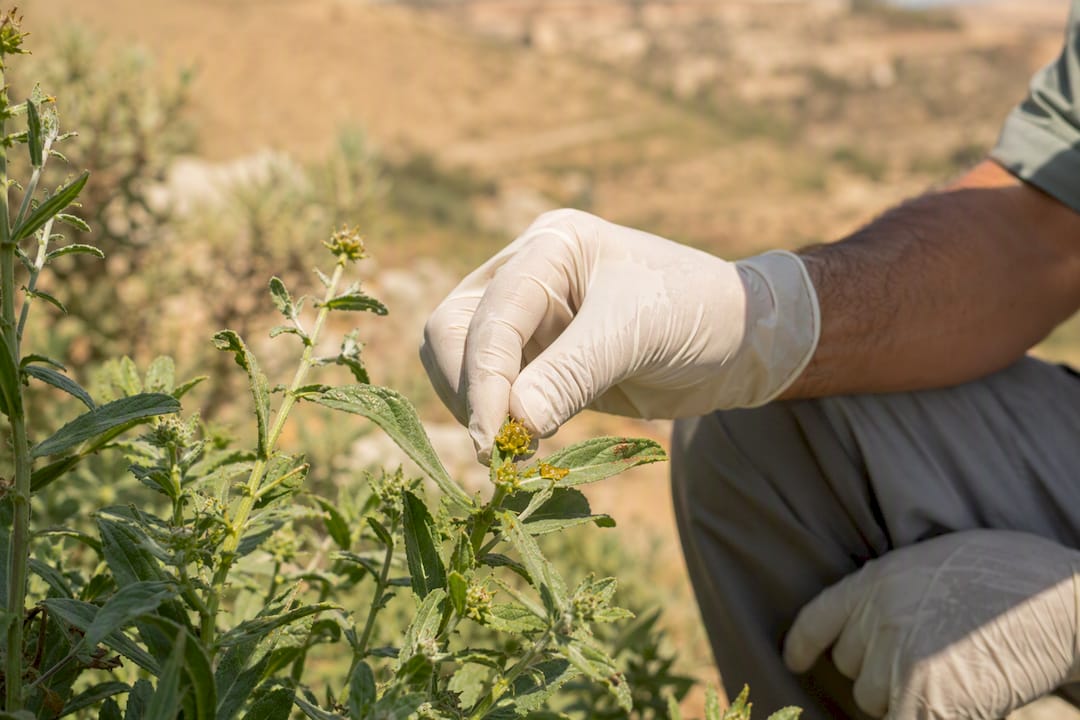
Inula viscosa oleoresin is the concentrated, lipophilic resin harvested from the glandular trichomes of the plant, and it matters because this sticky exudate carries some of the highest concentrations of sesquiterpene lactones and phenolic compounds found anywhere in the plant’s tissue. This is not an essential oil, and it is not a watery tea. It is closer to the plant’s own chemical defense system, distilled into a paste.
A few facts anchor what you are actually looking at:
GC‑MS and LC‑MS phytochemical profiling routinely identifies dozens of distinct compounds in a single oleoresin batch, from volatile terpenes to heavier phenolic acids.
In vitro assays have repeatedly shown antioxidant and antifungal activity tied to specific molecules like tomentosin and lupeol.
Almost all of the supporting evidence comes from lab and field studies, not human clinical trials, so any natural-health application should be framed as promising rather than proven.
Key Takeaways
Inula viscosa oleoresin delivers its strongest, best-documented effects in vitro and in field-level antifungal trials, while human clinical evidence remains largely absent.
Point | Details |
Oleoresin is not essential oil | It retains both volatile and non-volatile compounds, unlike steam-distilled essential oils. |
Solvent choice drives composition | Organic solvents like n‑hexane extract lipophilic sesquiterpene lactones; methanol concentrates phenolics. |
Evidence stays preclinical | Antioxidant, antimicrobial, and cytotoxic findings come from in vitro assays and field trials, not human trials. |
Safety requires caution | No established human dosing exists; patch-test topical blends and avoid use in pregnancy or children. |
Palinova offers tested sourcing | Palinova’s oleoresin is wildcrafted from Palestinian sources with GC‑MS/LC‑MS lot testing behind it. |
This article is general information, not a substitute for advice from a qualified doctor. Consult a qualified healthcare professional about your own circumstances before acting on anything here.
Table of Contents
What Is Inula Viscosa Oleoresin, Exactly?
Oleoresin is the plant’s raw resinous secretion, gathered directly from the sticky glandular hairs that cover Inula viscosa leaves and stems (the plant is also classified as Dittrichia viscosa). It differs from an essential oil in a fundamental way: essential oil is steam-distilled and contains only the volatile fraction, while oleoresin retains the full spectrum of both volatile and non-volatile compounds, including heavier sesquiterpene lactones and phenolic acids that never make it into a distillate. Methanolic extracts and aqueous extracts are different again. They are solvent-based preparations made by soaking plant material rather than harvesting the resin itself, and the solvent chosen determines which compound classes end up in the final product.
That distinction matters for anyone comparing lab reports. A methanolic leaf extract can post higher antioxidant readings and higher phenolic content than an aqueous extract of the same plant material, simply because methanol pulls a broader range of phenolics out of the tissue. Water often leaves the lipophilic fraction behind entirely. An oleoresin sits at the concentrated end of that spectrum. If you are evaluating a product, ask which extraction method produced it before you compare potency claims across brands.
What Compounds Make Up the Phytochemical Profile?
The phytochemical profile of Inula viscosa oleoresin breaks into a handful of well-documented compound classes, and each one shows up consistently across independent studies:
Sesquiterpene lactones: tomentosin, inuviscolide (also called costic acid), and their iso-forms, considered the plant’s signature defensive chemistry.
Terpenoids and triterpenoids: including lupeol, linked to much of the antimicrobial and anti-inflammatory signal in lab assays.
Phenolic acids: caffeic acid derivatives and chlorogenic acids, with dicaffeoylquinic acids sometimes making up a large share of the total phenolic fraction in a given analytical run.
Flavonoids: quercetin derivatives and acacetin, frequently the dominant peaks in LC‑MS chromatograms.
Volatile constituents: caryophyllene oxide and aromadendrene, both easily picked up by GC‑MS headspace analysis.
A 2024 phytochemical study on a Turkish population of the plant reported a methanol extract with a total phenolic content of 236.78 ± 7.63 mg GAE/g and total flavonoid content of 94.36 ± 1.86 mg QE/g, with LC‑MS/MS confirming acacetin, quercetin, chlorogenic acid, and protocatechuic acid as the dominant identified compounds.
Statistic callout: A well-run methanol extract can carry nearly a quarter-gram of gallic acid equivalent phenolics per gram of dry material. That is a dense chemical payload for a wild Mediterranean shrub most people walk past without a second glance.
GC‑MS handles the volatile and lipophilic sesquiterpene fraction, while LC‑MS (often paired with high-resolution mass spec) is what quantifies the caffeoylquinic acids and flavonoid glycosides. A COA that only shows one of these techniques is only telling you half the story.
How Does Extraction Method Change the Final Product?
Solvent choice is the single biggest variable separating one Inula viscosa product from another, and it decides which chemical fraction you actually get. Water macerates are the gentlest option and the least complete. They tend to miss the lipophilic compounds responsible for much of the antifungal activity, because those molecules simply do not dissolve well in water. Organic solvents behave very differently.
n‑Hexane and chloroform pull the resinous, lipophilic sesquiterpene lactones most efficiently, which is why they dominate antifungal research.
Acetone and ethyl acetate land in the middle, capturing a mixed profile of terpenoids and some phenolics.
Methanol and ethanol concentrate phenolics and flavonoids most effectively, which is why nearly every antioxidant study in the literature leans on a methanolic extract.
An emulsion concentrate made from an acetone/n‑hexane extract has shown effective field control of late blight and downy mildew in crop trials, a result that a water-based preparation of the same plant material could not replicate.
For quality checks, ask any supplier for a Certificate of Analysis built on GC‑MS and LC‑MS fingerprints, plus residual solvent testing, heavy metal and pesticide screens, and microbial limits. Wildcrafted material from warmer, drier growing regions is widely believed within the trade to secrete more defensive resin, though that remains a sourcing heuristic rather than a lab-confirmed rule. Store any oleoresin in amber, light-blocking glass. Heat and UV exposure degrade sesquiterpene lactones faster than almost any other compound class in the profile.
Pro Tip: If a COA labeled “pure oleoresin” shows a weak or absent sesquiterpene lactone signal on its GC‑MS trace, that is a red flag. It usually means the batch was cut with a lower-potency carrier or over-diluted before testing.
What Do Studies Show About Its Biological Effects?
Documented bioactivity clusters into a few categories, and the strength of evidence varies quite a bit between them.
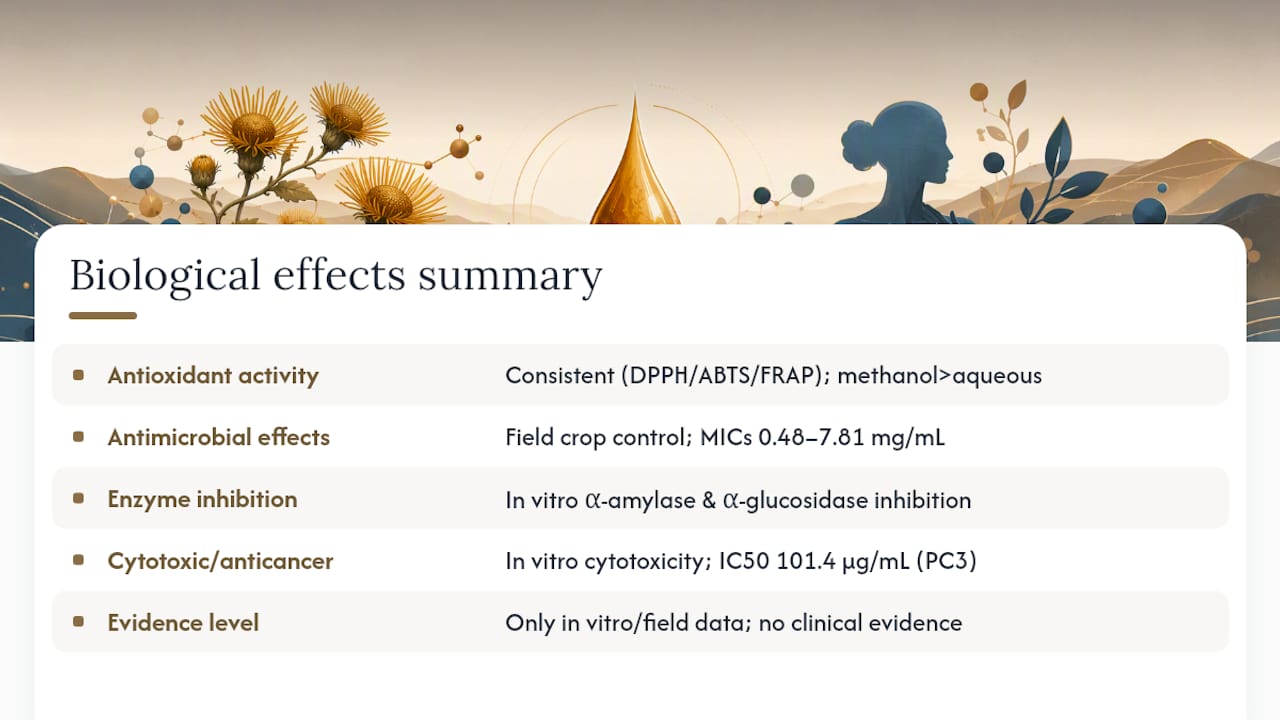
Antioxidant activity shows up consistently across DPPH, ABTS, and FRAP assays, generally strongest in methanolic extracts rather than aqueous ones, per the comparative extract study referenced earlier.
Antimicrobial and antifungal effects carry some of the best field-level support in the entire body of research. Organic solvent extracts formulated as emulsion concentrates have controlled Plasmopara viticola and Phytophthora infestans in actual crop trials, not just petri dishes. A separate study reported antimicrobial MICs ranging from 0.48 to 7.81 mg/mL against tested microbial strains.
Field trials using acetone and n‑hexane extractions formulated into emulsion concentrates showed reliable control of late blight and downy mildew, one of the strongest real-world signals for the plant’s lipophilic sesquiterpene fraction outside a laboratory setting.
Enzyme inhibition relevant to diabetes has been observed in vitro, with methanolic extracts inhibiting both α‑amylase and α‑glucosidase, enzymes involved in carbohydrate digestion.
Cytotoxic and anticancer signals exist but stay firmly in vitro. A methanol extract showed selective cytotoxicity against breast cancer cell lines while sparing normal PBMCs, and a separate assay reported an IC50 near 101.4 µg/mL against prostate cancer cells (PC3) at 48 hours, alongside down-regulation of autophagy genes.
Every one of these findings is in vitro or field-level agricultural data. None of it constitutes clinical evidence in humans, and a broader review of the plant’s chemistry confirms that gap explicitly.
Is It Safe to Use, and How?
Treat Inula viscosa oleoresin the way you would treat any concentrated botanical resin: with respect for its potency and honesty about what is not yet known. There is no established human dosing for internal use, no clinical safety data, and no regulatory approval for ingestion as a therapeutic agent. That alone should keep internal use limited to research contexts under professional oversight, not casual self-dosing.
For topical formulation, a handful of practical rules apply:
Always patch-test on a small area of skin (inner forearm works well) and wait 24 to 48 hours before wider use.
Dilute in a carrier oil. A conservative starting range for a research-stage topical blend runs from 0.5% to 2% oleoresin by volume.
Avoid use during pregnancy and avoid use in children entirely. There is no safety data covering either group.
Ask suppliers for contaminant testing covering heavy metals, pesticide residue, and microbial load, especially for wildcrafted material harvested near roadsides or agricultural runoff.
Skip internal use altogether unless you are working under clinical or research supervision with a product carrying full contaminant and identity testing.
Pro Tip: Start any new topical blend at 0.5% dilution in a neutral carrier oil like jojoba or sweet almond, patch test on the inner forearm, and only increase concentration if there is zero reaction after 48 hours.
Where the evidence is strongest, topical use in low-dilution skincare blends, aromatherapy diffusion, and controlled lab research, the plant’s resin has real chemical substance behind it, similar to products like the BYOMA Barrier Boost Essence that emphasize antioxidant and skin barrier support. Where the evidence is weakest, unsupervised internal dosing, treat caution as the default, not the exception.
[
A Note on Sourcing and Testing
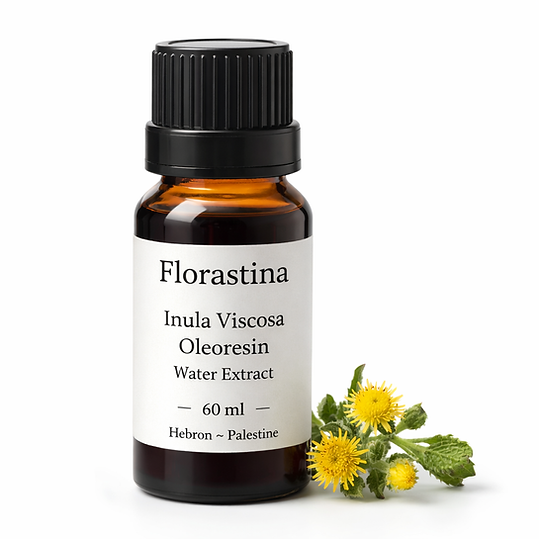
Palinova sources Inula viscosa material directly from Palestinian growing regions and relies on GC‑MS and LC‑MS testing to approve each lot before it becomes a finished product. Sustainability and traceability guide which harvests get used at all. Readers who want to see how a phytochemical profile translates into an actual product can look at the science behind the oleoresin on the Palinova blog.
Where To Find A Tested Oleoresin
If you have read this far, you already understand why a home-brewed water extract from foraged leaves will never match what a properly tested oleoresin delivers. Water misses the lipophilic sesquiterpene fraction almost entirely, and without a GC‑MS or LC‑MS report, you have no way to confirm what you actually made, or whether it is contaminated with soil metals or pesticide drift from a roadside harvest.
Palinova’s Inula Viscosa Oleoresin comes from wildcrafted Palestinian sources with lab documentation behind each lot, so you are not guessing at potency or purity. That matters most for practitioners and formulators who need a consistent starting material rather than a batch that varies every time someone forages a new patch. Pair it with a carrier like Barbary Fig Oil for topical blends, or browse the full skincare line built around Inula viscosa and other Palestinian botanicals. If you want guidance on dilution ratios or formulation for a specific skin concern, Palinova offers free aromatherapy consultations to help you get the ratio right before you commit a full batch. Check current product listings and available lab documentation on the product page to get started.
Sources
FAQ
Are Oleoresins Safe to Eat?
There is no established human dosing for ingesting Inula viscosa oleoresin, and no clinical safety data supports internal use, so it should be limited to research or professional oversight rather than casual consumption.
Is Inula Viscosa (False Yellowhead) Invasive?
Inula viscosa, sometimes called false yellowhead, is a fast-colonizing Mediterranean shrub that spreads aggressively in disturbed soils and roadsides, which is part of why wildcrafted supply tends to be abundant rather than scarce.
What Are the Benefits of Inula Viscosa Oleoresin?
Lab studies link it to antioxidant, antimicrobial, antifungal, and enzyme-inhibiting activity, with the strongest real-world evidence coming from field trials showing effective control of crop diseases like late blight.
How Does Extraction Method Affect Potency?
Organic solvents such as methanol and n‑hexane extract far more of the plant’s lipophilic and phenolic compounds than water does, which is why aqueous extracts consistently test weaker in antioxidant and antifungal assays.
How Do I Use Inula Viscosa Oleoresin Topically?
Dilute it in a carrier oil starting around 0.5% to 2%, patch-test on the inner forearm, and wait 24 to 48 hours before wider application to check for irritation.
Recommended


Comments