
White Zuta Oil From the Levant: 29% Pulegone, Uses, Safety
- Palinova
- 5 hours ago
- 7 min read
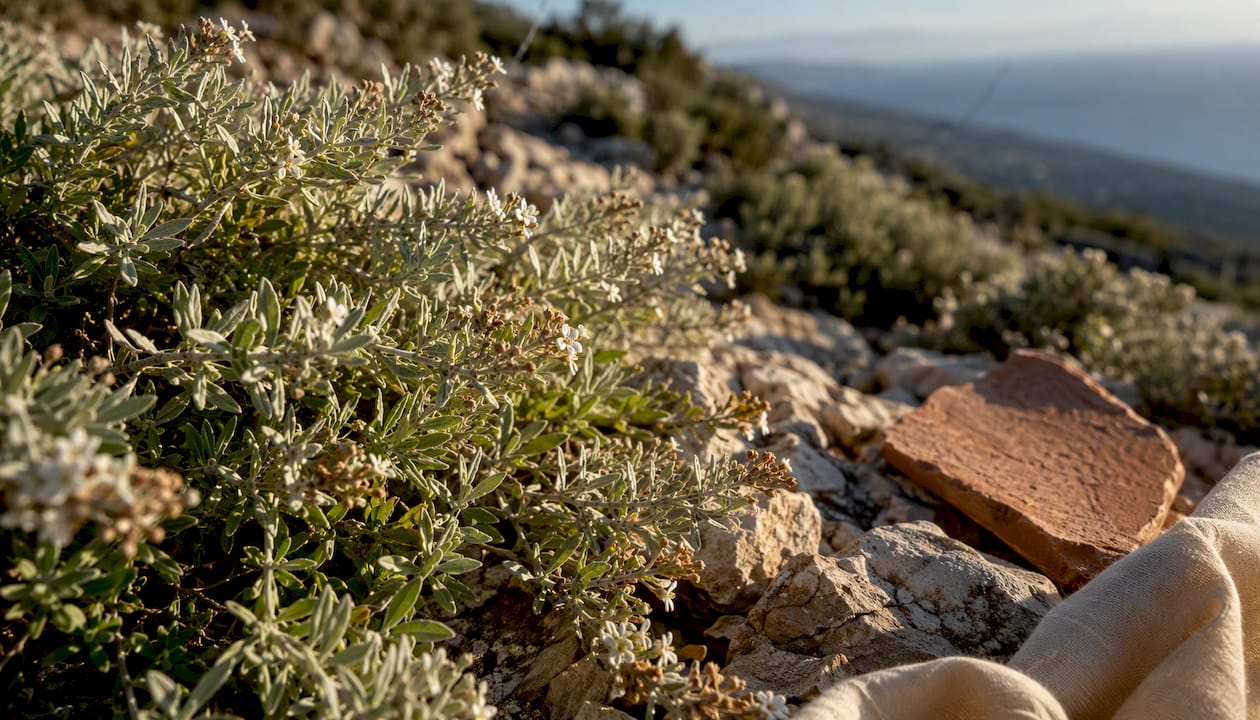
White Zuta oil is the steam-distilled essential oil of Micromeria fruticosa, a menthol-scented Mediterranean shrub long used in Levantine folk medicine. Its aroma comes from pulegone, menthone, and menthol (or isomenthol), compounds concentrated enough that undiluted skin contact isn’t advisable. Used correctly, in small diluted amounts, it fits the same aromatic and topical roles as other minty herbal oils, but the pulegone content is the one fact every buyer needs to know before opening the bottle.
TL;DR:
Pulegone makes up roughly 30% of White Zuta oil, posing a safety risk, especially at high or repeated doses, due to potential liver toxicity.
The chemical composition of the oil varies depending on the plant’s harvest time, soil, and regional growth conditions, affecting potency and aroma.
Most research on Micromeria fruticosa shows antimicrobial and antioxidant activity only at high concentrations in lab settings, not proven for therapeutic use.
For safe topical use, dilute the oil to 0.5 percent or less, test on skin first, and avoid ingestion or unprofessional use during pregnancy or with pets.
Palinova’s White Zuta oil is wildcrafted from Palestinian hillsides, steam-distilled, and supplied with batch-specific GC–MS reports for quality assurance.
Table of Contents
What Is Micromeria Fruticosa and Where Does It Grow?
Micromeria fruticosa goes by several names: White Zuta, Zuta Levana, white hyssop savory, or white-leaved savory, depending on the region and the seller. It’s a low, evergreen shrub, usually 20 to 80 centimeters tall, native to the eastern Mediterranean, including the hillsides of the Levant and parts of the Middle East where it grows wild among rocky, sun-baked terrain.
Distillers use the aerial parts, meaning the leaves and flowering tops, since that’s where the aromatic oil glands concentrate. Where the plant grows and when it’s harvested change its chemistry noticeably. A batch cut at peak flowering in one region can smell and behave differently from a batch harvested earlier or grown in different soil, which is part of why heritage and provenance matter as much as the species name on the label.
How Has White Zuta Been Used Traditionally?
Long before anyone ran a gas chromatograph on this plant, Levantine households were steeping it as a digestive tea and pressing crushed leaves onto minor wounds. Traditional practice treated Zuta Levana as a kitchen remedy as much as a ceremonial herb, and much of what modern aromatherapy does with the essential oil traces directly back to those habits.
Brewed as a hot infusion for stomach upset and mild indigestion
Applied as a crushed-leaf poultice on cuts, insect bites, or sore muscles
Inhaled as a steam to ease chest congestion and clear the sinuses
Used as a cooling tea during fevers or hot weather
Modern diffuser blends and steam inhalations borrow that same respiratory logic. It’s a natural bridge: the plant that soothed a grandmother’s cough syrup now shows up in a glass amber bottle labeled “essential oil.”
How Is White Zuta Essential Oil Made?
White Zuta oil comes from steam distillation. Fresh or lightly wilted aerial parts sit in a still while steam passes through, pulling the volatile monoterpenes out of the plant tissue and carrying them into a condenser, where oil and water separate. This is the same basic process used for lavender, peppermint, and most Mediterranean herb oils, and it’s why the yield is small: essential oils are concentrated fractions, often requiring several kilograms of plant material for a single small bottle.
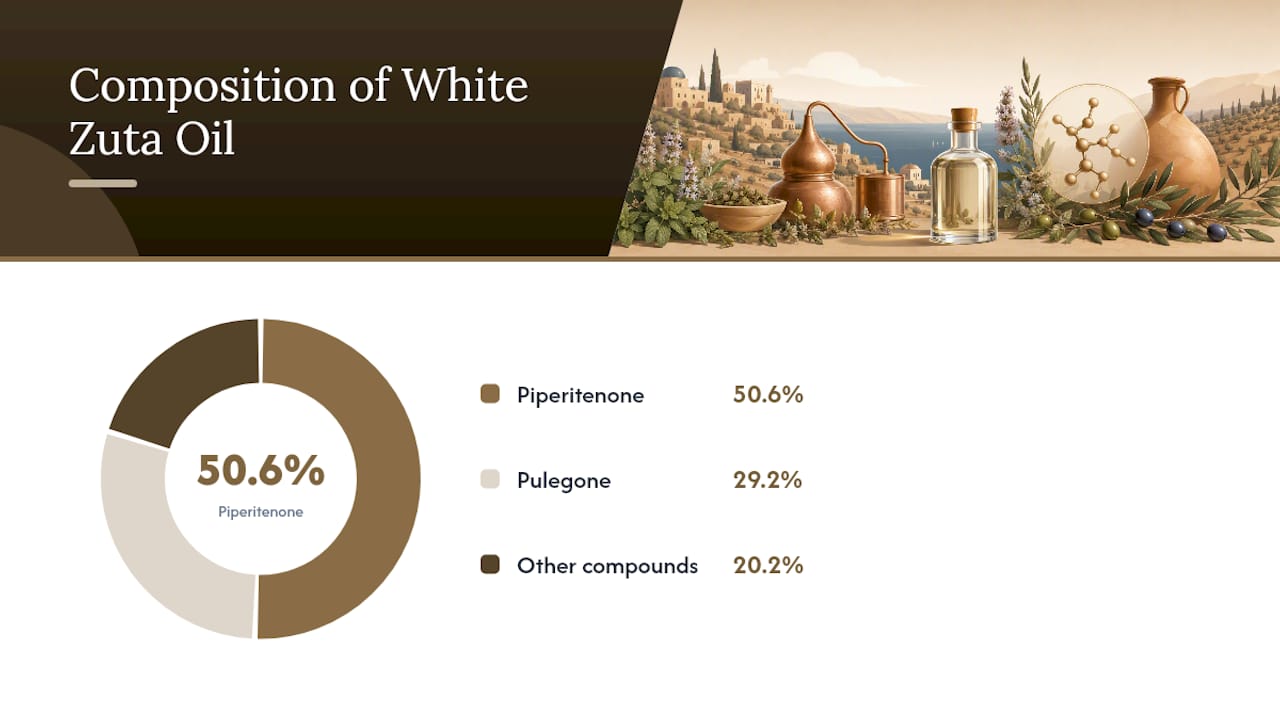
GC–MS analysis, the standard method for identifying what’s actually in an essential oil, consistently flags a few dominant compounds in Micromeria fruticosa oil.
Phytochemical snapshot: One JSFA study on hydrodistilled samples reported piperitenone at roughly 50.6% and pulegone at roughly 29.2% of the oil’s composition, with menthone and menthol also present depending on the sample.
Pulegone: the compound most responsible for the minty, slightly camphor-like bite and the main safety concern
Menthone and menthol (or isomenthol): contribute the cooling, peppermint-adjacent character
Piperitenone: reported as dominant in some hydrodistilled samples
Drying method, plant part, and growing region all shift these ratios, which is essentially the plant’s chemotype. Two bottles labeled identically can smell and perform differently depending on where and how the material was processed.
What Are the Real Benefits of White Zuta Oil?
Aromatherapy circles credit White Zuta with mental clarity, stress relief, and that sharp “clearing” sensation you get from anything in the mint family. Those effects line up with how people have always used it: a few drops in a diffuser, or a steam bowl, during a stuffy-nose week.
Diffused or inhaled for a perceived focus and alertness boost
Used in steam inhalation for traditional respiratory or cold support
Applied topically, always diluted, for localized cooling or minor soothing
Blended into massage oils for its warm, herbal top note
Here’s the honest caveat: a lot of the antimicrobial and antioxidant data on this plant comes from lab work on solvent extracts (ethanol, water) or in vitro assays, not from clinical trials on the essential oil itself. Solvent extracts often show stronger effects than the essential oil because nonvolatile compounds concentrate differently in each preparation, so a strong result in a petri dish doesn’t automatically translate to a therapeutic claim for the oil in your diffuser.
Pro Tip: If you want the traditional respiratory benefit, steam inhalation is the gentler entry point. Save diluted topical blends for after you’ve confirmed you tolerate the aroma and don’t react to skin contact.
How Should You Dilute White Zuta Oil Safely?
Pulegone is the reason White Zuta oil demands respect. In concentrated or repeated high doses, it’s associated with liver toxicity, which is exactly why solvent extracts and essential oils get evaluated separately in the pharmacology literature. Essential oils are multicomponent mixtures, and dose matters as much as ingredient.
Keep topical facial or body blends around 0.5% to 2%, roughly 3 to 9 drops of essential oil per ounce (30 ml) of carrier oil.
Drop to 0.5% or lower for sensitive skin, children, or first-time use.
Patch-test on the inner forearm and wait 24 hours before wider application.
Never ingest the oil, and keep it out of reach of pets and away from pregnant or nursing individuals without professional guidance.
Store the bottle in dark glass, capped tightly, away from heat and light, to slow oxidation.
Safety note: Practitioners familiar with pulegone-containing oils generally cap topical dilution at 1% or below and lean on inhalation methods over frequent skin application, precisely because the cooling sensation can mask how strong the compound actually is. For specific ratios, the dilution guidance Palinova uses for other Mediterranean oils applies the same logic here.
What Does the Research Actually Say?
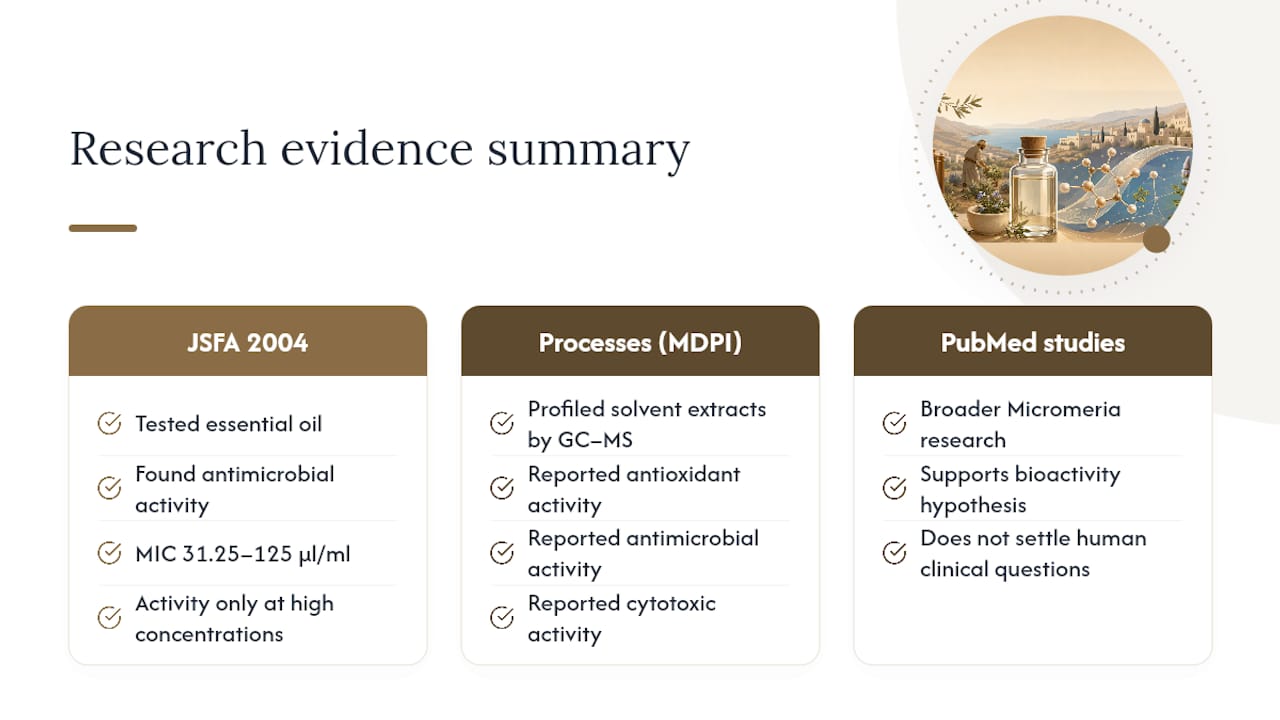
Peer-reviewed work on Micromeria fruticosa is real, but narrower than marketing copy sometimes implies. A Processes study in MDPI profiled different solvent extracts using GC–MS and found antioxidant, antimicrobial, and even cytotoxic activity, but those results varied by plant part and extraction solvent, not uniformly across the whole plant.
The older JSFA (2004) study tested the essential oil directly against bacteria and fungi, finding activity only at fairly high concentrations (MICs between 31.25 and 125 μl/ml), which is a meaningfully different bar than a dab on your skin. Broader PubMed-indexed research on Micromeria species supports the bioactivity hypothesis without settling human clinical questions. Read it as a plant with genuine chemical activity, not a substitute for medical treatment.
How Do You Choose a Quality White Zuta Oil?
Because “therapeutic grade” isn’t a regulated term, Johns Hopkins Medicine advises checking the actual production details rather than trusting a label claim.
Confirm the Latin name Micromeria fruticosa is printed on the bottle, not just “White Zuta” or “Zuta Levana.”
Look for extraction method (steam distillation), plant part used, and country of origin.
Ask whether the supplier offers batch-specific GC–MS reports; a company willing to share one is a company confident in its product.
Expect dark amber or cobalt glass packaging, since UV light degrades monoterpenes.
Be wary of prices that seem too low for a low-yield distilled oil, which is often a sign of dilution or adulteration.
Where Palinova Fits Into This
Palinova’s Micromeria fruticosa White Zuta essential oil is wildcrafted from Palestinian hillsides, steam-distilled from the aerial parts, and sold with the provenance transparency this guide just described as the standard to look for.
That heritage matters beyond marketing language. Palinova sources from the same agricultural landscape where Zuta Levana has been picked for tea and poultices for generations, and the wildcrafting approach means the plant isn’t farmed at scale, it’s gathered the way it always has been. Readers unsure about dilution ratios, patch-testing, or whether this oil fits their skin or respiratory goals can book a free aromatherapy consultation before buying anything. If you already know what you’re after, the product page lists the batch details, and Palinova’s new arrivals page is worth a look if you want to pair it with something else from the same region.
The Heritage-and-Evidence Balance Worth Remembering
White Zuta oil sits in an unusual spot: it has real cultural weight and real lab-confirmed chemistry, but the gap between “identified in a GC–MS report” and “clinically proven to help you” is wider than most product pages admit. Treat the traditional heritage as context, not proof, and treat the pulegone content as a genuine reason to dilute rather than a footnote. The plant earns its reputation through both threads at once, not one instead of the other.
— abdelmuhsen
Sources
FAQ
What Essential Oils Fight Bacteria?
Oregano, thyme, tea tree, and Micromeria fruticosa oil have all shown antimicrobial activity in vitro, though effective concentrations in lab studies are often higher than what’s used in typical aromatherapy blends.
What Is Zuta Levana?
Zuta Levana is the Hebrew name for White Zuta, the common term for Micromeria fruticosa, a Mediterranean shrub distilled into a menthol-scented essential oil.
Is Essential Oil the Same as Volatile Oil?
Yes, essential oils are volatile oils; the terms are used interchangeably to describe the aromatic, easily evaporating compounds extracted from plants through distillation or expression.
What Are Essential Oils Also Known As?
Essential oils are also called volatile oils or ethereal oils, reflecting their tendency to evaporate quickly and carry a plant’s characteristic scent.
Can White Zuta Oil Be Used Undiluted on Skin?
No.
Recommended


Comments