
Pistacia Palaestina Seed Oil: Health Benefits Guide
- Palinova
- Jul 25
- 12 min read

What are the health benefits of Pistacia palaestina seed oil?
Pistacia palaestina seed oil delivers a genuinely impressive range of benefits, grounded in both centuries of traditional use across the Levant and a growing body of modern phytochemical research. Pressed from the seeds of the Palestine terebinth, a deciduous tree native to Syria, Lebanon, and Palestine, this oil carries a dense concentration of phenolic compounds, flavonoids, and monoterpenes that translate directly into therapeutic action.
Here is what the science and tradition together support:
Antioxidant protection: Phenolic and flavonoid compounds in the extract deliver potent free-radical scavenging activity, confirmed across DPPH, FRAP, CUPRAC, and ABTS assays.
Anti-inflammatory effects: Monoterpenes, particularly alpha-pinene, suppress inflammatory pathways, making the oil relevant for both topical and systemic use.
Antimicrobial activity: Lab studies confirm activity against bacteria and fungi, including Escherichia coli and Helicobacter pylori.
Skin hydration and repair: As an emollient, the oil softens and seals the skin barrier, supporting moisture retention and healing.
Anti-aging properties: Antioxidant compounds help neutralize oxidative stress linked to wrinkle formation and skin aging.
Skin condition relief: Traditional and emerging evidence supports its use for acne, eczema, and psoriasis.
Dark circle concealment: Applied topically around the eyes, the oil is used to reduce the appearance of dark circles.
Circulation support: Described as a phlebotonic and lymphatic decongestant, it may ease cellulite, varicose veins, and the sensation of heavy legs.
Scalp and hair nourishment: The oil promotes shine, volume, and scalp health while potentially delaying hair whitening.
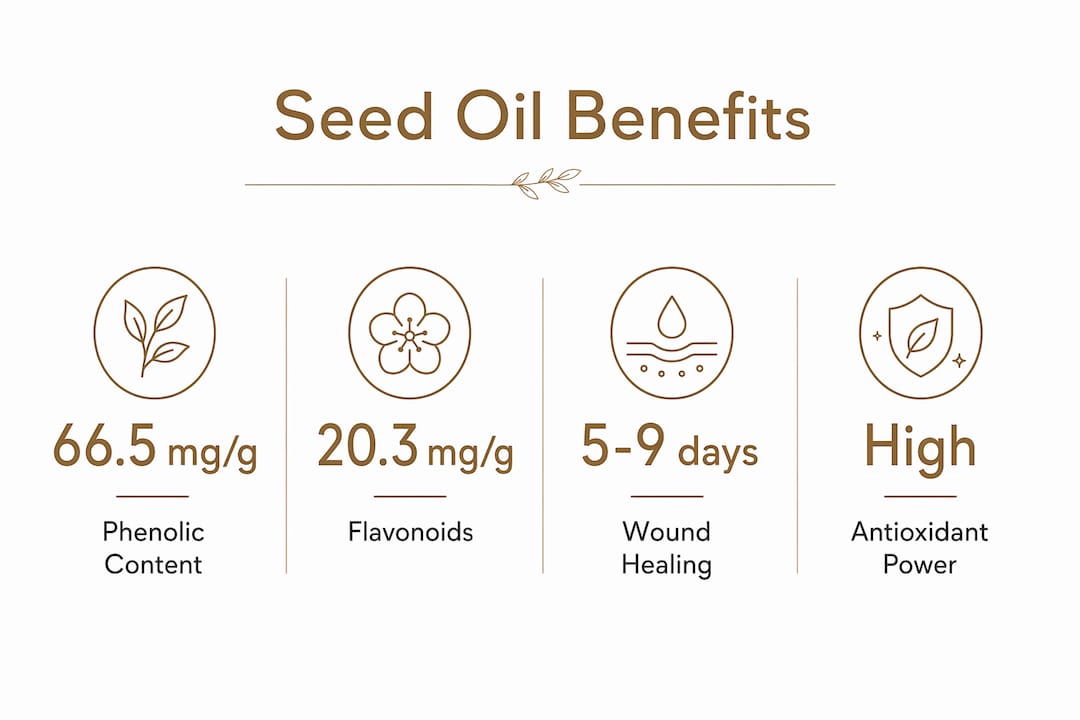
Wound healing: Methanolic extracts have shown significantly accelerated wound closure in controlled studies, with wounds healing in 8–9 days compared to 21 days in untreated controls.
Cardiovascular nutrition: Its essential fatty acid content, including linoleic acid, supports healthy cholesterol profiles when incorporated into the diet.
No single seed oil checks every one of these boxes with this level of documented specificity. That combination is what sets Pistacia palaestina apart from more common options like argan or jojoba.
Table of Contents
What bioactive compounds give Pistacia palaestina seed oil its power?
The therapeutic profile of this oil is not a matter of folklore. It traces directly to a measurable, well-characterized set of phytochemicals that researchers have now quantified with precision.
Phenolics and flavonoids
A published phytochemical analysis found that P. palaestina extract contains a total phenolic content of 66.5 mg gallic acid per gram of dry weight, and a total flavonoid content of 20.3 mg catechin per gram. Those are not modest numbers. Phenolics at that concentration deliver meaningful free-radical scavenging, and flavonoids contribute anti-inflammatory and antimicrobial activity on top of that.
The antioxidant assay results tell the same story from a different angle:
Assay | Result |
Assay results indicate strong antioxidant activity, with IC50 values approximately 5.16–8.21 μg/mL, comparable to known antioxidants like ascorbic acid, supporting the extract’s potency. |
Monoterpenes: alpha-pinene leads the way
The essential oil fraction of P. palaestina is rich in monoterpenes, with alpha-pinene as the dominant compound, reaching 63.1% concentration in leaf oil. Alpha-pinene is well-studied for its antimicrobial activity against both bacteria and fungi, and its anti-inflammatory effects are documented across multiple models. Myrcene and sabinene appear as secondary monoterpenes, each contributing to the oil’s broader bioactivity.
Essential fatty acids
The seed oil fraction contains linoleic acid, an omega-6 essential fatty acid the body cannot synthesize on its own. Research from Johns Hopkins confirms that linoleic acid is linked to a 35% lower risk of type 2 diabetes and improves LDL cholesterol profiles when it replaces saturated fat in the diet. For a seed oil used both topically and culinarily, that nutritional dimension matters.
The three pillars of this oil’s bioactivity, in order of research support:
Polyphenol and flavonoid content — antioxidant and anti-inflammatory action
Alpha-pinene and monoterpene fraction — antimicrobial and anti-inflammatory effects
Linoleic acid — cardiovascular and metabolic support, plus skin barrier function
How does Pistacia palaestina seed oil benefit your skin?
Skin care is where this oil has the most practical, day-to-day application, and the range of uses is broader than most people expect.
Moisturizing and barrier support
The oil functions as a true emollient, meaning it fills the gaps between skin cells and reduces transepidermal water loss. Linoleic acid is a key structural component of the skin’s lipid barrier, so topical application directly supports skin moisture barrier integrity. Skin that is chronically dry, flaky, or reactive often lacks this fatty acid at the surface level.
Anti-aging and antioxidant protection
Oxidative stress is one of the primary drivers of visible skin aging, from fine lines to uneven tone. The polyphenol concentration in P. palaestina extract gives the oil real antioxidant capacity at the skin surface, helping neutralize free radicals generated by UV exposure and environmental pollution. For anyone looking at anti-aging essential oils, this oil belongs in the conversation.
Acne, eczema, and psoriasis
The antimicrobial activity documented in lab studies translates to practical benefit for acne-prone skin, where bacterial overgrowth is a core issue. For eczema and psoriasis, the anti-inflammatory properties and emollient effect work together: the oil calms irritation while restoring the lipid layer that inflammatory skin conditions tend to deplete. Traditional Levant medicine used P. palaestina specifically for eczema and skin infections, and modern phytochemical findings support that use.
Dark circles and cosmetic applications
Applied gently around the eye area, the oil is used to reduce the appearance of dark circles. The mechanism likely involves improved local circulation and the antioxidant protection of the delicate periorbital skin, which is thinner and more vulnerable to oxidative damage than the rest of the face.
Circulation, cellulite, and heavy legs
This is one of the more distinctive claims associated with the oil. It is described as both a phlebotonic and a lymphatic decongestant, meaning it may support venous tone and encourage lymphatic drainage when massaged into the skin. Topical application over areas affected by cellulite, varicose veins, or water retention is a traditional practice with emerging scientific interest, though direct clinical trials remain limited.
Key topical uses at a glance:
Dry and dehydrated skin: apply as a daily moisturizer
Acne-prone skin: use as a spot treatment or light facial oil
Eczema and psoriasis: apply to affected areas to soothe and hydrate
Dark circles: dab a small amount under the eyes before bed
Cellulite and heavy legs: massage into skin with upward strokes toward the lymph nodes
Pro Tip: Because this oil is highly concentrated in antioxidants and unsaturated fatty acids, only a few drops are needed per application. Warm two or three drops between your palms before pressing gently onto the skin — this improves absorption and avoids the greasy residue that comes from over-applying.
How does Pistacia palaestina seed oil support scalp and hair health?
The same phytochemical properties that make this oil effective on facial skin translate well to scalp care, where the conditions are actually more demanding: the scalp is exposed to more sebum, more friction, and more environmental stress than most other skin surfaces.
Scalp nourishment and follicle support
Massaging the oil into the scalp delivers antioxidants and fatty acids directly to the hair follicle environment. Oxidative stress at the follicle level is associated with premature hair loss and reduced hair quality, so the oil’s free-radical scavenging activity is directly relevant here. The anti-inflammatory monoterpenes also help calm scalp conditions that can restrict follicle function.

Shine, volume, and dandruff prevention
The emollient properties smooth the hair cuticle, which is the structural reason hair looks shinier and feels softer after oil treatment. Dandruff is often driven by fungal overgrowth (Malassezia species) or by a disrupted scalp barrier. The antifungal activity of alpha-pinene addresses the microbial side, while the oil’s moisturizing effect addresses the barrier side.
Delaying hair whitening
This is a traditional claim with a plausible biochemical basis. Oxidative stress accelerates melanin degradation in the hair follicle, which is one pathway to premature graying. Antioxidant-rich topical treatments may slow this process, though the evidence here is more mechanistic than clinical.
Practical application guidelines:
Pre-wash scalp treatment: Apply 4–6 drops to the scalp, massage for 5 minutes, leave for 30 minutes, then shampoo as normal
Leave-in hair serum: Work 1–2 drops through the mid-lengths and ends of dry hair for shine and frizz control
Dandruff treatment: Apply to the scalp 2–3 times per week, focusing on flaky areas
Frequency: For general scalp nourishment, once or twice weekly is sufficient; for active scalp conditions, increase to every other day until symptoms improve
From ancient Levant medicine to modern lab findings
The Palestine terebinth has been a medicinal plant in the Eastern Mediterranean for a very long time. What is interesting about the current research is not that it discovered new uses, but that it keeps confirming old ones.
Traditional Levant applications: Folk medicine across Syria, Lebanon, and Palestine used P. palaestina for coughs, eczema, stomach aches, hypertension, kidney stones, and wound care. The plant’s resin, leaves, and fruits were all employed, often in different preparations for different conditions.
Antimicrobial validation: Modern studies confirm dose-dependent antimicrobial activity against E. coli and anti-Helicobacter pylori effects, directly validating the traditional use for gastrointestinal infections. The botanical and pharmacological properties of the plant have been systematically reviewed in peer-reviewed literature.
Wound healing acceleration: Methanolic extracts of P. palaestina fruits and leaves showed IC50 antioxidant values of approximately 5.16–8.21 µg/mL in lab assays. In animal wound healing models, wounds treated with the extract healed in 8–9 days compared to 21 days in untreated controls. That is a dramatic difference, not a marginal one.
Anti-proliferative activity: Lab studies have shown that P. palaestina essential oil inhibits cancer cell viability in colorectal and thyroid cancer cell lines in vitro, suppressing the NF-κB signaling pathway and arresting the cell cycle at the G1 phase. These are in vitro findings, not clinical outcomes, but the specificity of the mechanism is notable.
Anti-inflammatory confirmation: The monoterpene fraction, led by alpha-pinene, has been confirmed as the primary driver of anti-inflammatory activity, consistent with the plant’s traditional use for inflammatory skin and respiratory conditions.
Antioxidant benchmarking: The DPPH and FRAP values measured in recent Palestinian P. palaestina samples are comparable to ascorbic acid, giving researchers a concrete reference point for the extract’s potency.
The progression from “used in folk medicine for eczema” to “confirmed antimicrobial and anti-inflammatory activity via alpha-pinene and polyphenols” is exactly the kind of validation that separates a well-studied botanical from a speculative one.
Why Palinova’s Pistacia palaestina seed oil stands apart
Sourcing matters more than most people realize with botanical oils. The same plant species grown in different soils, harvested at different times, and processed with different methods can produce oils with meaningfully different phytochemical profiles.
Palinova sources its Pistacia palaestina seed oil directly from Palestinian agricultural land, the same Levant region where this tree has grown and been used medicinally for generations. That geographic specificity is not marketing language. The phenolic and monoterpene content documented in Palestinian P. palaestina samples reflects the plant’s native growing conditions, including the poor, rocky soils and high solar radiation that push the tree to produce more protective secondary metabolites.
Palinova’s products contain no synthetic additives, and the brand’s commitment to ethical sourcing means the supply chain supports Palestinian farming communities directly. For customers who want to understand exactly what they are applying to their skin or hair, Palinova also offers free aromatherapy consultations, where you can get personalized guidance on how to incorporate the oil into your specific routine.
What are the potential side effects and safety considerations?
Pistacia palaestina seed oil has a strong safety profile in the existing literature, with no significant adverse effects reported in traditional use or the available lab studies. That said, a few practical considerations apply.
Skin sensitivity: Anyone with a known allergy to tree nuts or other members of the Anacardiaceae family (which includes cashews, mangoes, and sumac) should patch-test before applying the oil broadly. Apply a small amount to the inner forearm, wait 24 hours, and check for redness, itching, or swelling before using it on the face or scalp.
Dilution for sensitive skin: The oil is concentrated. For people with reactive or sensitive skin, diluting it in a carrier oil such as jojoba or sweet almond at a 1:4 ratio before topical application reduces the risk of irritation without significantly diminishing the benefit.
Pregnancy and nursing: No clinical safety data exists for topical use of P. palaestina seed oil during pregnancy or nursing. The general guidance for any potent botanical oil is to consult a healthcare provider before use during these periods.
Oral use: The seed oil has culinary applications in the Levant tradition, but concentrated essential oil preparations are not intended for internal use. If you are considering dietary incorporation, use only food-grade preparations and in amounts consistent with culinary use.
No known drug interactions have been documented, and the oil does not appear in any major adverse event databases. For the vast majority of people, topical use is straightforward and well-tolerated.
How should you store Pistacia palaestina seed oil?
Seed oils rich in unsaturated fatty acids are more susceptible to oxidative rancidity than saturated fats, which means storage conditions directly affect both the oil’s safety and its therapeutic potency.
Temperature: Store the oil in a cool location, ideally between 50°F and 65°F (10°C–18°C). A dark cabinet away from the stove or any heat source works well. Refrigeration is acceptable and extends shelf life, though the oil may thicken slightly when cold; it returns to normal consistency at room temperature within a few minutes.
Light exposure: UV light accelerates oxidative degradation of both the fatty acid fraction and the polyphenol compounds. Keep the oil in its original dark glass bottle, or transfer it to an amber or cobalt glass container if the original packaging is clear.
Air exposure: Oxygen is the primary driver of rancidity. Always close the cap tightly after each use, and avoid transferring the oil to wide-mouth containers that expose a large surface area to air.
Shelf life: Properly stored, Pistacia palaestina seed oil typically remains stable for 12–18 months from the production date. Signs of rancidity include a noticeably sour or paint-like smell, a change in color toward darker yellow or brown, and a thicker, stickier texture. If any of these appear, discard the oil. Rancid oil has reduced therapeutic value and may cause skin irritation.
A small addition of vitamin E (tocopherol) to the bottle, available in capsule form at most pharmacies, can extend shelf life by acting as a natural antioxidant preservative. One capsule per 30 ml of oil is a practical ratio.
Palinova brings you authentic Palestinian seed oil, no compromise
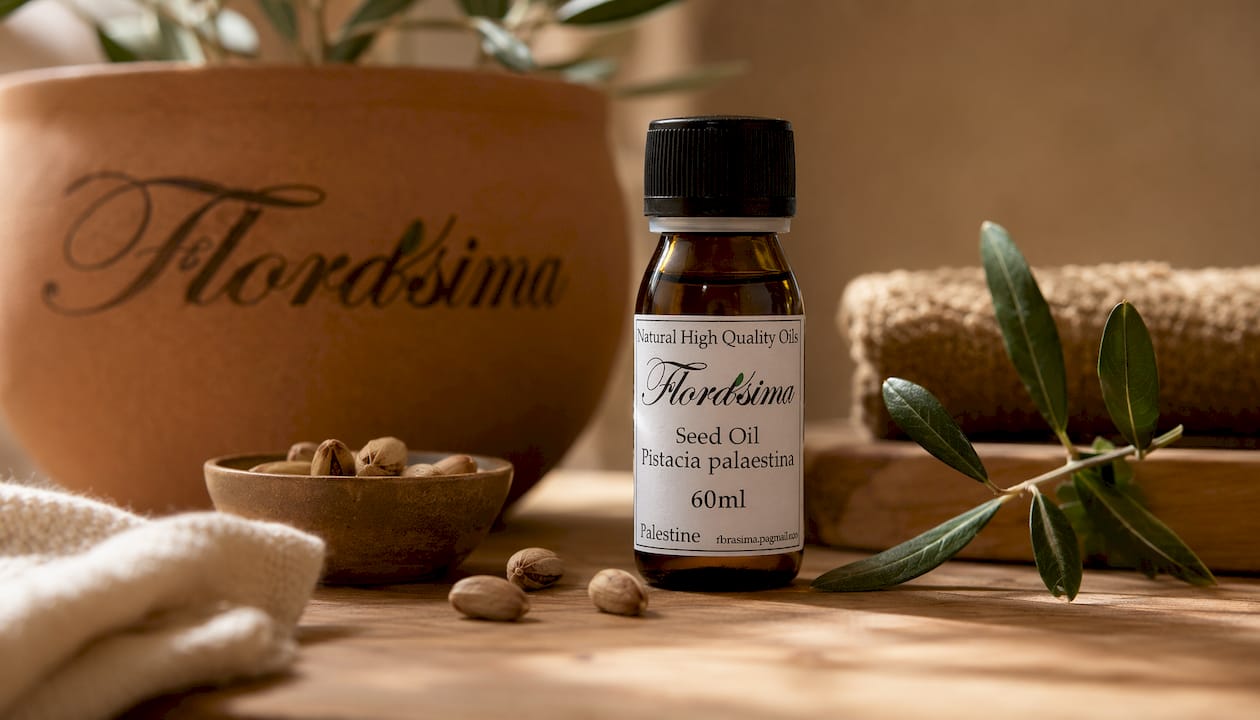
Most seed oils on the US market are processed, blended, or sourced from regions with no historical relationship to the plant. Palinova takes a different approach: every bottle of Pistacia palaestina seed oil comes from Palestinian botanical sources, free from synthetic additives, and backed by the phytochemical richness that only native-habitat sourcing delivers.
[
If you have read this far, you already know what makes this oil worth your attention: the documented antioxidant potency, the traditional validation, the practical range of skin and hair applications. What Palinova adds is the certainty that what is in the bottle matches what the research describes. Ethically sourced, authentically Palestinian, and available with a free aromatherapy consultation so you can build a routine that actually fits your needs. Visit the product page to learn more and place your order.
Key Takeaways
Pistacia palaestina seed oil’s documented phenolic content of 66.5 mg gallic acid per gram, combined with its alpha-pinene-rich monoterpene fraction, makes it one of the most phytochemically dense botanical oils available for skin, hair, and general wellness use.
Point | Details |
Antioxidant potency | Total phenolic content of 66.5 mg/g and flavonoids of 20.3 mg/g confirmed by multiple assay methods. |
| Wound healing speed | Treated wounds healed in 8–9 days versus 21 days in untreated controls in animal model studies (methanolic extracts applied topically). | | Linoleic acid benefit | Linked to a 35% lower risk of type 2 diabetes and improved LDL cholesterol when replacing saturated fats. | | Safe topical use | Patch-test first if you have Anacardiaceae allergies; dilute for sensitive skin; store in dark glass below 65°F. | | Palinova sourcing | Palinova’s seed oil is ethically sourced from Palestinian botanical land with no synthetic additives, available with free aromatherapy consultation. |
FAQ
What makes Pistacia palaestina seed oil different from other seed oils?
P. palaestina seed oil is unusually rich in both polyphenols (66.5 mg gallic acid/g) and monoterpenes like alpha-pinene, giving it a broader range of antimicrobial, anti-inflammatory, and antioxidant activity than most common seed oils. Its traditional use across the Levant for skin conditions, wound care, and gastrointestinal health is now supported by published phytochemical research.
What are the benefits of Pistacia atlantica seeds?
Pistacia atlantica, a close relative of P. palaestina, is similarly rich in phenolic compounds and essential oils with antioxidant and antimicrobial properties. Both species have been used in traditional Middle Eastern medicine for wound healing, skin infections, and digestive complaints, with lab studies confirming overlapping bioactive profiles.
What are the common uses of Pistacia vera?
Pistacia vera is the pistachio nut tree, cultivated primarily for its edible seeds. Its oil and extracts are used in food production, cosmetics, and traditional medicine for antioxidant and anti-inflammatory benefits, though its culinary use as a snack nut is by far the most widespread application globally.
What are the characteristics of the terebinth tree?
The terebinth (Pistacia palaestina and related species) is a deciduous tree or large shrub in the cashew family (Anacardiaceae), native to the Eastern Mediterranean. It tolerates poor, rocky soils and intense sun, and produces resinous fruits used in food, folk medicine, and oil extraction across the Levant region.
Is Pistacia palaestina seed oil safe to use on the face daily?
For most people, yes. The oil is well-tolerated topically, and only a few drops are needed per application given its concentration. People with Anacardiaceae allergies should patch-test first, and those with sensitive skin may benefit from diluting it before applying to the face.
Recommended

Comments