
Varthemia Iphionoides Essential Oil: Benefits and Science
- Palinova

- 1 day ago
- 17 min read
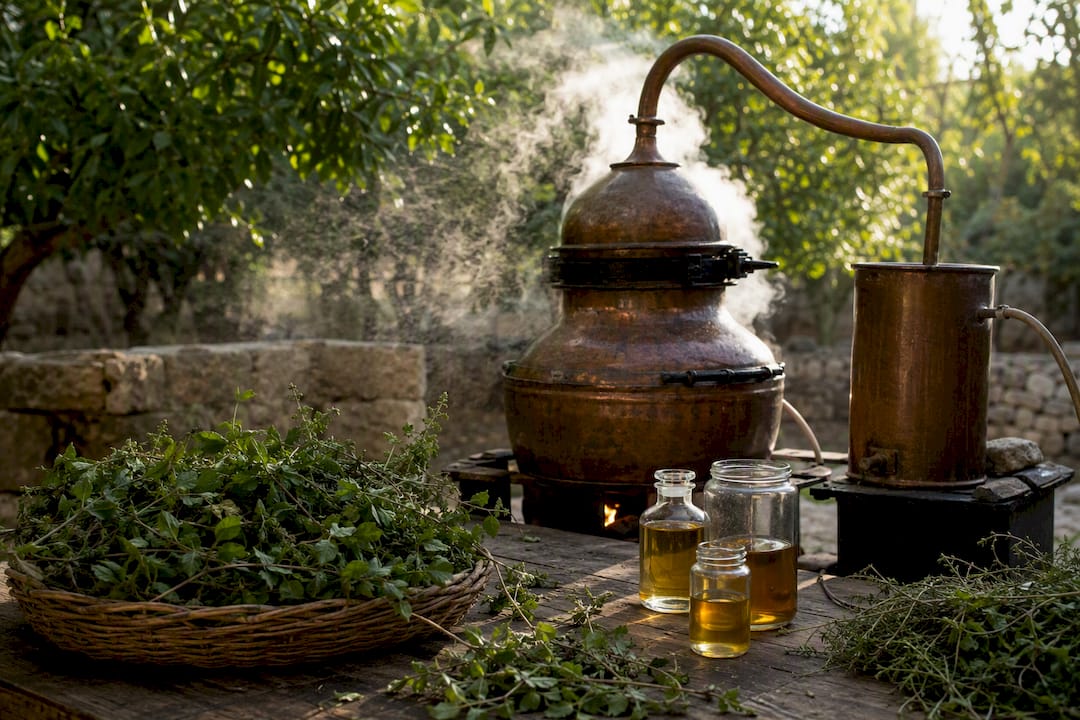
Varthemia iphionoides essential oil is borneol-dominant Mediterranean oil documented in peer-reviewed research to carry antibacterial, antioxidant, anticancer, and antidiabetic effects. This Varthemia Iphionoides essential oil guide to benefits, uses, and science draws on GC–MS chemical profiling, in vitro assays, and rodent studies, not marketing claims. GC–MS work on the plant (also classified as Chiliadenus iphionoides) has identified roughly 22 compounds accounting for about 96.1% of the oil, with borneol and its acetyl and formyl esters dominating the profile at concentrations reported up to 49.3%.
The bioactivity data are genuinely substantial for a regional botanical this under-studied. Antibacterial assays report inhibition zones between 15 and 26.5 mm and minimum inhibitory concentrations (MICs) ranging from 50 to 370 µg/mL across tested strains. Antioxidant work shows measurable shifts in superoxide dismutase (SOD) and malondialdehyde (MDA) levels in animal models. MTT cytotoxicity assays have found antiproliferative activity against breast, pancreatic, prostate, and leukemia cell lines. In streptozotocin-induced diabetic rats, oral dosing over a few weeks produced measurable drops in blood glucose and total cholesterol.
Here is what matters before you extrapolate any of this to human use:
Nearly all of this evidence is preclinical: cell cultures, bacterial plates, and rodent models.
No published clinical trials have tested the oil’s safety or efficacy in humans.
Composition varies by harvest location, plant part, and extraction method, so “borneol at 49.3%” describes one well-documented sample, not a fixed universal constant.
The takeaway: the chemistry is well-characterized and the lab-level bioactivity is real, but the leap from petri dish to therapeutic protocol has not been made yet.
Key Takeaways
Borneol dominance, quantified antibacterial and antidiabetic assay data, and a total absence of human clinical trials define the current state of the science on this oil.
Point | Details |
Chemical hallmark | Borneol and its esters make up as much as 49.3% of the oil, across roughly 22 identified compounds covering 96.1% of the total profile. |
Antibacterial potency varies by strain | Inhibition zones run 15 to 26.5 mm and MICs range from 50 to 370 µg/mL depending on the bacterial strain tested. |
Metabolic data is the most reproducible | 200 mg/kg oral dosing in diabetic rats over 2 to 4 weeks reduced blood glucose and cholesterol with consistent antioxidant marker shifts. |
Human safety data does not exist yet | No clinical trials have tested this oil in humans, so all dosing and safety guidance stays extrapolated from preclinical work. |
Sourcing and provenance matter for reproducibility | Palinova supplies authenticated Palestinian Varthemia iphionoides oil with documented sourcing for research and formulation use. |
Table of Contents
Varthemia Iphionoides Essential Oil Guide: Chemical Composition Basics
Gas chromatography–mass spectrometry (GC–MS) is the analytical backbone of every serious claim made about this oil, and the picture it paints is unusually consistent across research teams working decades apart. A 2004 study of oil distilled from Jordanian plants identified borneol as the dominant volatile compound, and more recent chemical profiling of Chiliadenus iphionoides confirms the same pattern with sharper resolution: roughly 22 compounds account for about 96.1% of the total oil, and borneol, together with its acetylated and formylated ester forms, makes up as much as 49.3% of that total.
That level of agreement across two decades and different research groups is not something you see with every wild-harvested aromatic plant. Many essential oils show wide chemotype variation between populations, even within the same species. Borneol’s dominance here appears to hold up as a genuine chemical signature of the plant rather than a one-off measurement.
What drives variation in the profile
Three variables reliably shift the constituent percentages researchers report, and anyone trying to reproduce or compare results needs to control for them:
Harvest location and season. Soil composition, altitude, and rainfall change monoterpene biosynthesis, which is why cross-referencing Jordanian and other regional GC–MS datasets matters for confirming a stable chemical fingerprint.
Plant part used. Aerial parts (leaves and flowering tops) typically yield different oil composition than stems or roots, and most published work draws from aerial biomass.
Extraction method and duration. Hydrodistillation time and temperature affect which volatile fractions escape versus which esters hydrolyze, so a rushed extraction can under-report the ester content specifically.
For a lab attempting to replicate published MIC or MTT results, matching the source plant material’s growing region and the extraction protocol matters as much as matching the analytical instrument settings.
Principal compounds and reported ranges
Beyond borneol itself, GC–MS analyses consistently flag a supporting cast of monoterpenes and sesquiterpenes, though their reported percentages shift more between studies than borneol’s does:
Compound class | Reported role in profile |
Borneol (free) | Dominant single constituent, up to ~49.3% in some analyses |
Borneol esters (acetyl/formyl) | Contribute meaningfully to the overall borneol-family total |
Minor monoterpenes | Make up part of the remaining ~50% of characterized oil |
Trace sesquiterpenes | Present in smaller proportions, vary more by sample |
Twenty-two identified compounds covering 96.1% of the oil is a strong characterization rate for a wild botanical. It leaves under 4% unidentified, which is a tight margin compared to many essential oils where 15% to 20% of the volatile fraction goes unassigned. That precision is part of why Varthemia iphionoides has drawn steady pharmacological interest despite its narrow native range in the eastern Mediterranean.
Antibacterial, Antioxidant, and Anticancer Findings
The bioactivity research on this oil clusters into four categories, and the strength of evidence differs meaningfully between them. Treat these as four separate evidence tracks, not one unified “it works” story.
1. Antibacterial activity
In vitro testing using agar well diffusion and broth microdilution methods has produced some of the most quantifiable data available. Inhibition zones measured between 15 mm and 26.5 mm against tested bacterial strains, a range that spans modest to genuinely strong susceptibility by standard microbiology benchmarks. MIC values, meaning the lowest concentration that stops visible bacterial growth, ranged from 50 to 370 µg/mL depending on the strain and study.

That 50 to 370 µg/mL spread is wide, and it tells you something important: potency is strain-dependent, not a fixed property of the oil. Effects tended to be stronger against certain strains than others, which mirrors what you would expect from a borneol-heavy oil, since related monoterpenoids often show variable gram-positive versus gram-negative sensitivity.
2. Antioxidant activity
Antioxidant evidence comes from both cell-free chemical assays and living-animal data, and the in vivo numbers are the more compelling half. In streptozotocin (STZ) induced diabetic rats, oral administration of the essential oil raised superoxide dismutase (SOD) activity and lowered malondialdehyde (MDA) levels, a combination that signals reduced oxidative stress at the cellular level. MDA is a byproduct of lipid peroxidation, so a measurable decline after oil administration is a genuine physiological signal, not just a chemistry-bench result.

3. Anticancer cytotoxicity
MTT assays, the standard colorimetric method for measuring cell viability after treatment, showed antiproliferative activity against multiple cancer cell lines including breast, pancreatic, prostate, and leukemia models. What makes this data set more interesting than a simple “kills cancer cells” headline is the selectivity testing: researchers ran parallel assays against fibroblast controls (non-cancerous cells) to check whether the oil was toxic broadly or somewhat selective to malignant cells.
The most notable finding in this line of research was not the oil alone, but what happened when it was paired with biosynthesized silver nanoparticles (AgNPs). Combined treatment produced antiproliferative effects that in some assays matched or exceeded standard reference controls, suggesting a genuine synergistic interaction rather than simple additive effects.
That synergy finding matters for anyone thinking about translational potential, because it hints at a path toward lower effective doses, which usually means fewer off-target effects.
4. Metabolic and hypolipidemic effects
The clearest dose-response data in the entire literature comes from the STZ-diabetic rat model. Rats given 200 mg/kg of the essential oil orally for two to four weeks showed significant reductions in blood glucose and total cholesterol alongside the antioxidant marker shifts already mentioned. This is the only pharmacological activity in the current literature tested at a specific, repeated, and reported dose over a defined duration, which makes it the strongest candidate for follow-up dose-ranging work.
Quick reference on assay strength:
Antibacterial: quantified (MIC + inhibition zone), moderate-to-strong, strain-dependent.
Antioxidant: quantified in vivo (SOD/MDA), consistent direction of effect.
Anticancer: qualitative-to-semi-quantitative (MTT viability), promising, needs mechanism confirmation.
Metabolic: quantified in vivo with fixed dose and duration, the most reproducible dataset available.
None of these four tracks has been tested in a randomized human trial. That single fact should frame how you read every number above.
Extraction Methods, Assay Protocols, and Dosing Data
Reproducing any of the findings above depends on matching the methods researchers actually used, not just citing their conclusions. Most published work on this species relies on hydrodistillation or steam distillation of aerial plant parts, followed by GC and GC–MS profiling to characterize the resulting oil before any bioassay work begins.
For the bioactivity studies, three assay methods recur throughout the literature:
Agar well diffusion, used to generate the inhibition-zone measurements against bacterial strains.
Broth microdilution, used to calculate MIC values, typically run with a solvent carrier like DMSO or a Tween-based emulsifier to keep the oil dispersed in aqueous media. That choice of vehicle can shift apparent potency, so it needs to be reported and controlled for.
MTT cytotoxicity assay, used across cancer cell lines and paired fibroblast controls to assess both efficacy and selectivity.
The in vivo metabolic work used a streptozotocin-induced diabetic rat model, a standard approach for studying type 1 diabetes mechanisms in rodents, dosed at 200 mg/kg administered orally over a two to four week period.
For anyone planning to replicate or extend this research, here are the numeric endpoints worth tracking against your own results:
Parameter | Reported range/value |
Inhibition zone (antibacterial) | 15 mm to 26.5 mm |
MIC (antibacterial) | 50 to 370 µg/mL |
In vivo oral dose (STZ rat model) | 200 mg/kg |
Dosing duration | 2 to 4 weeks |
Compounds identified via GC–MS | ~22 |
Total oil composition characterized | ~96.1% |
Pro Tip: If you’re designing a replication study, report your solvent vehicle for microdilution testing explicitly. A DMSO-based MIC and a Tween-based MIC on the same oil sample can produce meaningfully different numbers, and that variable gets left out of too many published methods sections.
How Borneol and Related Compounds Work Biologically
Borneol’s dominance in the chemical profile is not incidental to the bioactivity data. Monoterpene alcohols like borneol are lipophilic, meaning they interact readily with lipid membranes, which is the most commonly proposed mechanism behind the oil’s antibacterial effects: disruption of bacterial cell membrane integrity rather than a single targeted enzyme block.
For the antioxidant effects, the mechanism looks more direct. Borneol and related terpenoids are known free-radical scavengers, which lines up with the SOD increase and MDA decrease observed in the diabetic rat studies. That’s a plausible chemical explanation for an observed physiological outcome, not a confirmed step-by-step pathway.
The anticancer synergy with silver nanoparticles raises a more specific mechanistic question. Combining an essential oil with AgNPs generally works through one of two routes: enhanced cellular uptake of the oil’s active compounds once bound to the nanoparticle carrier, or a genuinely additive toxic effect from two separate mechanisms hitting the cell at once. The published research does not yet distinguish which route is driving the observed synergy.
A few honest limits worth stating plainly:
Membrane disruption and enzyme inhibition are proposed mechanisms based on borneol’s known chemistry, not mechanisms directly confirmed in Varthemia iphionoides studies specifically.
No published work has isolated borneol alone from this plant and tested it head-to-head against the whole oil, so it’s unclear how much of the effect is borneol versus the minor constituents acting in concert.
Biochemical experiments using purified borneol, membrane integrity assays, and enzyme-specific inhibition panels would be needed to move these mechanisms from “plausible” to “demonstrated.”
Pro Tip: If you’re citing a mechanism of action in a grant proposal or literature review, flag it as “proposed” rather than “established” until a study isolates the specific compound and tests the specific pathway. Reviewers notice the difference.
Safety, Dilution, and Toxicity Considerations
The cytotoxicity data that make the anticancer findings interesting are the same data that demand caution around topical or internal use. MTT assays showing antiproliferative effects against cancer cell lines came alongside fibroblast control testing specifically because researchers needed to check whether the oil was selectively toxic to malignant cells or broadly cytotoxic to healthy tissue too. Selectivity varied by assay and cell line, which means “safe because it’s natural” is not a conclusion this data supports.
Concentration is the variable that matters most. The same compound that shows measurable antibacterial activity at 50 to 370 µg/mL in a lab dish is not automatically safe at that concentration on human skin, and it is definitely not safe to assume a proportionally larger dose is proportionally more effective without toxicity data to match.
For researchers and formulators working with the oil in a lab or product-development setting, the general best practices used across the essential oil industry apply here with extra weight given the limited human data:
Dilute significantly before any skin contact. Standard aromatherapy practice for potent monoterpene-rich oils runs in the low single-digit percentage range in a carrier oil, though this is a general formulation convention, not a clinical directive specific to this species.
Patch-test on a small skin area before broader topical use, and wait 24 to 48 hours to check for irritation following how to test multiple perfumes for lasting quality.
Avoid internal use outside of controlled research settings. The 200 mg/kg oral dosing data comes from a rodent model, not a human pharmacokinetic study, and rodent-to-human dose conversion is not a simple linear scale-up.
Treat any anticancer or antidiabetic framing as a research lead, not a treatment protocol.
The evidence gap that matters most: no clinical trials in human subjects have tested this oil’s safety, tolerability, or efficacy at any dose or delivery method. Every safety inference above is extrapolated from cell assays and rodent studies, which is standard early-stage pharmacology, but it’s a meaningfully different evidence tier than a Phase 1 human safety trial.
Pro Tip: If you’re formulating with this oil for topical research applications, start dilution testing at the low end of your planned concentration range and work up, rather than starting near your target concentration and adjusting down after an adverse reaction.
Realistic Applications in Research and Formulation
The data set supports a handful of translational directions, each requiring different levels of additional work before real-world deployment. None of them are ready for direct-to-consumer therapeutic claims today.
Cosmetic or food preservative candidate. The antibacterial MIC data (50 to 370 µg/mL) puts the oil in a plausible range for natural preservative applications, but reaching effective concentrations in a finished formulation without irritation or stability issues requires dedicated formulation work.
Topical antimicrobial ingredient. Inhibition-zone and MIC data support further investigation into topical antibacterial products, with vehicle choice and solubility as the main formulation variables to solve for since the oil’s lipophilic nature affects how well it distributes in aqueous-based creams versus oil-based serums.
Anticancer compound isolation lead. The MTT and AgNP synergy findings make this oil a reasonable starting point for isolating and testing individual active fractions, rather than a finished anticancer agent itself.
Aromatherapy use within established dilution norms. Given the strong terpenoid profile, standard aromatherapy dilution guidelines apply, and the essential oils and aromatherapy resources covering dilution ratios are a useful starting reference point for formulators new to the plant.
Before any of these applications move past a research bench, standard quality-control steps apply: full toxicity panels beyond the cell-line selectivity data already published, stability testing under real storage and shelf-life conditions, and standardized composition testing across multiple harvest batches to confirm the borneol percentage holds steady outside a single study’s sample.
Where the Research Still Falls Short
The single biggest gap in the literature is obvious and consistent across every study reviewed here: there is no published human clinical trial data on this oil, at any dose, for any application. Everything documented so far is cell-based or rodent-based.
Beyond that headline gap, four specific research priorities stand out:
Standardized multi-site GC–MS mapping. Comparing oil from different growing regions and harvest seasons using identical analytical protocols would confirm whether the 49.3% borneol figure is typical or an upper-range outlier.
ADME and toxicity studies. Absorption, distribution, metabolism, and excretion data don’t yet exist for this oil in any species, which is a prerequisite for any human safety conversation.
Mechanism-specific biochemical assays. Isolated-compound testing (borneol alone, esters alone) against membrane integrity and specific enzyme targets would confirm or rule out the mechanisms currently proposed by chemical analogy.
Formulation stability testing. Shelf-life, oxidation resistance, and vehicle compatibility data are needed before any preservative or cosmetic antimicrobial application moves beyond concept.
Palinova sources its Palestinian botanical oils directly from regional growers and can provide authenticated sample material with sourcing documentation for research collaborators exploring standardized GC–MS mapping or preclinical protocol development.
Real progress on this plant won’t come from another cell-line study confirming what the last five already showed. It will come from someone running the first controlled human safety trial, and from labs willing to share authenticated, geographically-documented samples so the chemical variability question finally gets a clean answer.
Side Effects, Contraindications, and Drug Interactions
Published research on Varthemia iphionoides essential oil has not documented specific side effects or drug interactions in humans, simply because no human studies exist to observe them in. That absence of data is not the same as an absence of risk, and it means anyone using or formulating with this oil needs to reason from general essential oil pharmacology rather than species-specific safety literature.
Highly concentrated monoterpene oils like this one commonly cause skin irritation or sensitization when applied undiluted, and borneol specifically is metabolized through liver pathways, which raises a plausible, though currently untested, interaction concern for anyone on medications that also rely on hepatic metabolism. The antidiabetic effect observed in rodent studies at 200 mg/kg is worth flagging for a different reason: anyone already taking blood-glucose-lowering medication should treat unverified additive effects on blood sugar as a real possibility, not a hypothetical one, until human dosing data exists.
Pregnant or nursing individuals, young children, and anyone with a history of skin sensitization to terpenoid-rich oils should avoid use outside of professional guidance, consistent with standard practice for other potent essential oils. There is no published data confirming or ruling out interactions with anticoagulants, antiplatelet drugs, or chemotherapy agents, despite the oil’s documented antiplatelet and cytotoxic activity in preclinical work. Anyone on prescription medication should treat this as an open question and consult a healthcare provider before combining use, rather than assuming safety because the oil is plant-derived.
Quality Control and Standardization Guidelines
A borneol content that ranges from an unspecified baseline up to 49.3% across different studies tells you something practical: this oil needs batch-level chemical verification, not just a species label, before anyone uses it in research or formulation work.
Meaningful quality control for Varthemia iphionoides essential oil should include GC–MS verification of each production batch against a reference chromatogram, confirming borneol and ester content falls within an expected range rather than assuming consistency from one harvest to the next. Documentation of harvest location, plant part used, and extraction method (hydrodistillation versus steam distillation) should travel with every batch, since all three variables measurably shift the final composition.
For research applications specifically, a certificate of analysis showing the percentage breakdown of major constituents lets a lab confirm they’re working with comparable material to what’s cited in the published literature, which matters enormously when trying to reproduce a specific MIC or MTT result. For therapeutic or cosmetic formulation use, standardization also needs to account for storage stability, since monoterpene-rich oils are prone to oxidation over time, which can shift both the chemical profile and the antibacterial potency of a bottle sitting on a shelf for months.
Palinova documents sourcing and extraction details for its Palestinian botanical oils, an approach to provenance that matters more for a lesser-studied species like this one than it does for a widely standardized oil like lavender or tea tree.
Regulatory Status Around the World
Varthemia iphionoides essential oil is not currently classified as a drug or approved therapeutic agent in the United States, the European Union, or any other major regulatory market. In the United States, it falls under the Food and Drug Administration’s general framework for essential oils and botanical extracts, which means it can be sold as a cosmetic ingredient or for aromatherapy use, but no FDA approval exists, or has been sought, for treating diabetes, bacterial infection, or cancer. Any such application would need to go through the same drug approval pathway as any other therapeutic candidate, a process that has not started for this oil.
The absence of clinical trial data described throughout this guide is precisely why that regulatory gap exists. Drug approval requires human safety and efficacy trials, and none have been conducted or registered for this species. Cosmetic-use regulations, which are considerably less stringent than drug approval standards in most jurisdictions, are the applicable framework for any current commercial sale of the oil.
Buyers and researchers should treat any product marketed with explicit disease-treatment claims tied to this oil with real skepticism, since making such claims without regulatory backing is itself a compliance issue in most markets, separate from the question of whether the underlying preclinical data is promising. The science here is genuinely interesting. The regulatory status has simply not caught up, because the human research needed to justify it hasn’t been done yet.
What the Evidence Actually Supports Right Now
The preclinical data on this oil is stronger than what most under-studied regional botanicals have behind them, and that’s worth saying plainly rather than burying under caveats. A 96.1% characterized chemical profile, a consistently reproduced borneol dominance across studies two decades apart, and quantified assay metrics across four separate bioactivity categories is a genuinely solid foundation. Most essential oils marketed for wellness purposes don’t have anywhere near this level of documented characterization behind them.
Where I’d push back on how this plant sometimes gets discussed is the tendency to treat rodent and cell-line results as a preview of guaranteed human benefit. They’re not. They’re a strong signal that justifies the next step, not a substitute for it. The most useful thing that could happen to this research line in the next few years is a dose-escalation human safety study, paired with ADME work and standardized composition testing across multiple harvest sites, so the field finally knows whether the 49.3% borneol figure holds up as a reliable species-level constant or was a favorable single-batch result.
Until that work exists, the honest position is measured enthusiasm: use the chemistry and preclinical bioactivity to justify further research and careful, diluted formulation work, not to justify unproven treatment claims.
Sourcing Authenticated Oil for Research and Formulation Work
If you’re a researcher, formulator, or clinician working with this plant, sourcing matters as much as methodology. Palinova supplies authenticated Varthemia iphionoides essential oil sourced directly from Palestinian agricultural land, with the kind of provenance transparency that reproducibility work in this field actually needs.
Every batch ties back to a documented harvest and extraction process, which matters when you’re trying to compare your own GC–MS results against published borneol percentages and need confidence that your sample reflects the plant, not an unverified blend. Palinova also offers free aromatherapy consultations for anyone working through dilution ratios or formulation questions specific to potent monoterpene-rich oils like this one, and the team can speak to sustainability practices behind their Palestinian botanical sourcing more broadly.
For labs and formulators who want to start with a verified sample, the Varthemia iphionoides essential oil product page has current sourcing details and ordering information. If you’re exploring other regionally sourced options for comparative antimicrobial or antioxidant work, Palinova’s frankincense essential oil is another Palestinian botanical worth reviewing for parallel formulation projects. Reach out through the product page to request sample provenance documentation before you order.
Sources
For anyone building out a literature review or citation list on this species, these are the core peer-reviewed sources behind the data in this guide:
FAQ
What is considered the king of all essential oils?
There’s no single scientifically recognized “king” of essential oils. Frankincense often earns that informal title in aromatherapy circles for its broad historical use and documented compounds, but potency and best-use depend entirely on the specific application you’re targeting.
Does geranium oil increase estrogen levels?
There is no strong clinical evidence that geranium oil meaningfully raises human estrogen levels. Some in vitro and anecdotal reports suggest mild hormone-modulating activity, but nothing at the level of rigorous human trial confirmation exists, the same evidence gap seen with most essential oils.
What is the most powerful anti-inflammatory essential oil?
No essential oil has been definitively ranked as the single most powerful anti-inflammatory option, since comparisons vary by study design and delivery method. Varthemia iphionoides itself hasn’t been directly assayed for anti-inflammatory activity in published literature, though its antioxidant effects (SOD increases, MDA decreases) point to a related biochemical pathway worth further study.
What essential oils should not be mixed together?
Oils with overlapping strong phenolic or high-monoterpene profiles, such as certain cinnamon and clove combinations, can compound skin irritation risk when blended.
Is Varthemia iphionoides essential oil safe to use undiluted?
No. The oil’s high borneol concentration and documented cytotoxicity in cell assays make undiluted use inadvisable; standard aromatherapy dilution practices and a patch test are the responsible starting point for any topical use.
Has Varthemia iphionoides oil been tested in human clinical trials?
No published human clinical trials exist for this oil. All antibacterial, antioxidant, anticancer, and antidiabetic data come from in vitro assays and rodent studies, which is why researchers describe the current evidence base as preclinical.
Recommended


Comments