
Why essential oils from Palestine are unique and different
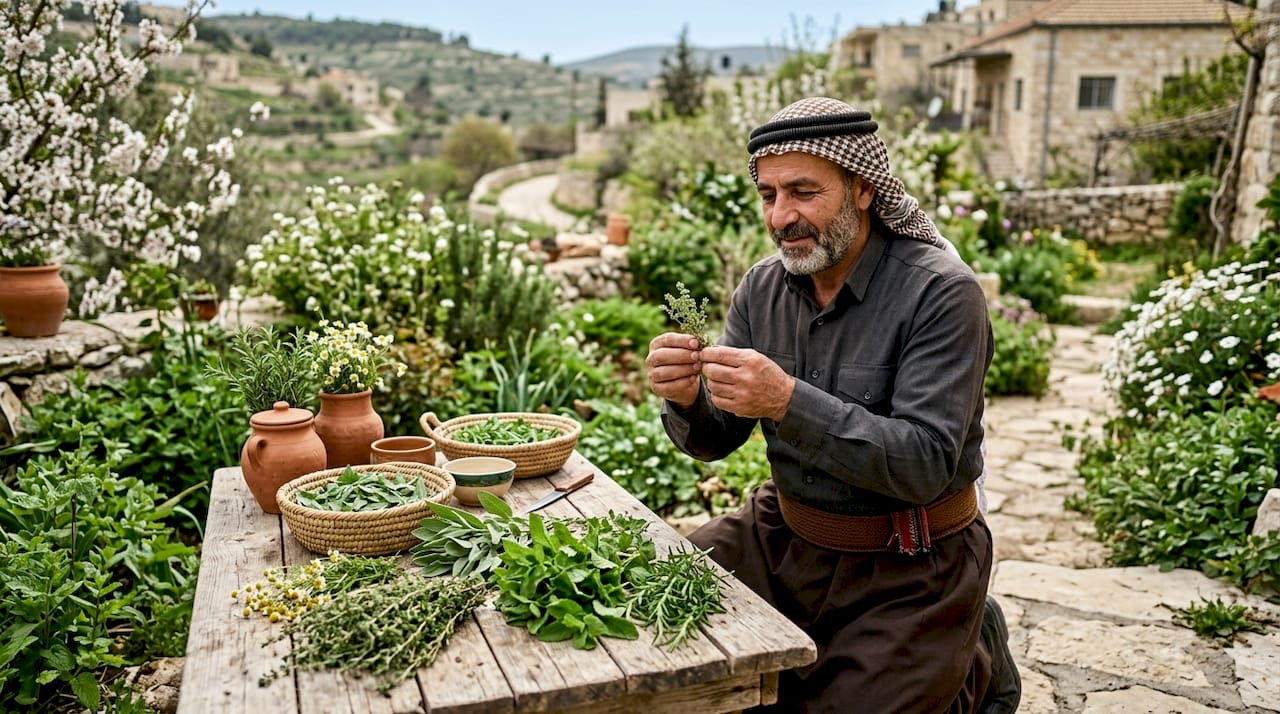
Palestinian essential oils are defined by an exceptional concentration of bioactive compounds produced under environmental stress, extracted through traditional copper-still distillation, and rooted in centuries of ethnobotanical knowledge. No other region combines limestone-rich, semi-arid terroir with smallholder family harvesting and slow steam extraction in quite the same way. Plants like Salvia palaestina and Majorana syriaca respond to natural water scarcity by producing far higher levels of volatile compounds, including carvacrol, thymol, and eucalyptol, than their irrigated commercial counterparts. The result is an oil that carries both measurable therapeutic potency and a cultural weight that no industrial process can replicate. Palinova sources directly from these traditions, offering oils that reflect the land, the people, and the science behind them.
Why essential oils from Palestine are unique and different: the terroir effect
Palestine’s growing environment is the single greatest factor shaping its essential oils. The region’s rocky, limestone-rich soils and semi-arid Mediterranean climate create what botanists call a hydro-stress terroir. Plants growing under these conditions cannot rely on abundant water, so they redirect metabolic energy into producing secondary metabolites, the volatile compounds that give essential oils their aroma and therapeutic activity.
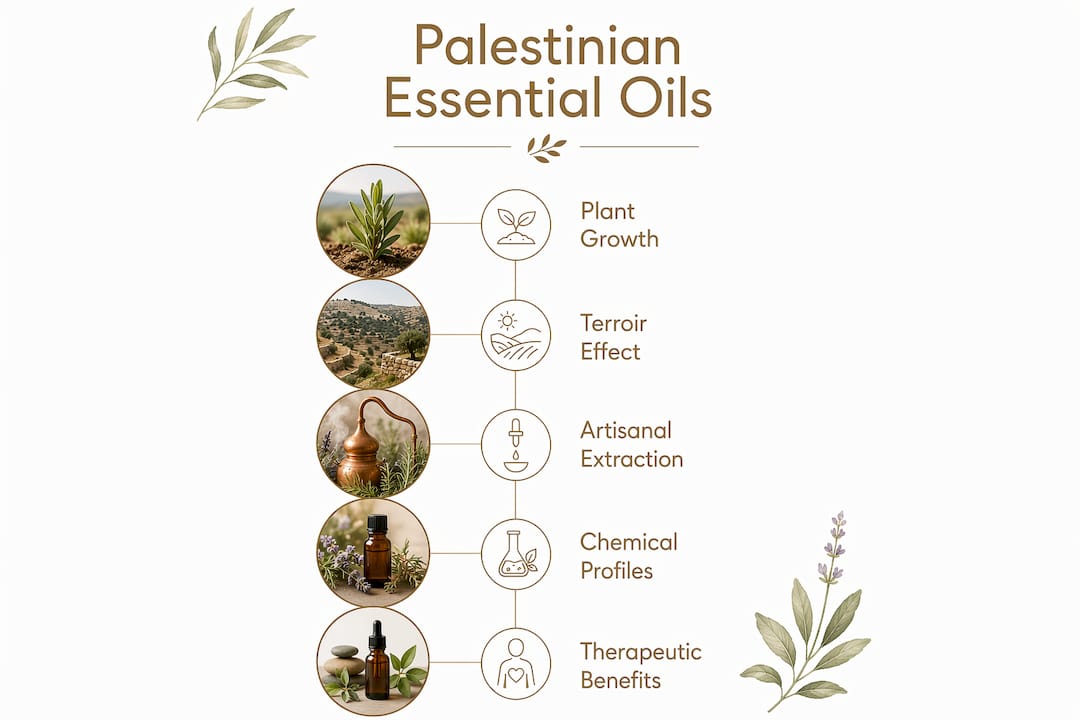
The practical result is striking. Regional chemical profiles of Ruta chalepensis oils from Jerusalem and Hebron show high concentrations of linalyl acetate and β-linalool, which carry antioxidant and antibacterial properties. Oils from Jenin, by contrast, are rich in 2-undecanone and 2-nonanone, compounds with pronounced antifungal activity. The same species, grown just a few dozen kilometres apart, produces a chemically distinct oil with a different therapeutic application. That is terroir in action.
Environmental factors including soil mineral content, pH, temperature, and altitude all influence the biosynthesis and yield of essential oils in Palestinian flora. Warmer, drier conditions specifically boost phenolic monoterpenes like carvacrol and thymol. These are the compounds most associated with antimicrobial and anti-inflammatory activity.
Thymus capitatus illustrates this variation clearly. Oil from Ramallah is dominated by carvacrol and γ-terpinene. Jenin oil is high in γ-terpinene and cis-β-terpineol. Hebron oil is rich in thymol and β-caryophyllene, with measurably different antioxidant and antimicrobial potency. Each micro-climate produces a distinct biochemical fingerprint.
Key environmental drivers behind Palestinian oil potency:
Limestone soils create alkaline, mineral-rich conditions that stress root systems and concentrate secondary metabolites.
Water scarcity forces plants to produce more volatile compounds as a survival mechanism.
Altitude variation across the West Bank shifts temperature and UV exposure, altering compound ratios.
Seasonal extremes between dry summers and cool winters increase the density of aromatic glands in leaf tissue.
Plant species | Region | Dominant compounds | Primary activity |
Ruta chalepensis | Jerusalem, Hebron | Linalyl acetate, β-linalool | Antioxidant, antibacterial |
Ruta chalepensis | Jenin | 2-undecanone, 2-nonanone | Antifungal |
Thymus capitatus | Ramallah | Carvacrol, γ-terpinene | Antimicrobial |
Thymus capitatus | Hebron | Thymol, β-caryophyllene | Antioxidant, anti-inflammatory |
Pro Tip: When buying Palestinian essential oils, ask for the specific region of origin. An oil labelled simply “thyme” tells you very little. One labelled “Thymus capitatus, Hebron harvest” tells you its likely carvacrol content and antimicrobial profile.
How artisanal distillation preserves what the land creates
The chemistry produced by Palestine’s terroir is only as good as the extraction method used to capture it. This is where traditional Palestinian production separates itself from industrial alternatives most sharply.
Smallholder family cooperatives across the West Bank still use slow steam distillation. In this method, plant material is loaded into a copper or stainless steel vessel, steam passes through at low temperature, and the volatile compounds are carried into a condenser where they separate from the water. The entire process is unhurried. That matters enormously.
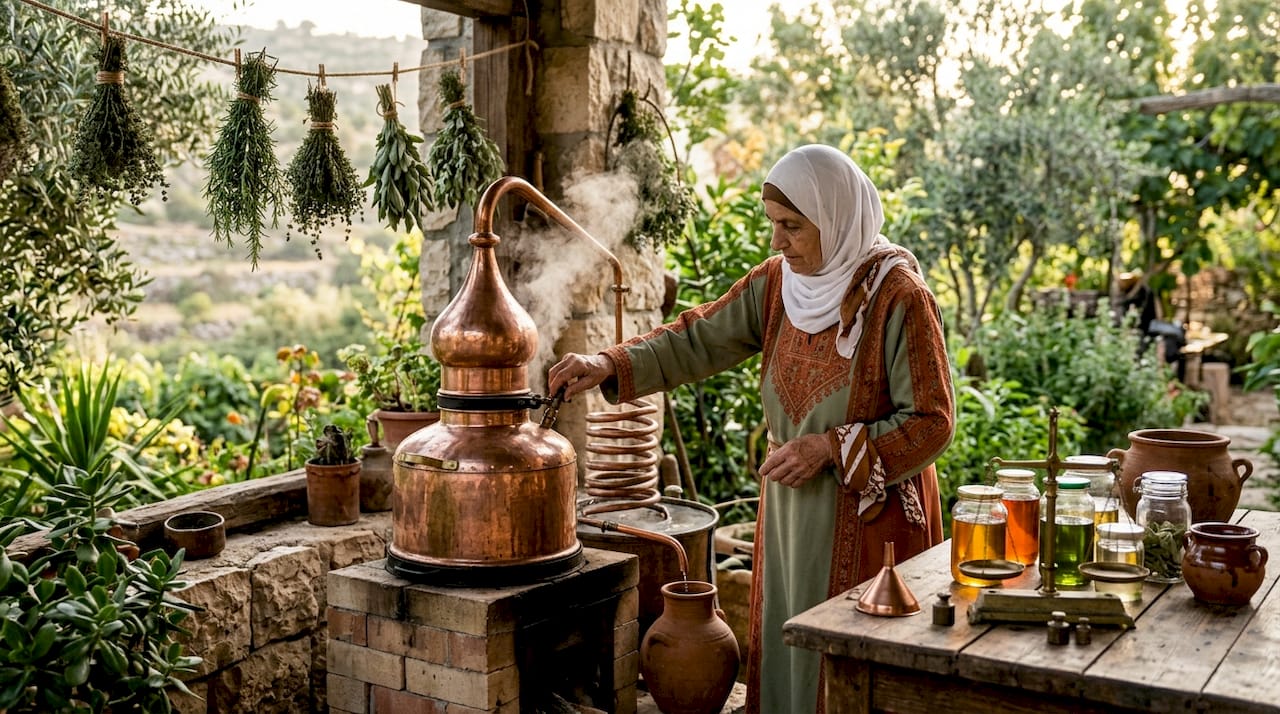
Industrial flash evaporation uses high heat and pressure to extract oil quickly and at scale. Speed destroys delicate top-note aroma compounds through thermal degradation. The resulting oil is consistent but flat, stripped of the lighter volatile fractions that contribute both scent complexity and therapeutic activity. Manual harvesting also excludes the mechanical stress and oxidation typical in machine-shaken commercial crops, preserving volatile compounds from the moment of picking through to bottling.
Palestinian wild sage is a clear example. Its oil contains thujone, camphor, and many other compounds recognised for antimicrobial, anti-inflammatory, and hormonal balance properties. These compounds survive only when extraction temperatures stay low. Industrial processing would degrade thujone and camphor within minutes.
Signs of authentic artisanal Palestinian essential oils:
Region-specific labelling: genuine producers name the village or district of harvest.
Small batch sizes: artisanal production runs in kilograms, not tonnes.
Harvest date included: authentic oils carry the season and year of distillation.
Colour and viscosity variation: batch-to-batch variation is a marker of authenticity, not a flaw.
No added carriers: pure oils require no dilution or synthetic fixatives.
Pro Tip: Artisanal variability is a quality signal, not a consistency problem. Contrary to industrial standardisation aiming for uniformity, authentic Palestinian oils are valued precisely because their variability reflects terroir and medicinal-grade production.
What does the science say about Palestinian essential oils’ therapeutic benefits?
The therapeutic claims around Palestinian essential oils are not folklore. They are supported by peer-reviewed research examining specific compounds and specific cell lines.
Salvia palaestina essential oil demonstrates selective cytotoxic activity against cancer cell lines, achieving 62.8% cell death in oesophageal cancer lines and 52.3% in ovarian cancer lines at 100 µl/ml concentration after 72 hours. The safety index of 8.5 and 6.8 respectively indicates the oil targets cancer cells while leaving healthy cells largely unaffected. That selectivity is what makes these findings significant rather than merely interesting.
Thymus capitatus and Origanum syriacum carry potent antimicrobial compounds effective against drug-resistant bacteria. High concentrations of rosmarinic acid, carnosic acid, and thymol inhibit pathogens including Staphylococcus aureus and Escherichia coli. These are not minor organisms. They are among the most clinically significant bacterial threats in modern medicine.
Key bioactive compounds and their documented effects:
Carvacrol: broad-spectrum antimicrobial, active against both Gram-positive and Gram-negative bacteria.
Thymol: antifungal and antioxidant, shown to inhibit biofilm formation in resistant strains.
Rosmarinic acid: anti-inflammatory and antioxidant, with emerging evidence for neuroprotective activity.
Thujone and camphor: found in Palestinian sage, associated with antimicrobial and hormonal-regulating properties.
Linalyl acetate: antioxidant and sedative, present in high concentrations in Jerusalem-region Ruta chalepensis oils.
The anti-aging applications of these compounds are equally well-supported. Rosmarinic acid (as in inula oleoresin) inhibits collagen-degrading enzymes, while thymol reduces oxidative stress in skin tissue. Palinova’s Sumac Seed Oil draws on this same biochemical logic, concentrating antioxidant compounds from a plant adapted to extreme environmental stress.
The cultural and socio-economic roots of Palestinian oil production
Palestinian essential oil production is not simply an agricultural activity. It is a form of cultural continuity and economic resistance that shapes the quality of every bottle produced.
Family cooperatives organise harvesting around ancestral knowledge rather than industrial schedules. Harvest timing in Summer favours higher concentration and potency of essential oils over yield volume. Farmers accept less oil per harvest in exchange for greater biocompound density. That trade-off is only possible when the goal is quality rather than throughput.
The age of native Palestinian trees and plants adds another layer of biochemical complexity. Native trees often reach 1,000 to 2,000 years old, and their root systems and biochemical profiles are impossible to replicate in younger cultivated plants. Older root systems access deeper mineral layers, producing oils with compound ratios that younger plants simply cannot match.
Cultural practices around harvesting reinforce this quality. Hand-picking is not merely a technique. It is a ritual that determines which leaves are taken, at what time of day, and under what conditions. The cultural intent behind hand-harvesting is considered as important to therapeutic value as the chemical composition itself.
“Farming in Palestine is not just about producing food or oils. It is about maintaining a living connection to the land, preserving ancestral knowledge, and sustaining communities that have cultivated these plants for generations. Each harvest is an act of cultural memory.”
The fair-trade cooperative model ensures that the economic value of these oils flows back to the families who produce them. This is not a marketing claim. It is a structural feature of Palestinian smallholder production that directly affects how oils are grown, harvested, and distilled.
Key takeaways
Palestinian essential oils are uniquely potent because their terroir, artisanal extraction, and cultural harvesting practices combine to produce bioactive compound concentrations that industrial methods cannot replicate.
Point | Details |
Hydro-stress terroir | Rocky, limestone soils and water scarcity force plants to produce higher concentrations of carvacrol, thymol, and eucalyptol. |
Regional chemical variation | The same species grown in Ramallah, Hebron, or Jenin produces distinct compound profiles with different therapeutic applications. |
Artisanal distillation | Slow copper-still steam extraction at low temperatures preserves delicate volatile compounds that industrial flash evaporation destroys. |
Scientific validation | Salvia palaestina oil achieved 62.8% cell death in oesophageal cancer lines with a safety index of 8.5, demonstrating selective therapeutic activity. |
Cultural harvesting | Ancestral timing and hand-picking prioritise potency over volume, embedding quality into every stage of production. |
What I have learned from years of working with Palestinian botanicals
abdelmuhsen’s perspective
Most people approach essential oils as a product category. They compare prices, read ingredient lists, and pick the bottle with the best label. That approach misses the point entirely when it comes to Palestinian oils.
What I have found, working closely with these botanicals, is that the chemistry and the culture are inseparable. You cannot understand why Thymus capitatus from Hebron has a different antioxidant profile than the same species from Jenin without understanding the soil, the altitude, and the farmer who decided when to harvest. The science confirms what the farmers already knew.
The part that surprises most people is the variability. Buyers trained on industrial products expect consistency. Palestinian oils vary by season, by micro-climate, by the age of the plant. That variability is not a quality problem. It is the evidence that the Plants came from a real place, grown under real conditions, not standardised in a processing facility.
What concerns me is that this knowledge is fragile. When farming communities lose access to their land, the ethnobotanical knowledge goes with it. The oils become just another commodity. Supporting authentic Palestinian production is not a lifestyle choice. It is the only way to preserve the conditions that make these oils what they are.
The future of Palestinian essential oils depends on consumers who understand provenance. If you know why the oil matters, you will not accept a substitute.
— abdelmuhsen
Authentic Palestinian essential oils from Palinova
Palinova (Florastina) brings together the oils discussed in this article into a curated collection sourced directly from Palestinian smallholder cooperatives.
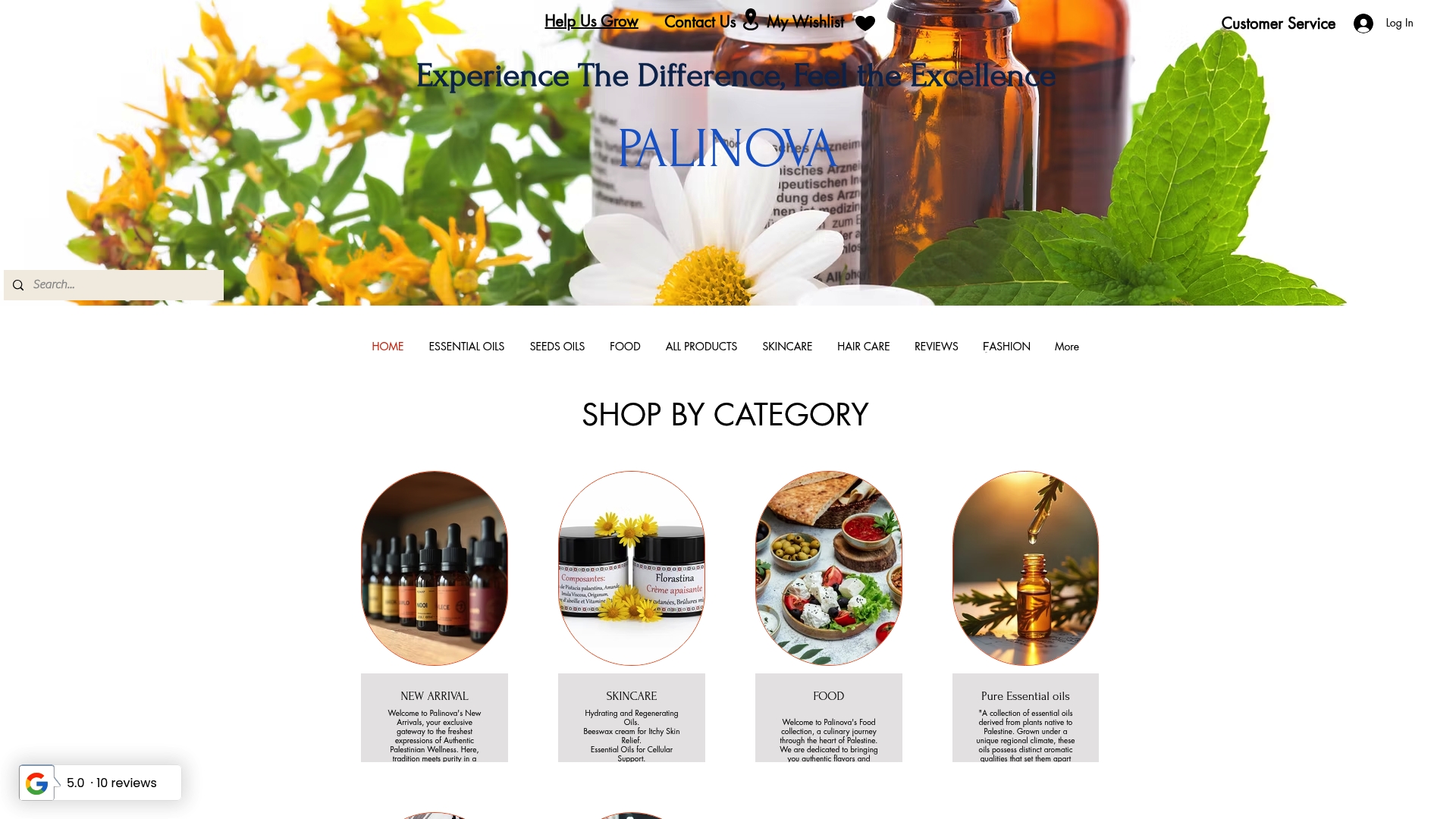
The range includes wildcrafted cypress essential oil, steam-distilled using traditional methods that preserve its full aromatic profile, and pure za’atar oil from Origanum syriacum, one of the most studied Palestinian herbs for antimicrobial activity. Every product is free from synthetic additives and carries full provenance information. Palinova also offers free aromatherapy consultations to help you match the right oil to your specific wellness needs. The full collection of Palestinian essential oils reflects the terroir, the tradition, and the science covered here.
FAQ
What makes Palestinian essential oils more potent than commercial oils?
Palestinian plants grow under hydro-stress conditions in limestone-rich, semi-arid soils, which forces them to produce higher concentrations of volatile compounds like carvacrol and thymol. These concentrations are measurably higher than those found in irrigated commercial crops.
Which Palestinian essential oil has the strongest scientific evidence for therapeutic use?
Salvia palaestina essential oil has demonstrated selective cytotoxic activity against oesophageal and ovarian cancer cell lines, with a safety index of 8.5 and 6.8 respectively, making it one of the most scientifically documented Palestinian oils.
How do I know if a Palestinian essential oil is genuinely artisanal?
Authentic artisanal oils carry region-specific labelling, a harvest date, and show natural batch-to-batch variation in colour and aroma. Oils without this information are likely produced through industrial extraction.
Do different regions of Palestine produce different oils from the same plant?
Yes. Ruta chalepensis from Jerusalem and Hebron is rich in linalyl acetate and β-linalool, while Jenin oil from the same species contains 2-undecanone and 2-nonanone, giving it a different antimicrobial profile entirely.
What Palestinian essential oils are good for skin health?
Boswilla Sacra, Palestinian helichrysum italicum and inula viscosa contain many compounds, of which reduce oxidative stress in skin tissue. Barbary Fig and Sumac Seed Oils are particularly noted for its anti-aging properties due to its high antioxidant concentration.
Recommended

Comments