
Choose Essential Oils by Origin: Science Backed Safety Steps

Plant origin changes an essential oil’s chemistry and scent, and that change ripples through effect, safety, and sustainability. Two bottles labeled “lavender” can smell and act differently depending on the soil, altitude, and climate where the plant grew. Origin disclosure on a label is a fast proxy for how transparent and traceable a supplier actually is, so checking it before you buy tells you far more than a pretty package ever will.
TL;DR:
Verifiable origin details, including Latin botanical names and specific regions, are crucial to assess the authenticity and chemical profile of essential oils.
Batch-specific information, harvest dates, and access to GC/MS reports help confirm quality and traceability, especially for single-origin oils.
Oils from higher elevations or drought-stressed plants may have different scent, potency, and safety profiles, requiring careful selection based on intended use.
Vague or generic origin claims and marketing terms like “therapeutic grade” should raise questions about transparency and sourcing practices.
Proper dilution guidelines depend on the chemotype, with high-phenol oils requiring lower concentrations to minimize skin irritation.
Table of Contents
Why Plant Origin Matters When Choosing Essential Oils
The same species grown in two different valleys can produce oils with meaningfully different chemical fingerprints. Soil mineral content, rainfall, temperature swings, and hours of direct sunlight all influence how a plant builds its volatile compounds, the aromatic molecules that get concentrated during distillation. A rosemary plant stressed by drought on a rocky hillside often produces a different ratio of camphor to cineole than one grown in cooler, wetter lowland soil.
Altitude adds another layer. Plants grown at higher elevations face more UV exposure and cooler nights, which can push them to produce higher concentrations of certain protective compounds. This is why two suppliers can sell “the same” oil from the same species and hand you two genuinely different products.
Genetics complicate things further. A single species can have multiple chemotypes, meaning plants that look identical but produce distinct chemical profiles based on genetic variation. This is exactly why the Latin botanical name on a label matters more than the common name. “Thyme” could mean Thymus vulgaris CT thymol (potent, warming, best diluted carefully) or Thymus vulgaris CT linalool (gentler, more skin-friendly). Common names hide that distinction; Latin names don’t.
Harvest timing shifts things too. A plant cut before flowering yields a different oil than the same plant harvested at peak bloom, which is part of why batch-to-batch variation is normal rather than a sign of poor quality. Researchers increasingly use isotope and multielemental fingerprinting alongside chemometric analysis to verify where a plant actually grew, a method that’s reshaping how origin claims get checked at the supplier level.
What environment changes in an essential oil:
Ratio of major aromatic constituents (not just presence, but proportion)
Overall potency and intensity of scent
Skin sensitivity risk, since some chemotypes are more irritating than others
Shelf stability, since some constituent profiles oxidize faster than others
Pro Tip: If a supplier lists only “lavender oil” with no Latin name or growing region, treat that as a starting question, not a finished answer. Ask which species and, if possible, which harvest.
What should be on an essential oil label?
A trustworthy label gives you enough information to judge the oil before you open the bottle. Missing pieces aren’t automatically dishonest, but they should prompt questions.
Botanical Latin name (e.g., Origanum syriacum, not just “oregano oil”)
Country or region of origin, ideally specific enough to mean something (not just “Mediterranean”)
Extraction method, since steam distillation and cold pressing produce different chemical results
Batch or lot number, tying the bottle to a specific production run
Harvest or distillation date, when the supplier tracks it
Watch for these warning signs:
Vague origin claims like “sourced globally” with no specifics
No Latin name anywhere on the packaging or product page
Unregulated “therapeutic grade” language, a marketing term with no legal or scientific standard behind it
Reluctance to share a GC/GC-MS report when asked
A gas chromatography mass spectrometry (GC/MS) report shows the actual chemical breakdown of a specific batch, listing individual compounds by percentage. Reputable suppliers can usually produce one on request, according to Tisserand Institute’s supplier evaluation guidance, which names missing botanical names or origin details as clear red flags in the industry. Single-origin oils should name one specific growing region; blends should disclose each component’s origin separately rather than averaging them into a vague claim. For a broader primer on ingredient transparency, this guide to reading skincare labels applies the same scrutiny to cosmetic formulas.
How does origin affect essential oil safety?
Chemistry differences aren’t just academic. They change how an oil behaves on your skin or in your diffuser. A high-phenol oil like oregano or thyme CT thymol can irritate skin far more aggressively than a linalool-dominant lavender, even though both are technically “natural.” Some citrus oils carry phototoxic compounds that react with sunlight and can cause burns or discoloration on exposed skin, a risk that varies by species and processing method.
Essential oils are also far more concentrated than the plant material they came from, 50 to 100 times more concentrated in some cases, which is why dilution matters regardless of how “gentle” an oil seems.
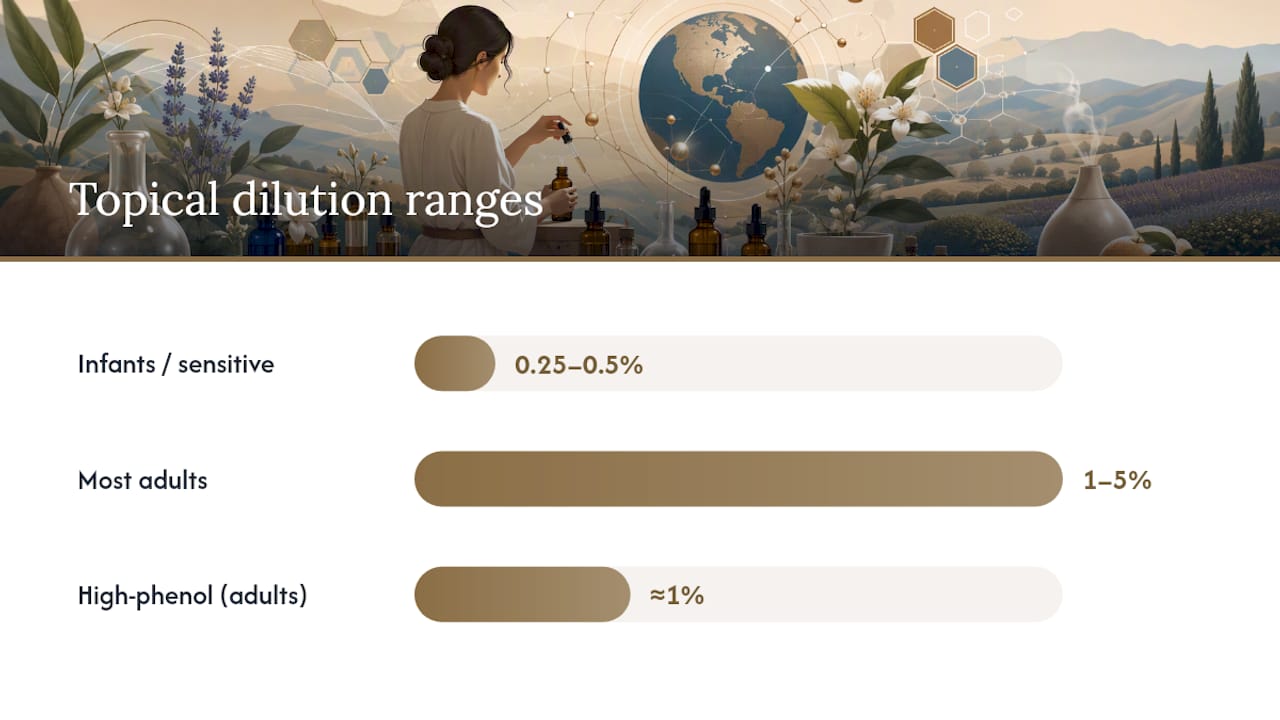
Most adults can safely use topical dilutions of 1% to 5%
Infants and sensitive skin often need dilutions closer to 0.25% to 0.5%
High-phenol chemotypes call for the lower end of any range, even for adults
Internal use should stay off the table unless a qualified professional is supervising
Our dilution guide for skin and rituals walks through specific ratios for common applications, and clinicians generally recommend treating any internal use as a decision made with a doctor, not a hobbyist experiment.
Why does provenance matter beyond scent and safety?
Origin disclosure protects more than your skin. It protects the people and land the oil came from. When a supplier names a specific region, farm, or cooperative, that’s a signal they can trace the product back through the supply chain, which usually means fairer payment to growers and less pressure on wild plant populations.
Some regions carry premium pricing because their growing conditions produce especially prized chemical profiles, and that premium can tip toward overharvesting or, in worse cases, illegally sourced material passed off as legitimate. Verification isn’t just marketing language. Real methods exist: third-party audits, organic or fair-trade style certifications where applicable, and the same isotope and chemometric fingerprinting researchers use to confirm geographic claims scientifically.
Questions worth asking a supplier before you buy:
Which farm, cooperative, or region did this specific batch come from?
How do you verify that claim internally?
What happens to farmers or harvesters when demand for this oil spikes?
Do you rotate sourcing regions, and if so, why?
Palinova’s own sourcing practices, detailed in this post on sustainable essential oil sourcing, lean on exactly this kind of specificity rather than vague sustainability language.
How do you choose the right oil using origin information?
Turn everything above into a shopping habit. Start by deciding what you actually want from the oil: a specific scent profile, a therapeutic use case, or peace of mind about ethical sourcing. That decision determines how much you should prioritize single-origin bottles over blends.
Check the label for a Latin name, region, batch number, and extraction method before adding to cart
Ask whether a GC/MS report is available for that specific batch, not just the product line in general
Look for any grower or region story on the product page or supplier site
Note storage conditions and expiration guidance, since heat and light degrade oils faster than most people expect
Decide whether a cost-focused blend or a provenance-disclosed single-origin oil fits your actual use case
When testing a new oil at home, patch test it first, record the batch number somewhere you’ll remember, and note how it smells and performs over the following days. Composition shifts from batch to batch are normal for an agricultural product distilled from plants, not a sign something’s wrong.
Pro Tip: Keep a simple log, batch number, purchase date, and how the oil smelled on day one versus month three. Oxidation changes scent profiles over time, and a log helps you catch it early.
What transparent sourcing actually looks like
A supplier serious about provenance doesn’t hide behind marketing copy. They name the botanical species, disclose the growing region down to something specific, and can tell you when a batch was harvested and distilled.
[
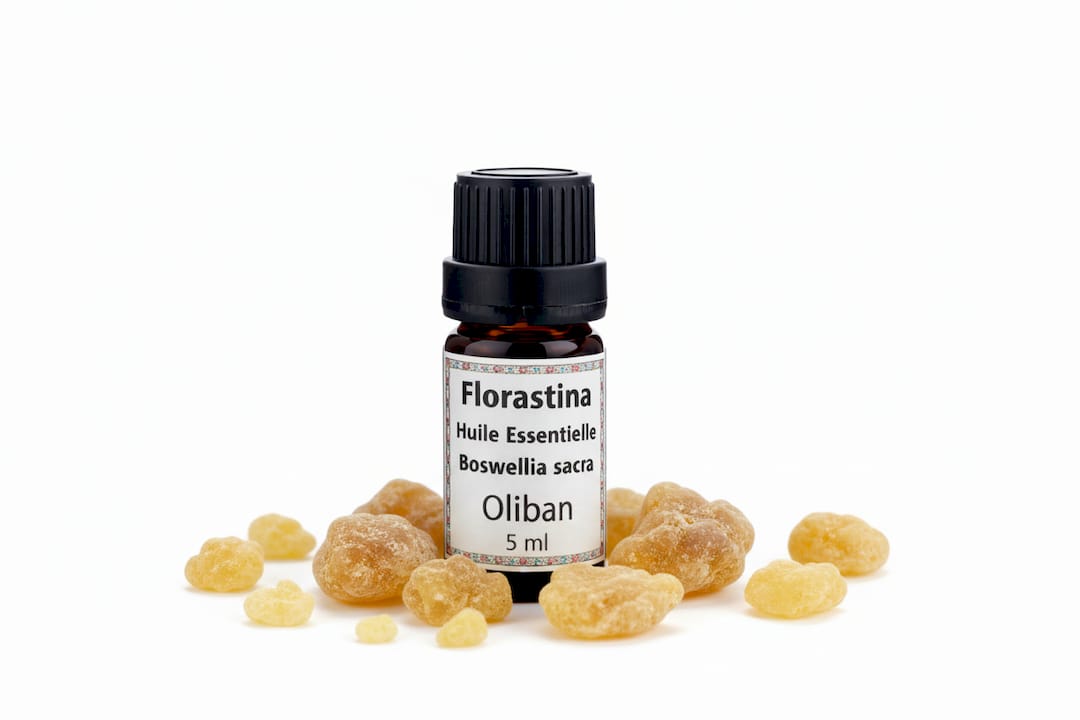
Some suppliers build their oils around this standard, naming the botanical species on product pages and tying each oil back to the agricultural regions it comes from. That transparency can extend to blog content explaining sourcing decisions rather than just listing them as bullet points on a product page.
What to look for in any supplier’s disclosures:
Full Latin botanical name, not just a common name
Named growing region, not a vague continent or hemisphere
Harvest notes or seasonal context when available
Batch-specific information tied to what you’re actually buying
Balancing aroma, safety, and incomplete origin data
Most oils on the market won’t hand you a full GC/MS report or a named farm. That’s the reality of a global supply chain, not necessarily a red flag by itself. What matters is how a supplier responds when you ask for more.
Prioritize documented transparency over confident marketing language every time. If a company can’t tell you the species or region, that’s worth more weight than a bold claim of “pure” or “therapeutic grade.” Some variability is simply the nature of a natural, seasonal product, and that’s fine, as long as the supplier isn’t using vagueness to hide something they should be able to explain.
— abdelmuhsen
Try oils with sourcing you can actually verify
Palinova sources every oil from specific agricultural regions across Palestine, naming the botanical species and growing conditions instead of hiding behind generic labels. That’s the direct alternative to guessing whether a bottle marked “natural” actually discloses anything meaningful. Browse the essential oils collection to see species and origin details on each product page, including the Za’atar essential oil, which lists its botanical name and regional sourcing directly. If you’re unsure which oil fits your skin type or intended use, some suppliers offer consultations to walk through dilution and selection before you commit to a bottle. Start by checking the essential oils page for the current lineup and origin details on each listing.
Sources
FAQ
What should I avoid when buying essential oils?
Avoid bottles with no Latin botanical name, no country or region of origin, and unverifiable “therapeutic grade” claims, since none of those are regulated terms and their absence often signals a supplier that isn’t tracking sourcing closely.
Is lavender oil a hormone disruptor?
Some early lab research raised questions about lavender and tea tree oils and hormone activity, but the findings are limited and don’t establish that typical topical use causes hormone disruption in people; anyone concerned should discuss specific use with a doctor rather than avoiding the oil outright based on preliminary data.
How can I tell if an essential oil is high quality?
Check for a Latin botanical name, a specific country or region of origin, batch or lot information, and a supplier willing to share a GC/MS report on request, since those details together indicate real traceability rather than marketing language.
Is there a single “best” essential oil?
No single oil works for everyone, since quality depends on species, chemotype, region, and how the oil was processed rather than any one plant being universally superior; the right choice depends on your specific goal, whether that’s scent, skin application, or a documented safety profile.
Recommended


Comments