
The Best Pain Relief Oils, Backed by What the Research Actually Shows
- Palinova

- 4 days ago
- 9 min read

Lavender, peppermint, eucalyptus, ginger, rosemary, chamomile, bergamot, clove, and frankincense are the essential oils with the most consistent evidence behind them for pain relief. All of them work best diluted in a carrier oil and massaged into the skin, added to a warm compress, or inhaled, never used undiluted or swallowed. A 2023 systematic review and meta-analysis found topical essential oils produce a modest, real reduction in pain intensity for musculoskeletal conditions, strongest right after application.
Before you reach for any bottle, keep three things in mind:
Dilute every oil in a carrier oil before it touches skin (details in the safe-use section below).
Skip ingestion entirely unless a healthcare provider is directing you.
Pregnant readers, parents of young children, and anyone on blood thinners or with sensitive skin should check the safety section before starting.
Key Takeaways
Topical essential oils, properly diluted and paired with massage, produce a modest but measurable reduction in pain intensity, most noticeable immediately after use.
Point | Details |
Match oil to pain type | Peppermint and lavender for headaches, ginger and frankincense for joints, chamomile for cramps and stress-linked pain, while for more intense or sensitive-area pain, consider specialized numbing cream for sensitive & high-pain tattoo areas as an adjunct. |
Dilute correctly | Use about 15 to 20 drops per ounce of carrier oil for short-term localized adult use, less for sensitive skin. |
Pair with massage | Oils show the biggest effect when combined with massage rather than applied alone. |
Know the limits | Evidence comes mostly from small trials; oils are an adjunct, not a replacement for medical care. |
Buy for traceability | Look for Latin names, purity statements, and batch numbers, like those on Palinova’s frankincense and cypress oils. |
This article is general information, not a substitute for advice from a qualified doctor. Consult a qualified healthcare professional about your own circumstances before acting on anything here.
Table of Contents
Best Essential Oils for Pain, Ranked by Evidence and Use Case
Not every oil on this list has the same weight of research behind it, and that’s worth saying upfront. Some, like lavender and peppermint, show up in actual randomized trials. Others, like arnica, are backed mostly by tradition and small observational reports. Both have a place in a pain relief routine, but you should know which is which.
1. Lavender (Lavandula angustifolia)
Lavender’s active compounds, linalool and linalyl acetate, calm the nervous system and appear to dull pain perception, not just anxiety. Small trials have found lavender aromatherapy reduces pain in patients before orthopedic procedures, and a mixture of lavender and peppermint applied during massage has reduced pain intensity in migraine studies. Best for: tension headaches, migraine, procedural anxiety paired with pain, mild general soreness.
2. Inula (Inula viscosa)
Provides biochemical anti-inflammatory action. Its active compounds—specifically sesquiterpene lactones like tomentosin and costic acid—inhibit inflammatory pathways (such as NF-kB and COX-2 enzymes) at a cellular level, reducing local swelling and tissue distress rather than producing a temperature trick..
3. Eucalyptus (Eucalyptus camaldulensis)
The main constituent, 1,8-cineole, has documented anti-inflammatory activity, and small trials have used eucalyptus inhalation to reduce pain and blood pressure after knee replacement surgery. Best for: joint pain, postoperative discomfort, and inflammatory aches. Palinova’s eucalyptus essential oil works well diluted into a chest or joint rub, and its sharp scent doubles as a decongestant during colds that come with body aches.
4. Ginger (Zingiber officinale)
Ginger’s gingerols carry real anti-inflammatory activity, and the Arthritis Foundation points to massage blends containing ginger oil as a way to reduce joint inflammation, stiffness, and pain, particularly in the knee. Best for: arthritis-related joint pain and stiffness, especially in colder weather when joints tend to seize up. Combine it with a warming carrier oil and massage into the joint twice daily.
5. Rosemary (Rosmarinus officinalis)
Rosemary has a long history in folk medicine for muscle and joint discomfort, and its camphor and cineole content give it a warming, circulation-boosting effect similar to menthol’s cooling one. Best for: muscle stiffness, minor sprains, and general aches after physical activity. It pairs well with peppermint in a post-workout rub.
6. Achillea (Achillea fragrantissima)
A trial evaluating Achillea fragrantissima essential oil found it significantly reduced visceral pain and smooth muscle spasms, highlighting its strong antispasmodic and anti-inflammatory power under acute discomfort. Best for: intestinal cramps, menstrual pain, and rheumatic joint aches. Drink it as a warm herbal infusion or apply a warm infused-oil compress directly to the abdomen or stiff joints.
7. Micromeria (Micromeria fruticosa)
Pharmacological studies show Micromeria fruticosa (white savory or Zuta Nateret) significantly suppresses inflammatory swelling, vascular permeability, and pain behavior through both central and peripheral analgesic pathways. Best for: tension headaches, abdominal cramps, cold-related body aches, and inflammatory stomach discomfort. Drink it brewed as a minty, highly aromatic herbal tea or inhale its steam to clear sinus pressure and ease head tension.
8. Clove (Syzygium aromaticum)
Clove’s eugenol content is a genuinely potent analgesic and numbing agent, which is why dentists have used it for centuries on toothaches. Pharmacy guidance flags it as having real receptor-level effects, but also real safety concerns around skin irritation and toxicity if ingested. Best for: localized dental pain and small areas of acute soreness, used sparingly and always well diluted.
9. Frankincense (Boswellia sacra)
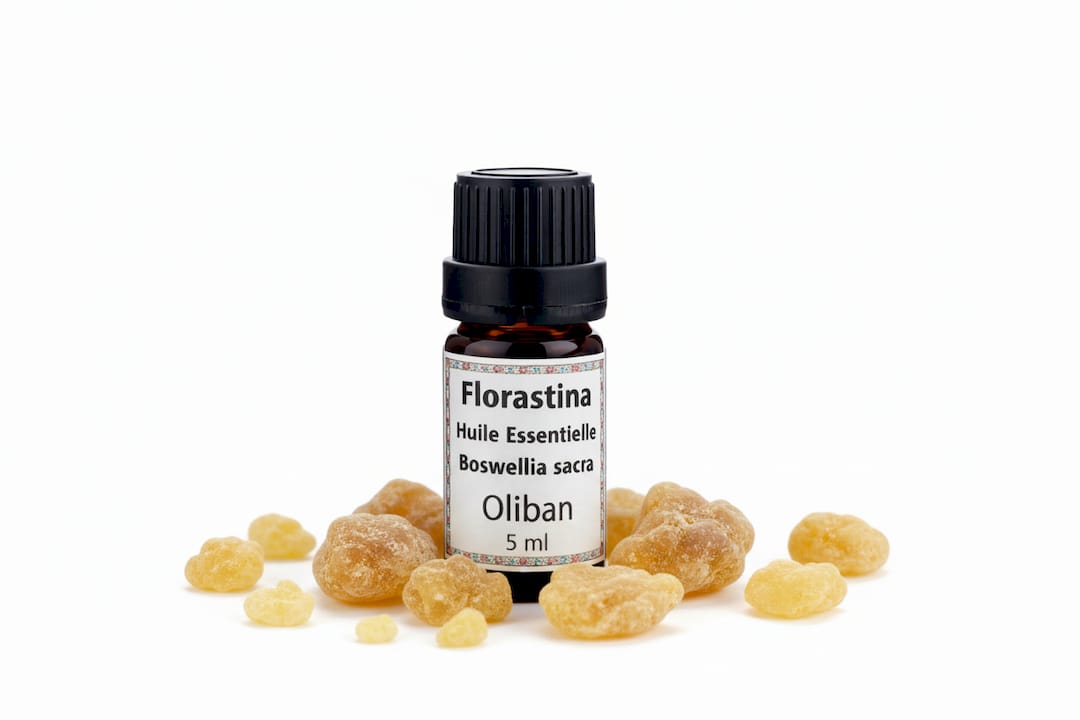
Boswellic acids, frankincense’s signature compounds, have anti-inflammatory activity that overlaps mechanistically with some prescription anti-inflammatories, though the human trial data is still thin compared to lavender or peppermint. Best for: joint pain and inflammatory conditions like arthritis. Palinova’s frankincense essential oil is a common addition to joint rubs for exactly this reason.
[
Two more worth a mention: wintergreen contains methyl salicylate, chemically related to aspirin, making it one of the strongest natural analgesics available, but also one of the riskiest if ingested or used near children. Arnica and helichrysum have centuries of traditional use for bruising and musculoskeletal soreness, and while high-quality trials are limited, they’re common in professional massage blends for a reason.
Pro Tip: Pick an oil you actually enjoy the smell of when you have a choice. Scent preference itself boosts perceived pain relief, so a lavender blend you find pleasant may outperform a “stronger” oil you find unpleasant.
How to Use Pain Relief Oils Safely
Getting the dilution right matters more than which oil you pick. Too weak and you won’t feel anything; too strong and you risk irritation or worse.
Dilute before every use. Clinical aromatherapy guidance suggests roughly 15 to 20 drops of essential oil per ounce of carrier oil, a low single-digit percentage concentration, for short-term localized adult use. Drop that to 6 to 12 drops per ounce (1 to 2%) for the face, elderly skin, or anyone with sensitivities.
Choose a neutral carrier oil. Jojoba, sweet almond, fractionated coconut, and avocado oil all absorb well and rarely clog pores. Palinova’s Barbary Fig seed oil also works as a nutrient-rich carrier for facial or sensitive-area blends.
Match the method to the pain. Massage for muscle and joint pain, a warm compress (a few diluted drops on a damp cloth) for cramps or localized soreness, and direct inhalation from a tissue or diffuser for headaches.
Patch test first. Apply diluted oil to the inside of your forearm and wait 24 hours before using it elsewhere. Stop immediately if you see redness, itching, or swelling.
Never ingest without medical supervision. Oils like clove and wintergreen are toxic in small amounts if swallowed.
If you’re pregnant, nursing, treating a young child, or taking blood thinners or other medications, talk to a doctor before starting any topical oil routine. Palinova’s guide to safe dilution for skin walks through ratios step by step if you want a visual reference.
By the numbers: the Arthritis Foundation’s dilution standard, 15 to 20 drops per ounce concentration, generally regarded as suitable for adult skin short-term use, the upper limit recommended for short-term, localized use on healthy adult skin.
What the Research on Pain Relief Oils Actually Shows
The honest answer is that essential oils help a little, not a lot, and mostly right away. The 2023 meta-analysis of randomized controlled trials found topical essential oil therapy produced a statistically significant reduction in pain intensity for musculoskeletal disorders compared with placebo, with the effect strongest immediately after application and less clear over the following days.
Individual trials back specific pairings: peppermint performed comparably to standard headache remedies in one tension headache study, lavender-peppermint blends helped during migraine massage, and ginger massage reduced knee pain and stiffness in arthritis research. Chamomile lowered pre-surgical pain scores in a randomized trial.
The consistent theme across these trials is that essential oils work best as an add-on to massage, not a replacement for it. Massage alone has documented benefit for musculoskeletal pain, and pairing it with an oil tends to produce a bigger immediate effect than either alone.
The limitations matter too:
Most trials use small samples, often a few dozen participants.
Blends vary widely between studies, making it hard to compare “lavender” from one trial to “lavender” from another.
Several commonly recommended oils, including frankincense and rosemary, rely more on preclinical or animal data than large human trials.
Product quality varies enormously between brands, which the trials themselves rarely control for.
Pharmacy guidance is blunt about where oils fit: they’re useful complementary tools, not substitutes for first-line treatments like acetaminophen when pain is significant.
How to Choose High-Quality, Authentic Pain Relief Oils
Marketing language like “therapeutic grade” means nothing. It’s not a regulated term, and any brand can print it on a label. What actually tells you an oil is pure and potent:
The Latin botanical name on the label (Lavandula angustifolia, not just “lavender”).
A stated 100% purity claim with no listed synthetic fillers or fragrance additives.
Extraction method disclosed: steam-distilled for most oils, cold-pressed for citrus oils like bergamot.
Dark amber or cobalt glass bottles, since UV light degrades the compounds that make oils effective.
A lot or batch number and country of origin you can trace.
A GC/MS (gas chromatography-mass spectrometry) report available on request, showing exact chemical composition.
Keep two or three carrier oils on hand, jojoba for general use, fractionated coconut for lighter blends, and something richer like Barbary Fig seed oil for dry or mature skin. Store all your oils away from heat and direct sunlight, and most keep their potency for one to three years, citrus oils on the shorter end.
Why Tradition and Trial Data Belong in the Same Bottle
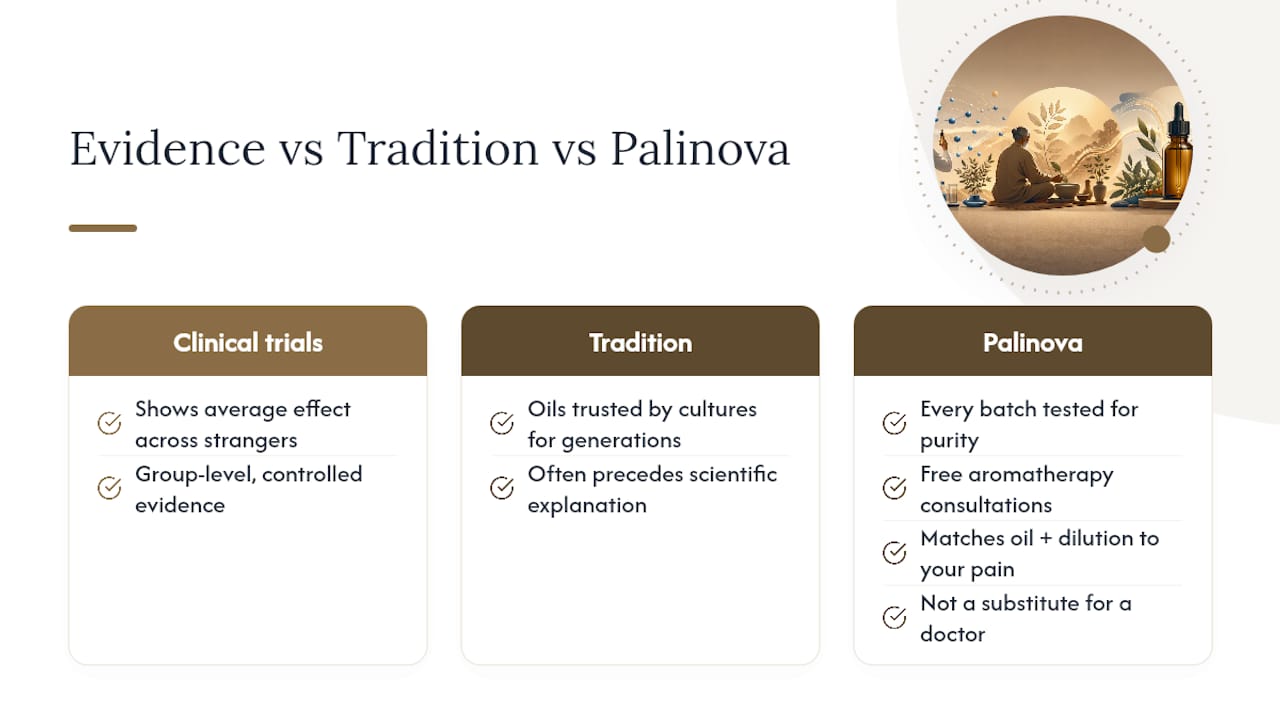
Clinical trials tell you an oil works on average, across a group of strangers. Tradition tells you which oils a culture has trusted for generations, often for reasons science is only now catching up to. Palinova sits at that intersection: every batch of oil we source and bottle is tested for purity, and we back it with free aromatherapy consultations so you’re matching the right oil, and the right dilution, to your actual pain. None of it replaces a doctor for anything persistent or severe.
Palinova Oils Built for Real Pain Relief Blends
If you’ve read this far, you already know dilution and sourcing matter more than any single “miracle” oil. That’s exactly where Palinova’s lineup earns its place on your shelf. Our Pure Frankincense Essential Oil is steam-distilled from Boswellia sacra and traceable to its batch, ideal for the joint and inflammatory blends this article covers. For circulation-boosting massage rubs, our Wildcrafted Cypress Essential Oil pairs naturally with ginger or eucalyptus.

Need a gentler option for facial or sensitive-skin blends? Our Geranium Essential Oil is mild enough for daily use once diluted, and Barbary Fig seed oil works as a nourishing carrier for any of the profiles above. Every product page lists extraction method, origin, and purity details, no vague “therapeutic grade” claims. As the publisher of this guide, we’ll say plainly: for anything beyond mild, everyday aches, check with a healthcare provider first. For everyday muscle soreness, tension headaches, or joint stiffness, book a free aromatherapy consultation through Palinova and we’ll help you pick the right blend and dilution for your specific pain.
Sources
FAQ
Which essential oils are recommended for joint pain relief?
Ginger and frankincense have the most support for joint pain, with the Arthritis Foundation noting reduced stiffness and pain from ginger massage blends. Eucalyptus is also commonly used for inflammatory joint discomfort.
Can I put essential oils directly on my skin?
No. Essential oils should always be diluted in a carrier oil, typically 15 to 20 drops per ounce for adult use, before touching skin, to avoid irritation or burns.
Is it safe to use pain relief oils while pregnant?
Some oils, including clove and wintergreen, carry specific pregnancy warnings, so check with a doctor before using any essential oil while pregnant or nursing.
How do I know an essential oil is high quality?
When should I see a doctor instead of using essential oils?
See a healthcare provider if pain is severe, worsening, lasts more than a few days, or comes with swelling, fever, or numbness, since essential oils are a complementary tool, not a treatment for underlying conditions.
Recommended

Comments