
1–10 Year Storage Plan for Essential Oils for Hobbyists
- Palinova

- 1 day ago
- 7 min read
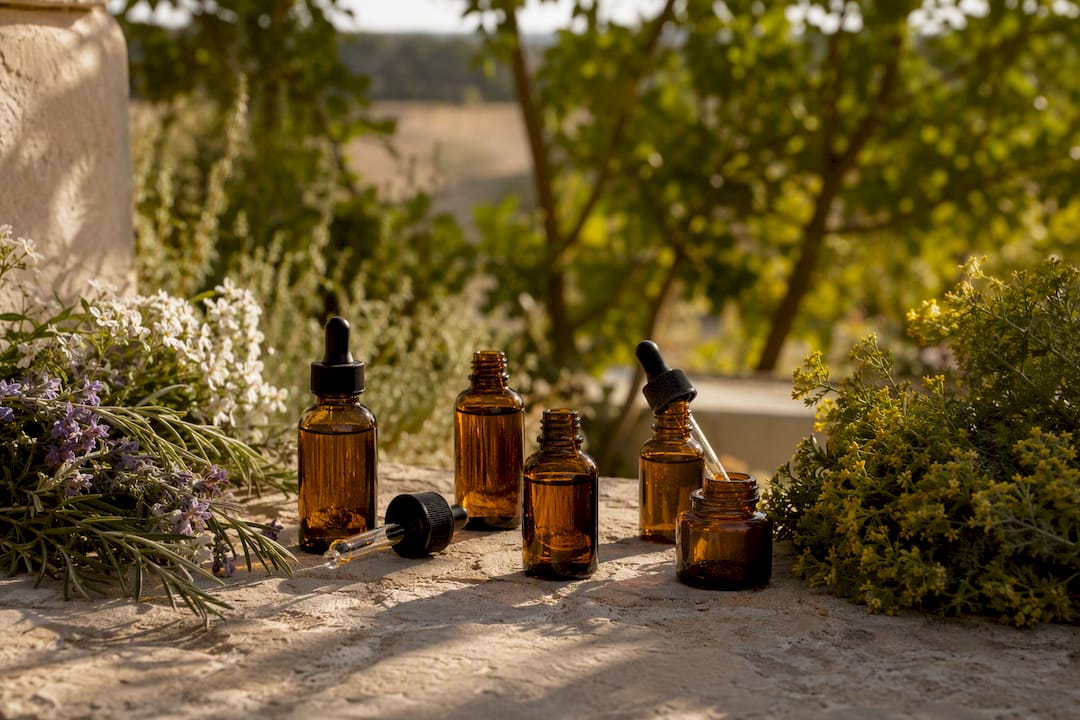
Store essential oils cool, dark, and airtight, and refrigerate citrus oils once opened, to preserve aroma and therapeutic quality the longest. Oxidation, driven by oxygen, light, and heat, is the main enemy of scent and potency. Get the container, temperature, and cap right, and most oils will outlast their reputation for going bad fast.
TL;DR:
Citrus oils typically last 1 to 2 years due to their high limonene content, which makes them volatile and prone to rapid oxidation.
Proper storage in dark glass bottles at stable, cool temperatures, along with labeling and rotating stock, significantly extends oil shelf life.
Oxygen, light, and heat accelerate oxidation, so refrigerated citrus oils and decanting small amounts for daily use help preserve freshness.
Signs of oxidized oils include off smells, darkened color, cloudiness, thicker consistency, and reduced scent complexity, which can cause skin irritation.
Heavier wood and resin oils like frankincense and sandalwood naturally resist degradation and can improve with age when stored correctly.
Table of Contents
Essential Oil Shelf Life by Type: What to Expect
Not every oil ages the same way, and that surprises a lot of people who assume “essential oil” means one uniform product with one uniform clock. It doesn’t. Chemistry determines the timeline, and chemistry varies wildly between a citrus peel extract and a tree resin.
Here’s roughly what to expect, assuming proper storage in dark glass away from heat:
Citrus oils (lemon, bergamot, sweet orange, grapefruit): about 1 to 2 years. High limonene content makes them volatile and fast to oxidize.
Herbaceous oils (lavender, rosemary, peppermint, tea tree): roughly 2 to 4 years, with some variation based on how they’re processed.
Floral oils (rose, jasmine, geranium, ylang ylang): generally 2 to 4 years, though ylang ylang tends to hold up longer than most florals.
Wood and resin oils (sandalwood, patchouli, frankincense, vetiver): 4 to 10 years or more, and several of these actually improve in aroma and depth as they age, the way a good whiskey does.
The fix for tracking all this is embarrassingly simple: write the purchase or opening date on the bottle with a piece of tape and a marker. Then use older stock first. This first-in, first-out habit is standard in professional kitchens and small-batch skincare labs for a reason. It works.
Why Do Essential Oils Lose Their Scent Over Time?
Three forces work against every bottle on your shelf: oxygen, light, and heat. Oxidation happens when oxygen molecules react with the compounds that give an oil its scent and its therapeutic properties, gradually converting them into different, less pleasant molecules. Ultraviolet light accelerates this reaction, which is exactly why clear glass bottles are a bad idea no matter how pretty they look on a shelf.
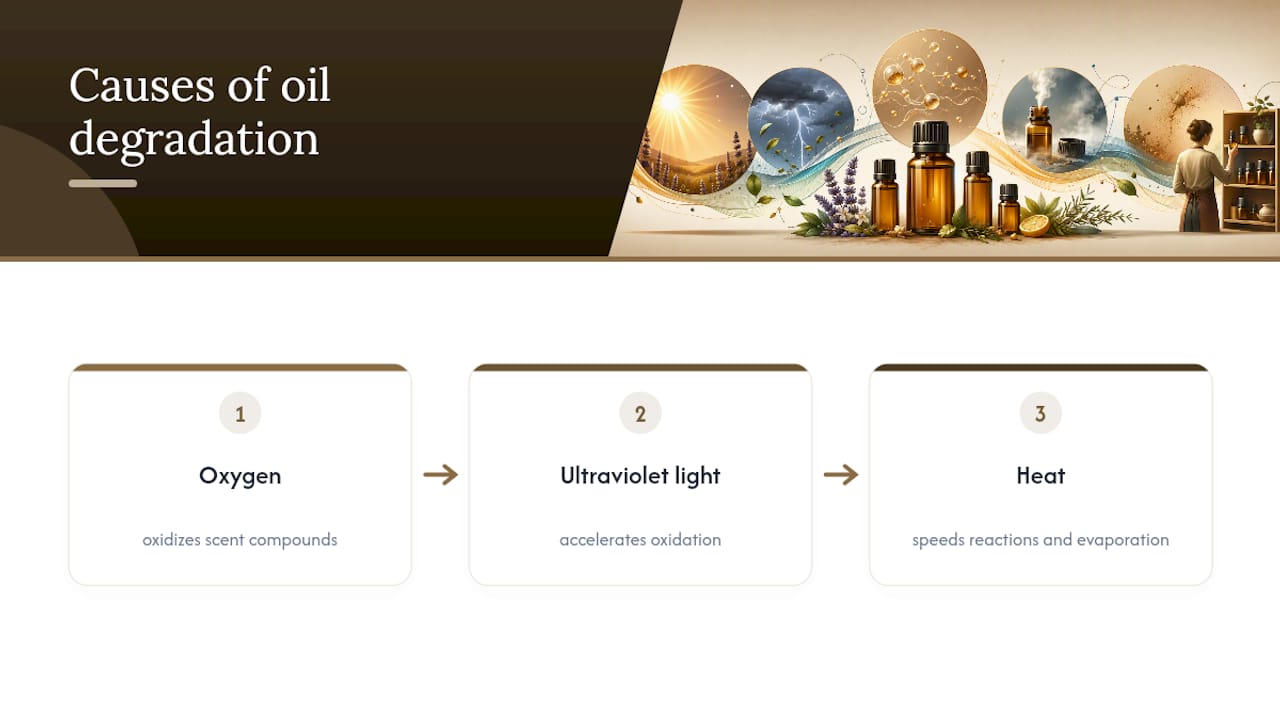
Evaporation compounds the problem. Every time you open a bottle, some volatile compounds escape into the air, and the lightest, most fragrant “top note” molecules go first. That’s why an old bottle of bergamot can smell thin and flat compared to a fresh one, even if it hasn’t visibly changed color.
Storage material matters more than most people realize. Certain plastics and some metals can react with essential oil compounds, altering the oil’s chemistry or leaching into it over time. The edible oil industry actually measures this kind of degradation with lab metrics like peroxide value and p-anisidine value, where a peroxide value above 3 meq/kg typically signals an oil has oxidized. You don’t need a lab to apply the lesson: oxidation is measurable, real, and cumulative, even when you can’t see it happening.
How to Set Up Proper Essential Oil Storage
Getting this right takes less effort than most people expect. Here’s the order of operations:
Buy in dark glass. Amber or cobalt blue glass blocks the UV light that speeds up oxidation. Skip clear glass and skip plastic almost entirely, since plastic can interact with concentrated plant compounds over months of contact.
Keep orifice reducers and caps snug. A loose cap lets oxygen sneak in every day, not just when you’re using the bottle. Check the reducer insert periodically. If it’s cracked or loose, replace it.
Pick a cool, stable spot. A closet, drawer, or dedicated storage box works better than a bathroom cabinet, where humidity and heat cycle constantly. A steady 60 to 70°F beats a bathroom that swings 20 degrees with every hot shower.
Refrigerate citrus oils. Cold storage dramatically slows the loss of limonene and other volatile top-note compounds in citrus oils specifically. Let refrigerated bottles come to room temperature before opening them, so condensation doesn’t form inside the bottle.
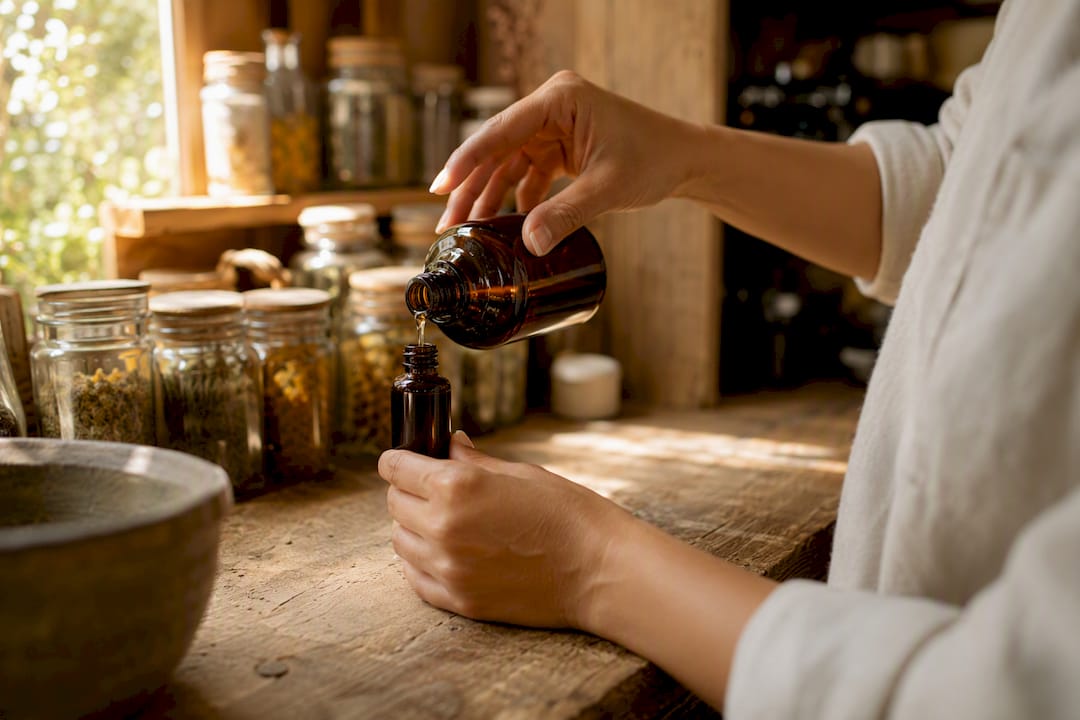
Decant your daily-use bottle. Pour a small working amount into a smaller bottle instead of opening your main stock bottle repeatedly. Every opening introduces oxygen and headspace, the empty air pocket above the liquid that speeds oxidation.
Label and rotate. Date every bottle, store older stock at the front, and use it first.
For travel, keep bottles upright in a padded case to prevent leaks and cap loosening from pressure changes. A basic storage toolkit costs very little: a few orifice reducers, a dark storage box, and a roll of small labels will cover most home collections.
Pro Tip: If you use an oil daily, decant a week’s worth into a tiny bottle and leave your main stock sealed in dark, cool storage. That single habit can add months to your primary bottle’s usable life, because you’re not repeatedly exposing the whole supply to air.
How Can You Tell If an Essential Oil Has Gone Bad?
Your nose is a better instrument than most people give it credit for. Signs of oxidation include:
A sour, sharp, or “off” smell that wasn’t there before, sometimes described as similar to old cooking oil.
A scent that feels flat or one-dimensional instead of layered, especially in a diffuser where it dissipates too fast.
Noticeable darkening or a cloudy appearance compared to when you bought it.
A thicker, more viscous texture than the oil originally had.
Safety matters here, not just aesthetics. Oxidized oils can cause skin irritation or sensitization that a fresh bottle of the same oil wouldn’t cause. If an oil shows any of these signs, patch test on a small area before any topical use, or skip topical use entirely. This is doubly important if you’re formulating skincare blends, where choosing carrier oils for stable peptide skincare blends already requires attention to freshness and quality.
An oil that’s faded but not sour isn’t necessarily trash. It can still work fine for home cleaning or diffusing in a room, just not on skin.
Does Refrigeration Help, and What About the 30/50/20 Rule?
Refrigeration mainly benefits citrus oils, where the payoff in slowed oxidation is worth the hassle. Most other oils don’t need a fridge and can even develop condensation issues if you cycle them between cold storage and a warm room. If you do refrigerate a bottle, let it sit out and reach room temperature before opening it.
You may have run into the “30/50/20 rule” floating around aromatherapy forums. It doesn’t hold up as a reliable standard, and no credible industry body backs it with evidence. Skip it in favor of the label-and-rotate method: date your bottles, track what you actually use, and reorder your priciest or fastest-fading oils before you run dry.
As for oils that improve with age, patchouli, sandalwood, vetiver, and ylang ylang are the classic examples. Their heavier, less volatile molecular structure resists evaporation, and time seems to round out their aroma rather than degrade it.
How Palinova Packages and Supports Proper Oil Storage
Palinova bottles its essential oils in dark glass from the start, because packaging is the first line of defense against oxidation, not an afterthought. Every product ties back to Palestinian agricultural heritage and ethical sourcing practices, which means the oils arriving at your door are already handled with the same storage principles this article covers.
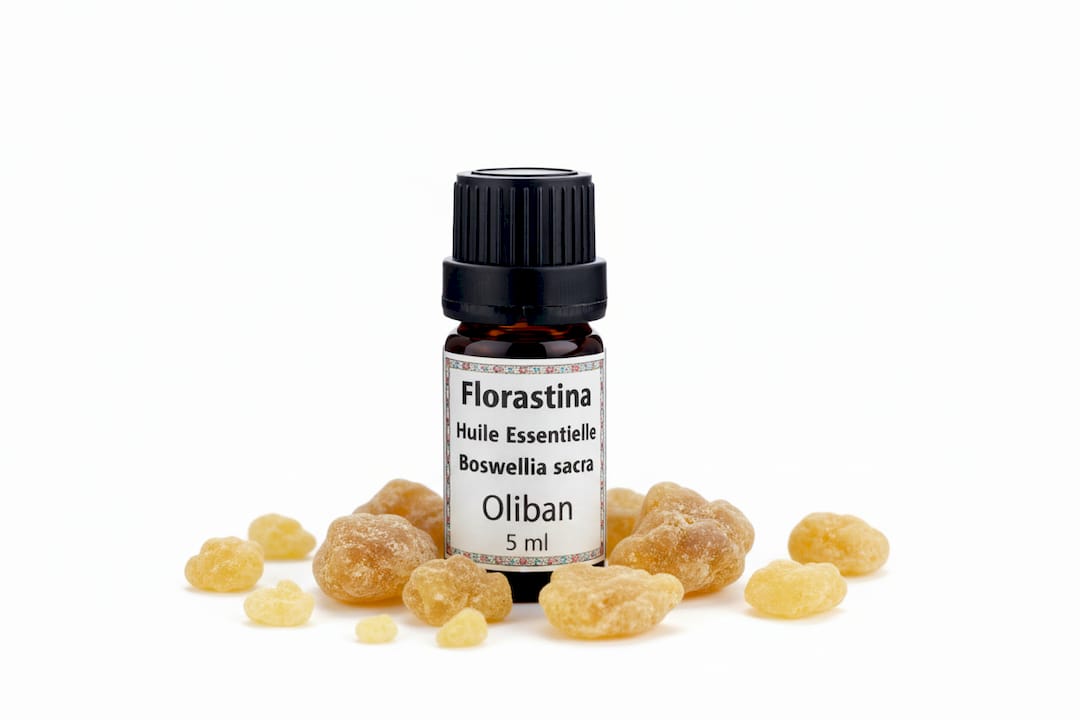
If you’re unsure which oils fit your routine or how to store a growing collection, Palinova offers free aromatherapy consultations to walk through your specific needs, from skincare blending to everyday aromatherapy use. For readers building out a resin and wood collection that ages well, the frankincense product page is a solid place to start, since Boswellia sacra resin oils are exactly the long-lasting, storage-forgiving category this guide describes.
[
The One Habit That Actually Protects Your Collection
Most storage advice overcomplicates a simple truth: the bottles that last longest are the ones people actually touch the least. Dark glass, a tight cap, minimal headspace, refrigeration for citrus, and a date written in marker. That’s the whole system, and none of it requires special equipment or expertise.
If you’re staring at a shelf of bottles unsure what’s still good, that’s exactly the kind of question worth bringing to a Palinova consultation instead of guessing.
— abdelmuhsen
Ready-to-Use Oils Built for Long-Term Storage
Buying oils already packaged for longevity saves you the guesswork of re-bottling everything yourself. Palinova’s Wildcrafted Cypress Essential Oil ships in protective dark glass designed to slow oxidation from day one, and the same goes for the resin and wood oils in the catalog that are built to age well rather than fight the clock.
A few places worth starting:
The Wildcrafted Cypress Essential Oil page, for a wood-forward oil that stores well long term.
The Pure Frankincense Essential Oil page, for one of the slowest-degrading oil categories available.
The free aromatherapy consultation, where Palinova helps you match oils and storage habits to your actual routine, not a generic checklist.
If your shelf needs a refresh or you’re not sure which oils deserve a spot in your rotation, book a free consultation or browse the Palinova shop to see how each product is packaged for freshness before it ever reaches you.
Sources
FAQ
Can I still use 10-year-old essential oils?
It depends on the type. Wood and resin oils like sandalwood or frankincense may still be excellent at 10 years, while citrus oils that old have almost certainly oxidized and should be checked carefully or discarded.
How can I store essential oils to keep them fresh?
Keep them in dark amber or cobalt glass, capped tightly, in a cool spot away from light and heat, and refrigerate citrus oils once opened.
What is the 30/50/20 rule for essential oils?
It’s a popular but unsupported guideline circulating in aromatherapy circles; there’s no credible industry backing for it, so label-and-rotate tracking is a more reliable approach.
What holds essential oil scent the longest?
Heavier wood and resin oils, such as sandalwood, patchouli, vetiver, and frankincense, hold their scent longest and can even deepen in aroma with proper aging.
Recommended


Comments