
Three Chemotypes in Palestinian Pistacia palaestina Oils: Uses & Safety
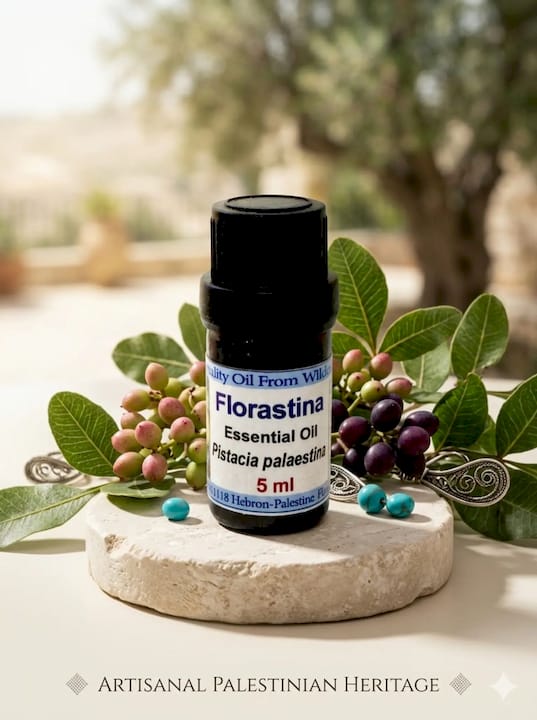
Pistacia palaestina essential oil is a steam-distilled botanical oil extracted from the leaves, galls, or ripe fruit of the Pistacia palaestina tree, and its chemistry runs heavy on monoterpenes like α-pinene, myrcene, sabinene, and (E)-ocimene. It is not pistachio seed oil, and treating the two as interchangeable is a common mistake. People use it in aromatherapy diffusers, in diluted topical blends, and in traditional preparations valued for antimicrobial properties. It carries real bioactivity, which means it also carries real rules: dilute it, patch test it, and don’t mistake a promising lab result for a medical treatment.
TL;DR:
The chemical composition of Pistacia palaestina essential oil varies significantly depending on whether it is extracted from leaves, galls, or fruit, affecting its scent and biological activity.
Oil derived from leaves and galls contains high α-pinene levels, making it sharper and more pine-like, while fruit oil is dominated by (E)-ocimene, producing a greener, herbaceous aroma.
Early research indicates potential bioactivity, such as antimicrobial and anticancer effects observed in cell studies, but clinical evidence for health benefits remains absent.
Safe use requires proper dilution, patch testing, and avoidance of ingestion or use during pregnancy without medical advice, as concentrated oils can cause irritation or adverse reactions.
Authenticity depends on verifying plant part, region, extraction method, and chemical analysis, with trusted vendors providing detailed sourcing and testing information.
Table of Contents
What Does Pistacia Palaestina Essential Oil Smell Like and How Is It Used?
The scent leans green, resinous, and slightly piney, with a sharp top note that softens into something warmer and almost balsamic as it dries down. That profile comes directly from its α-pinene content, the same compound responsible for the crispness in pine and rosemary oils. Perfumers and home blenders alike tend to treat it as a base or heart note rather than a bright top note.
It plays well with other woody and resinous oils, and pairs less predictably with sweeter florals. Good blending partners include:
Cedarwood, for a deeper, drier woody base
Frankincense, to round out the resinous quality
Bergamot, used sparingly, for a citrus lift with low photosensitizing risk
Other Palinova essential oils in the same family for layered, complex blends
In cosmetics, it usually shows up as a fragrance accent or a low-concentration active in topical formulas rather than a headline ingredient. Store it in a dark glass bottle, away from heat and direct light, with the cap tight between uses. Oxidized essential oils lose potency and can become more irritating to skin, so a bottle left open on a bathroom shelf degrades faster than one kept in a drawer.
How Does Chemical Composition Vary by Plant Part?
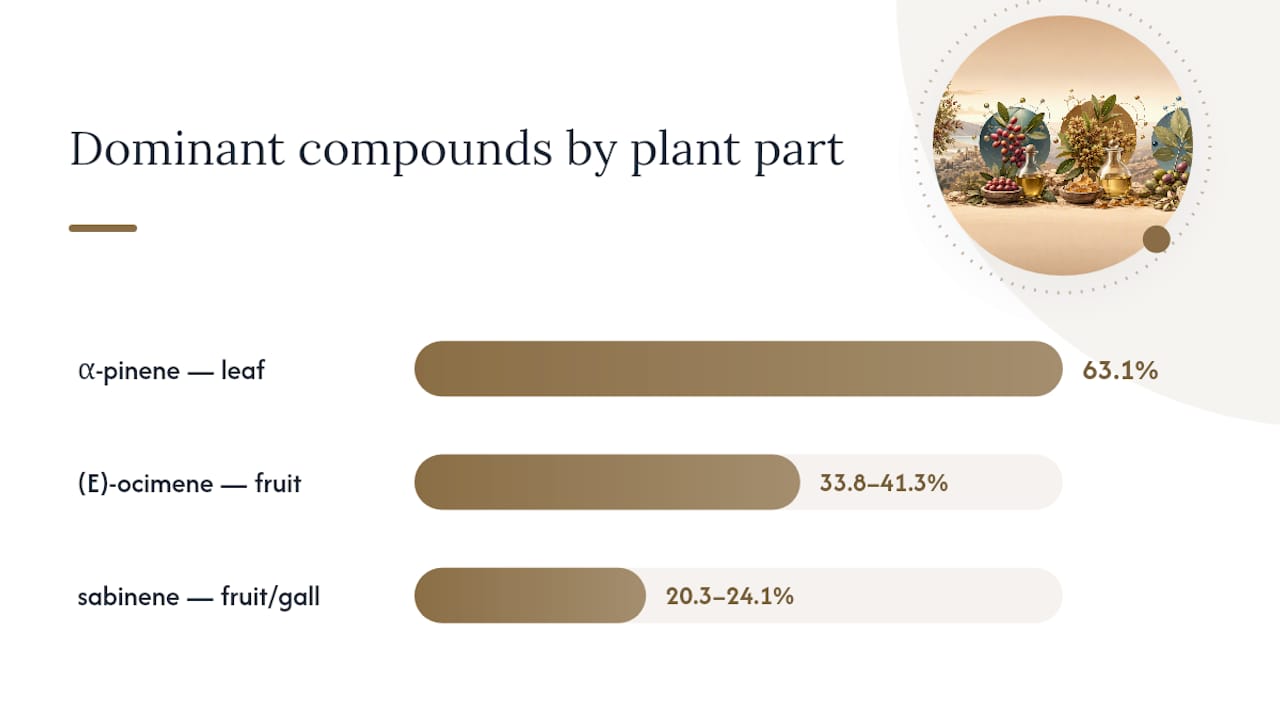
The plant part used for extraction changes almost everything about the oil, from how it smells to what it might do biologically. GC–MS analysis of Pistacia palaestina shows three distinct chemical signatures depending on whether the oil comes from leaves, galls, or fruit, according to research published on PubMed.
Leaf oil: dominated by α-pinene (around 63.1%) and myrcene (around 13.3%), giving it the sharpest, most classically “pine forest” aroma
Gall oil: still α-pinene heavy (around 49.4%) but with a much bigger sabinene presence (around 22.8%) and a meaningful limonene fraction (around 8.1%), softening the profile with citrus undertones
Fruit oil: a completely different chemotype, led by (E)-ocimene at 33.8 to 41.3% alongside sabinene at 20.3 to 24.1%, producing a greener, more herbaceous scent than the leaf or gall extracts
α-pinene swings from roughly 49% to 63% of total composition depending on whether the oil comes from galls or leaves. That single compound alone can be the difference between an oil marketed for its sharp, camphoraceous aromatherapy use and one better suited to lighter, more diffusible blends.
Extraction part matters because it determines both aroma and the mix of compounds available for whatever biological activity researchers are studying. A fruit-derived oil rich in (E)-ocimene is not chemically comparable to a leaf oil built around α-pinene, even though both carry the same species name on the label. On top of plant part, geography, harvest season, and even the specific steam distillation method used can shift these ratios, according to chemical characterization work on related Pistacia species. That variability is exactly why a credible vendor should be able to tell you which plant part your bottle came from, not just the species name.
What Does the Research Say About Its Biological Effects?
Lab research on Pistacia palaestina and its close relatives points toward genuine bioactivity, but the evidence is early stage and confined mostly to cell cultures and small animal models. A 2020 study tested the fruit oil against HCT116 colorectal cancer cells and found it reduced cell viability, inhibited migration, and lowered secretion of CXCL8, a signaling protein linked to tumor progression, according to findings published by researchers at the University of Jordan. That’s a meaningful signal in a petri dish. It is not evidence that the oil treats or prevents cancer in a human body, and no clinical trials have tested it that way.
Related Pistacia species back up parts of this picture. Mastic oil from Pistacia lentiscus var. chia, chemically similar and often dominated by the same α-pinene and myrcene compounds, has shown cytoprotective effects and measurable shifts in antioxidant-related gene expression in zebrafish models, per research on the species’ gene expression profile. The same study is worth citing for the opposite reason too: higher concentrations produced toxicity in the larvae tested, a reminder that dose matters even in a plant-derived oil.
Broader reviews of Pistacia pharmacology describe antimicrobial, anti-inflammatory, and antioxidant activity tied to these recurring terpene compounds across the genus. Researchers who publish this kind of preliminary work are consistently careful to flag its limits.
Preliminary anticancer and antimicrobial results from cell and animal models are a starting point for further controlled research, not a basis for therapeutic claims about human health outcomes.
What does that mean for someone using this oil at home? Conservative, complementary use makes sense: a diluted topical blend for skin support, a few drops in a diffuser for its aromatic qualities, or a role in a broader wellness routine. What doesn’t make sense is swapping out medical care for an essential oil because a cell-culture study looked promising. The gap between “active in a lab dish” and “effective in a person” is one of the biggest things people misunderstand about botanical research generally, not just this oil specifically.
How Do You Use Pistacia Palaestina Oil Safely?
Essential oils this concentrated need dilution before they touch skin, and a patch test before they touch anything else. Follow these steps the first time you use a new bottle:
Mix 1 to 2 drops of essential oil into 5 mL of a carrier oil like jojoba, sweet almond, or fractionated coconut oil, landing around a 0.5 to 1% dilution.
Apply a small amount of the diluted blend to the inner forearm.
Wait 24 to 48 hours and check for redness, itching, or irritation before applying it more broadly.
If your skin reacts, wash the area and skip topical use of that oil going forward.
For diffusion, start with 3 to 5 drops in a standard ultrasonic diffuser and run it in a ventilated room, not sealed overnight in a bedroom.
A simple massage blend: 2 drops Pistacia palaestina oil, 2 drops cedarwood, and 10 mL sweet almond oil. For a grounding diffuser blend, try 3 drops Pistacia palaestina paired with 2 drops frankincense.
Avoid ingestion, keep it away from eyes and mucous membranes, and skip topical use entirely if you’re pregnant or nursing without talking to a healthcare provider first, since potent botanical oils haven’t been well studied in that population. Keep bottles capped and stored away from light and heat, since an oxidized oil is more likely to irritate skin than a fresh one.
[
Pro Tip: Keep a small notebook or note on your phone logging which blends you’ve patch tested and how your skin reacted. Sensitization to essential oils can build over repeated exposure, so a blend that was fine three months ago is worth retesting if you’ve started using it daily.
How Do You Verify Authentic Pistacia Palaestina Oil Before Buying?
Not every bottle labeled “Pistacia palaestina” contains what it claims, and the chemistry differences by plant part make this an easy category for vague labeling to hide in. Before buying, check the listing for these basics:
The full botanical name, not just a common name or genus
Which plant part was distilled (leaf, gall, or fruit), since that changes both scent and expected compound ratios
The extraction method, ideally steam distillation, and a stated country or region of origin
Availability of a Certificate of Analysis or GC–MS report showing actual compound percentages
A batch number and basic information on how the oil is stored and shipped
Ask directly about wildcrafting practices and whether the source cooperative or grower is named. Vague answers, no batch number, or a total absence of composition data are red flags worth walking away from. A supplier willing to talk specifics about where the trees grow and how the oil was tested is generally a more trustworthy one. Palinova’s Pistacia palaestina essential oil product page lays out sourcing and usage details for readers who want to see what transparent labeling actually looks like in practice.
A Publisher’s Take on Sourcing This Oil Responsibly
Palinova sources its Pistacia palaestina oil through [brand_signal: wildcrafted Palestinian botanicals] harvested with attention to seasonal timing and land stewardship, and every batch reflects [brand_signal: sustainability and ethical sourcing commitments] built into how the company works with growers. Author credentials and relevant expertise inform how this article translates lab chemistry into practical guidance. Readers uncertain about dilution ratios or blend compatibility can use Palinova’s [brand_signal: free aromatherapy consultations] to get a plan suited to their own skin and goals rather than guessing from a label alone. Case studies or testimonials demonstrating product efficacy
— abdelmuhsen
Where to Buy Authentic Pistacia Palaestina Essential Oil
Sourcing matters more with this oil than with common lavender or peppermint, because the plant is regionally specific and the compound ratios shift so much by plant part. Palinova’s Pistacia palaestina essential oil product page lists bottle sizes, current pricing, and origin details so you know exactly what you’re buying before checkout.
Shipping and return details are posted on the product page itself, and the same listing notes composition transparency so you’re not left guessing what’s actually in the bottle. If you want to compare it against other botanicals in the same aromatic family, the essential oils category page covers the wider lineup, including oils like cypress that blend well alongside it. Anyone who ends up more interested in a topical formulation than a DIY blend can browse Palinova’s skincare line for ready-made options built around similar Palestinian botanicals. Place an order through the product page directly, or reach out through the site’s consultation option first if you want dilution guidance tailored to your skin before you buy.
Sources
FAQ
Which Essential Oil Is Compared to Botox for Wrinkles?
Frankincense essential oil is the one most commonly marketed with “natural Botox” comparisons for wrinkles, though clinical evidence for that claim is limited. Pistacia palaestina oil is not marketed or studied for that purpose.
Can You Put Pistacia Palaestina Oil Directly on Skin?
No, undiluted application is not recommended.
What Essential Oil Helps Stop Itching From Bug Bites?
Lavender and tea tree are the oils most commonly used for insect bite itching, thanks to documented anti-inflammatory and antimicrobial properties. Pistacia palaestina hasn’t been specifically studied for that use, though its related anti-inflammatory compounds suggest it could offer mild relief in a diluted blend.
What Essential Oil Is Best for Heart Palpitations?
Essential oils are not a treatment for heart palpitations, and anyone experiencing them should see a doctor rather than rely on aromatherapy. Some people use calming oils like lavender for general relaxation, but that is not a substitute for medical evaluation of a cardiac symptom.
Is Pistacia Palaestina Essential Oil the Same as Pistachio Seed Oil?
No, they are entirely different products. The essential oil is a volatile, aromatic compound used in dilution for aromatherapy and topical support, while pistachio seed oil is a fixed, nutrient-rich carrier oil used in skincare and cooking.
Recommended

Comments