
1–3% Dilution Explains Why Essential Oils Smell Different on Skin

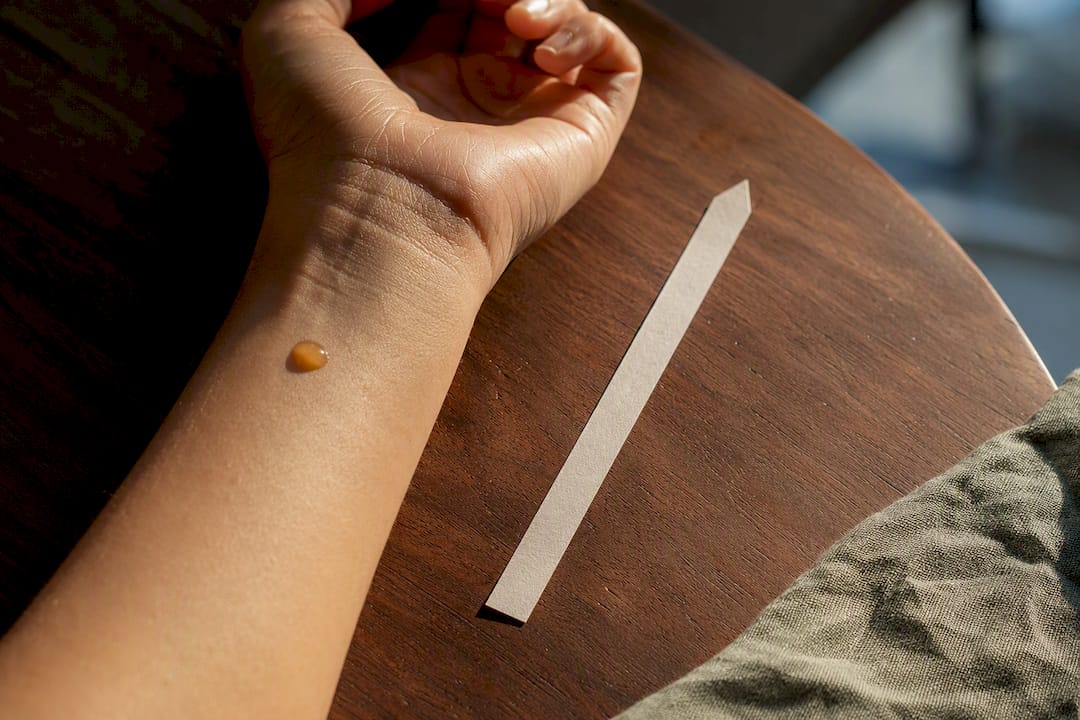
Essential oils smell different on skin because four things collide at once: the oil’s own shifting chemistry, your individual skin biology, how the oil was grown and stored, and how you actually applied it. None of that means anything is wrong with the oil. A ten-minute patch test, worn on the inside of your wrist, will usually tell you more about how a scent will actually behave on you than any blotter strip ever will.
TL;DR:
Essential oils vary widely in scent due to differences in chemical composition, extraction methods, and oxidation, which affect how they smell on skin compared to the bottle.
Skin pH, hydration, microbiome, and genetics influence how oils develop and evaporate, making their scent unique to each individual.
Proper storage, using dark glass bottles in cool, dark places, and understanding chemotype differences help maintain oil quality and scent integrity over time.
Dilution and application site significantly impact scent perception, with lower concentrations and pulse points providing more balanced and long-lasting fragrances.
Changes in scent during wear can signal oxidation, contamination, or phototoxic reactions, necessitating patch tests and cautious use, especially with citrus oils.
Table of Contents
Why Do Essential Oils Smell Different on the Skin? The Chemistry Behind It
An essential oil isn’t one smell. It’s a mixture of dozens to hundreds of aromatic compounds, each evaporating at its own speed, and that staggered evaporation is the real reason a single oil can smell sharp and citrus at 9 a.m. and warm and woody by lunch.
Chemists group these compounds by volatility. Light, fast-moving molecules like monoterpenes make up what perfumers call the top notes, the bright opening you smell in the first few minutes. Heavier sesquiterpenes and terpenoids linger longer and form the heart and base notes, the deeper, often sweeter or earthier smell that surfaces after the light molecules have already evaporated off your skin. On a blotter strip sitting in still air, that evaporation happens slowly and evenly. On skin, body heat speeds everything up and compresses the whole sequence, which is why the same drop of oil can smell almost unrecognizable an hour apart.
There’s also the question of what’s actually in the bottle. Two oils labeled with the same plant name can differ meaningfully depending on chemotype (genetic variation within the same species), growing region, harvest timing, and extraction method, whether that’s steam distillation, cold pressing, or solvent extraction. A comprehensive review of essential oils used in cosmetics documents exactly this: composition varies by genetics, geography, harvest conditions, and how the oil was processed, which is why “lavender” from one farm can smell noticeably different from “lavender” grown three valleys over.
Natural oils also carry far more complexity than synthetic fragrance ever does. A single natural rose oil can contain hundreds of distinct aromatic compounds, layered and interacting, which is exactly why it keeps changing on skin over hours while a linear synthetic scent barely moves.
What drives the shift, in short:
Molecular weight determines evaporation speed, light molecules leave first
Top, heart, and base notes emerge in sequence, not all at once
Chemotype and extraction method change the underlying chemical mix
Skin heat accelerates evaporation compared to a blotter or the open bottle
How Your Skin Chemistry Changes the Way Oils Smell
Your skin isn’t a neutral surface. It’s an active chemical environment, and it treats every oil a little differently depending on your pH, your hydration level, your genetics, and even your microbiome.
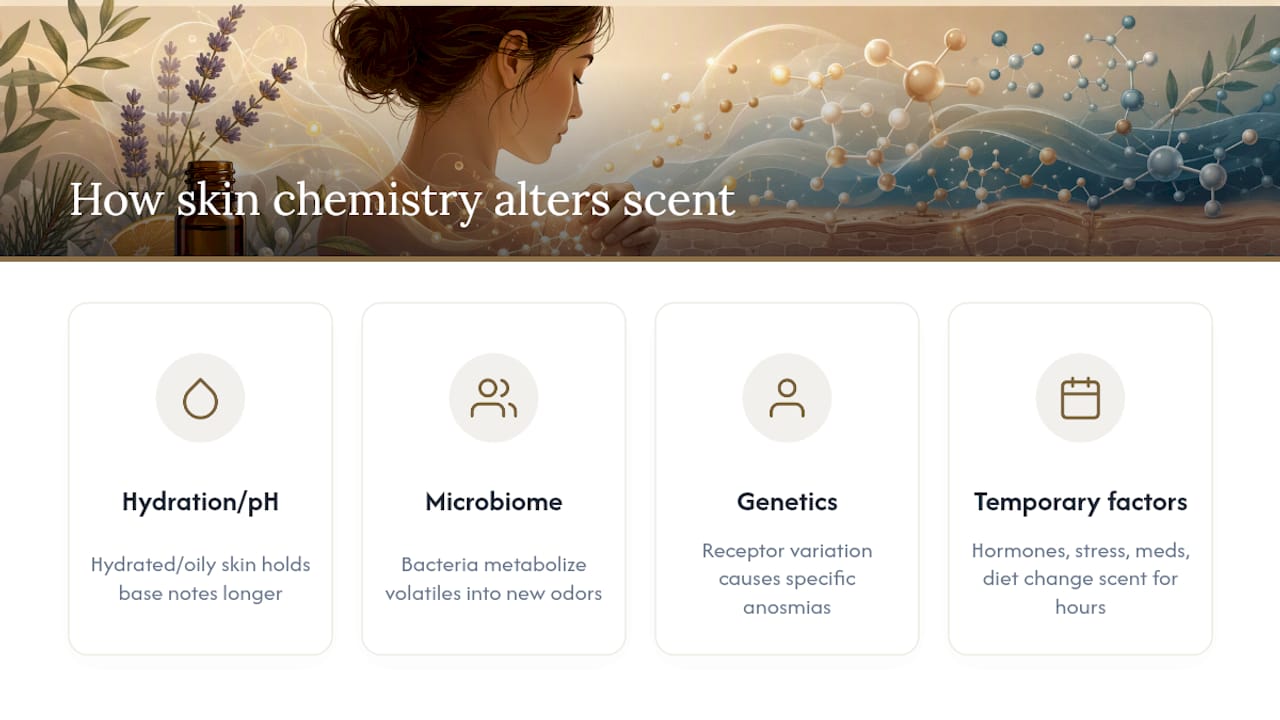
Skin pH and moisture levels affect how quickly aromatic molecules evaporate and how fully they develop. Research on skin hydration and fragrance interaction shows that well-hydrated, slightly oilier skin holds fragrance longer and lets base notes fully emerge, while dry skin lets top notes flash off fast and fade early. That’s why the same drop of oil can smell “thin” on one person and “rich” on another, even at identical concentrations.
Your skin’s bacterial population plays a role too. Research on skin microbiome and odor metabolism shows resident bacteria actively metabolize volatile compounds into new odor byproducts. Two people with different bacterial populations can turn the exact same oil into two genuinely different smells, not just a perceived difference but a chemically different one.
Then there’s perception itself. Genetic variation in scent receptors means some people experience specific anosmia, a partial blindness to certain scent molecules while smelling everything else normally. Research on the genetics of olfaction confirms this receptor variability is real and inherited, which explains why a friend might swear an oil smells like citrus while you get mostly wood.
Hormonal shifts, stress, certain medications, and even diet can temporarily change how oils read on your skin, sometimes for a matter of hours.
Pro Tip: Moisturize dry skin about ten minutes before testing a new oil. It slows evaporation just enough to let you smell the full drydown instead of only the fleeting top notes.
External Factors: Origin, Storage, and Oxidation
A lot of scent variation has nothing to do with your skin at all. It happened before the bottle ever reached you.
Chemotype is the biggest factor most people never hear about. Thyme is the textbook example: Thymus vulgaris can grow as several distinct chemotypes, one dominated by thymol, another by linalool, depending on soil, climate, and altitude, even though both get sold under the same common name. Extraction method compounds this. Steam-distilled oils lose some heat-sensitive compounds that cold-pressed citrus oils retain, which is one reason a cold-pressed bergamot can smell sharper and greener than a distilled version.
Oxidation is the quieter problem. Once a bottle is opened, oxygen and light slowly break monoterpenes down into different compounds, including hydroperoxides and epoxides. The same review of essential oil composition and safety notes that oxidized limonene derivatives and similar breakdown products are considerably more likely to cause skin sensitization than the original, unoxidized compounds. An oil that’s turned musty, sour, or just “off” from its original scent has usually oxidized, and that changed smell is a genuine warning sign, not just an inconvenience.
Storage habits determine how fast that clock runs:
Keep bottles tightly capped and away from direct light
Store in a cool, stable spot, not a steamy bathroom cabinet
Use dark glass bottles, which citrus and high-terpene oils especially need
Buy citrus oils in smaller quantities since they oxidize faster than heavier florals or woods
Note the harvest or bottling date if the brand includes one, and don’t hang onto opened citrus oils for years
Why Dilution, Carrier Oil, and Application Site Change the Result
How you apply an oil shapes what it smells like almost as much as the oil itself does. This is the part most people skip past, and it’s where the biggest improvements happen.
Dilute deliberately. Perfume-strength blends typically sit around 15 to 20 percent essential oil in carrier, while topical skincare use calls for a far gentler range, often in the 1 to 3 percent territory depending on the oil and the area of skin. Diluting isn’t just a safety step. It directly changes how the scent develops, since less concentrated oil evaporates and reveals its notes differently than a heavy, undiluted drop.
Choose your carrier with intention. Light carriers like fractionated coconut or grapeseed oil let top notes flash quickly and fade. Heavier carriers like jojoba or sweet almond oil anchor the blend, slowing volatile release so the scent lasts longer and develops more gradually, an effect confirmed in research on drug delivery systems for skincare.
Pick your spot. Pulse points, wrists, and inner elbows run warmer, which speeds up evaporation and intensifies scent projection. Rubbing the area accelerates things further and can burn off top notes before you’ve had a chance to smell them properly.
Test the same drydown every time. Smell a blotter, then apply a diluted patch to your forearm and check back at roughly 5, 30, 90, and then 360 minutes. That’s the only way to see how an oil actually behaves on you rather than in a bottle.
Pro Tip: Test on the inner forearm, not the wrist, if you’re comparing multiple oils in one sitting. It’s less exposed to handwashing and lotion residue that can skew the results.
When a Changed Scent Signals a Safety Problem
Not every scent shift is harmless, and it’s worth knowing which changes are worth paying attention to.
Certain citrus oils, especially those that are cold-pressed rather than distilled, contain bergapten and related furocoumarins that make skin markedly more reactive to UV light. The review on essential oils in cosmetics confirms these phototoxic reactions are well documented, and the practical guidance is to avoid direct sun exposure on treated skin for roughly 24 to 48 hours after application.
Oxidized oils raise a separate concern. Patch-test data cited in that same review puts sensitization rates for various essential oils in a range of roughly 1 to 8 percent depending on the specific oil and population studied, a minority but not a negligible one, and oxidized compounds like limonene breakdown products are consistently more likely to trigger a reaction than the fresh, unoxidized oil.
A few signs it’s time to stop and reassess:
The oil smells sour, musty, or noticeably different from when you bought it
You notice redness, itching, or burning within a few hours of a patch test
The oil is a citrus variety and you’re heading into direct sun
The bottle has been open for more than a year without dark, cool storage
What Palinova Recommends for Testing and Safe Use
Palinova’s own guidance on essential oil dilution for skin and rituals walks through safe percentage ranges for different uses, and every purchase comes with access to a free aromatherapy consultation if you want help matching a dilution to your skin type. A few habits worth building in:
Patch test on the inner forearm before applying any new oil more broadly
Start with a conservative dilution, closer to 1 percent for facial skin, and adjust upward slowly
Store opened bottles in a cool, dark spot and track how long they’ve been open
Check Palinova’s notes on how essential oils vary from brand to brand before assuming a “bad batch” when it might just be normal chemotype variation
Treating Scent Variability as a Feature, Not a Flaw
The variability that makes essential oils frustrating to standardize is the same trait that makes them interesting. Once you accept that your skin is part of the formula, you start experimenting instead of troubleshooting, adjusting dilution and carrier until a blend genuinely feels like yours.
— abdelmuhsen
Get Curated Oils and Real Guidance Before You Blend
Most guides tell you to “just dilute properly” and leave you guessing at percentages with whatever bottle you already own. Some providers help by pairing each oil with clear dilution notes and offering consultations to match concentration to your actual skin instead of a generic chart.
The Achillea Fragrantissima essential oil is a good starting point if you want to see chemotype and terroir effects firsthand, since its scent profile reflects the specific Palestinian growing conditions it comes from rather than a standardized industrial blend. If you’re curious how origin changes an oil’s character more broadly, the full essential oil collection is organized by botanical source. Before applying anything new at a stronger concentration, run a patch test on your forearm and give it a full day. If you want a second opinion on dilution or carrier choice for your specific skin, book a free consultation and ask before you commit to a blend.
Sources
Composition variability, safety, and oxidation: PMC7865210. Skin microbiome: PMC12655691. TRPV3 skin interaction: Nature Communications. Genetics of smell: PMC11519045.
Review: Essential oils in cosmetics — composition, safety and variability (PMC7865210)
FAQ
Why do dermatologists not like essential oils?
Many dermatologists are cautious about essential oils because undiluted or oxidized oils carry real risks of skin sensitization and, in the case of some citrus oils, phototoxic reactions when skin is exposed to sun afterward.
What is the best smelling essential oil for skin?
There’s no single best oil since preference is deeply personal and shaped by genetics, but oils with rich base notes, like sandalwood or rose, tend to develop the most noticeable, evolving drydown on skin when properly diluted in a carrier oil.
How can you tell if an essential oil is 100 percent pure?
Look for the botanical Latin name on the label, a stated country of origin, and a batch or harvest date; pure oils also tend to vary slightly bottle to bottle due to natural chemotype differences, unlike synthetic fragrance, which smells identical every time.
Why should you not put essential oils on your skin undiluted?
Undiluted oils are more likely to cause irritation or sensitization, and certain citrus oils can trigger phototoxic burns in sunlight; diluting in a carrier oil at a low percentage, then patch testing, is the safer approach recommended across aromatheromy safety practice.
Recommended

Comments